Monthly Archives: July 2018

Saving and Improving Lives: One Drop at a Time

submitted by Linda Baldwin; photo by Pete Christianson
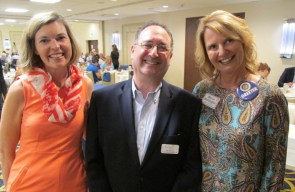
Ben Merens 7 25 2018

From left: Program Committee Chair Sara DeTienne; Ben Merens & Marcia Whittington

This week’s Rotary presentation by Ben Merens, a “storyteller” for the Blood Center of WI Blood Research Center, was one where I left having learned amazing information about a subject of which I knew nothing.

Merens did indeed tell stories…

The young man at Verizon who had had a double lung transplant, survived, married his nurse and had a family.  Ricky owes his life to doctors like those at the BRI because blood research found a way to get the body to accept transplants.

Chaos, Merens describes, is what the blood system looks like and scientists determine what patterns do exist, how they are supposed to work and then find out how to fix things when they don’t.

BRI scientists patented a test to determine whether the regularly used blood thinners would work for a specific patient and if not, doctors could substitute a more effective blood thinner.

We watched with Merens as he described a heart being harvested and then rushed down the hall to transplant into a waiting patient.  The heart was successfully inserted…then the action stopped, and they waited. The heart, still in the open chest, began to beat.

Merens described a WI Donor event when a mother spoke about the joy and sadness when she realized her son is living because another person’s child has died.  Then she said, he’s an active two year old being held by the mother of the donor who heard her child’s heart beat in the chest of my son.

We think about research being a scientific activity with words and practices that most of us don’t understand.  Merens brought the results of research into our hearts and minds at Rotary today.  And we do understand.

If you missed our meeting this week, you can watch the video here.
“Bring Back Civics Education!”

submitted by Rich Leffler; photo by Pete Christianson

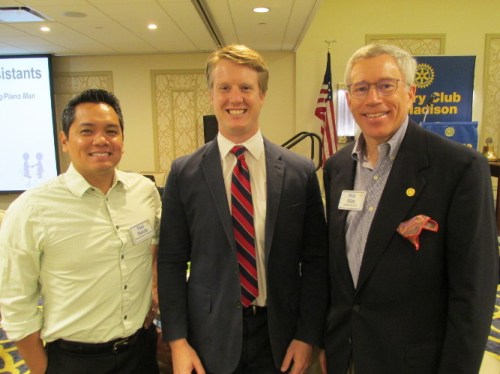
Luke Fuszard 7 18 2018

From left: Paul Ranola, Luke Fuszard and Rick Kiley

Luke Fuszard spoke to us this week on the decline of civics education, which he says places democracy at risk. Luke is a software engineer and has an MBA.  No civics background. But he does have two children, and he is concerned about the decline in civics education.

In 1954 Kentucky required three years of history and civics, and students had to pass a very tough statewide exam. Only nine states today require any such education, and Wisconsin is not one of them. The result is a predictable widespread ignorance. Ninety-seven percent of immigrants taking the [relatively easy] citizenship exam pass it. Thirty-three percent of native citizens who take the same test fail it. For most of American history, it was generally believed that solid civics and history knowledge was needed for people to be good citizens. That seems no longer to be the case.

Two occasions seem to have sped this decline in interest: (1) Sputnik in 1957; (2) the 1983 report, “A Nation at Risk.” Both incentivized the teaching of math and science, and as these expanded, history and civics courses were reduced. Middleton and Wausau still have robust civics programs. Wisconsin has recently adopted a statewide civics exam, but it is online and can be taken multiple times. And in 2012, all federal funds were shifted away from civics or history to math and science.

Why are civics and history important? Many math majors will never be mathematicians. Many science majors will never be scientists. But everyone will eventually be a member of the body politic. Since 1776, hundreds of thousands of people have given their lives in defense of our freedom and our democracy. The least we can do is to lobby our legislators to support civics education. Much civic behavior is learned in childhood: We should pass on to our children our belief in the importance of being an educated citizen, able to make informed political decisions.

Our thanks to Wisconsin Eye for videotaping our meeting this week.  You can watch the video here.

Battle for Economic Growth in Wisconsin

submitted by Carol Toussaint; photo by Pete Christianson

Kevin Conroy 7 11 2018AWhat will it take for Wisconsin to win the battle for economic growth fueled by entrepreneurship?  Rotarians and their many guests left the Wednesday lunch with some specific ideas presented by Kevin Conroy, Chairman and CEO of Exact Science.
According to Conroy, Wisconsin is not inspiring start-ups. Our demographics are currently against inspiring start-ups and our demographics are holding us back.  Our workforce is rapidly aging and shrinking.  Median family income is flat.  We are near the bottom in terms of net migration of college workers and we’re not building a promising young workforce.  We need exciting companies to keep and draw exciting companies.

According to studies conducted by the Kaufman Foundation, Wisconsin is ranked last in the U.S. for start-up activity and Conroy stressed that start-ups create most new net jobs and are the key to success in the battle for economic growth.  Venture Capital needs to be more readily available in Wisconsin if there is to be a change in status among the states.  Currently three states–California, New York and Massachusetts–manage 83% of the nation’s venture.

What Conroy termed a “silver lining” is that experience from the last 3 years has been better for investment in new companies.  Angel investors are providing significant help but there is a “funding gap” after angels.  Without growth in next stage funding Wisconsin will continue to lag behind other states.  Models to look at include a private sponsored venture capital model in Michigan and a Public-Private Partnership.

In speaking of the Company he heads, Conroy shared that Exact Science relentlessly pursued a solution to the big problem of colon cancer, partnered with the Mayo Clinic, focused on great science, raised nearly $2 billion, and had a direct lineage to the UW-Madison via Third Wave Technologies.

The company is expanding to a new campus which includes lab, manufacturing, and customer care services in the former Rayovac building and is expanding into new headquarters in University Research Park.  To make the point that “start-ups matter”, Conroy summarized that the impact on Wisconsin from the start-up he heads provides $2 billion in capital and $29 million in taxes.

Rotary Scholars and Their Mentors Get to Know Each Other –Picnic Style

submitted by Sharyn Alden; photos by Dean Nelson & Karl Wellensiek

DSC_0073

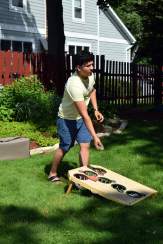
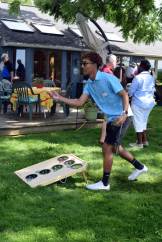
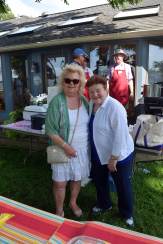
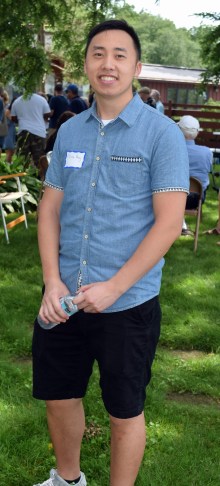
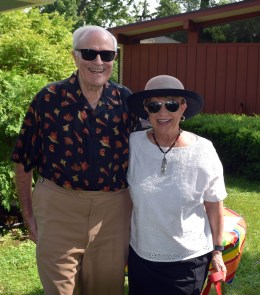
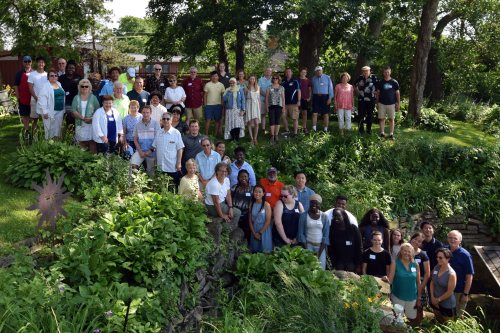
The sun shined brightly July 1st, after a tornado watch lifted, on one of Rotary’s most festive traditions –the annual Rotary Scholar Mentor Picnic held lakeside at the home of Ed and Nancy Young.

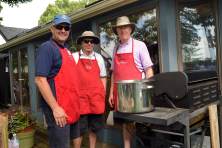
There were multiple tables of picnic food choices –segmented further by categories. There were appetizers and salads, a lively grilling station with brats and burgers fresh off the grill, and a dessert table laden with cakes, cookies and luscious chocolate delights.


dsc_0043.jpg  dsc_0042.jpg  dsc_0030.jpg

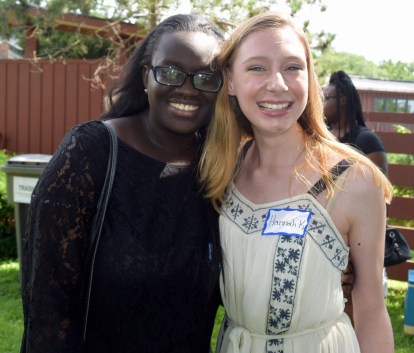
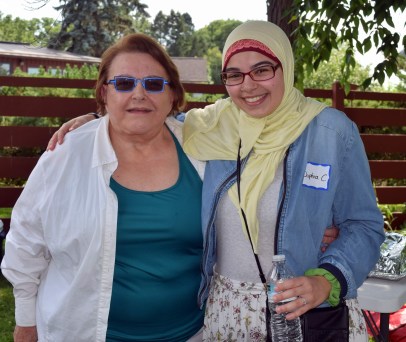
Beyond the good eats and boat rides, and overall festive atmosphere, what most of us came for was this exceptional opportunity to get to know each other better.

Melanie Ramey, former President of Rotary (1998-1999), a five-time mentor to Rotary scholars, is currently a mentor to Matida Bojang.  Ramey said, “The annual picnic provides a great opportunity for scholars to become better acquainted with their mentors and also meet other scholars with similar academic or cultural backgrounds.”

DSC_0032  DSC_0031

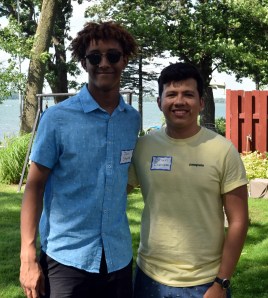
This was the second Rotary Scholar Mentor Picnic for Eddie Larson, whose mentor is Majid Sarmadi. Larson, who will be a junior this fall majoring in actuarial science at UW-Madison, said, “Rotary as an organization offers many excellent networking opportunities. But the annual picnic brings together people of so many diverse backgrounds, it’s a terrific venue for meeting and making new friends.”

DSC_0037  DSC_0038  DSC_0056  dsc_0036.jpg

Seated at a picnic table, gazing out at Lake Monona, first-time picnic attendee, and scholar, Cassie Ferguson plans to major in early childhood education because she said teachers, from elementary grades through high school had a strong impact on her life. “I want to give back,” she said simply while enjoying the view of the Capitol in the distance.

DSC_0029  dsc_0055.jpg  dsc_0058.jpg  dsc_0039.jpg

Conversations like this, at a casual picnic with no specific agenda other than to enjoy yourself, can be stepping stones to planting seeds for life-long friendships between scholars and mentors.

Our thanks to Ed and Nancy Young for hosting this year’s 2018 Scholar Mentor Picnic; to “Picnic Planner” Dean Nelson; Scholar Mentor Committee Co-Chairs Rob Van den Berg & Cheryl Wittke & Chair Emeritus Ellie Schatz and to members of our Kitchen Committee for working their magic at the grill.  The event was a great success!