Category Archives: 2. Meetings

Lake Monona Waterfront Design: Connecting Downtown with the Lakefront

–submitted by Joy Cardin

The Lake Monona Waterfront Design project is a once-in-a-generation opportunity to create an inclusive, environmentally-focused, and economically-beneficial gathering space for the entire community according to our guest speakers at the Madison Rotary Club’s June 14th meeting. 

The chair of the Lake Monona ad-hoc committee Allen Arntsen and the president of Downtown Madison Inc. Jason Ilstrup explained the need, the benefits and the future of the ambitious project that will redesign a nearly two mile stretch of the Lake Monona shoreline from Olin Park to Machinery Row on Williamson Street.  

The winning master plan submitted by the Denver design firm Sakaki includes an elevated boardwalk, a waterfront restaurant, a boathouse, nature center and an expansion of the Monona Terrace Convention Center.  The plan acknowledges the Ho-Chunk Nation’s history with Lake Monona and focuses on its future environmental health.  

The ad hoc committee will continue to work with Sakaki and other community shareholders on finalizing the redesign over the next few months.  A final plan is expected to go before the Madison Common Council for a vote in October.  

If you missed our meeting this week, you can watch the video here: https://youtu.be/pDCwzjOakDs.

November 30: Dr Niraj Nijhawan on Recent Brain Science Discoveries

–submitted by Larry Larrabee


Dr. Niraj Nijhawan’s presentation, Brain Science Discoveries to Boost Resilience and Character, revealed the role brain neurology plays in communication of “the lower brain,” largely the limbic system and “the higher brain,” largely the orbital prefrontal cortex, i.e., our selfish side and our better character side.

He described how the Life Ecology Organization (LEO) teaches individuals in groups “Hope Narratives” that can control or limit the effects of the “Destructive Narratives” we get from our “lower brain.”  Data was presented showing the positive effect of LEO with adults and teens in the areas of meaning, love and purpose, while significantly reducing suicidality, anger and selfishness.

If you missed our meeting this week, you can watch the video here: https://youtu.be/QwI28w6S5z8.

November 9: Women Veterans Then and Now

–submitted by Janet Piraino

Jodi Barnett, Women’s Veteran Coordinator at the State Department of Veterans Affairs,  spoke to the club about the challenges of being a woman in the military.  She talked about the discrimination she faced, such as the time she was told at a veterans’ meeting that the women’s auxiliary met on Tuesdays.  Or, the time she was told at the VA Hospital that she could not sign in for her husband.  

She also highlighted the gains women veterans are making as the fastest growing demographic of veterans. She credited State DVA Secretary Mary Kolar (the first female Wisconsin DVA secretary) as helping her and other women veterans break the glass ceiling. She praised the election of Verona Veteran Denise Rohan as the American Legion’s first female national commander in the group’s 100+ year history.  She also applauded the first all-female Wisconsin Honor Flight that took 88 women veterans to Washington, D.C. in May to visit the nation’s war memorials.

Barnett praised Wisconsin services for veterans and encouraged club members to check out the I Am Not Invisible campaign currently traveling around Wisconsin to increase awareness of and facilitate dialogue about women veterans. 

If you missed our Rotary meeting last week, you can watch the video here: https://www.youtube.com/watch?v=M501l0I7aT0.

September 28: Know Madison: Annual Vocational Fellowship Day Highlights

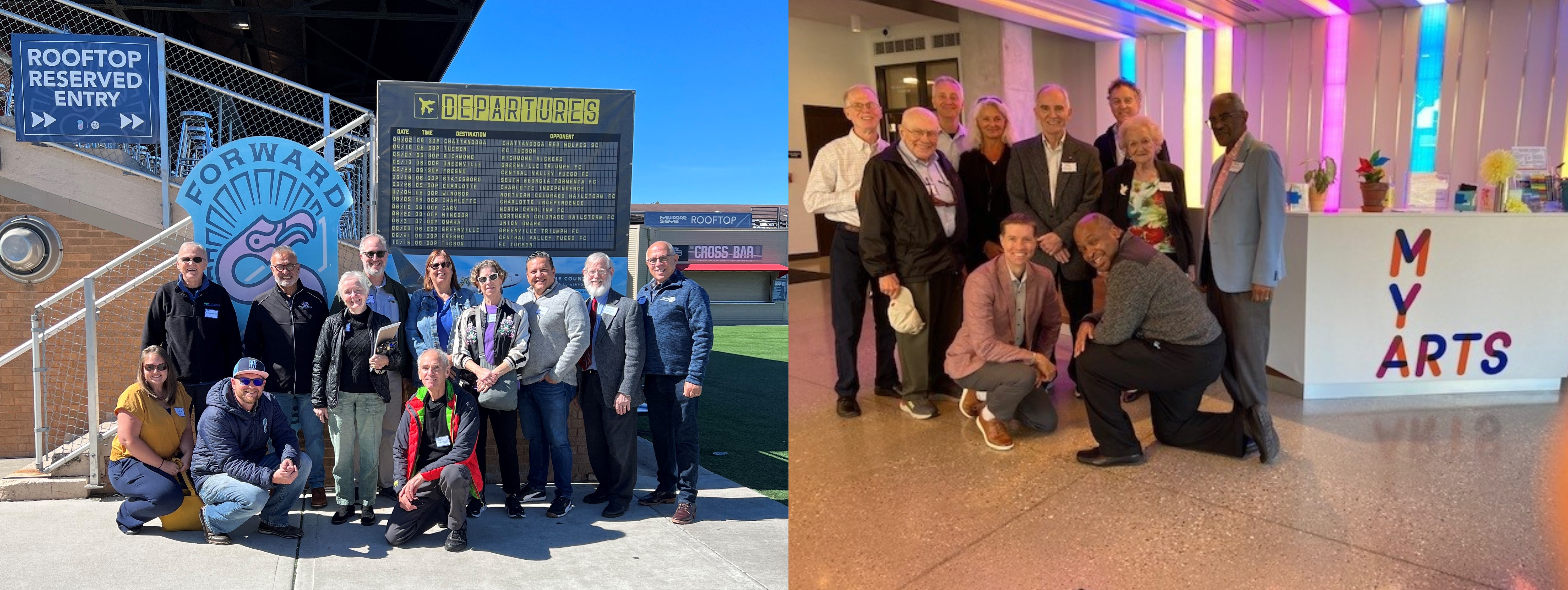
Photo 1: Breese Stevens Field; Photo 2: Children’s Theater of Madison at MYARTS

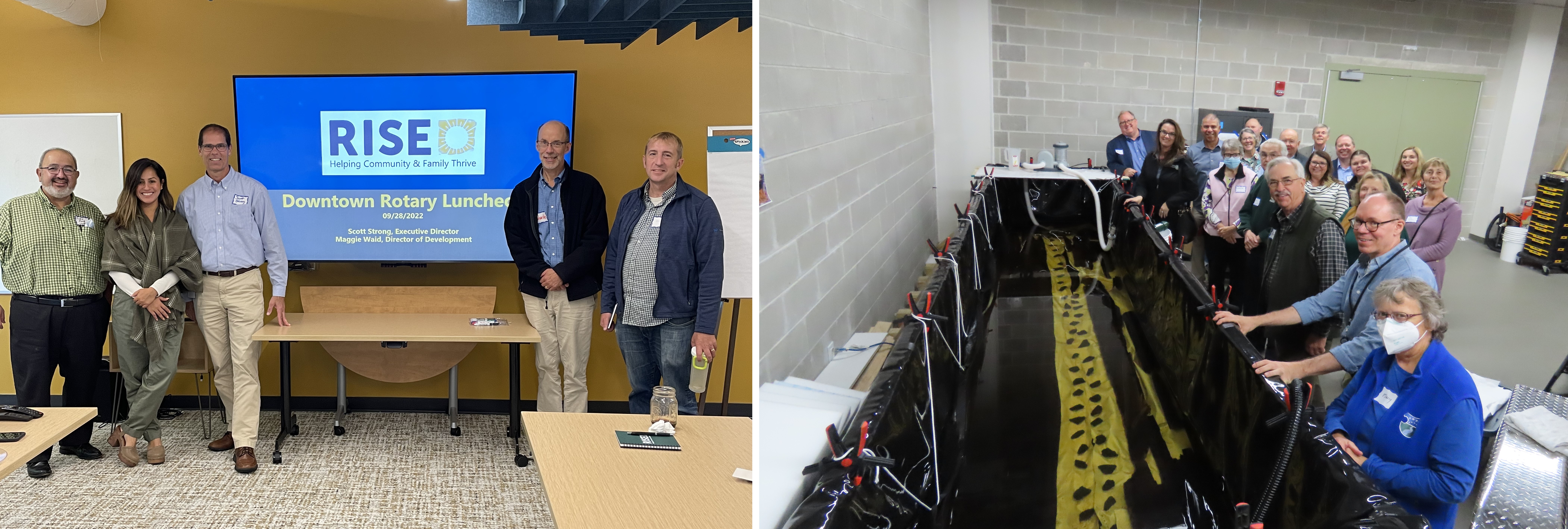
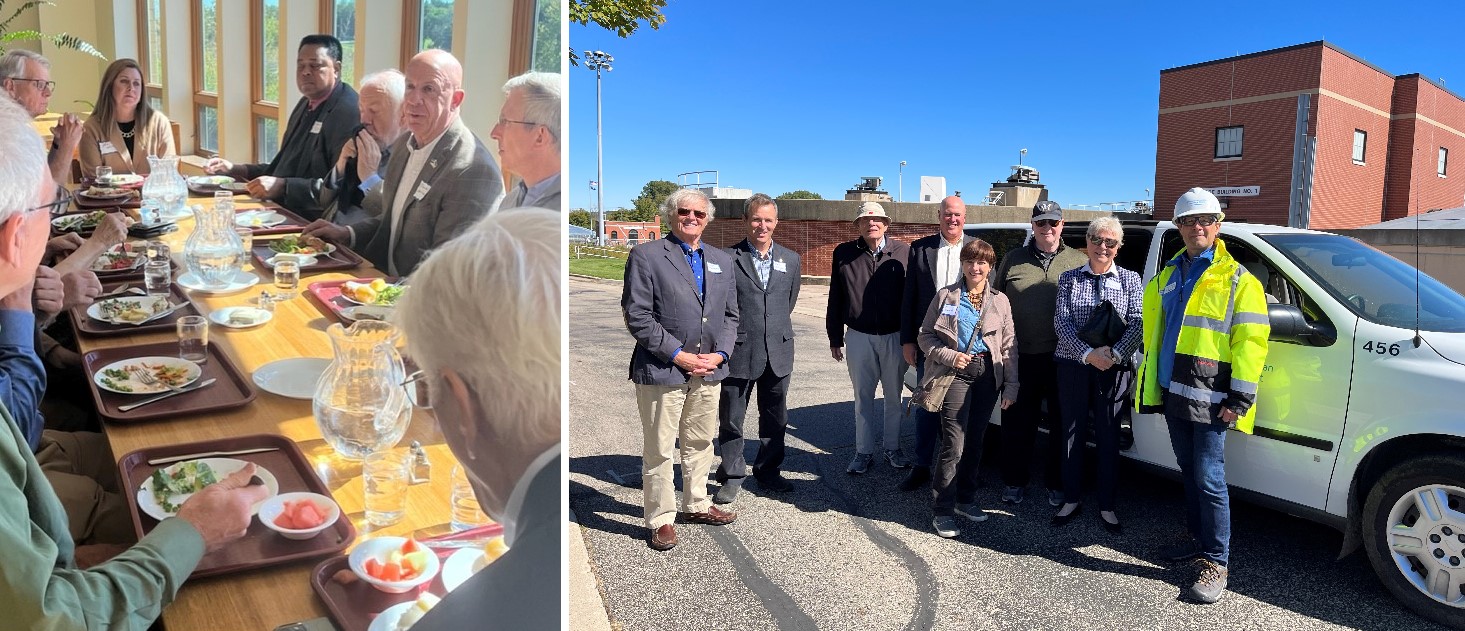
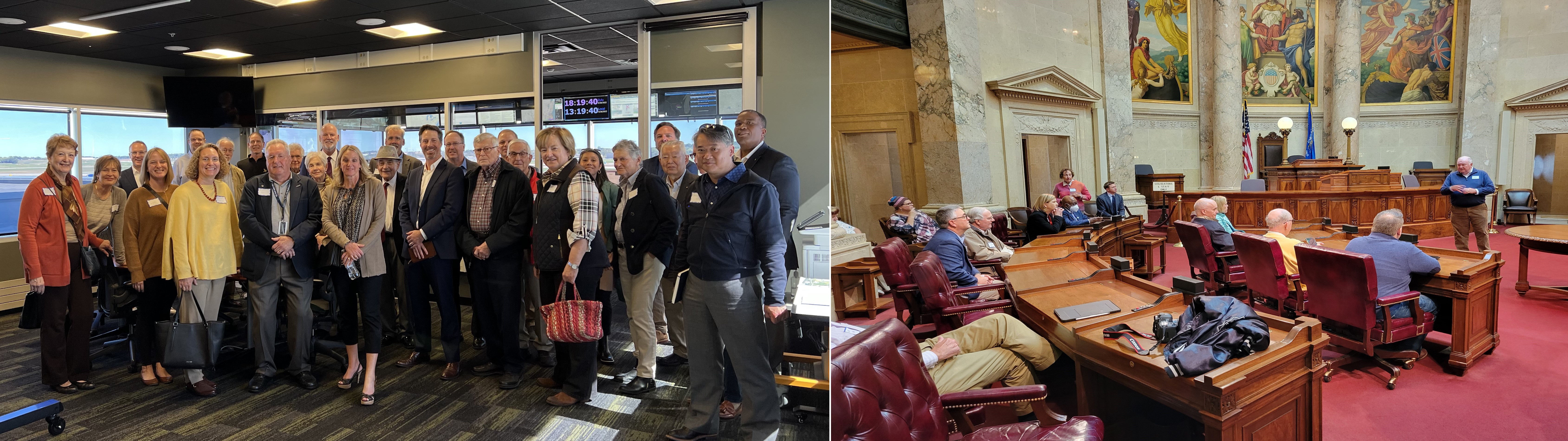
Instead of our regular meeting at the Park Hotel, members enjoyed an opportunity to get to know one another better in small groups as they toured and learned about various Madison area businesses.

Photo 1: RISE Wisconsin; Photo 2: WI Historical Society

The idea behind this annual luncheon goes back to the founding of the organization in 1905 when Paul Harris met with three friends to discuss an idea that he had been developing.  From this discussion came the concept of a business club to promote fellowship and, by rotating weekly meetings at their various places of business, become better acquainted with one another’s vocations.  This practice of rotating meetings is how Rotary got its name.

Photo 1: Holy Wisdom Monastery; Photo 2: Madison Metropolitan Sewerage District

In this spirit, club members and guests visited one of eight sites this week.  Our Vocational Day Sub-Committee wishes to thank the following hosts: 

  • Mark Clear – Breese Stevens Field
  • Allen Ebert – Children’s Theater of Madison at MYARTS
  • Jason Ilstrup – Dane County Airport
  • Bob Dinndorf & Charles McLimans – Holy Wisdom Monastery
  • Michael Mucha – Madison Metropolitan Sewerage District
  • Scott Strong – RISE Wisconsin
  • Christian Overland – WI Historical Society
  • Terry Anderson – WI State Senate


Photo 1: Dane County Airport; Photo 2: WI State Senate

Some comments from club members:

“It was an amazing tour! A continuation of excellent programs this year!”

“The presentation and tour were instructive, well organized and fascinating! Good food too!”

Visit our club’s Facebook and LinkedIn pages for more photos.

August 10: At the 50-Year Mark, the Dane County Farmers’ Market is Still Going Strong!

–submitted by Sharyn Alden

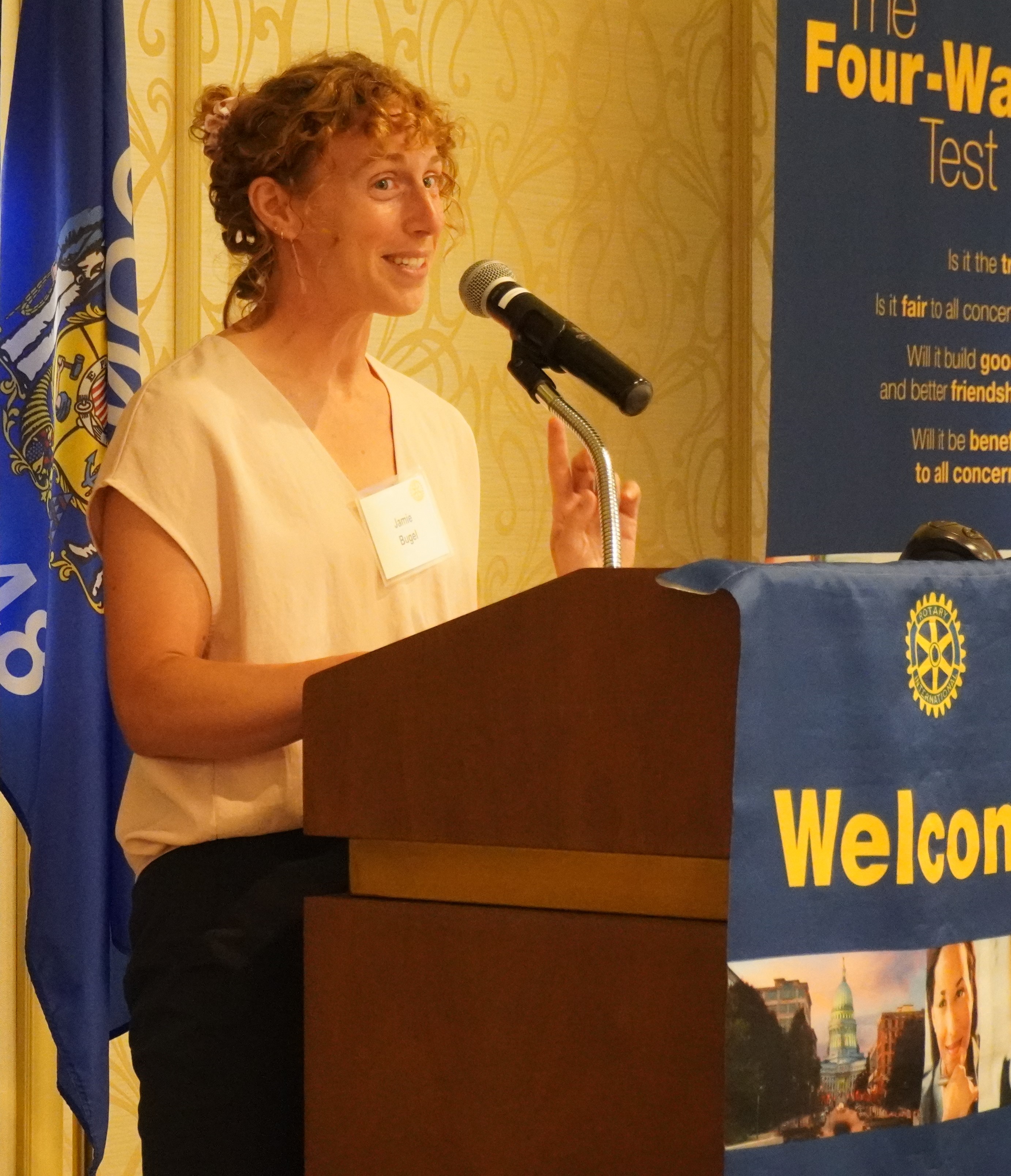
During the August 10 Rotary meeting, Market Manager Jamie Bugel provided an interesting history and updates about the iconic market on the Capitol Square.

When Jamie Bugel talked about the ‘Dane County Farmers’ Market, a fixture on the Capitol Square since 1972, she knew her stats.

“Fifty years ago the market started with 11 farmers, but by the next weekend 85 farmers showed up,” she said.

It didn’t take long for one of Madison’s best-kept secrets to start growing exponentially. Bugel pointed out last week there’s a major difference in how and where vendors are located on the Square compared to when the market first opened.

In its early years, vendors just showed up and took the best spots around the Square they could find. “Sometimes they would arrive at 4 in the morning and sleep on the Square to save a spot and secure the best foot traffic.”

Since 1991, though, that method of ‘finders keepers’ went away. The model since the early 90s the location is based on how many years a vendor has been part of the market.

Bugel said there are currently 230 members (farmers/vendors) of the Dane County Farmers’ Market, yet her staff is “just two and a half’ associates. On an average Saturday on the Square there are about 100 vendors offering products.”  When asked how a business can become a Farmers’ Market vendor she said, “You don’t have to milk the cows that supply milk for your cheese, but you do have to be the owner of the business you represent, and you must be active in the production of the food or goods you sell.”

As the number of vendors has grown, today’s Dane County Farmer’s Market is a unique repository of food and other products that are grown and made locally. Sometimes they are new to shoppers on the Square.

Bugel gave an example of some of the market’s unusual products. “Black currants, which are more common in Europe are now one of the products you might find when you’re at the market,” she said.

If you missed our meeting last week, you can watched it here: https://www.youtube.com/watch?v=Pds1WBDnjMY&t=3s.

July 20: The Power of a Grand Civic Vision: Monona Terrace

–submitted by Ellsworth Brown

Who knew that 115 years ago Madisonian John Olin, believing that Madison was a special place, engaged John Nolen, a preeminent city planner from Cambridge, Massachusetts, to produce a 1911 plan for Madison that became a preeminent example of the urban landscape movement?  And who knew that John Nolen,  author of projects for well over a dozen cities, created plans as well for the Tenney Park-Yahara River Parkway, the UW, and Wisconsin’s state park system?  And especially, who knew that the track of Nolen’s plans affirmed a four-generation vision for Madison that inspired the city, county, state, non-profit organizations and private funding to give us Monona Terrace and leave its traces in a Downtown 2000 Master Plan including 1.7 miles of Lake Monona waterfront, a six-fold increase in the tiff valuation since 1995, a new State Museum, the Overture Center, hotels that will soon double room numbers within two blocks of Monona Terrace, and an affirmed self-confidence in Madison’s common future? 

George Austin knew, and he shared it with us on Wednesday, July 20.  The exceptional attendance at Wednesday’s meeting honored his 23-year career with the city, including 15 years as Planning and Development Director and leader of the Monona Terrace project; and now the Wisconsin History Center’s project manager. 

This is one of Madison’s greatest stories, told to us by the successor to the visions that preceded him.

If you missed our meeting last week, you can watch it here: https://www.youtube.com/watch?v=YOPR2u7dYRQ&t=874s.