On February 2, Robert Beezat spoke to the Club about Character Based Management, offering keys to more productive and effective organizations. Robert talked about the critical job of managers and the importance that strong character plays in being a good, effective manager. If you reflect back on great managers you’ve had in your life, you’ll likely reflect on those who had integrity – meaning their actions reflected their words. Robert reminded us that although no one can be perfect, we can all be better. He encourages leaders to continuously evaluate themselves and invest time in improving their managerial skills.
On January 12, Shannon Barry, executive director of Domestic Abuse Intervention Service, spoke about how her organization adjusted to support survivors through the pandemic. This required new strategies just when their clients’ own situations were more dire. During the Covid lockdowns, victims were isolated with their batterers. DAIS provides an array of personal services and advocacy and has the only domestic violence shelter in Dane County. The volunteers who previously staffed the DAIS 24-hour helpline were let go, and all staff members had to help staff the line. With a Paycheck Protection Program loan, DAIS has purchased additional phones, improved its technology and made the workplace safer.
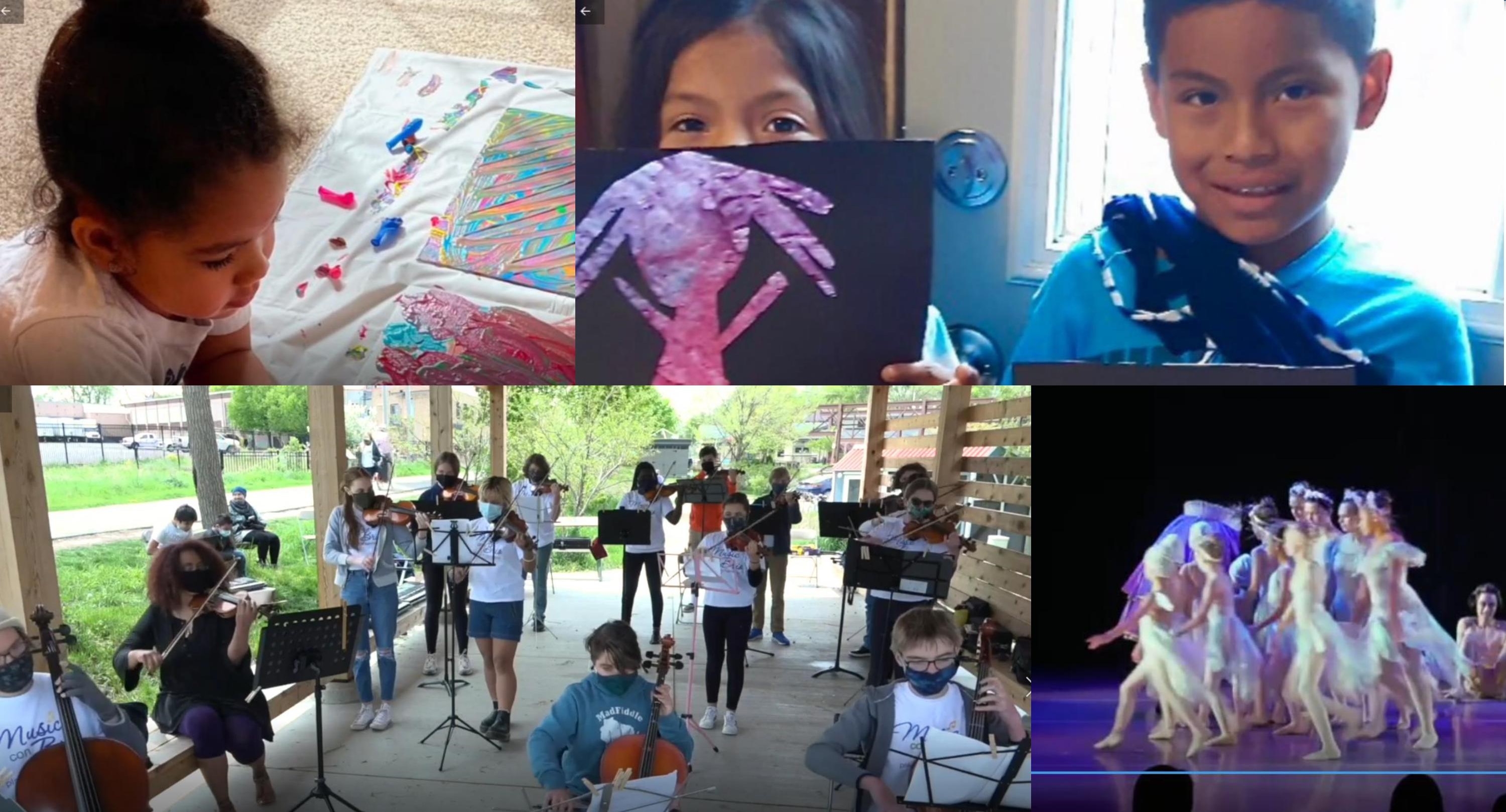
The program for our last meeting of the year was a video compilation of performances by five Madison-area youth arts organizations. Featured video montages were from:
Opera for the Young – A professional adult touring company that brings interactive performances to elementary schools throughout the Upper Midwest. Adult casts collaborate with music teachers and student choruses to perform specially created opera adaptations. They reach 70,000 children at around 200 schools. They showed snippets from Pirates of Penzance and The Magic Flute.
Little Picassos – A youth-focused art enrichment organization that serves low-income families and seeks to provide more equal access to art education and enrichment. The program provides a safe and nurturing environment to create and learn about art genres and history. It also seeks to highlight the achievements of Black, Latino and Indigenous artists.
Music Con Brio – Created to provide affordable, accessible, and high-quality music lessons to children regardless of a family’s ability to pay or transport their child to and from lessons. They produce an annual community concert series in collaboration with diverse Madison groups that perform a wide range of music from chamber music to jazz and funk.
Madison Scouts Drum and Bugle Corps – Founded in 1920, the Madison Scouts is the oldest youth music organization in the State of Wisconsin. The program reaches over 4,000 youth students through music education programs, leadership development programs, and events hosted in Wisconsin through performing ensembles, and the Madison Scouts. The Madison Scouts bring 165 youth from around the world including North America, Japan and Europe.
Madison Ballet – Reaches around 13,000 people per year through live ballet productions at the Overture Center, School of Madison Ballet, and outreach partnerships with other non-profits in the Madison area. The video they shared was of a performance at a state park near Delafield of A Midsummer Night’s Dream.
Thanks to Neil Fauerbach for doing the video editing to present this program at our meeting.
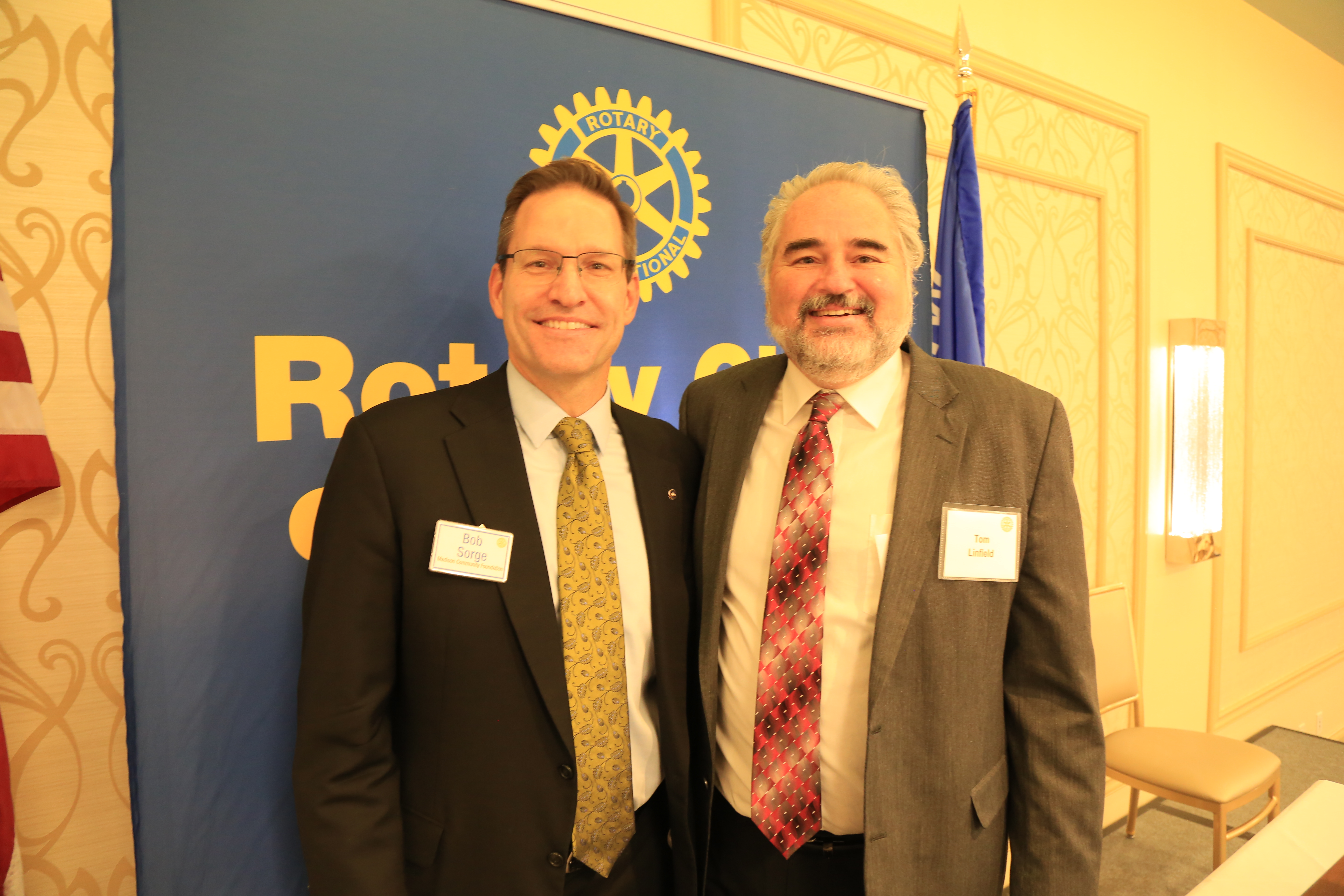
Club Member and Past President Bob Sorge (left) and Tom Linfield (right) of the Madison Community Foundation (MCF) gave an informative, eye opening and thought-provoking presentation on the tangible benefits of non-profit capital projects on the Madison area.
Bob gave background information on the MCF and the financial resources directed into the community. MCF distributed about $29M in grants in 2020 that were largely directed by individual fundholders. The MCF was also able to help other non-profits in the area leverage another $114M in resources from outside agencies for a total impact of $143M. In addition, to create an authoritative reference for making informed giving decisions, the MCF has spent the recent past developing capabilities for researching and evaluating area non-profits. The result has been the Greater Madison Nonprofit Directory which can be found on the MCF website. This is a resource open to all community members.
Tom covered the impact of capital campaigns on the Madison area by pointing out that buildings quickly become a community asset elevating the area surrounding the structure and becoming a center of development in the neighborhood. New buildings also transform the non-profit’s capacity for services and development of resources to benefit the community. Think about the impact that libraries, schools, health centers, community centers and affordable housing (to name a few) has on a given area. There are about 15 building campaigns a year. The financial impact is large not just for the physical buildout, but it also creates momentum within the non-profit for increased services, outreach, performance space, work efficiencies, and hosting/meeting space. Once complete, this allows the non-profit entity to leapfrog to the next level to the community it serves.
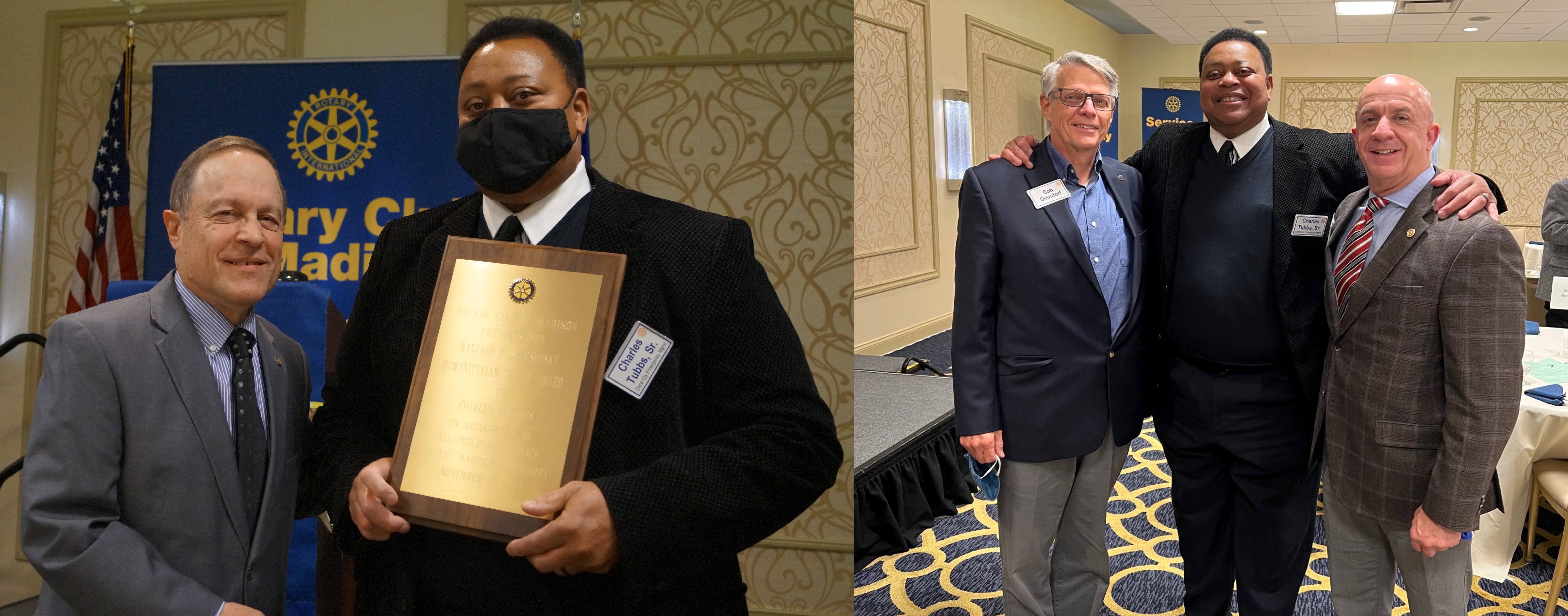
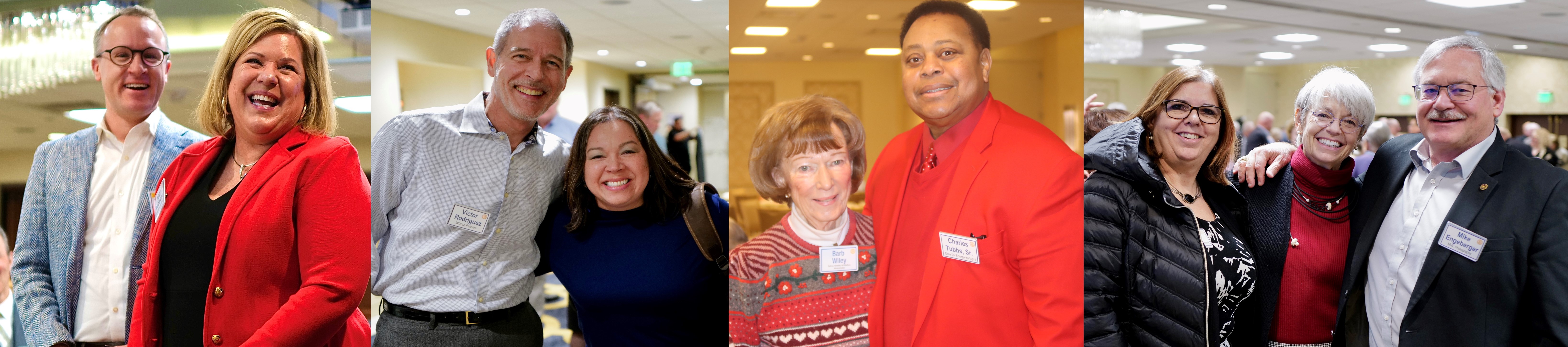
Top left: Steve Goldberg and Charles Tubbs; Top right: Bob Dinndorf, Charles Tubbs and Charles McLimans
Charles Tubbs is the Director of Dane County Emergency Management, but that’s just part of his story. Charles has been a model of humanitarian service and leadership throughout his entire career, leveraging his skills as a peace-maker, a problem solver, a healer, a mentor, an innovator and a bridge-builder way beyond his profession and across many communities. His lifelong career has been in the field of law enforcement and public safety, and he has approached all of his jobs in this field in much the same way Rabbi Swarsensky would have done.
For example, he has always insisted on treating incarcerated individuals with dignity and respect. That’s what the Rabbi would have done. He places a high priority on protecting the most vulnerable, marginalized citizens in our community and throughout the country. That’s what the Rabbi did. He uses his special talents and insight on mental health and addiction issues to lead local and national initiatives addressing those complex challenges. That’s what the Rabbi would have done.
Ten years ago, Charles placed himself at the center of the prolonged demonstration in and around the State Capitol building to provide a calming influence during a volatile, tense time — much as the Rabbi did during the Vietnam War protests in the sixties. And just like the Rabbi, he places the highest value on each person entrusted to his care. And today this man plays a key role in leading us through the pandemic.
He’s served in leadership roles with local human service organizations, including 100 Black Men of Madison, Journey Mental Health Center, Restoring Roots, Madison’s NAACP Chapter, and many others.
His nominators wrote: “Charles is engaged in the same fierce pursuit of justice and mercy that made Rabbi Swarsensky such a remarkable gift to our Rotary Club, to the community and to the world. Indeed he lives the very qualities that led our club to establish the Swarsensky Humanitarian Service Award.”
He’s the type of humanitarian Rabbi Swarsensky would have been proud to know; proud to work with; and proud to walk with. So it is in that spirit that the Rotary Club of Madison presents the 40th annual Manfred Swarsensky Humanitarian Service Award to Charles Tubbs.
Along with this award, a $2,500 grant is presented by the Madison Rotary Foundation to an agency of the recipient’s choice. Charles Tubbs has chosen Restoring Roots to receive this grant.
The Manfred E. Swarsensky Humanitarian Service Award was established in 1982 and identifies individuals who have, through their voluntary efforts, made a particularly outstanding contribution to the humanitarian service in the greater Madison community, in the tradition so well exemplified by the life of Rabbi Swarsensky. The award-winning documentary video, “A Portrait: Rabbi Manfred Swarsensky,” that was created and produced by Rotarian Dick Goldberg with assistance by Wisconsin Public Television, provides background on Manfred Swarsensky and can be viewed on YouTube, and the Rotary office also has a copy of the video for any member wishing to view it.
Justice Castaneda a man on a mission, delivered a distillation of his academic work with the passion and intensity of a community advocate. He cares deeply about Madison, a city in which he was raised and moved many times before concluding his teenage years. Castaneda knows intimately the challenges that caused and perpetuate the strictures of redlining, covenants and zoning. He concluded his presentation with a summary that gives this complex subject a frame:
Contemporary housing patterns are limited by historical and contemporary land use policies and practices that contribute significantly to housing volatility, absence of strong community ties, and family cohesiveness.
Volatility in housing tenure—sometimes 50% turnover a year—is an undercurrent in pathological associations with concentrated poverty. For example, affordability of land available for development in Madison is limited to former redline sections that are depressed and underserved, formerly redline sections of the city. Purchase of this lower-priced land for economic development often removes the availability of affordable housing.
Impediments in access to democratic processes and institutions are detrimental to collective efficacy.
The structure of local governments, their deliberate pace extending through two or three administrations, limits the use of long-term mitigation strategies.
Castaneda added that the absence in Madison of viable, efficient transportation routes between neighborhoods, services and sources of employment in historically redlined, covenant restricted areas continues to contribute to ongoing volatility of housing.



 Rotary Club of Madison, Wisconsin