Category Archives: Rotary Club of Madison Guest Speaker

November 15: A Story of Acceptance and Service

–submitted by Kevin Hoffman
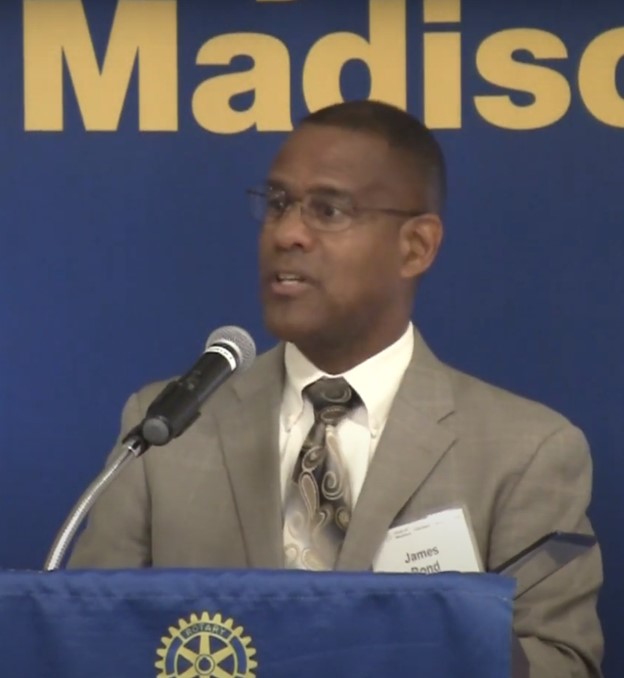
WDVA Secretary-Designee James Bond shared his journey of discovery and success from growing up in a single-parent family in a poor neighborhood on Madison’s east side to being appointed by Governor Tony Evers in January to lead the WDVA. As he grew up and became more exposed to people of diverse backgrounds, he realized that his circumstances and yearnings were different than many and a source of shame and embarrassment. He dreamed of a successful and “normal” life and set about achieving the life he wanted by joining the Marine Corps and returning to Madison to attend the University of Wisconsin.

Today, Secretary-Designee Bond has a proven track record of service to others and has remained true to himself. He is the first Black, openly LGBTQ leader of the WDVA. In addition, he has married and has adopted two boys from foster care to create the stable family he desired as a young person. He is proud that he can represent under-represented constituencies and be able to give back for the assistance his family needed when growing up. His role as leader at WDVA is well-suited in his mission to give back, serve others and inspire.

If you missed our meeting this week, you can watch it here: https://youtu.be/wHL85o3kZJY.
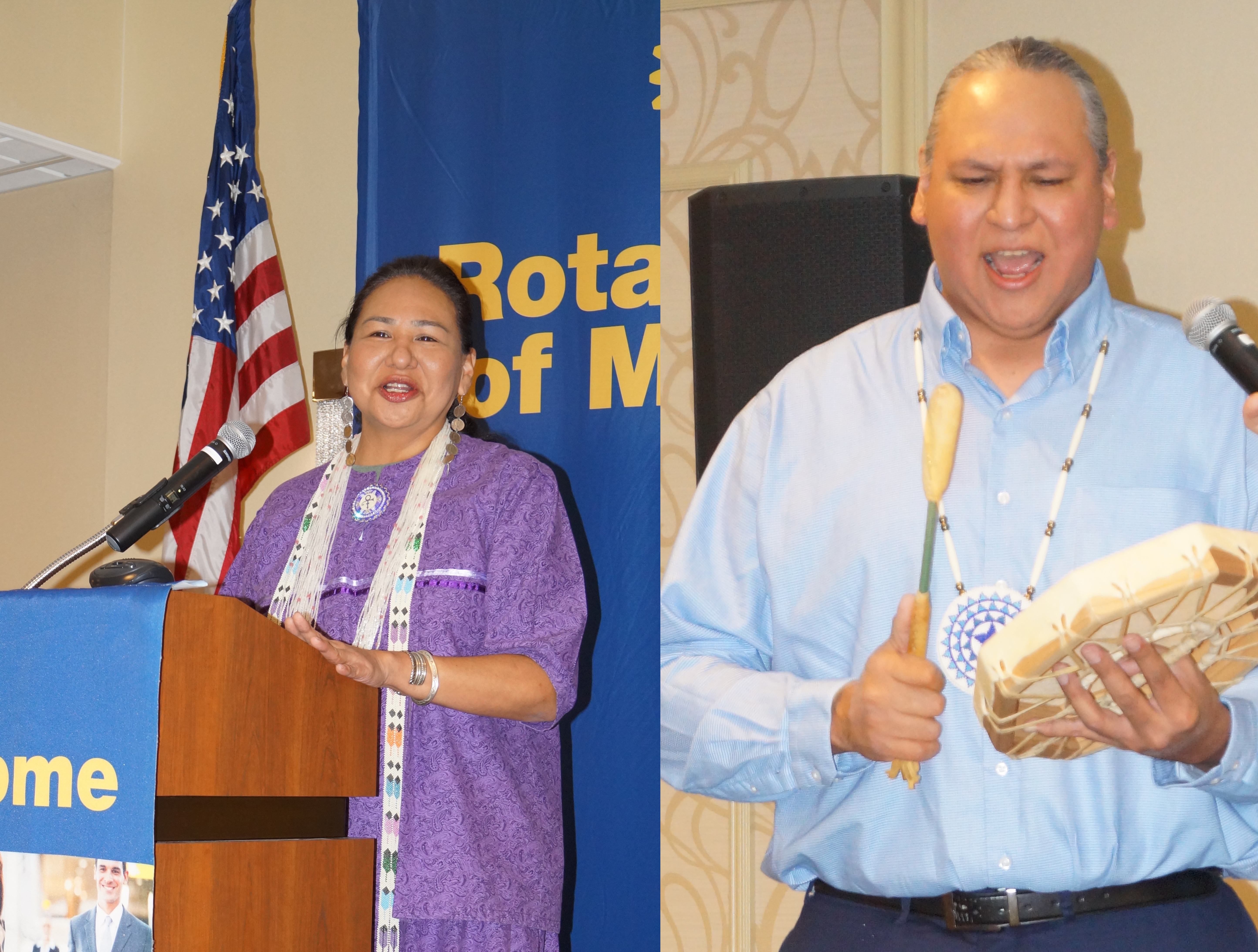
November 1: An Introduction to Native American Pow-Wows

–submitted by Bill Haight

Anne and Josh Thundercloud of the Ho-chunk Nation spoke on Native American pow-wows, which are social gatherings held across the country. A traditional pow-wow focuses on social dances and songs of the hosting tribe. The American flag is often displayed aside the tribe’s flag in honor of the esteem the Native Americans hold for military veterans. The public is always welcome.

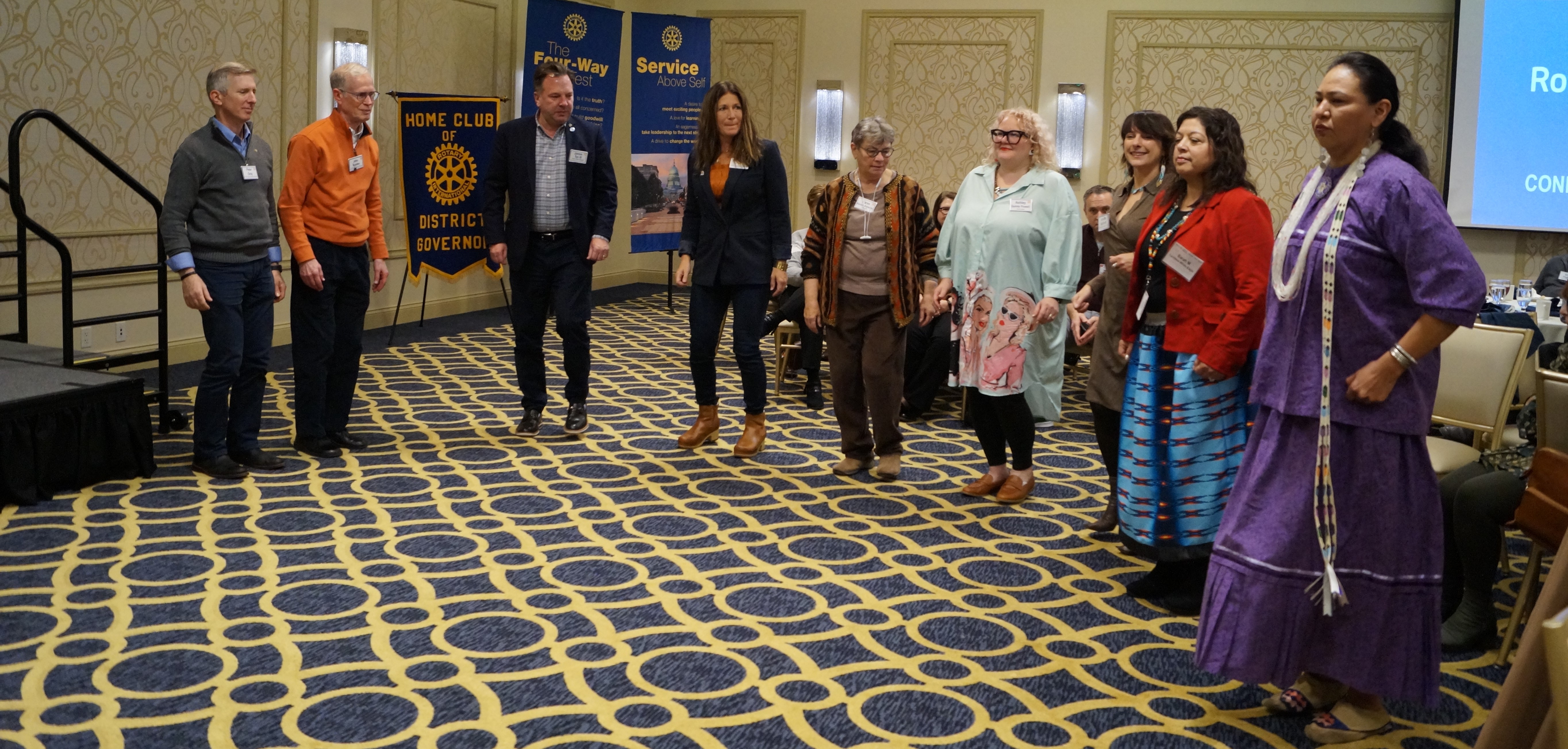
The brother and sister team ended the program with music and a dance, which soon had a couple dozen Rotarians joining the rhythm in a circle at the front of the room.

If you missed our meeting this week, you can watch the video here: https://youtu.be/7r2XOpDSMyY.

October 25: Lynch Talks Transportation from Mules to BRT

–submitted by Valerie Renk

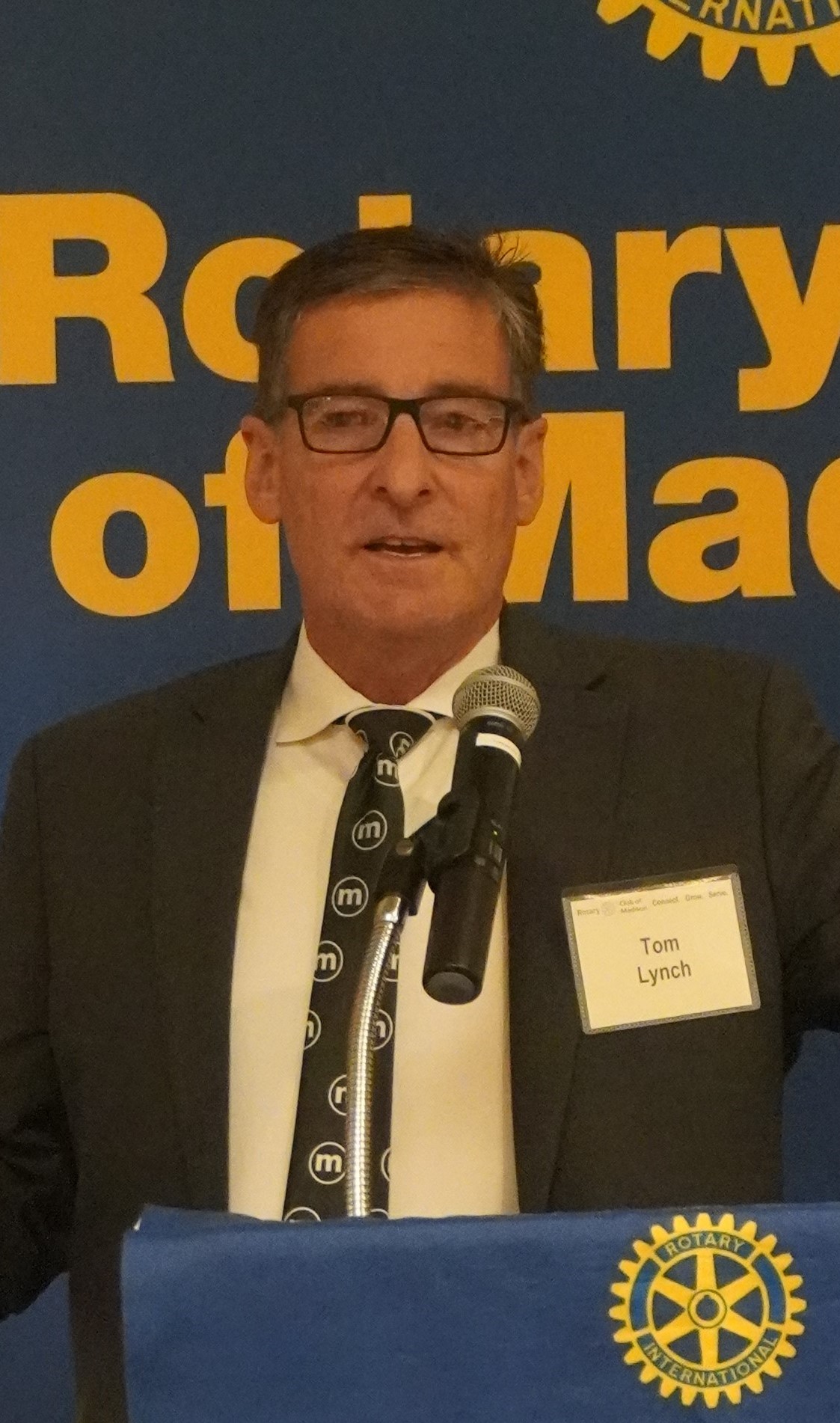
   Madison City Transportation Director Tom Lynch shared how transportation evolved in Madison at the October 25 Rotary meeting. Milestones:

  • 1869: Rail service begins; by 1899 Madison has 184 trains a day. State had to pass law limiting time streets can be blocked.
  • 1884:  Street cars begin; pulled by mules until 1892.
  • 1901: First modern cars appear. By 1916 cars outnumber horses in Madison.
  • 1949:  First beltline built (now W Broadway).
  • 1962: Passenger rail lost.
  • 1965: Cycling on state street/square outlawed.
  • 1968: Bus company leaves; city buys to maintain service

   Lynch shared that both public and private transportation are subsidized. Those first mule-pulled street cars offered 5 cent rides but cost the city 9 cents. Today’s Lake Street Ramp costs the city about $700/stall/year with revenue of $212, a subsidy gap of almost $500 per car. Streets are also 40% wider to accommodate parking, another cost covered by property taxes. 

   Three initiatives were reviewed by Lynch. Vision Zero is designed to safely and equitably prioritize traffic needs. Bus Rapid Transit (BRT) is finally happening. Modest means and BIPOC citizens are especially helped by new schedules and technology moving buses more quickly. Passenger Rail could bounce back from that 1961 loss if the city wins part of 102 billion available federal rail grants. Watch for November announcements and January public meetings.

If you missed our meeting this week, you can watch the video here:  https://youtu.be/5mE3TKrILW4.

October 18: Transformational Ideas Recognized

–submitted by Valerie Renk

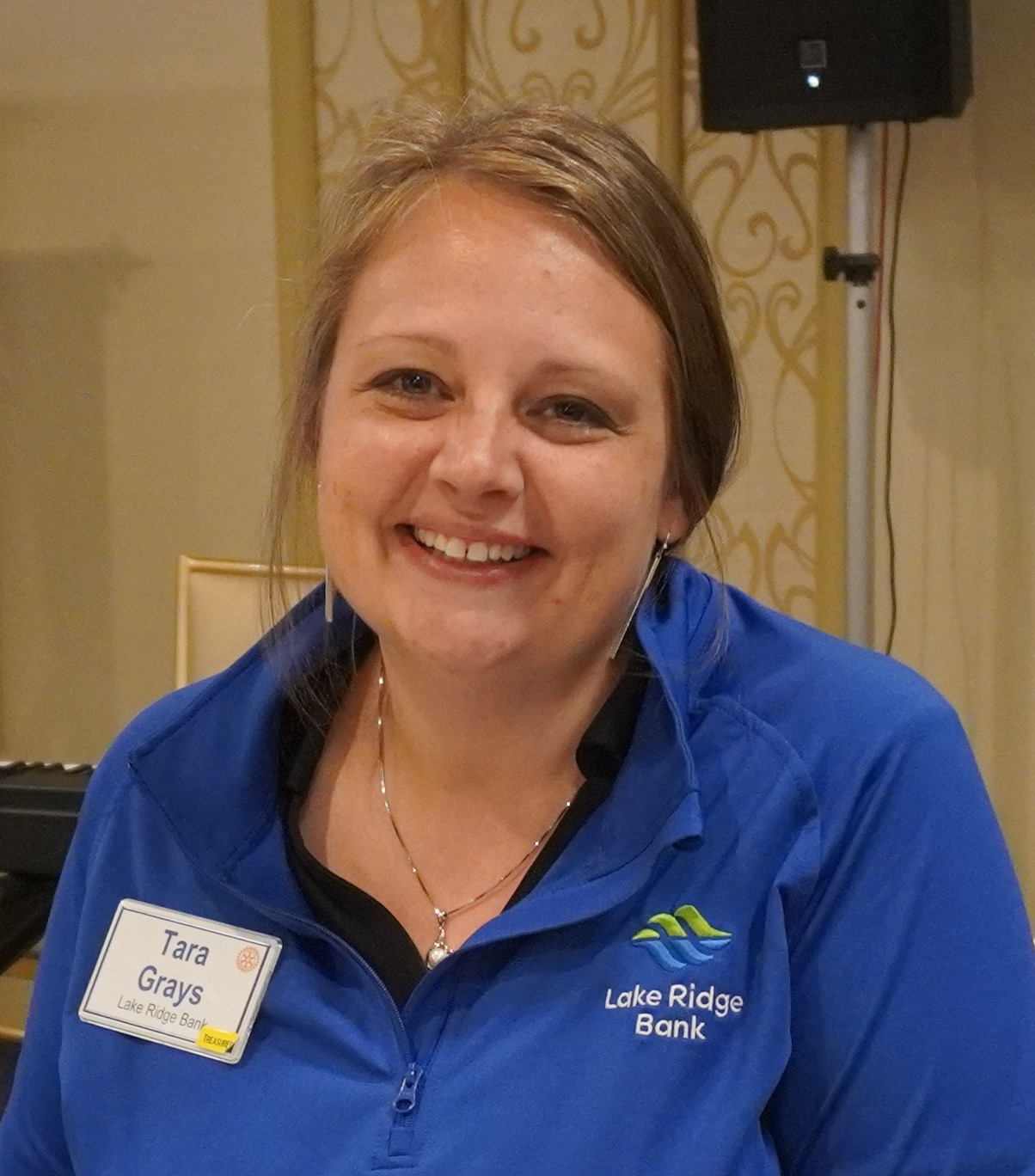
Rotarians heard from fellow Rotarian Tara Grays how several ideas are transforming Wisconsin businesses. Great ideas were celebrated by honoring nine recipients of Wisconsin Innovation Awards. 

Hello Loom, a small-scale loom, makes it easier for people to start a fiber arts hobby, and was the first honoree example. Hello Loom is the size of a cell phone and just as portable.

Another honoree, Elephas, images a live Cancer tumor to predict which immunotherapy the tumor will best respond to.

Nurse Disrupted helps close the nursing shortage gap by deploying virtual nursing sessions from current staff.  

Other honorees included:  Synthetaic, NECTO, Virtual Foundry, Community Clothes Closet, and Managecore. 

If you missed our meeting this week, you can watch the video here: https://youtu.be/a6BkBYDX0wc.

October 11: Sustaining American Democracy

–submitted by Ellsworth Brown

Dan Tokaji, Dean and Professor of Law at UW-Madison Law School, addressed sustaining and strengthening American democracy, focusing on election administration, restructuring elections, money and politics, and the big picture.

With humor, wisdom, a catalogue of issues, and some suggested solutions, Tokaji observed that a unique characteristic of American politics is the profound scale of local elections, inherently partisan, differing by state and often in conflict with federal election laws that, themselves, have changed significantly since the year 2000.

Redistricting, unlimited acceptance of private money, and the need for fidelity to truth further confound the election picture.

If you missed our meeting this week, you can watch it here: https://youtu.be/kmHObUPTDG8.

October 4: Application of Artificial Intelligence

–submitted by Rich Leffler

UW Professor Kaiping Chen explained last week that AI performs tasks that mimic human intelligence in order to help humans make decisions. There are visible applications, like Alexa or Siri; there are less visible applications such as a robot that can perform surgery; and there are invisible applications that can determine who gets medical care or whether a prisoner is released on bail or kept in jail. There are also deep fakes on the Internet intended to fool. To provide equity, decisions concerning applications should be made by a collective stewardship of the communities that may be affected, including the under-served and the under-resourced.

If you missed our meeting last week, you can watch it here:  https://youtu.be/Oz-YRR8ee2Y