
Category Archives: Rotary Club of Madison Guest Speaker

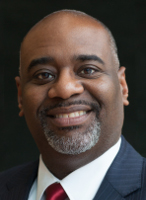
Rotarians Glean Zoom Meeting Tips from Author, Speaker, Darin Harris

 It was a mere nine months ago when rumblings of a pandemic were unfolding, and the word ‘zoom’ as a communications tool was all but foreign to many people.

 That was then, this is now. Today, Zoom connects people across the globe as a way to conduct business and enjoy other people’s company as Covid-19 has reshaped how the world works.

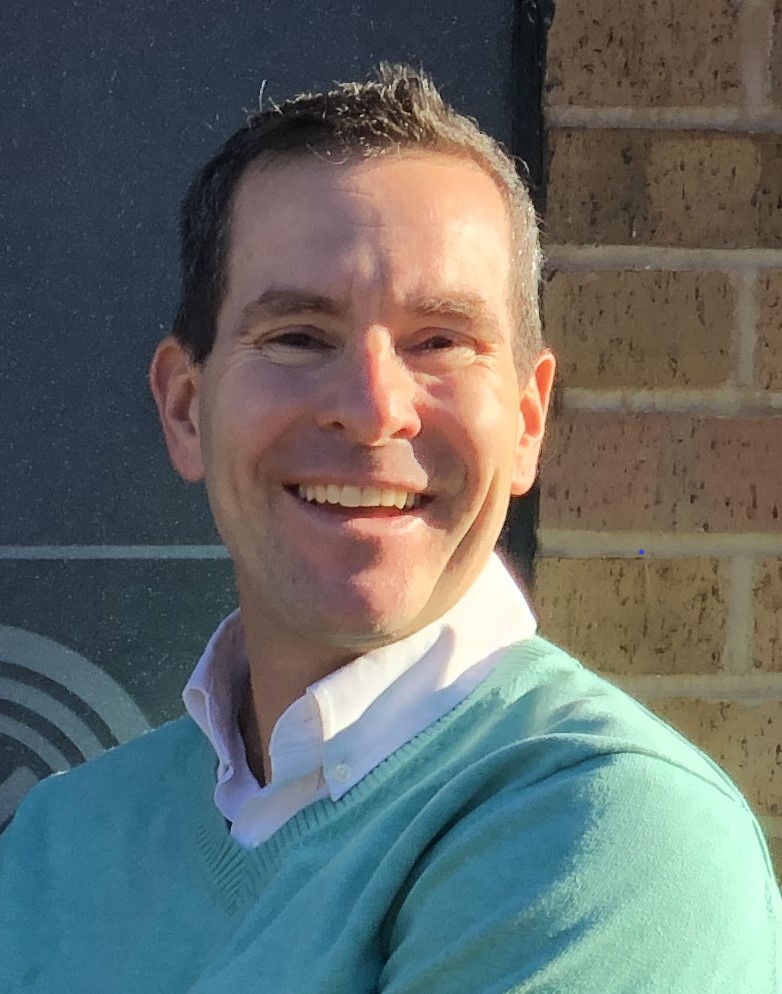
On October 28, Darin Harris presented “This is Not TV: Networking and Best Practices in Zoom” to over 80 Rotarians.

Harris joined Rotary in July of this year. He is co-founder of Living Giving Enterprises, an organizational and leadership development company which houses http://www.Journeyofcollaboration.com. He also guest lectures at UW-Madison, Edgewood College and Northland College in Ashland.

At this week’s Rotary presentation he showed some ways Zoom is used in addition to traditional face-to-face screen time. 

No matter what you use Zoom for – social meetups or for business the platform offers numerous opportunities for engagement. He emphasized this is, after all, interactive communication, not TV!

 Among some of the Zoom controls that can be useful is the survey option. In another example, he pointed out the Reactions tab if you want to show people how you’re feeling–use icons like clapping hands or a heart. Other features include CHAT, break-out groups, and Google Documents.

 In advance of dividing Rotarians into small break-out groups Harris explained, “Networking is all about getting to know each other better. Go into it with a ‘cup half-full’ attitude and then be an active listener.”

Harris then instructed participants to find something nearby that means something to them, then share it with the person on the other side of the screen.

In a break-out session with this author, Ellis Waller held up a model railroad car. On a shelf behind him he explained the 54-inch long miniature train was indicative of his interest in railroads, something he has enjoyed all his life.

 It was a superb example of how intriguing objects around you can jump-start fascinating Zoom conversations that will long be remembered.

Our thanks to fellow Rotarian Darin Harris for his timely presentation this week and to Sharyn Alden for preparing this review article.  If you missed our meeting this week, you can watch it here: https://youtu.be/cBiE_YpbA5s and

“Madison is an Outlier,” says Eileen Harrington, Chair of Madison’s Taskforce on Government Structure

Eileen Harrington, who spent her career in public service, recently served as Chair of Madison’s Taskforce on Government Structure (“TFOGS”). At the Rotary podium on October 21, she pointed out Madison’s city government needs restructuring. For example, fewer Madison residents are represented by local government compared to cities like Minneapolis and Austin.

She opened the program by asking, “What would it cost to have a full-time Common Council so that our city can thrive when we have excluded so many people?  We need all hands on deck.”

Harrington, who grew up in Madison, retired from the Senior Executive Service of the United States Government at the end of 2012 after a distinguished twenty-eight year career protecting American consumers and leading change and programs in two different federal agencies.  From 2010 through 2012 she served as Executive Director of the Federal Trade Commission, the senior career staff position at the FTC.  Before that, she served as Chief Operating Officer of the U.S. Small Business Administration. 

In 2004, she was awarded a Service to America Medal for her work creating the National Do Not Call Law and Registry. This is the same medal Anthony Fauci, M.D., Director of the National Institute of Allergy and Infectious Diseases, and member of the White House Coronavirus Task Force, recently received.

Madison’s Taskforce on Government Structure (seven residents and four alders) spent two years working together holding more than 90 meetings and making 42 recommendations.

Harrington said recommendations include the following:  alderpersons should serve full time, the number of alders be reduced from 20 to 10 and that they serve four years instead of two years.

Currently, the Madison Common Council is a city council that consists of 20 alderpersons elected from 20 wards who serve two-year terms.

Another issue with the current structure is the disjointed source of information. Harrington explained, there are 102 boards, committees and commissions connected to Madison government but no one place to find information.

She ended the program by saying, “We need more full-time engagement on city boards, commissions and committees.”    She also noted that there’s a lack of diversity in Madison’s city government and that is especially true with economic diversity.

Our thanks to Eileen Harrington for her presentation this week and to Sharyn Alden for preparing this review article. If you missed our meeting this week, you can watch it here:  https://youtu.be/-_j9_uB1dPQ.

Ethical Leaders in Government – What Can We Do?

This week’s presentation was by Lee Rasch, the Executive Director of LeaderEthics Wisconsin, a non-profit that promotes ethical leadership in elected officials and develops ideas and programs that enable individuals and groups to support achieving that goal. 

As we all are fully aware, America’s political divide has become a chasm in recent years, and digital media has played a critical role in developing and exacerbating the problem.  To counteract that trend, Rasch’s group emphasizes that ethical leadership involves truthfulness, transparency and a dedication to unification of the populace, not polarization. 

While most of us are often nonplussed when asked what each of us can do individually, he provided several examples of practical actions Rotarians can take to address this growing societal problem.   Some of these suggestions were: 1) make personal efforts to promote government transparency; 2) identify misinformation whenever it arises and follow websites that identify and rate media for factual accuracy and bias; 3) support those individuals who do ethical work, regardless of their political affiliation; 4) learn about and support organizations that are committed to ethical contributions to society (e.g. Rotary); 5) reach out to and support ethical next-generation leaders; and 6) most importantly, vote for candidates that will provide ethical leadership and let them know you expect them to meet that expectation. 

Given the fractionated state of our nation, we all have much to do in order to get us on a course leading to ethical leadership in government, but Rasch emphasized the time to start is now.  Hopefully, every Downtown Rotarian will begin by voting in the upcoming election and starting individual efforts that will lead to a more ethical and unified government for our country.

Our thanks to Lee Rasch for speaking to our club this week and to Linn Roth for preparing this review article. If you missed our meeting this week, you can watch it here:  https://youtu.be/hi9q0Ves07s.

We apologize for the technical difficulties experienced during this week’s speaker presentation when we were testing the use of Skype.  We realize now that the internet can be too unpredictable, so we will use a pre-recorded video for any future speaker who is unable to appear at our livestreamed meeting. 

Call for November 3 Referenda

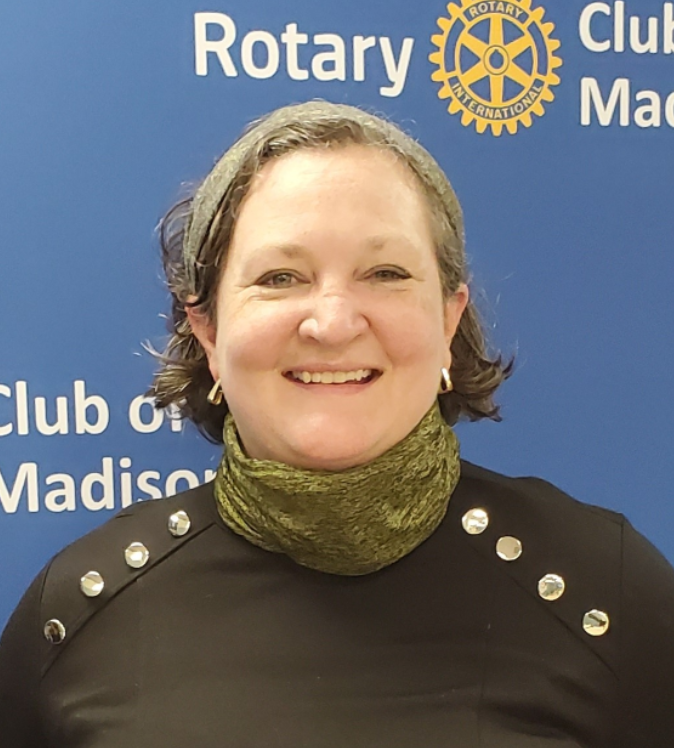
This week, Rotarians heard from new Madison Metropolitan School District Superintendent Dr. Carlton Jenkins that there is a critical need to pass referenda on the November 3 ballot. Board Chair Gloria Reyes was also in attendance. 
There are two referenda questions. The first seeks $33 million for operations such as full day 4K education; language classes, arts/music/science, and strategic equity projects.

The second questions seeks $317 million to replace aging facilities. This equates to $50/year for every $100,000 in home value. Overall, the referenda totals $350 million over all years.

If the referenda fails, Jenkins says they will continue to work with reciprocal accountability to seek the resources needed for the job.    

Jenkins said, “We look to collaborate with One City School and others.  We have reciprocal accountability, and we will build on those relationships.”  He reported over 100 MMSD science, technology, engineering and math (STEM) students are collaborating with Madison College and also looking at skilled trade and other pathways.  “Children are interested in many programs, he said.  “We want to give them the skillsets they need to have a choice of what they want to do in the future.”

Community collaboration plans from food distribution to college planning were also shared.

When asked if he would build on plans of the previous administration or make his own plans, Jenkins said he has read existing plans, will build on them and quoted Maya Angelou, “When we know better, we do better.”

Before coming back to MMSD, Jenkins previously served as Superintendent of Robbinsdale School District; prior to that served as Chief Academic Officer for the Atlanta Public School System. He earned his PhD and MS degrees from UW-Madison. He holds a BS degree from Mississippi Valley State.

If you would like to learn more about the referenda, visit: https://www.madison.k12.wi.us/2020-referenda-future-ready.

Our thanks to MMSD Superintendent Carlton Jenkins for speaking to our club this week.  We also thank Valerie Renk for preparing this review article, and, if you missed our meeting this week, you can watch it here:  https://youtu.be/CaLtyeAnWhg.

Pivoting for Change and Adaptation

In the Q&A following Chazen Director Amy Gilman’s presentation, she was asked if pandemic adjustments have had any benefits.   She replied that as the continuum suddenly ended, stillness enabled the Chazen—actually, all of us—to pivot from thoughts about how to return to normalcy and about how the museum can be more intentional about the future fulfillment of its mission.
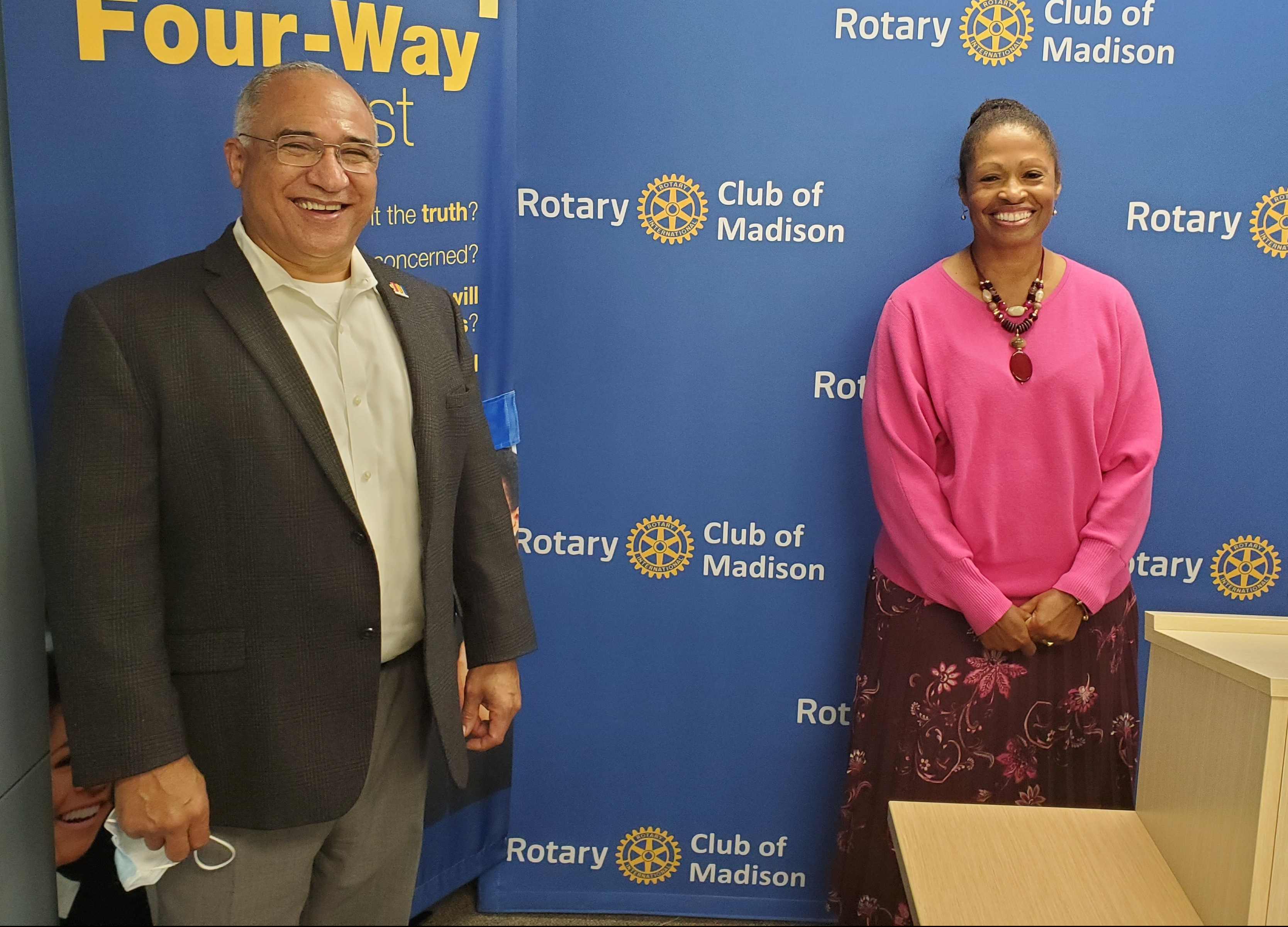
The Chazen, a UW-Madison museum, has turned its attention to digital/virtual communication, foregoing written communication; alignment of resources (and possible shortages of tax income) with programs; expanding attention to donor communications; creating virtual programming; development of collections; the rejuvenation of the original Chazen facility to more reflect change over time; and applying the measures of diversity and inclusiveness to all elements of its work.  In particular, she recommended to us Parkland: Birth of a Movement by David Cullen.

Two programs are illustrative:  First, virtual tours are in development in support of the UW Art History program, which was accustomed to using the museum’s galleries as part of its activities.  And the Chazen asked 100 Black Men of Madison what is needed by those whom they serve and that the museum could provide.  The result was 1,400 complete kits for two “making art” projects, complete with instructions, examples and necessary supplies . . . part of a significant museum pivot.

Extensive and significant responses to questions followed.  Several focused on the Alliance of American Museums’ forecast that 30% of the nation’s museums—not just art, and usually smaller and more fragile—might fold.  Gilman provided professionally accepted ethical standards for care of collections including their disposition to other museums with shared missions or use of funds from sales of collections for the care and growth of collections rather than for operations.

This was a thoughtful, introspective and constructive presentation informed by a continuing history of service to a variety of audiences—and complete with an invitation to virtual services now and to return to visits when possible.

Our thanks to Amy Gilman for her presentation this week and to Ellsworth Brown for preparing this review article.  If you missed our meeting this week, you can watch it here:  https://youtu.be/pEnHuVM5Hr8.

First African American Woman Made Her Own Road Map to Major General

Major General Marcia Anderson was introduced by a humble President Jorge, who noted the number of ranks between his of captain when he was in the Army, and major general.  But good introduction, carefully done, Jorge!

Major General Anderson’s presentation was complete, very clear, extremely well-presented.  It discussed her personal path to success through self-motivation and discovery, and crisis management as practiced by the Army.

Anderson began her career as an attorney and has served in the National Guard and the Army, with which she stayed because she thought that, as an African American woman, she could provide a different and necessary perspective.  Upon joining she discovered an organization of tradition and hierarchy and that it was largely a men’s organization. 

Anderson also found that there were no “road maps” to becoming an officer.  The methods she employed were exceptional in their fundamental nature, applicable not only to her military experience, but also to those in civilian organizations:  hard work, competence (essential in the face of dangerous military practices), the power of team support, tactical meeting skills, a focus on communications and the needs of people above and below her, curiosity, giving credit where it is due, telling the truth, and never compromising one’s ethical standards.  She offered personal examples.

Crisis management shifted the presentation to military practices.  These too can apply to civilian planning:  Training opportunities—in the military, up to 50% of the job—followed by practice, and then execution.  Planning is, Anderson posited, a collaborative process that should involve all who will be active in the plan, top to bottom.  A good plan is thorough but not overly elaborate, since virtually all plans will change in the face of execution.

The presentation was on the one hand complete and clear.  On the other hand, it spoke of profoundly simple basic tenets.  Her formula would work in anyone’s world and reminds me of Albert Einstein’s belief that “Everything should be as simple as possible, and no simpler.”  

Our thanks to Major General Marcia Anderson for her presentation this week and to Ellsworth Brown for preparing this review article.  If you missed our meeting this week, you can watch it here:  https://youtu.be/eLzVjeWXEYs.