
submitted by Carole Trone
 Founding artistic director Jennifer Uphoff Gray of Madison’s Forward Theater Company attributes their growth and success to the strong community involvement, much like the Rotarians gathered to hear about Forward Theater’s first decade. This has been a successful span, but their success was by no means a given in the early days. Gray noted the precarious economic climate in their founding days and how it confirmed their abiding commitment to a sustainable financial model for the theater and especially for the artists they employ.
“Mission-driven growth” for Forward has focused on four key priorities: support for local artists; arts advocacy; audience engagement; and community impact. Ninety-five percent of the hundred staff hired each season are from south central Wisconsin and are paid at least a living wage, inspiring standards for the broader theater community. This core priority strengthens the community and also the artists’ personal investment in it. These ambitious goals have a solid business model behind it, with a growing annual budget that has always operated in the black. Forward Theater incorporates multiple strategies to encourage dialogue, and their post-performance talkbacks have proven to be a favorite part of the audience experience. Finally, Forward Theater has woven multiple partnerships with area organizations around key themes in their plays. This has deepened the engagement among audiences and community members through collaborative outreach events, author talks, and even fundraising.
Gray promised more growth and partnerships to come as Forward Theater surges into its second decade of successful productions: “Onward, Upward, and Forward!”
If you missed our meeting this week, you can watch the video here.
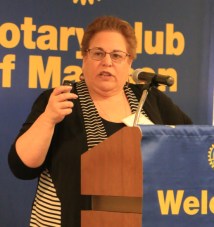 The recent claim by Chinese scientist He Jianjui that he successfully altered the DNA of twin girls to build up the twins’ HIV resistance served as a backdrop of the Rotary Club of Madison’s weekly meeting, whose guest speaker Dr. Alta Charo, a UW-Madison professor of law and bioethics, offered as a broad outline of ethical considerations concerning Human Genome Editing.
 The 1960s were a tumultuous decade in the United States and certainly in Madison. Club member Stu Levitan drew on his new book “Madison in the Sixties” to illustrate his talk to the Club on November 7th. The book, whose genesis was 34,000 articles from Madison newspapers of the decade reviewed by Stu by digital scanning (followed by more in depth research) focuses on five major issues of the time –civil rights, University of Wisconsin, urban renewal, Monona Terrace and student unrest – but Stu’s remarks to the Club dealt with the involvement of Club members in the 1960s, not only appropriate to the audience but also a natural theme given the prominence of so many Rotarians in the life of Madison then, as always. Space does not allow for more than a few examples of the highlights of the presentation so for a full listing one will just have to buy the book!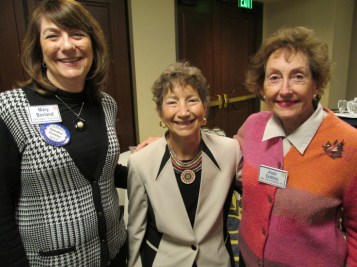


 Rotary Club of Madison, Wisconsin