Category Archives: Rotary Club of Madison

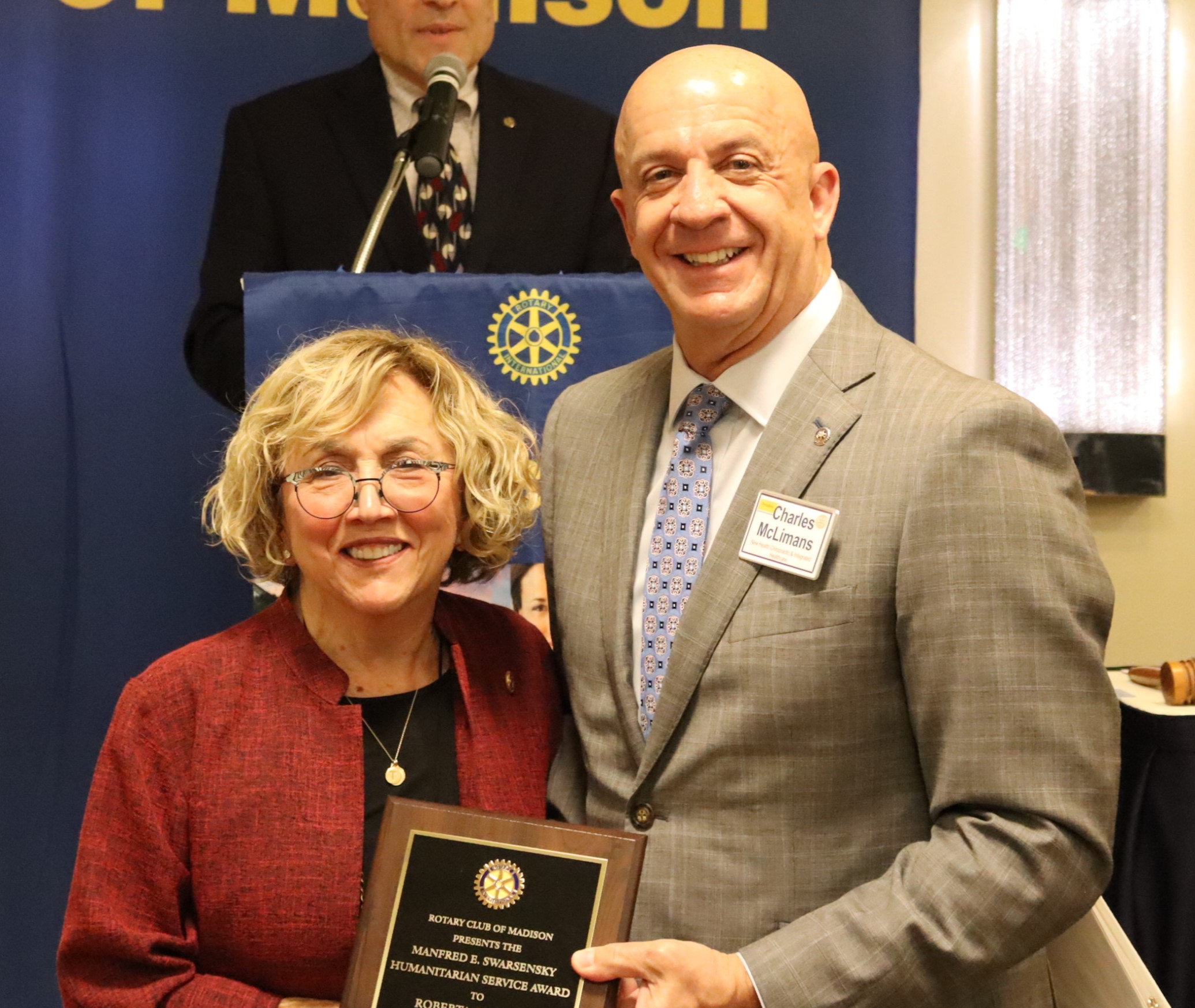
November 8: Club Member Roberta Gassman Receives 2023 Manfred Swarsensky Humanitarian Service Award

For decades, Roberta Gassman has performed volunteer community leadership work and public service at the highest levels of local, state and federal government well beyond what was required by her paid employment.  Since her youth, she has been motivated by the values of the civil rights movement, her own family’s personal experience with religious persecution and the principles of her Jewish faith – seek justice, heal the world, do good deeds.  As Allan Koritzinsky, nominator of Roberta Gassman for this award, says, “In multiple ways, she has demonstrated a commitment to opening doors for all, whatever their color, religion, sex or income level and building bridges, working across the aisle, furthering public/private partnerships and advocating for social justice and against intolerance.”

Within the Madison area, she has served on many boards, often in leadership roles, including for major civic organizations such as the Madison Community Foundation, United Way of Dane County, Edgewood College, Overture Center, Madison Equal Opportunities Commission, Temple Beth El, Jewish Federation of Madison, UW-Madison School of Social Work Board of Visitors, Downtown Madison, Inc., Madison Museum of Contemporary Art, Madison Repertory Theatre, Chancellor Becky Blank’s task force to address history of bias at UW; and, the Rotary Club of Madison where she is a Paul Harris Fellow and has chaired multiple major committees including Fund Drive, Program, Public Relations, Classification and Swarsensky Humanitarian Service Award.

Gassman has won numerous honors over the years and has been active in mentoring young women.

She served in Washington, D.C., in President Barack Obama’s administration at the U.S. Department of Labor as Deputy Assistant Secretary for Employment and Training; in Governor Jim Doyle’s Cabinet as Wisconsin’s longest serving Labor Secretary; as Governor Tony Earl’s Policy Advisor on Employment and Women’s Issues; as a top aide to a Madison mayor & a Dane County Executive; as Senior Vice-President of Marketing and Community Investment at Home Savings Bank; and, as Senior Fellow at the UW-Madison School of Social Work teaching macro practice and public policy to advanced graduate students from multiple departments.

Gassman and her husband Lester Pines have two grown daughters and three grandchildren.

Congratulations to Roberta Gassman on receiving this year’s Manfred E. Swarsensky Humanitarian Service Award.

If you missed our meeting this week, you can watch it here: https://www.youtube.com/watch?v=K8cYj7v1awc.

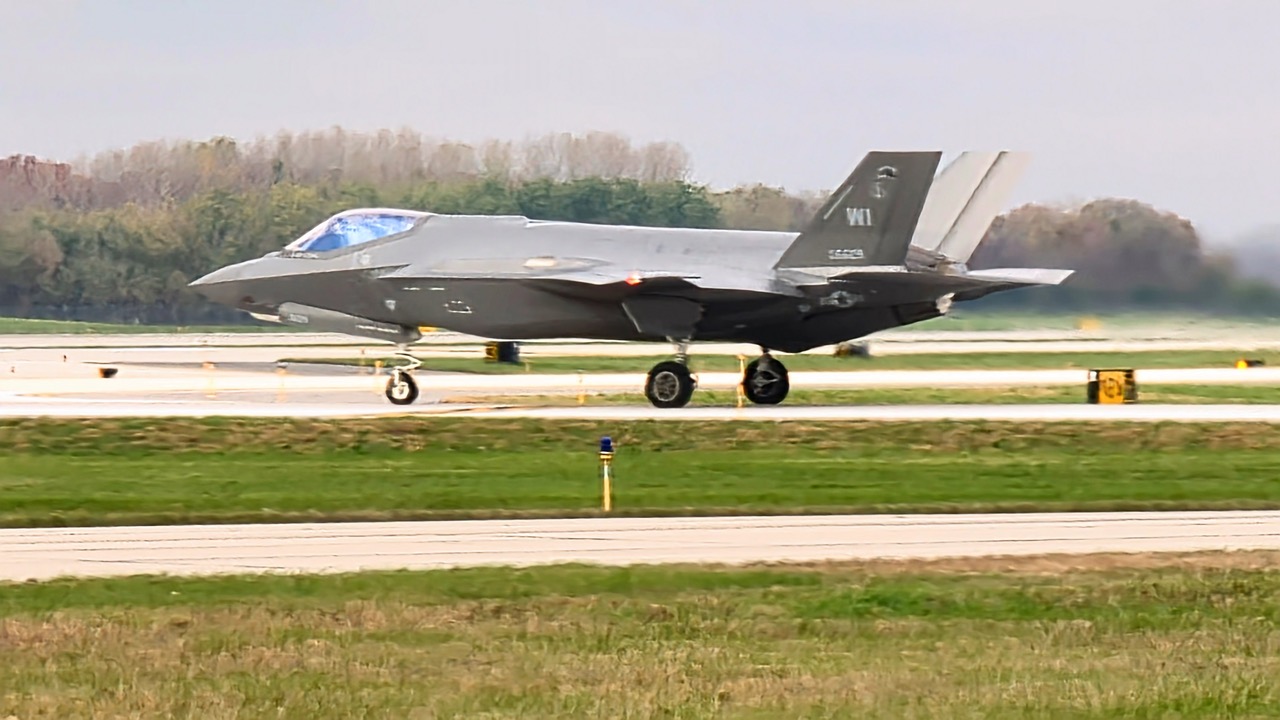
ROTARY VETERANS FELLOWSHIP: AIR NATIONAL GUARD TOUR

–submitted by Rob Stroud; photos by Rob Stroud and Rhonda Adams

On Tuesday, October 31, our Veterans Fellowship met at noon for a tour of the Wisconsin Air National Guard 115th Fighter Wing.  We were greeted by Lt. Col Ben Gerds, who has been a guard member since finishing high school, more than 30 years ago.  Although he joined the unit as an enlisted airman and worked as a mechanic on the unit’s planes to help pay for his college education, once he finished college, he applied for and was accepted to fighter pilot training and has flown for the 115th ever since.  He was about as thoughtful, personable, and knowledgeable of a guide as one could be. 

Ben covered the history and the mission of the 115th Fighter Wing, from its creation to today, with the newest, fifth generation F-35 A fighter jets.  We visited the hanger, where we were able to get close to one these amazing $148 million aircrafts.  At the moment, the 115th has only six of these aircraft, but they expect to have twenty of them once production catches up with demand.  We learned of the science fiction-like features of the aircraft, with electronic systems that allow the pilot and the plane to carry out a wide range of missions in every possible condition. Unlike the F-16 fighters that these planes replace, the F-35 is extremely stealthy, with fuel, weapons, radar, cameras, and ammunition all being within the hull and with the hull designed so that no radar signal is bounded back from the sending radar.

After viewing the aircraft, we were shown the pilot’s equipment, including an incredible helmet ($500,000 each!) that shows virtually all of the information that the pilot needs displayed on the inside of his visor.  The F-35 has cameras mounted in a number of places on the plane and, with computer technology, the pilot has a seamless camera view of his entire surroundings (including below and behind the plane) that can be displayed on the visor and changed in response to eye movements.  The visor can also display systems information at the touch of a button. 

We observed four pilots (the wing currently has 10 pilots certified on the F-35) being briefed for their afternoon mission and then Ben took us to a spot close to the runway where we watched the four planes take off at 20 second intervals. 

Many thanks to our Fellowship co-chairs, Chris Kolakowski, who gave us a contact person at the Air National Guard and Rhonda Adams, who arranged for this wonderful outing  and thanks, too, to all of the personnel we met at the Air National Guard, who were courteous, professional and friendly. 

If you are curious about how are national defense dollars are being spent, this would be a great place to start.  I am confident that those of us who attended are all in agreement that the visit was even better than we expected, thanks to the men and women of the Wisconsin Air National Guard, 115th Fighter Wing.

November 1: An Introduction to Native American Pow-Wows

–submitted by Bill Haight

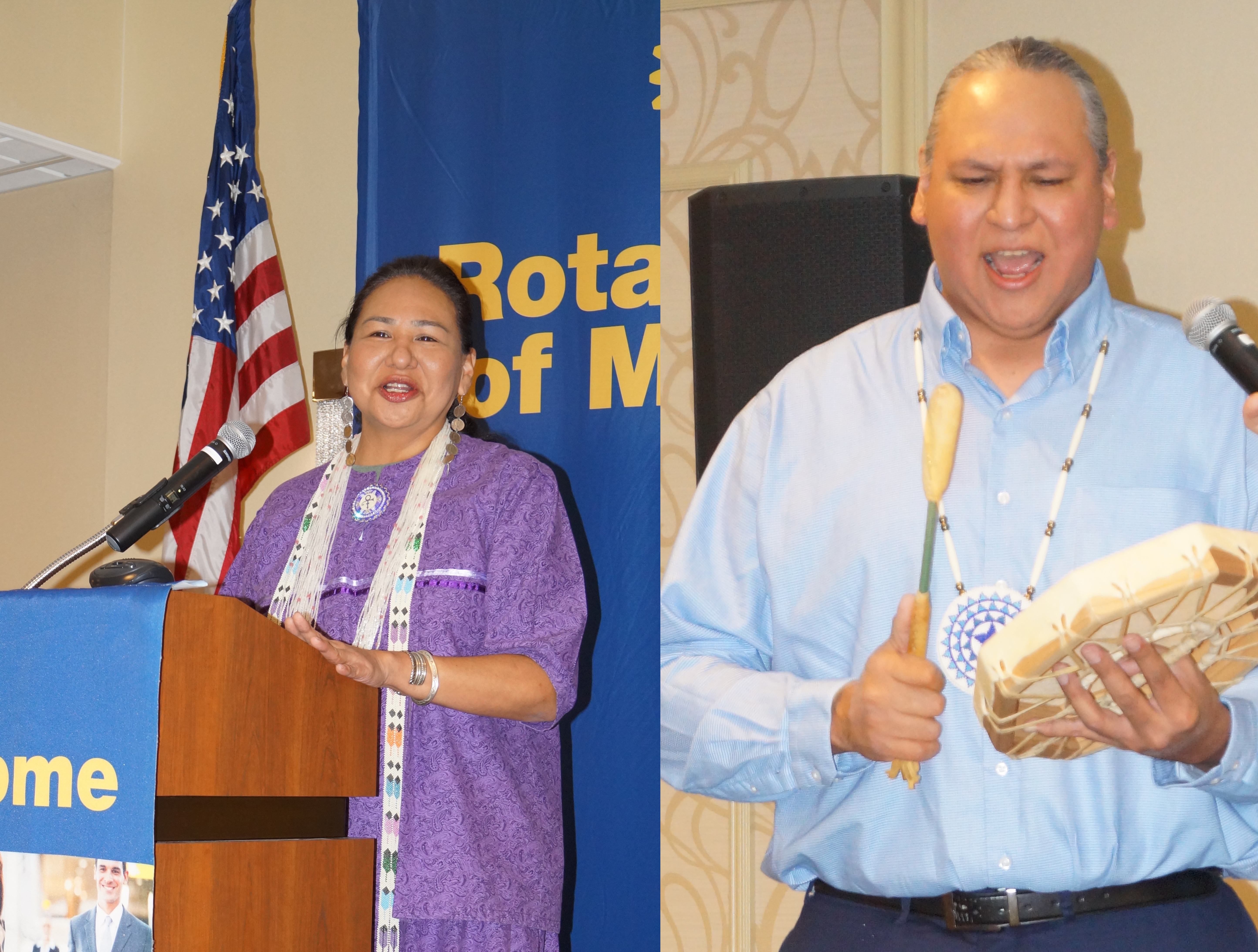
Anne and Josh Thundercloud of the Ho-chunk Nation spoke on Native American pow-wows, which are social gatherings held across the country. A traditional pow-wow focuses on social dances and songs of the hosting tribe. The American flag is often displayed aside the tribe’s flag in honor of the esteem the Native Americans hold for military veterans. The public is always welcome.

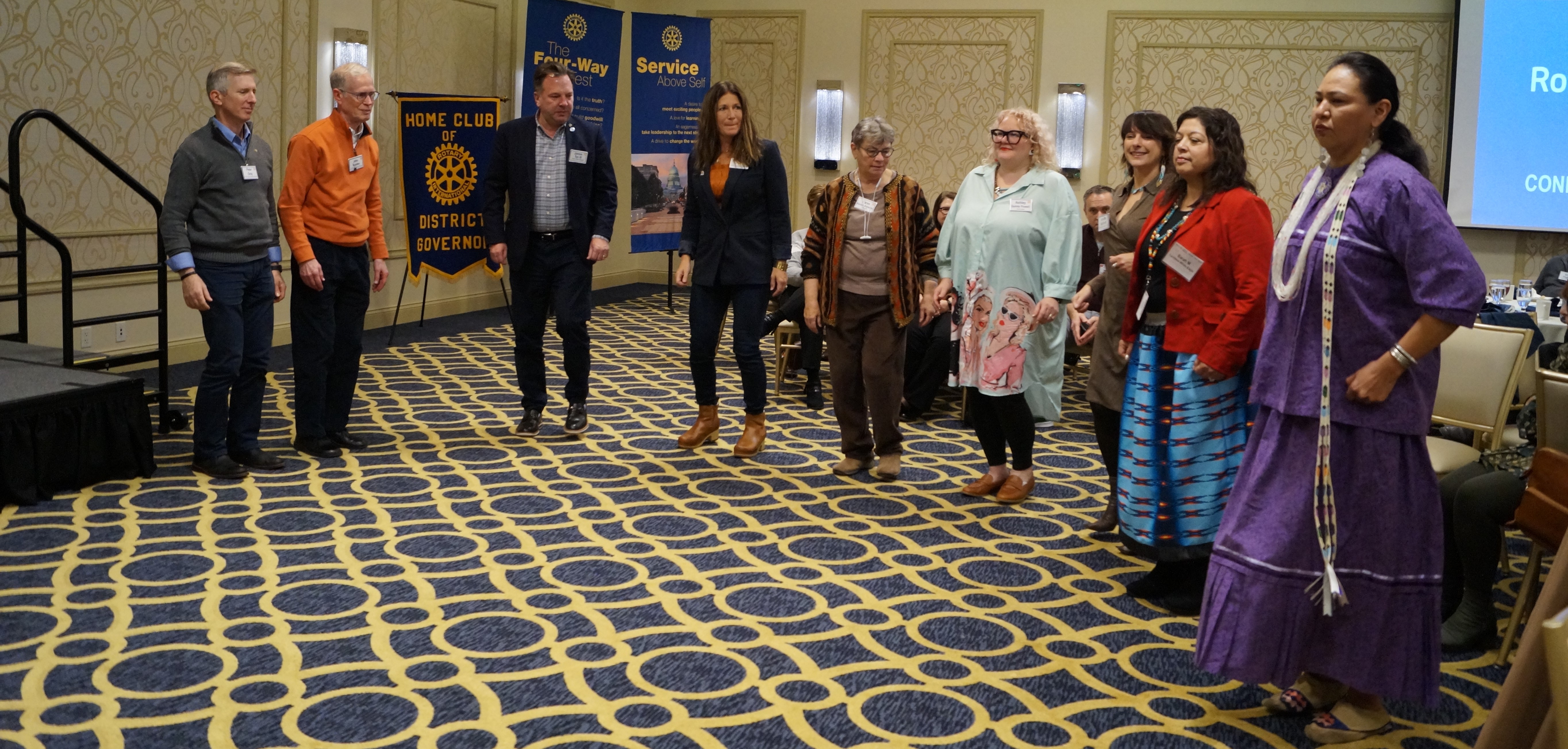
The brother and sister team ended the program with music and a dance, which soon had a couple dozen Rotarians joining the rhythm in a circle at the front of the room.

If you missed our meeting this week, you can watch the video here: https://youtu.be/7r2XOpDSMyY.

October 18: Transformational Ideas Recognized

–submitted by Valerie Renk

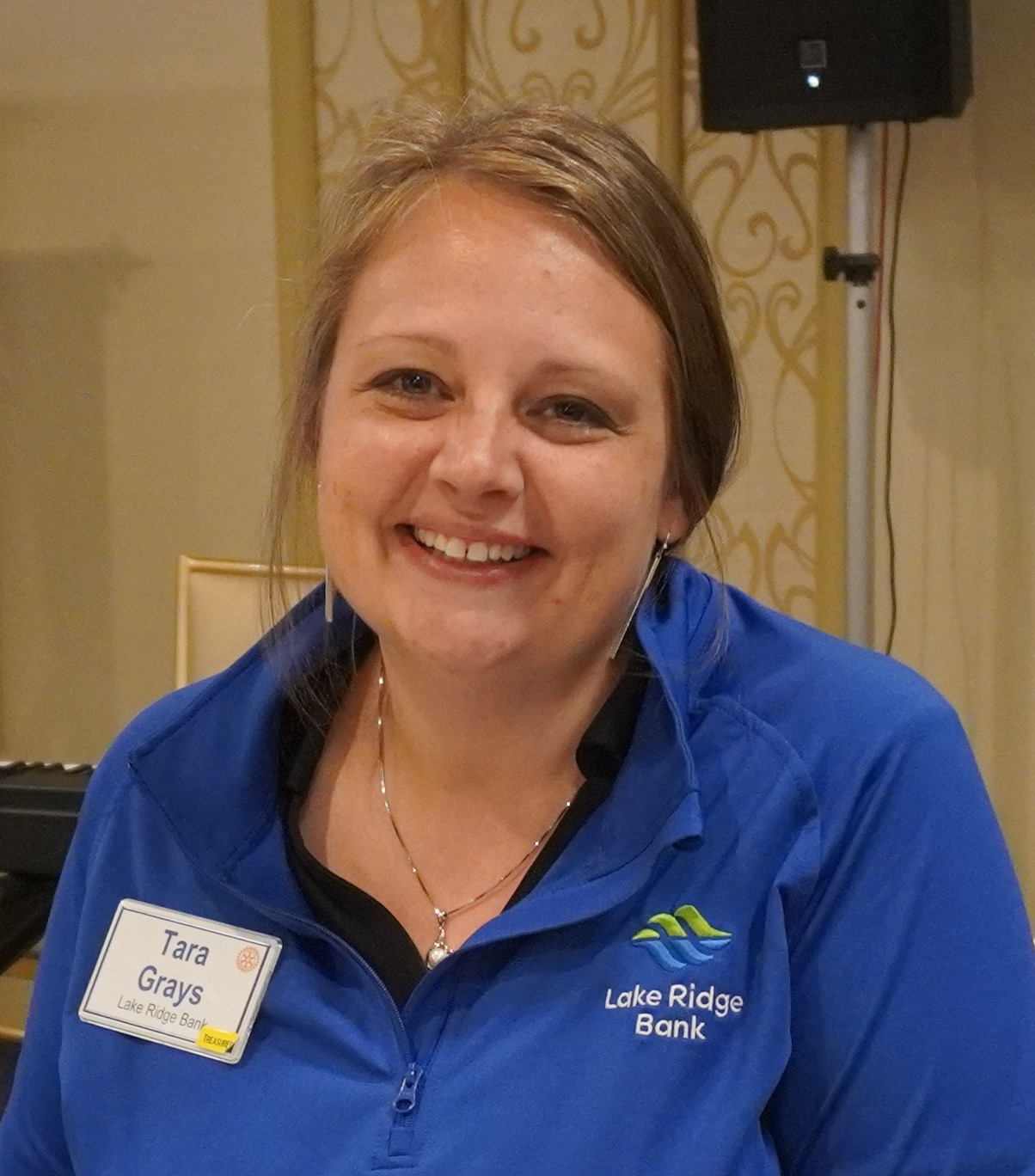
Rotarians heard from fellow Rotarian Tara Grays how several ideas are transforming Wisconsin businesses. Great ideas were celebrated by honoring nine recipients of Wisconsin Innovation Awards. 

Hello Loom, a small-scale loom, makes it easier for people to start a fiber arts hobby, and was the first honoree example. Hello Loom is the size of a cell phone and just as portable.

Another honoree, Elephas, images a live Cancer tumor to predict which immunotherapy the tumor will best respond to.

Nurse Disrupted helps close the nursing shortage gap by deploying virtual nursing sessions from current staff.  

Other honorees included:  Synthetaic, NECTO, Virtual Foundry, Community Clothes Closet, and Managecore. 

If you missed our meeting this week, you can watch the video here: https://youtu.be/a6BkBYDX0wc.

October 11: Sustaining American Democracy

–submitted by Ellsworth Brown

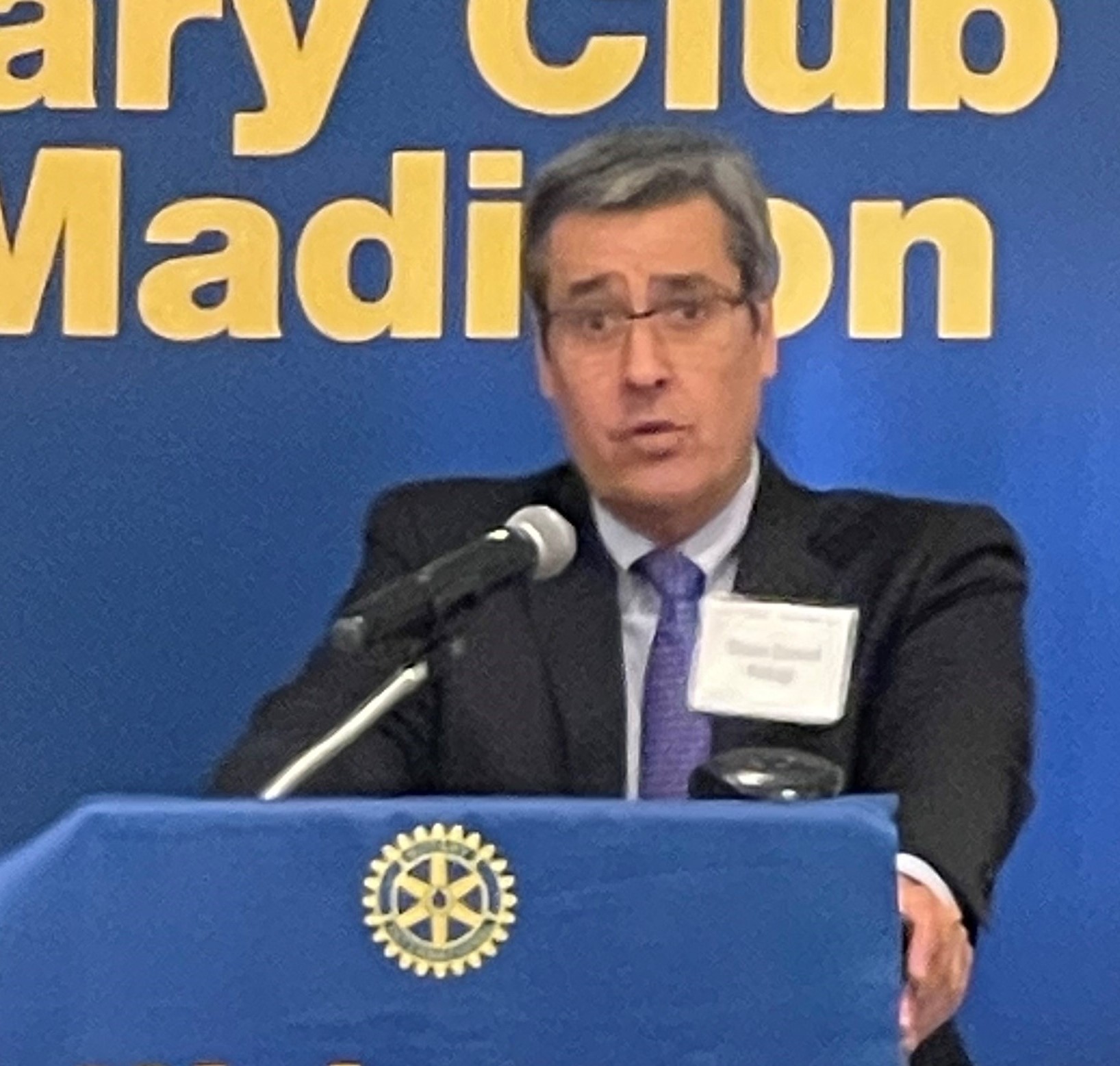
Dan Tokaji, Dean and Professor of Law at UW-Madison Law School, addressed sustaining and strengthening American democracy, focusing on election administration, restructuring elections, money and politics, and the big picture.

With humor, wisdom, a catalogue of issues, and some suggested solutions, Tokaji observed that a unique characteristic of American politics is the profound scale of local elections, inherently partisan, differing by state and often in conflict with federal election laws that, themselves, have changed significantly since the year 2000.

Redistricting, unlimited acceptance of private money, and the need for fidelity to truth further confound the election picture.

If you missed our meeting this week, you can watch it here: https://youtu.be/kmHObUPTDG8.

October 4: Application of Artificial Intelligence

–submitted by Rich Leffler

UW Professor Kaiping Chen explained last week that AI performs tasks that mimic human intelligence in order to help humans make decisions. There are visible applications, like Alexa or Siri; there are less visible applications such as a robot that can perform surgery; and there are invisible applications that can determine who gets medical care or whether a prisoner is released on bail or kept in jail. There are also deep fakes on the Internet intended to fool. To provide equity, decisions concerning applications should be made by a collective stewardship of the communities that may be affected, including the under-served and the under-resourced.

If you missed our meeting last week, you can watch it here:  https://youtu.be/Oz-YRR8ee2Y