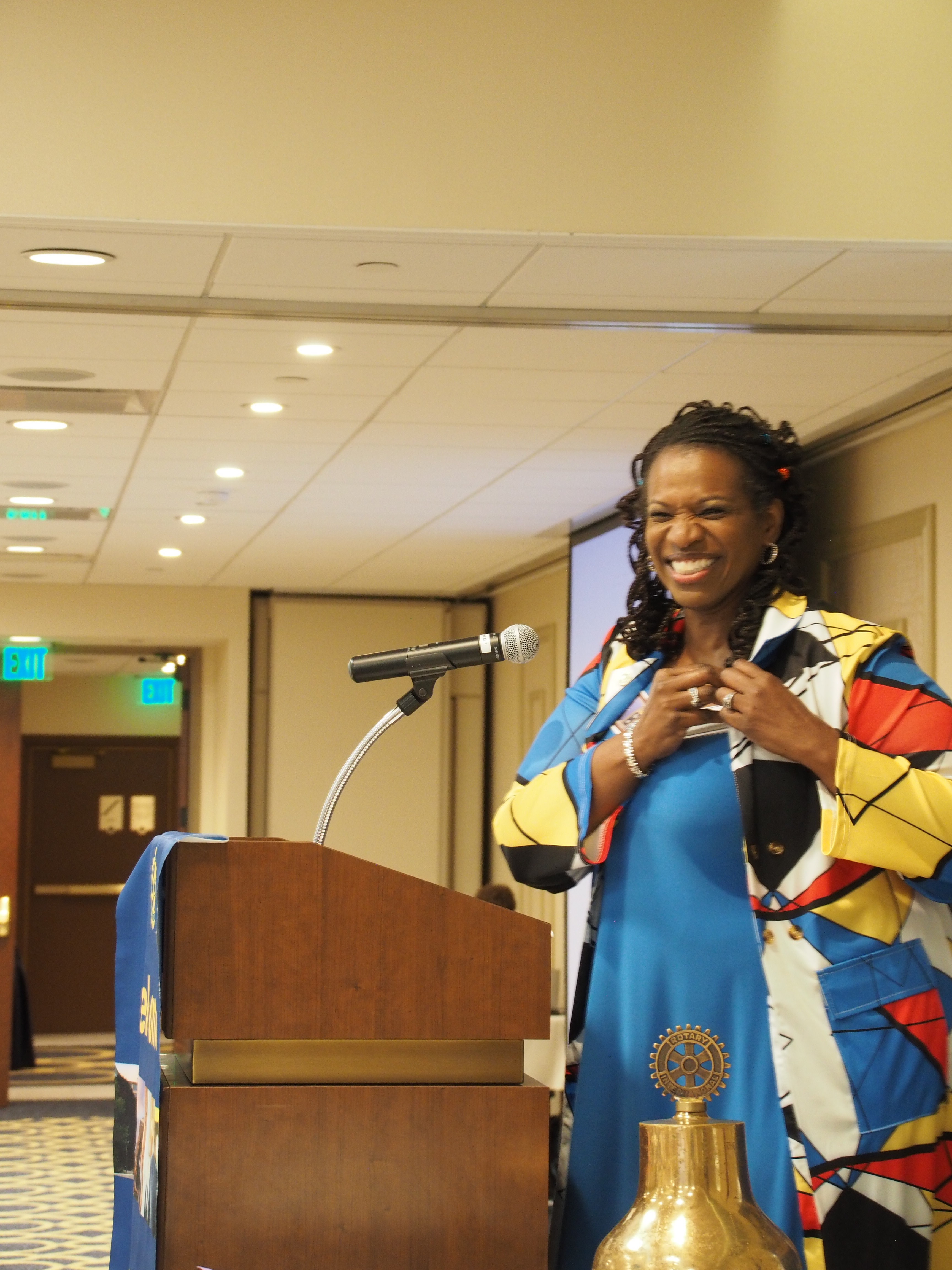
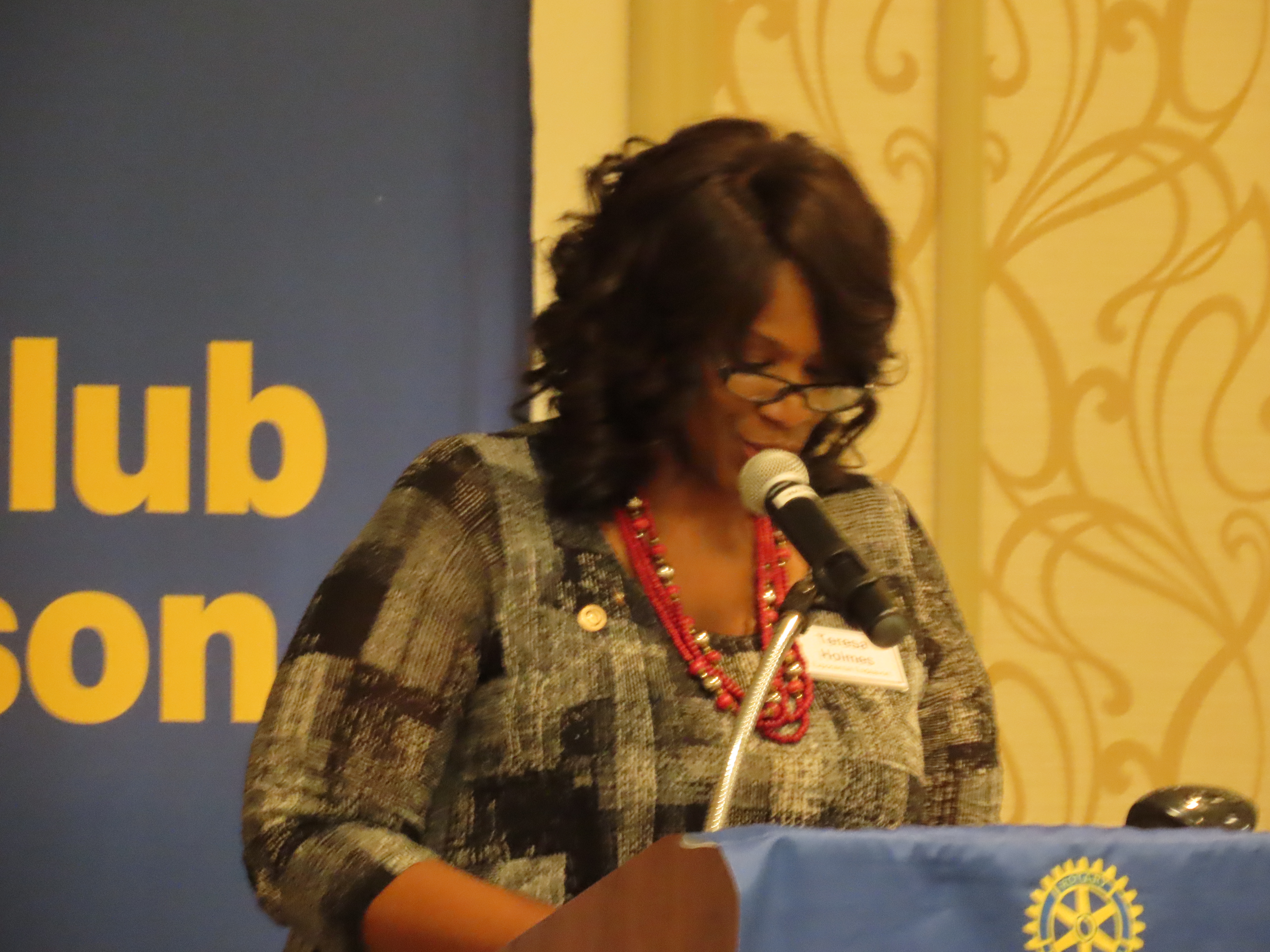
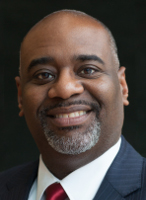
Today is our official kickoff to the Rotary year so I wanted to share a bit on my personal background, Rotary journey, and what you can expect from me during the evolving aspects of our year together.
I am the oldest of three children born to a mother who worked in various areas of law enforcement and a father who served in the Navy. Over the years, I’ve tried to make it a habit of asking for what I need so if I sounds like I’m telling you instead, please don’t take it personally; giving others instructions is a part of my history. I’m a native of Milwaukee and for years lived one block away from the core of the original site where Juneteenth Day is celebrated. Most of my family members still live in Milwaukee so my other home is not far away.
I often refer to myself as a twice transplant to Madison, as I initially moved here in 1989 to work for what was is now Alliant Energy but moved back to Milwaukee after only 5 years. At that time, I would’ve been known as a Gen Z, and my mom, who by then had transitioned into the Human Services field, encouraged me to follow my heart knowing that I had aspirations for changing the dynamics of how users experienced working with computing professionals. By the time I was 23, I had several experiences with initiating change within teams, systems and corporations in the US and in other countries through the use of my natural gift to simplify tedious processes whether manual or technological. I had no idea that I’d return to Madison 20 years later after creating my own firm, now Exponential Endeavors. I lead a team of Solution Architects, who have backgrounds in either engineering, technology or creative arts and are identifying efficient and innovative ways to transform manual processes thru technology or reduce the time it takes to implement technology engagements. I can speak tech English, folks! Right before the pandemic, I was asked to utilize my business model to assist a company in Madison with rapid redesign of its entire technology infrastructure and because of the need to pivot quickly when the stay-at-home order began in March of last year, my team and I were able to do the same for companies locally and throughout the Midwest while leading them into resiliency during the COVID year. So, change and doing things sooner than initially planned is ‘in my lane’. Did you know that I was supposed to be your president – next year?
My Rotary journey began only 5 years ago in May of 2016 after being invited to attend the Scholarship luncheon by then Rotarian Derrick Van Mell. I had been asked to join the organization before but declined because of what I believed was not present in the room. Attending one luncheon can make all the difference and after seeing the scholarships awarded to 25 local students – I said Yes without hesitancy. Service is a part of my DNA as I come from a long line of WI and Texan public servants and prior to that experience lacked the awareness I now have of the Rotary Club of Madison.
My first year of my Rotary service, I attended the international convention held in Atlanta, Georgia, and couldn’t believe what Rotarians were doing locally and internationally and have dug in my heels since then to Connect, Grow and Serve where led and often asked to do so. I’m a person with a deep sense of Faith and belief in the ability to dream and live well throughout the process of evolving circumstances. A few of you have cautioned me not to use the podium as my ‘pulpit’, fret not. I don’t need a pulpit when an expansive mission field is right before me.
The accelerated transition to VP caused me to get to know many of you in ways that I’ve enjoyed while also growing in the understanding of the traditions this club and Rotary International hold near and dear. I’m looking forward to spending time with many of you, while walking, dining, at local activities that combine those two or a fellowship or community event.
As we serve, the evolving aspect of changes we’ll all be affected by and journey through are not intended to harm or hinder our organization from continued success and service – rather meant to create more continuity within the organization while better positioning our service teams – our committees to execute their creative ideas throughout our community. The ideas presented and approved by leaders w/in this club are meant to be seen and experienced far beyond a single term of the presidency so our club’s VP-Paul Hoffman and others who follow him will carry the torch of ideas forward and brightly! Throughout the year, I’ll lead the way in communicating and navigating the various aspects of how we’ll enhance what we’re doing.
Being President of our club wasn’t what I thought I’d be doing at the end of my board term. As I reflect while dreaming, I realize it has become an extended part of my journey of Service above Self! I’m honored and humbled to serve as our club president. Thank you for such an opportunity!



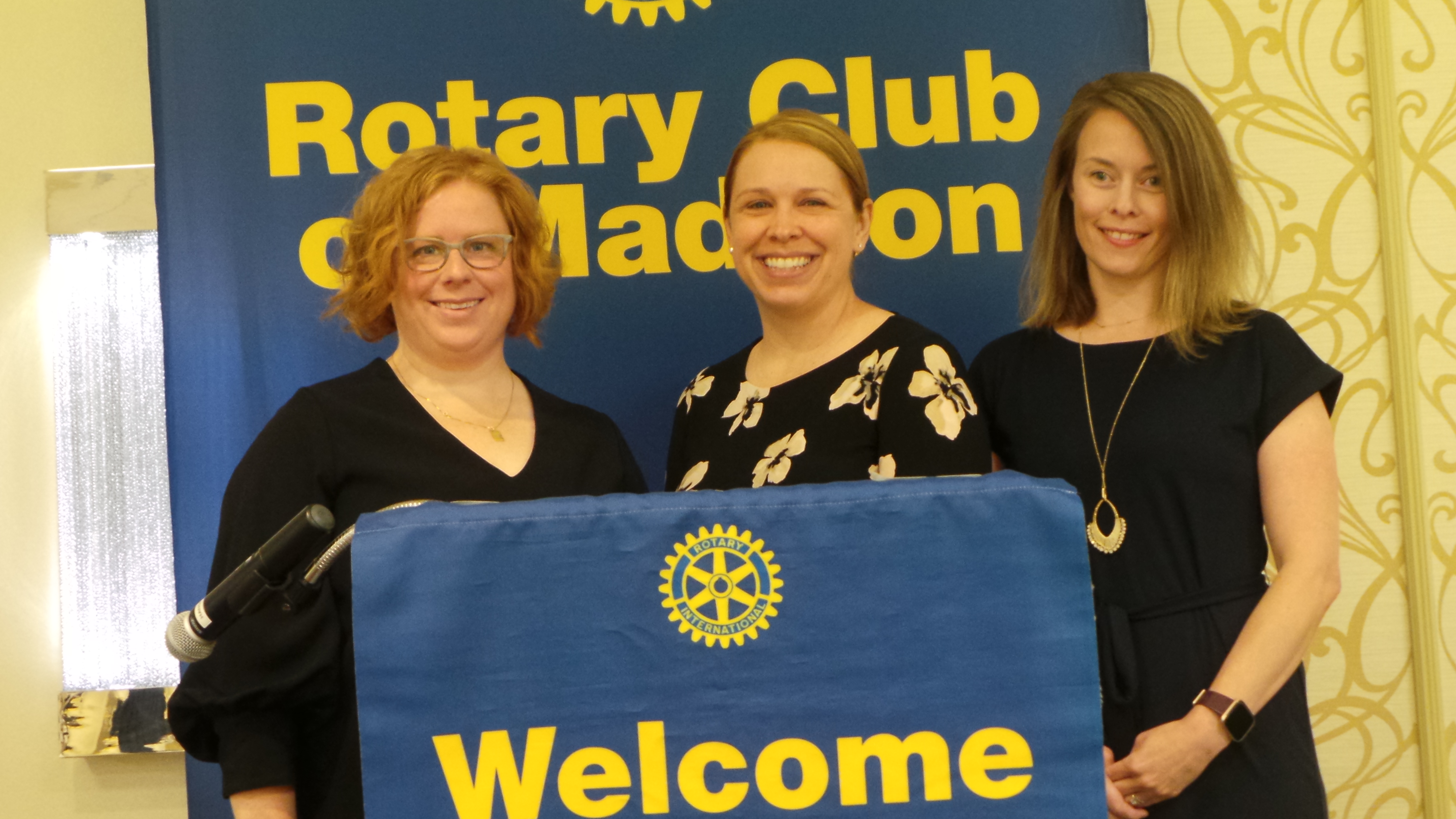 Rachel Sattler, Kim Curran, and Kate Walsh comprised a panel supplying a fast-moving presentation about the largely unaddressed scope of problems and possible solutions to sexual assault of UW-Madison women.
Statistics are startling: 26% of UW-Madison undergraduate women have experienced unwanted contact, 20% have been assaulted, and 6.8% have suffered violent attacks. The use of alcohol by men and women plays a large role in these abuses.
The consequences are several and can have life-long symptoms: rape victims often experience PTSD, depression, and substance abuse disorders. School dropouts occur.
The panel agreed that responses to sexual assault are unsatisfactory because a highly functioning, systemic, coordinated, multi-agency source of physical and medical, psychological, and legal services does not exist.
This problem is magnified by most victims’ lack of knowledge about these services, their sources and their unknown and disparate locations, the absence of transportation, and the lack of an advocate who could knit all of these together, provide a single point for reporting, and accompany a victim to the services.
One result of the absence of coordinated services is that only 2% of the victims report an assault to the University, and very few are reported to police.
The panel is deeply involved in ways to address the shortcomings described above. A U.S. Department of Justice grant has been awarded to hire a campus advocate who can begin to connect services, provide continuous and establish an example that can encourage the hiring of more advocates.
A multi-agency virtual portal is also being developed for reporting and coordination of services, to help with the connection not only between agencies but also among survivors.
At the close of the presentation, President Jorge asked what we as Rotarians can do to help. The answer: contact foundations you know for financial support of advocates or mental health programs or make personal contributions to these initiatives.
Our thanks to Kim Curran, Rachel Sattler and Kate Walsh for their presentation this week and to Ellsworth Brown for preparing this review article.
If you missed our meeting this week, you can watch it here:
Rachel Sattler, Kim Curran, and Kate Walsh comprised a panel supplying a fast-moving presentation about the largely unaddressed scope of problems and possible solutions to sexual assault of UW-Madison women.
Statistics are startling: 26% of UW-Madison undergraduate women have experienced unwanted contact, 20% have been assaulted, and 6.8% have suffered violent attacks. The use of alcohol by men and women plays a large role in these abuses.
The consequences are several and can have life-long symptoms: rape victims often experience PTSD, depression, and substance abuse disorders. School dropouts occur.
The panel agreed that responses to sexual assault are unsatisfactory because a highly functioning, systemic, coordinated, multi-agency source of physical and medical, psychological, and legal services does not exist.
This problem is magnified by most victims’ lack of knowledge about these services, their sources and their unknown and disparate locations, the absence of transportation, and the lack of an advocate who could knit all of these together, provide a single point for reporting, and accompany a victim to the services.
One result of the absence of coordinated services is that only 2% of the victims report an assault to the University, and very few are reported to police.
The panel is deeply involved in ways to address the shortcomings described above. A U.S. Department of Justice grant has been awarded to hire a campus advocate who can begin to connect services, provide continuous and establish an example that can encourage the hiring of more advocates.
A multi-agency virtual portal is also being developed for reporting and coordination of services, to help with the connection not only between agencies but also among survivors.
At the close of the presentation, President Jorge asked what we as Rotarians can do to help. The answer: contact foundations you know for financial support of advocates or mental health programs or make personal contributions to these initiatives.
Our thanks to Kim Curran, Rachel Sattler and Kate Walsh for their presentation this week and to Ellsworth Brown for preparing this review article.
If you missed our meeting this week, you can watch it here: 
 Rotary Club of Madison, Wisconsin