Category Archives: Rotary Club of Madison

Reflections on Wisconsin’s Economy


UW Economics Professor Noah Williams is the founding Director of the Center for Research on the Wisconsin Economy (CROWE) and gave a report on the economic situation since the start of the pandemic lockdown in March 2020 through November 2020. He also gave some insight on economic trends and expectations for 2021.

He examined the impact by looking at labor market statistics from official government sources (State of Wisconsin, Bureau of Labor Statistics), as well as private data collectors that utilize cell phone data and offer employment and business services that can produce data on a more contemporaneous basis.

Professor Williams started by saying the economy is secondary to the course of virus spread and infection. As the virus spread in March, April and May unemployment claims increased dramatically to a peak of over 300,000 compared to approximately 80,000 in 2019. New claims are at the rate of 15,000 per week compared to 5,000 last year. Continued unemployment has declined since the peak but there are still over three times the number of unemployed than there were in 2019. However, this only measures persons eligible for unemployment insurance. It is estimated that the actual number of unemployed individuals is double when you include ineligible and those who have stopped looking for work. In terms of raw numbers that translates to around 205,000 fewer employed than the same time last year.
The impact of job losses has been varied across sectors of the economy. The hardest hit has been Leisure and Hospitality with a 50% drop in employment at the peak in April. While it has recovered somewhat to about a 20% loss year-over-year it is still a dire situation as events, attractions and restaurants have been hampered or outlawed to curb the spread of the virus. Manufacturing and Retail employment took a dip in April (15%), as well, but is now only down from 3.0-4.5% as of October.

Changes in spending patterns and economic activity have been dramatic. For example, Madison has not fared as well due to the absence of students on campus. Foot traffic, measured by cell phone tracking, is down about 40% in Madison, compared to Milwaukee at 26% down and the rest of the state at 30% down. Also, there has been a shift from local and small business to large business and online: Retail purchases are down around 7% and online is up over 20%.

For 2021, the good news is that highly effective vaccines have been developed but we should expect continued economic headwinds (probably at least six months) as it will take many months to get enough people vaccinated. And, while negative surprises were on the downside and recovery surprises were on the upside the rate of improvement has slowed as government support programs are coming to an end. While the most dire of projections have not borne out, the economic consequences of the pandemic will continue to be a challenge.

Our thanks to Prof. Noah Williams for his presentation this week and to Kevin Hoffman for preparing this review article. If you missed our meeting, you can watch it here: https://youtu.be/WkOzn3reDmI.

Honoring Our Veterans and Their “Service Above Self”

It takes a special kind of person to have the courage to wear this nation’s uniform and stand ready for whenever they are needed. One who raises their right hand and pledges to protect this country at all costs, including giving their lives if necessary to defend our republic. This week, on Veteran’s Day, Brigadier General Joane Mathews provided a look into those service members who make up Wisconsin’s National Guard – 10,000 citizen soldiers and airmen that live in and work in every county. They are your friends, your neighbors, your coworkers, your employees, your children’s soccer coach. Remarkably, they balance their professional careers with their family lives along with their military service. Family, community and employer support is key to ensuring the strength of our Wisconsin National Guard.
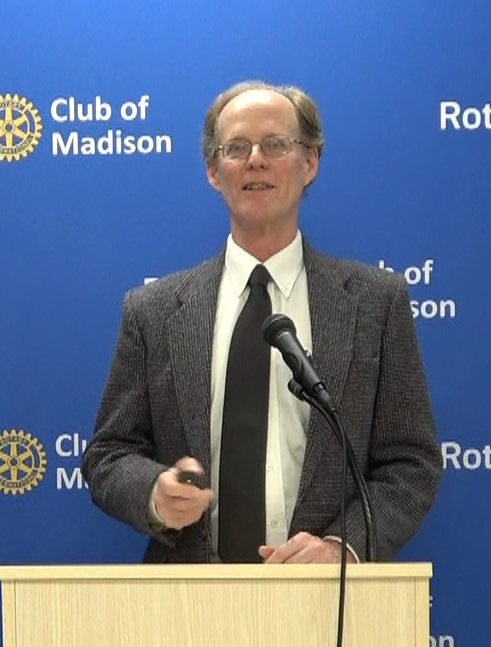
Veteran’s Day is a day to honor all of those men and women who have made such a noble commitment to their country and their communities. Brigadier General Mathews eloquently quoted U.S. Army Veteran Charles M. Provence, who wrote that it is the soldier, not the minister, who has given us freedom of religion, the soldier not the poet who has given us freedom of speech, the soldier not the lawyer who has given us the right to a fair trial, the soldier not the politician who has given us the right to vote. On Veteran’s Day we honor those soldiers for securing those rights we all enjoy every day.

Brigadier General Mathews explored the wide breadth of calls that our Wisconsin National Guard members answer. The National Guard’s roots go back to years prior to Wisconsin even becoming a state, when soldiers were called upon to fight in the Civil War. The National Guard sent servicemen to all wars following that and continue to do so into 2020, as members have been deployed to Afghanistan and throughout the Middle East. They provide top levels of support for the citizens of the State of Wisconsin as well, as the Wisconsin National Guard serves at the call of the Governor. In March of 2020, the National Guard mobilized over 1,400 soldiers to help with the COVID-19 response, from staffing testing sites, calling citizens to alert them of test results, to filling in at a senior living facility after an outbreak of COVID-19 caused a staffing shortage within the facility. There is no call that the National Guard cannot or will not answer to assist the citizens of Wisconsin. To date, WI National Guard members have administered more than 800,000 COVID-19 tests statewide.

More than 1,200 National Guard members mobilized to Milwaukee, Madison, Racine, Kenosha and Green Bay in the weeks following the death of George Floyd in Minneapolis to assist with unrest breaking out across those cities and have continued to answer calls to assist with unrest across the State over the subsequent months. Just last week, 400 National Guard members staffed polling places across the state due to a shortage of poll workers arising from the pandemic. It is truly an understatement to say that our Wisconsin National Guard members receive no call they cannot answer to support and protect and serve our nation. On this Veteran’s Day, we honor all of those who have served and sacrificed on our behalf— on each and every one of those calls stateside, nationwide and across international borders – where they were called to duty to secure and provide our country and people with the many gifts that we all enjoy as freedoms in this life.

Our thanks to BG Joane Mathews for her presentation this week and to Jessica Giesen for preparing this review article.  If you missed our meeting this week, you can watch it here: https://youtu.be/NcB7XdCg2GY?t=530

Election 2020: The Day After

   After being glued to our televisions, radios and phones for over twenty-four hours trying to dissect and understand what was happening with the 2020 United States Presidential election, it was a breath of fresh air to welcome Professor David Canon to the Rotary stage to help put things into perspective and answer so many nagging questions that many of us had had on our minds for years – and other questions that had arisen only minutes before the presentation began (Question: Will Wisconsin have a recount? Answer: Perhaps, but an election recount has never shifted a result where the vote margin was over 20,000 votes, which was the case in Wisconsin at the time of the presentation).

   However, Professor Canon reminded us, no election is over until every vote is counted and states laws in twenty-two states allow vote counting after actual Election Day (so long as ballots are post-marked by Election Day). Why the vast difference in voting procedure throughout the country? Why not put together a unified federal system so that everyone in the country knows the deadlines, guidelines and procedures for voting? Wouldn’t that help to clear up a lot of voter confusion leading up to and throughout our election days? The answer is yes, surely it would, but our Constitution mandates a federal system of government whereby each individual State legislature is tasked with determining the manner in which electoral votes are determined and the time, manner and place of its State’s elections. So until the Constitution itself is amended, the discretion and power to direct elections will always remain with each individual state.

   As the sun set on Election Day and the country entered election night, then woke up in the morning and turned the news back on – one thing was very clear – the polls seemed to have read things wrong just as they did in 2016. Professor Canon opined that the polls looked to be off in the same manner to which they were off in the last presidential election. While only time will tell as analysts dig down into the cause of this, Professor Canon pointed out that the same pollsters were spot on in other elections that were non-presidential, such as the 2018 elections – when the polls were spot on. Professor Canon posited that one reason may have been what is being referred to as “shy” Trump voters – that is, voters who tended to shy away from pollsters for one reason or another. It’s difficult to force someone to answer a poll and if answers are non-responsive or evaded, the pollsters cannot ever get an accurate read on that portion of the population.

   Professor Canon ended his presentation with something that we can all keep an eye on over the coming years and elections – that is, “ranked choice” voting – which is already being used in many local elections. Through ranked choice voting, a voter can rank their choices of candidates without the traditional fear of “wasting” a vote if they do not vote for the top democrat or republican candidate. In ranked choice, a voter can vote for a libertarian or independent candidate, for example, knowing that if that candidate does not gather a certain number of votes, the voter’s vote is reallocated to their second choice candidate. This method could prove to be a truer expression of voter preferences and may be an excellent way of letting voters really express their views at the ballot.

   Our thanks to UW-Madison Prof. David Canon for his timely presentation this week and to Jessica Giesen for preparing this review article.  If you missed our meeting this week, you can watch it here: https://youtu.be/Shqk2Z7acx8?t=573.  We also thank WisEye for co-streaming our meeting this week.

“Madison is an Outlier,” says Eileen Harrington, Chair of Madison’s Taskforce on Government Structure

Eileen Harrington, who spent her career in public service, recently served as Chair of Madison’s Taskforce on Government Structure (“TFOGS”). At the Rotary podium on October 21, she pointed out Madison’s city government needs restructuring. For example, fewer Madison residents are represented by local government compared to cities like Minneapolis and Austin.
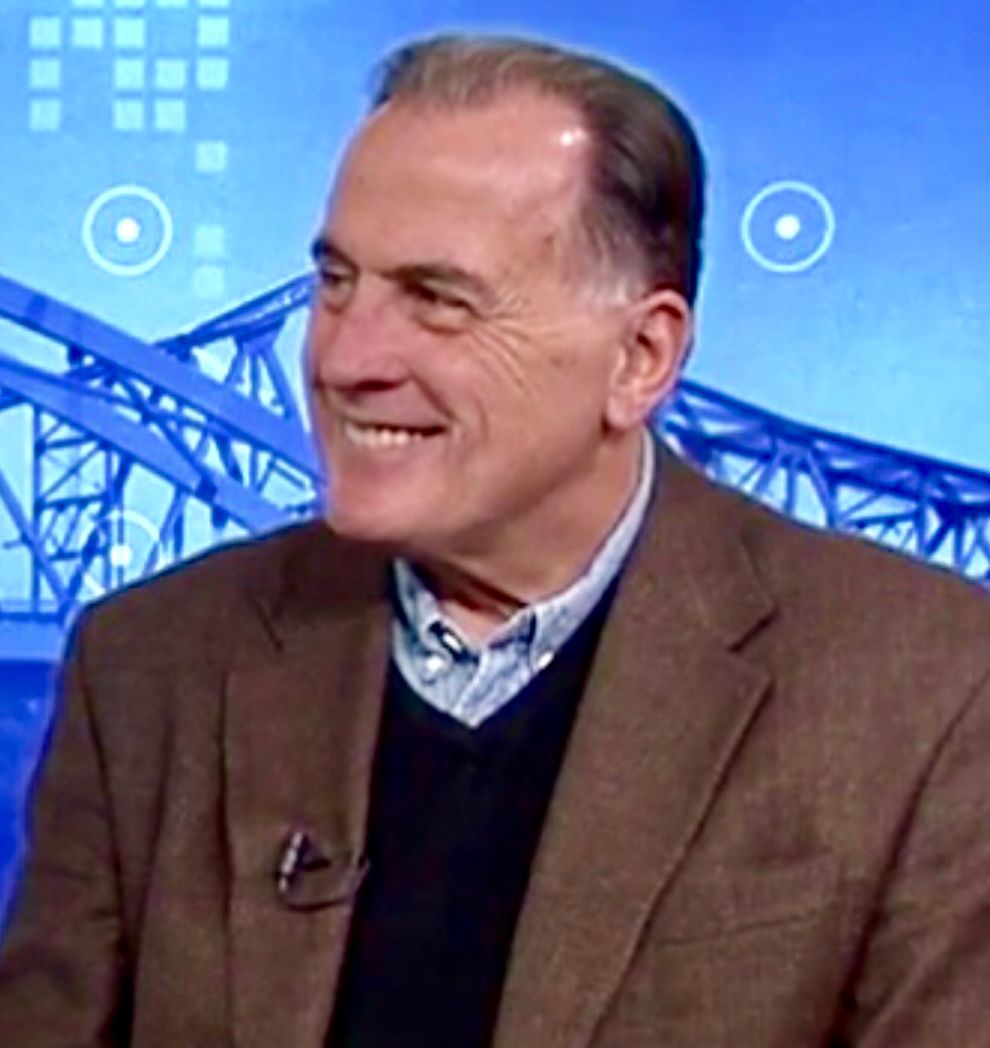
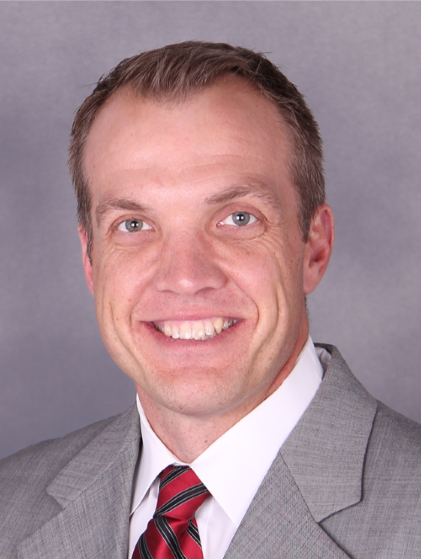
She opened the program by asking, “What would it cost to have a full-time Common Council so that our city can thrive when we have excluded so many people?  We need all hands on deck.”

Harrington, who grew up in Madison, retired from the Senior Executive Service of the United States Government at the end of 2012 after a distinguished twenty-eight year career protecting American consumers and leading change and programs in two different federal agencies.  From 2010 through 2012 she served as Executive Director of the Federal Trade Commission, the senior career staff position at the FTC.  Before that, she served as Chief Operating Officer of the U.S. Small Business Administration. 

In 2004, she was awarded a Service to America Medal for her work creating the National Do Not Call Law and Registry. This is the same medal Anthony Fauci, M.D., Director of the National Institute of Allergy and Infectious Diseases, and member of the White House Coronavirus Task Force, recently received.

Madison’s Taskforce on Government Structure (seven residents and four alders) spent two years working together holding more than 90 meetings and making 42 recommendations.

Harrington said recommendations include the following:  alderpersons should serve full time, the number of alders be reduced from 20 to 10 and that they serve four years instead of two years.

Currently, the Madison Common Council is a city council that consists of 20 alderpersons elected from 20 wards who serve two-year terms.

Another issue with the current structure is the disjointed source of information. Harrington explained, there are 102 boards, committees and commissions connected to Madison government but no one place to find information.

She ended the program by saying, “We need more full-time engagement on city boards, commissions and committees.”    She also noted that there’s a lack of diversity in Madison’s city government and that is especially true with economic diversity.

Our thanks to Eileen Harrington for her presentation this week and to Sharyn Alden for preparing this review article. If you missed our meeting this week, you can watch it here:  https://youtu.be/-_j9_uB1dPQ.

Ethical Leaders in Government – What Can We Do?

This week’s presentation was by Lee Rasch, the Executive Director of LeaderEthics Wisconsin, a non-profit that promotes ethical leadership in elected officials and develops ideas and programs that enable individuals and groups to support achieving that goal. 

As we all are fully aware, America’s political divide has become a chasm in recent years, and digital media has played a critical role in developing and exacerbating the problem.  To counteract that trend, Rasch’s group emphasizes that ethical leadership involves truthfulness, transparency and a dedication to unification of the populace, not polarization. 

While most of us are often nonplussed when asked what each of us can do individually, he provided several examples of practical actions Rotarians can take to address this growing societal problem.   Some of these suggestions were: 1) make personal efforts to promote government transparency; 2) identify misinformation whenever it arises and follow websites that identify and rate media for factual accuracy and bias; 3) support those individuals who do ethical work, regardless of their political affiliation; 4) learn about and support organizations that are committed to ethical contributions to society (e.g. Rotary); 5) reach out to and support ethical next-generation leaders; and 6) most importantly, vote for candidates that will provide ethical leadership and let them know you expect them to meet that expectation. 

Given the fractionated state of our nation, we all have much to do in order to get us on a course leading to ethical leadership in government, but Rasch emphasized the time to start is now.  Hopefully, every Downtown Rotarian will begin by voting in the upcoming election and starting individual efforts that will lead to a more ethical and unified government for our country.

Our thanks to Lee Rasch for speaking to our club this week and to Linn Roth for preparing this review article. If you missed our meeting this week, you can watch it here:  https://youtu.be/hi9q0Ves07s.

We apologize for the technical difficulties experienced during this week’s speaker presentation when we were testing the use of Skype.  We realize now that the internet can be too unpredictable, so we will use a pre-recorded video for any future speaker who is unable to appear at our livestreamed meeting. 

A Launching Pad for Young People to Do Great Things in the World

Chris McIntosh opened the October 7 Rotary program with a question. “What do you think of when you think of the Badgers?”

You may imagine sitting in the stands watching football at Camp Randall, but there’s a lot more to it when it comes to Badger athletics.

Each year, the UW-Madison Department of Intercollegiate Athletics makes available the opportunity for approximately 800 student-athletes to obtain a world-class education while competing on a grand athletic stage.

Chris McIntosh was named Deputy Athletic Director in July 2017. He oversees daily operations of the department, student‐athlete recruitment, business development, human resources, and strategic planning.

McIntosh was a consensus All‐America offensive tackle and Outland Trophy finalist for the Badgers in 1999. He captained Wisconsin’s back‐to‐back Big Ten and Rose Bowl champions in 1998 and 1999 and started 50 straight games during his college career. He was a first‐round draft choice of the Seattle Seahawks in 2000 and played in Seattle for three seasons.

He emphasized that UW-Madison athletes gain far more than lasting memories and trophies; they have numerous opportunities ahead due to their world-class education. 

Athletes receive support from several organizations like W-Club which includes UW-Wisconsin alumni around the country. Interestingly, 63 percent of Badger athletes settle in the Upper Midwest after graduation.

Where does the revenue come from for the UW athletics?  McIntosh said the sport of football, including filling the stands at Camp Randall on seven Saturdays a year is an important cog in the wheel. But this year there have been revenue shortfalls given the widespread impact of Covid-19.

Eight hundred young people in 23 sports are developing life skills that can take them far. The mentoring and support they receive at the UW during these formative years is crucial to their success. Much of that support comes from relationship building.

McIntosh showcased several athletes’ stories and how UW-Madison was a launching pad for their doing great things in the world.

By and large UW athletes recognize their exceptional educational opportunities. That shows in the 3.2.46 GPA earned by the vast majority of UW-Madison athletes.

Looking back on their athletic experiences at the UW-Madison, McIntosh said, “These young people discover they are capable of far more than what they thought was possible.—all because of football.”

Our thanks to Chris McIntosh for speaking to our club this week and to Sharyn Alden for preparing this review article. If you missed our meeting this week, you can watch it here:  https://youtu.be/YB626jHUsdk.