
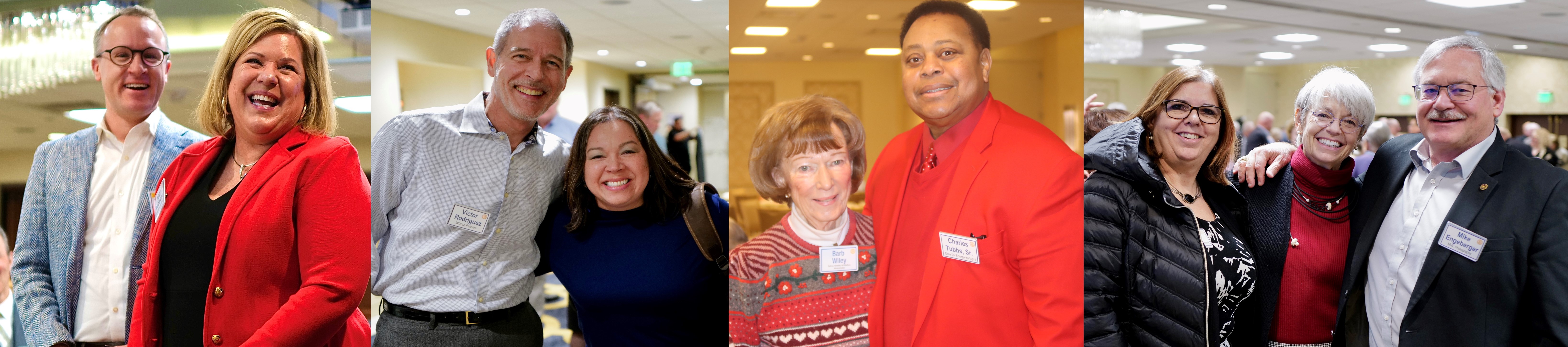
submitted by Ben Hebebrand; photo by Mike Engelberger
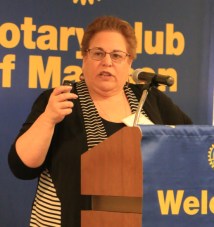 The recent claim by Chinese scientist He Jianjui that he successfully altered the DNA of twin girls to build up the twins’ HIV resistance served as a backdrop of the Rotary Club of Madison’s weekly meeting, whose guest speaker Dr. Alta Charo, a UW-Madison professor of law and bioethics, offered as a broad outline of ethical considerations concerning Human Genome Editing.
Jianjui’s actions have drawn wide condemnation by the medical, ethical, and research community as there are allegations that his work lacked an ethical compass that according to Charo at this point in time should be guided by the thought that “other than prevention or treatment” human genome editing “should not proceed.”
Genome editing, according to Dr. Charo, is best explained by “adding, deleting, inactivating, or making targeted alterations” of DNA. Genome editing is acceptable practice in research laboratories. Somatic gene therapy, in which therapeutic DNA is integrated in the genome, is a process used to treat disease that is highly regulated. “Somatic gene therapy should only be employed for treatment and prevention but not for enhancement,” said Dr. Charo. Gene therapy cancer vaccines are being developed , but among the most common uses today of somatic gene therapy are to treat cystic fibrosis, heart disease, hemophilia and AIDS.
If human genome editing is pursued for purposes of enhancement, there are obviously significant risks. Among the medical concerns rising to the very top is the potential of newly introduced genes not interacting with the existing gene structure. Dr. Charo characterized the ethical concerns revolving around the idea that human mankind may be closer to “making a step toward designer babies.” Other ethical concerns in Jianjui’s work is “the lack of consent by the affected person” and circumventing the traditional medical peer review process, instead publicizing his work directly with popular media sources. In summarizing Jianjui’s work, Dr. Charo said “two edited baby girls have been born.”
If you missed our meeting this week, you can watch the video here.
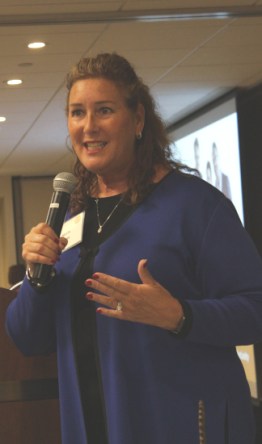 Our Rotary speaker on November 28 opened by introducing herself with her full Latina name, including her given name, her Confirmation name, her father’s last name and her mother’s last name. Then she mentioned that she married a guy named Bill White and became Maria White. Born in Havana, Cuba, White is a new member of the Toledo, Ohio, Rotary Club. She is so new, in fact, that she hasn’t even attended one of their meetings yet. It was our luck to have her speak to our club. That’s certainly worthy of a make-up in Toledo!
 The 1960s were a tumultuous decade in the United States and certainly in Madison. Club member Stu Levitan drew on his new book “Madison in the Sixties” to illustrate his talk to the Club on November 7th. The book, whose genesis was 34,000 articles from Madison newspapers of the decade reviewed by Stu by digital scanning (followed by more in depth research) focuses on five major issues of the time –civil rights, University of Wisconsin, urban renewal, Monona Terrace and student unrest – but Stu’s remarks to the Club dealt with the involvement of Club members in the 1960s, not only appropriate to the audience but also a natural theme given the prominence of so many Rotarians in the life of Madison then, as always. Space does not allow for more than a few examples of the highlights of the presentation so for a full listing one will just have to buy the book!
 Rotary Club of Madison, Wisconsin