
submitted by Kevin Hoffman
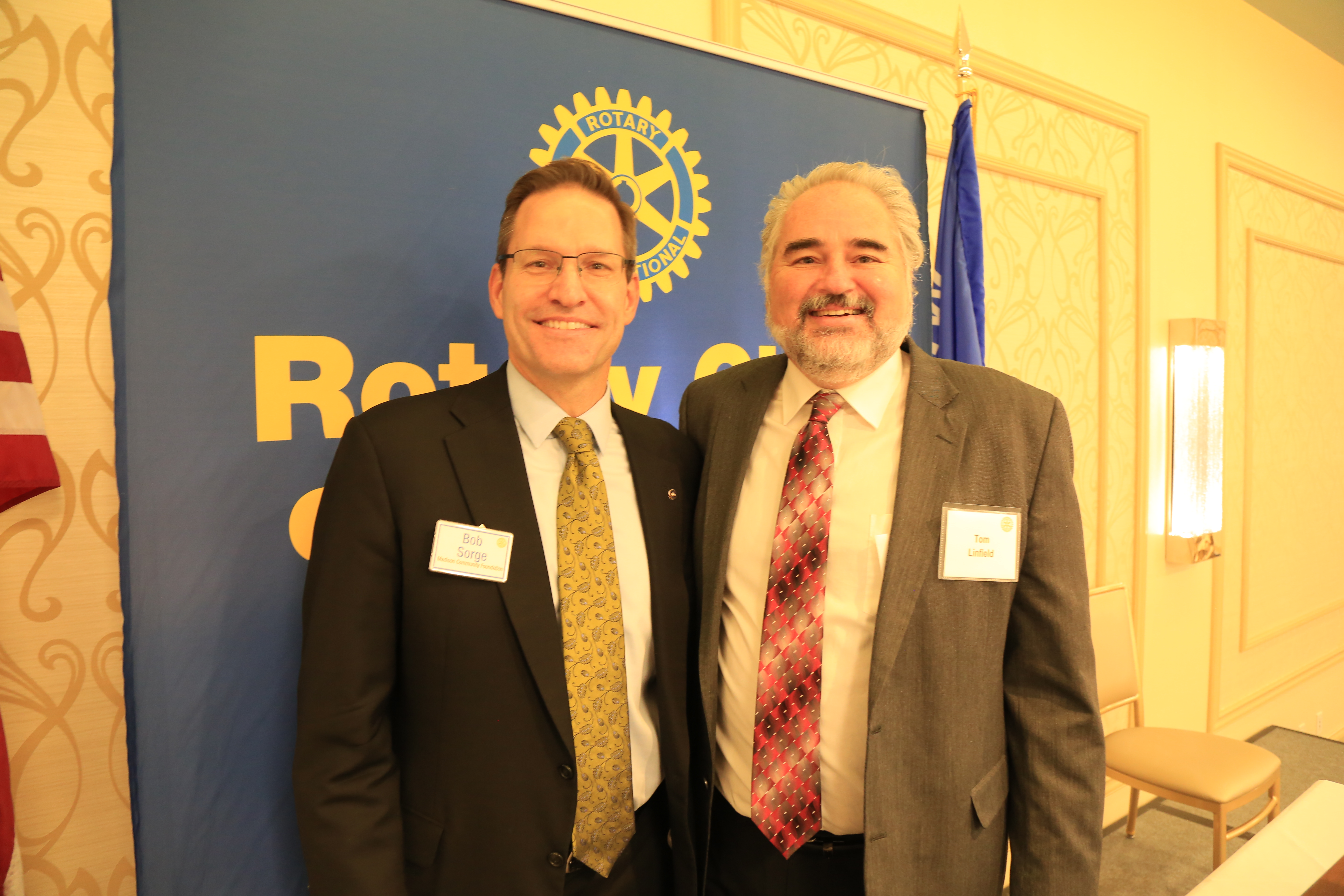
Club Member and Past President Bob Sorge (left) and Tom Linfield (right) of the Madison Community Foundation (MCF) gave an informative, eye opening and thought-provoking presentation on the tangible benefits of non-profit capital projects on the Madison area.
Bob gave background information on the MCF and the financial resources directed into the community. MCF distributed about $29M in grants in 2020 that were largely directed by individual fundholders. The MCF was also able to help other non-profits in the area leverage another $114M in resources from outside agencies for a total impact of $143M. In addition, to create an authoritative reference for making informed giving decisions, the MCF has spent the recent past developing capabilities for researching and evaluating area non-profits. The result has been the Greater Madison Nonprofit Directory which can be found on the MCF website. This is a resource open to all community members.
Tom covered the impact of capital campaigns on the Madison area by pointing out that buildings quickly become a community asset elevating the area surrounding the structure and becoming a center of development in the neighborhood. New buildings also transform the non-profit’s capacity for services and development of resources to benefit the community. Think about the impact that libraries, schools, health centers, community centers and affordable housing (to name a few) has on a given area. There are about 15 building campaigns a year. The financial impact is large not just for the physical buildout, but it also creates momentum within the non-profit for increased services, outreach, performance space, work efficiencies, and hosting/meeting space. Once complete, this allows the non-profit entity to leapfrog to the next level to the community it serves.
If you missed our meeting on December 8, you can watch the video here: https://www.youtube.com/watch?v=QybkuIpEtT4&t=5s.


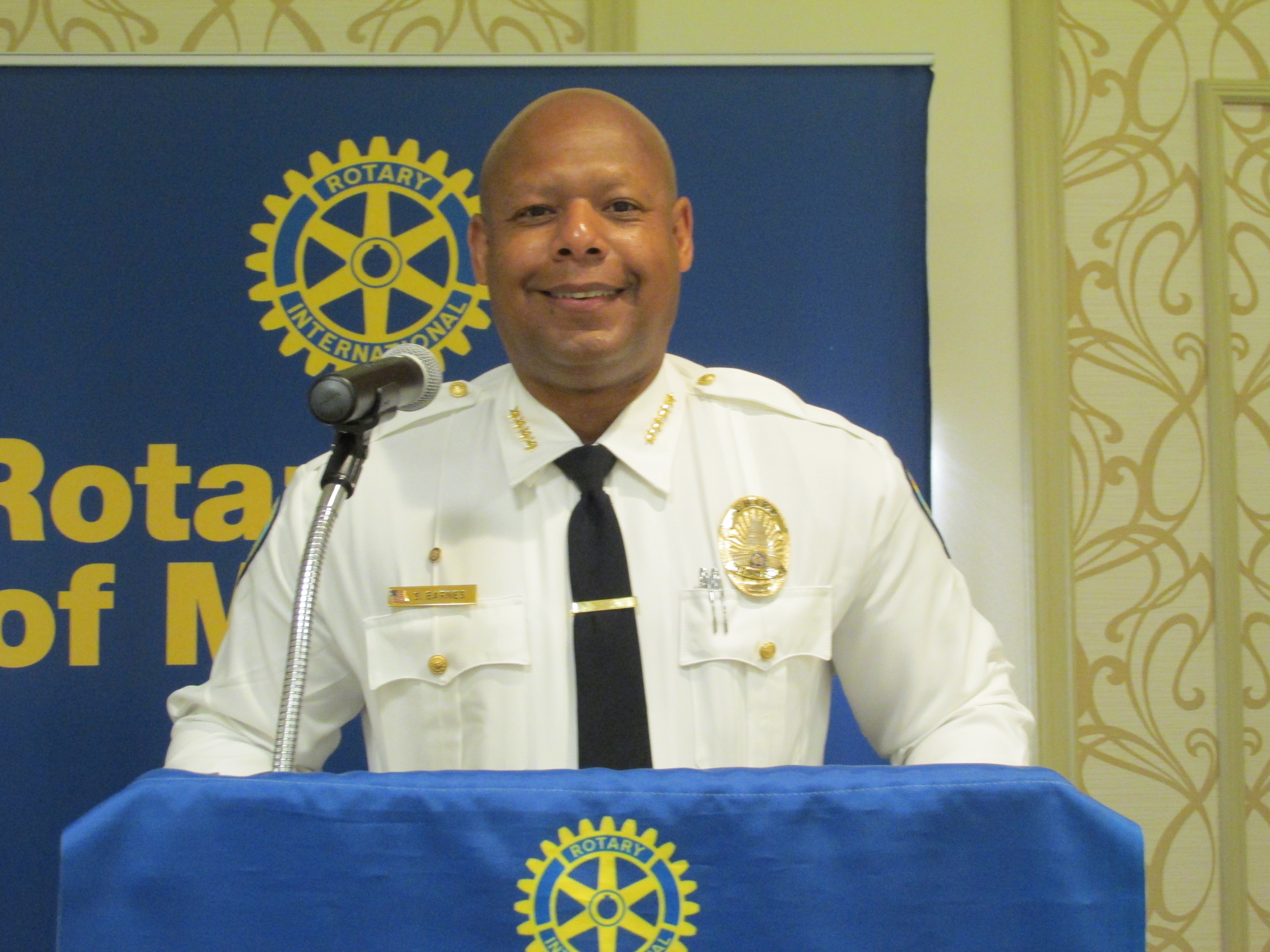
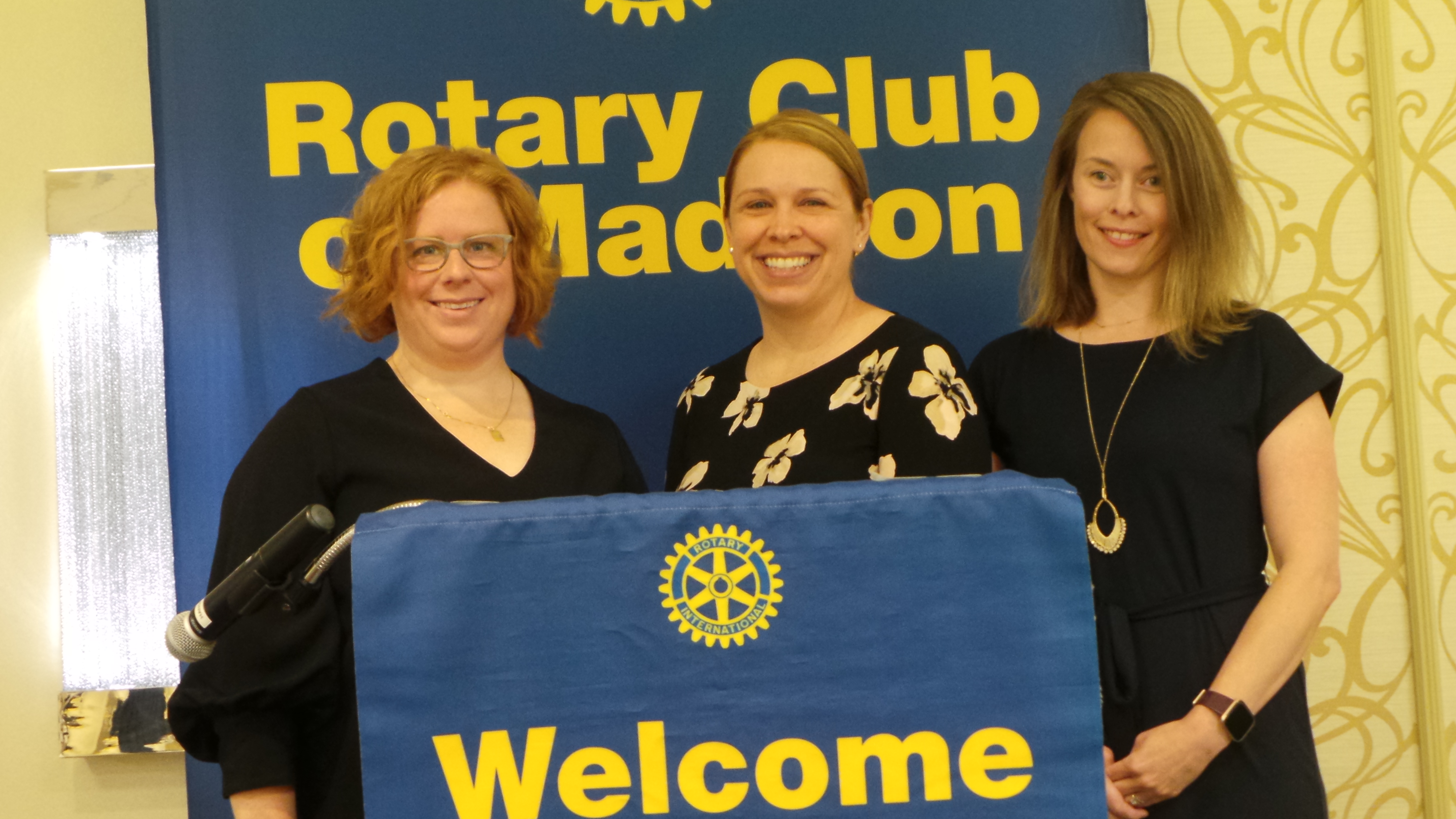 Rachel Sattler, Kim Curran, and Kate Walsh comprised a panel supplying a fast-moving presentation about the largely unaddressed scope of problems and possible solutions to sexual assault of UW-Madison women.
Statistics are startling: 26% of UW-Madison undergraduate women have experienced unwanted contact, 20% have been assaulted, and 6.8% have suffered violent attacks. The use of alcohol by men and women plays a large role in these abuses.
The consequences are several and can have life-long symptoms: rape victims often experience PTSD, depression, and substance abuse disorders. School dropouts occur.
The panel agreed that responses to sexual assault are unsatisfactory because a highly functioning, systemic, coordinated, multi-agency source of physical and medical, psychological, and legal services does not exist.
This problem is magnified by most victims’ lack of knowledge about these services, their sources and their unknown and disparate locations, the absence of transportation, and the lack of an advocate who could knit all of these together, provide a single point for reporting, and accompany a victim to the services.
One result of the absence of coordinated services is that only 2% of the victims report an assault to the University, and very few are reported to police.
The panel is deeply involved in ways to address the shortcomings described above. A U.S. Department of Justice grant has been awarded to hire a campus advocate who can begin to connect services, provide continuous and establish an example that can encourage the hiring of more advocates.
A multi-agency virtual portal is also being developed for reporting and coordination of services, to help with the connection not only between agencies but also among survivors.
At the close of the presentation, President Jorge asked what we as Rotarians can do to help. The answer: contact foundations you know for financial support of advocates or mental health programs or make personal contributions to these initiatives.
Our thanks to Kim Curran, Rachel Sattler and Kate Walsh for their presentation this week and to Ellsworth Brown for preparing this review article.
If you missed our meeting this week, you can watch it here:
Rachel Sattler, Kim Curran, and Kate Walsh comprised a panel supplying a fast-moving presentation about the largely unaddressed scope of problems and possible solutions to sexual assault of UW-Madison women.
Statistics are startling: 26% of UW-Madison undergraduate women have experienced unwanted contact, 20% have been assaulted, and 6.8% have suffered violent attacks. The use of alcohol by men and women plays a large role in these abuses.
The consequences are several and can have life-long symptoms: rape victims often experience PTSD, depression, and substance abuse disorders. School dropouts occur.
The panel agreed that responses to sexual assault are unsatisfactory because a highly functioning, systemic, coordinated, multi-agency source of physical and medical, psychological, and legal services does not exist.
This problem is magnified by most victims’ lack of knowledge about these services, their sources and their unknown and disparate locations, the absence of transportation, and the lack of an advocate who could knit all of these together, provide a single point for reporting, and accompany a victim to the services.
One result of the absence of coordinated services is that only 2% of the victims report an assault to the University, and very few are reported to police.
The panel is deeply involved in ways to address the shortcomings described above. A U.S. Department of Justice grant has been awarded to hire a campus advocate who can begin to connect services, provide continuous and establish an example that can encourage the hiring of more advocates.
A multi-agency virtual portal is also being developed for reporting and coordination of services, to help with the connection not only between agencies but also among survivors.
At the close of the presentation, President Jorge asked what we as Rotarians can do to help. The answer: contact foundations you know for financial support of advocates or mental health programs or make personal contributions to these initiatives.
Our thanks to Kim Curran, Rachel Sattler and Kate Walsh for their presentation this week and to Ellsworth Brown for preparing this review article.
If you missed our meeting this week, you can watch it here:  Letesha Nelson, the CEO and Executive Director of the Goodman Community Center, was our speaker this week. She joined the Goodman Center, succeeding fellow Rotarian Becky Steinhoff, in January 2021. Ms. Nelson has a long history of non-profit work, having held leadership positions with the Girl Scouts of America for many years. She brings to her work an obvious passion and a joy in service to others.
 Rotary Club of Madison, Wisconsin