
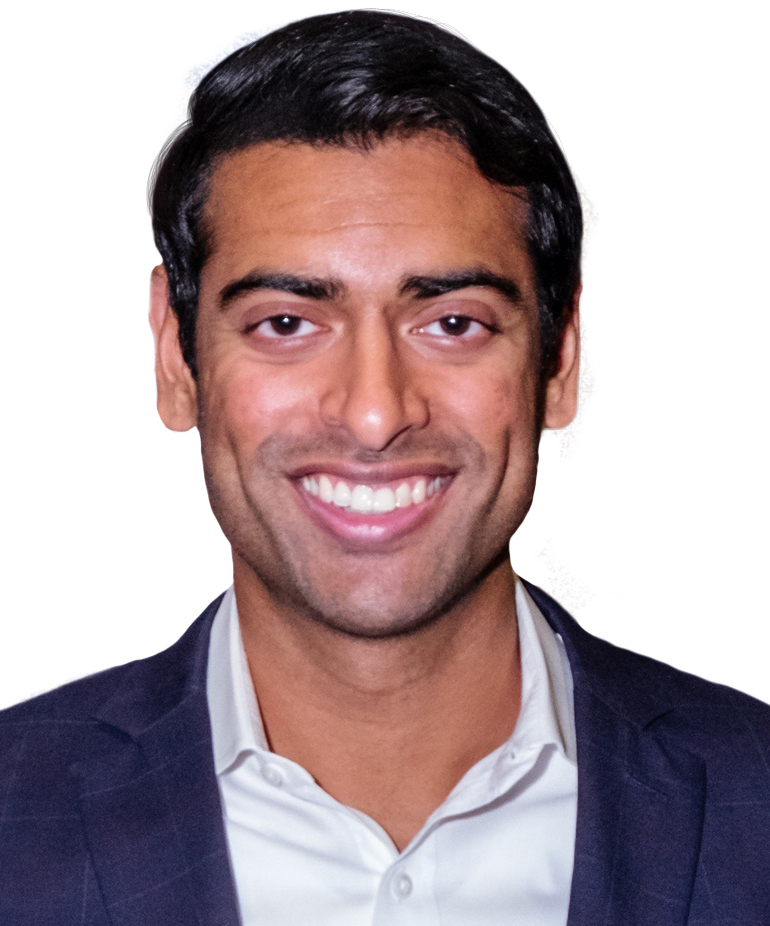
 Steven Olikara is the founder and CEO of the national Millennial Action Project (MAP) based in Washington DC. It is the largest nonpartisan organization of millennial lawmakers and seeks to build a new generation of leadership to bridge the political divides that threaten our democracy and future.
He founded the Millennial Action Project because he saw a need to develop and work with younger members of legislatures and change the tone of politics from contempt and hatred for the other side into compassion, understanding, and building bridges to reach agreement and compromise. He wanted to facilitate a future-oriented mindset with young leaders rather than be limited to dwelling on the divisions and conflicts of the past.
Even though partisanship and political separation has been on the rise for some time, MAP encourages and supports the rise of the millennial generation into leadership roles and helps them develop future-focused policy and bi-partisan coalitions to get initiatives across the line. MAP does this through affiliation and support of chapters in each state that identify issues, policies and people to find common ground.
Three issues MAP has identified for further work are election resiliency, gerrymander reform and gun violence prevention. While it may seem that these issues are as divisive and partisan as they come, MAP has been able to achieve some successes by listening, staying focused on the future, and identifying moderate and swing legislative partners to form coalitions.
Learning lessons from the spring and fall elections in Wisconsin, MAP is working on strengthening voting systems and, because of the large number of absentee and mail-in ballots in the most recent cycle, working on legislation to allow pre-processing of early ballots.
On gerrymander reform, MAP has found that there are members on both sides who are willing to reform how boundaries are created. For those who want to reform the system the unifying desire is to have leaders who win based on the best ideas rather than by manipulation of the system and disregard for other interests and constituencies. They have achieved victories in Ohio, Virginia, Colorado, Michigan and Missouri.
The victory they achieved with gun violence prevention is to win authorization and funding for the Centers for Disease Control (CDC) to begin studying gun violence as a public health issue. It is hoped that looking at it from a scientific and rigorous perspective that policies and laws can be developed to protect society from further proliferation of gun violence.
He encouraged us to choose to exercise more compassion and empathy towards the “other” and recognize that many leaders manipulate and profit from hate that is amplified on social media. Empathy and compassion need to be exercised to grow, and we should choose and support leaders who build bridges and appeal to our better angels.
Our thanks to Steven Olikara for his presentation this week and to Kevin Hoffman for preparing this review article. We also thank WisEye who co-streamed our online meeting this week. If you missed our meeting, you can watch it here: https://youtu.be/RxM2SKOcPXQ.
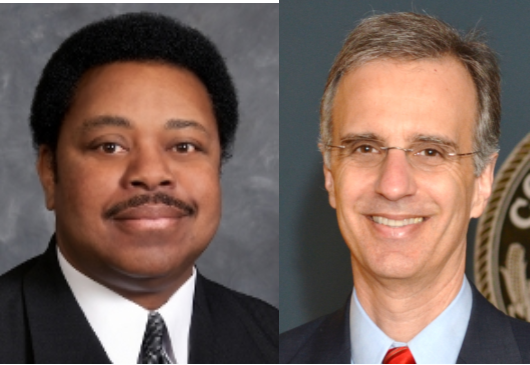
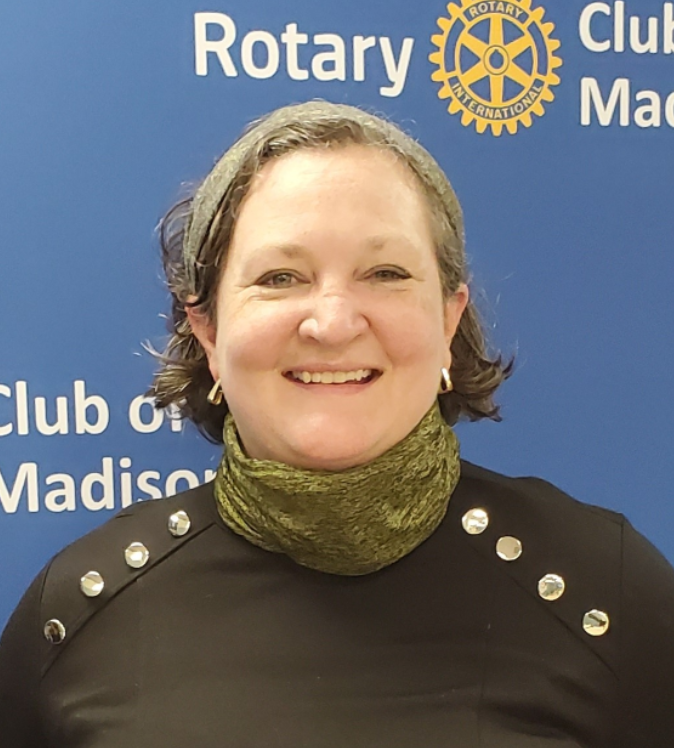 In the Q&A following Chazen Director Amy Gilman’s presentation, she was asked if pandemic adjustments have had any benefits. She replied that as the continuum suddenly ended, stillness enabled the Chazen—actually, all of us—to pivot from thoughts about how to return to normalcy and about how the museum can be more intentional about the future fulfillment of its mission.
 When UW-Madison closed campus in March, 8,000 classes were converted to remote learning. Thirteen days later, 97.5% of classes were online. Closure was a heavy lift, but reopening is a much bigger lift.
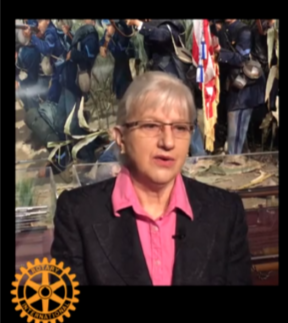 On May 20, 2020, VA Secretary Mary Kolar gave an insightful presentation regarding the significance of Memorial Day. She first offered information regarding the Wisconsin Department of Veterans Affairs and the services and benefits provided for service members in Wisconsin, where 345,000 veterans reside. The WDVA works hard each day to ensure that veterans have access to all benefits available to them. The programs the WDVA oversees extend from administering the Wisconsin Veterans Museum (a Smithsonian affiliate that welcomes 90,000+ visitors each year), where it continuously educates the public with unique stories and histories of Wisconsin’s veterans, to veterans’ cemeteries where our veterans receive honorable burials, to providing access to mental health and housing assistance.
 Fellow Rotarian and board member Nasra Wehelie spoke to us virtually via YouTube this week. Her subject was the traditions of the Islamic holy month of Ramadan, which are both rewarding and challenging. Ramadan is the ninth month of the Muslim lunar calendar, said to be when the Koran was revealed to Muhammad. Because it is based on the lunar calendar, it varies according to the Roman calendar.
 Rotary Club of Madison, Wisconsin