Category Archives: Weekly Rotary Guest Speaker

August 9: New McKenzie Center: Educating Young People in the Skilled Trades

–submitted by Joy Cardin

From left: Michael Johnson, Alan Branch, Club President Charles McLimans and John McKenzie

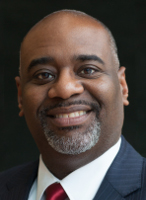
Rotarians heard from the key leaders in the Boys and Girls Club of Dane County’s new McKenzie Regional Workforce Development Center that just celebrated its grand opening on July 15.  The center was created to address the labor shortage in the skilled trades industry.  John McKenzie, owner of the McKenzie Apartment Company and donor to the project, approached BGCDC president and CEO Michael Johnson when he realized the only way to meet the demand was to diversify the workforce – which is largely male, white, and aging.  McKenzie says the center will be good for the economy, business, and the social fabric of the community.   Johnson says the $30-million project is the largest workforce training center in Boys and Girls Club history and has spurred similar efforts in 20 other communities.  Alan Branch, the vice president of workforce development for BGCDC, says it is important to interest children between the ages of 9 and 13 in the skilled trades before they eliminate them as a career choice. The McKenzie Center will offer some participants an alternative to college and a path directly from high school to a job.  There will also be opportunities for apprenticeships, education about wealth management, entrepreneurship, and post-secondary education.   

If you missed last week’s program you can watch it here:  https://www.youtube.com/watch?v=9sBXA3PkCo0&t=1574s.
August 2: Science Behind a Smile

–submitted by Joy Cardin

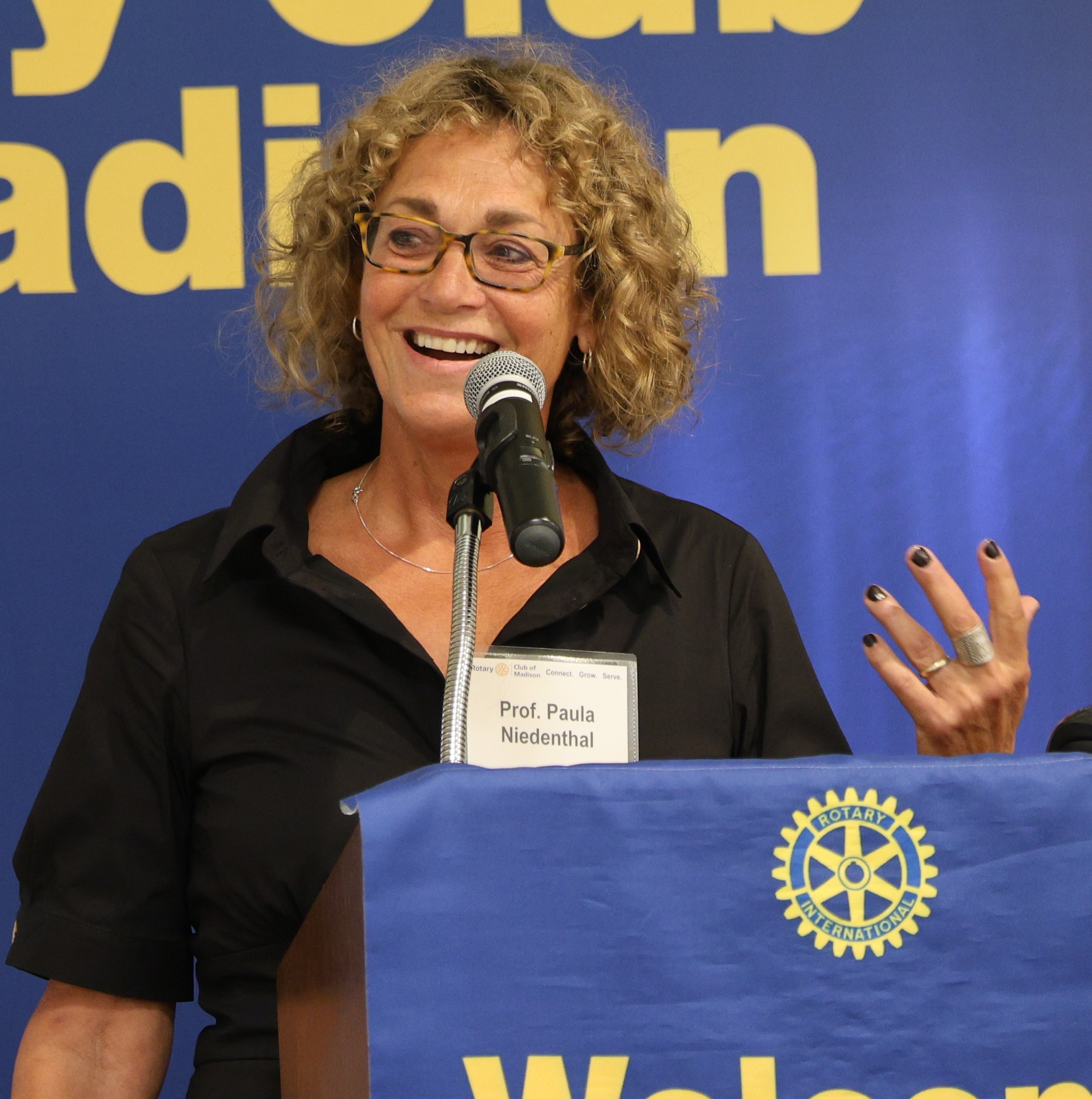
Why do we smile?  Why do people smile more in some countries than others?  And how are our smiles perceived?  UW-Madison Psychology Professor Paula Niedenthal shared some of the answers to these questions in her presentation before the Rotary Club of Madison. Neidenthal, who researches smiling around the world, has found countries like the U.S. that are more ancestrally diverse, smile more than others.  She theorizes this is because people from different cultures and countries who spoke different languages (and who emigrated to the United States) would use smiles and facial displays of emotion to better communicate and build trust.  On the other hand, in European countries with less ancestral diversity where only one language is spoken, don’t smile as much and perceive the North American smile as “fake” and intended to “sell you something”

Neidenthal was smiling as she began her presentation because the Madison City Council the night before started the process to change an ordinance than bans keeping pigs in Madison. The proposed change would allow miniature pet pigs to live in the city.  Neidenthal is hopeful this will mean her pet pig, Rudi, the subject of numerous recent news stories, will be able to continue to delight his fans around her near westside neighborhood.  

If you missed last week’s meeting, you can watch it here:  https://www.youtube.com/watch?v=D_OhddgERD8&t=13s

July 26: Name, Image, Likeness (NIL) and WI Athletics

–submitted by Kevin Hoffman

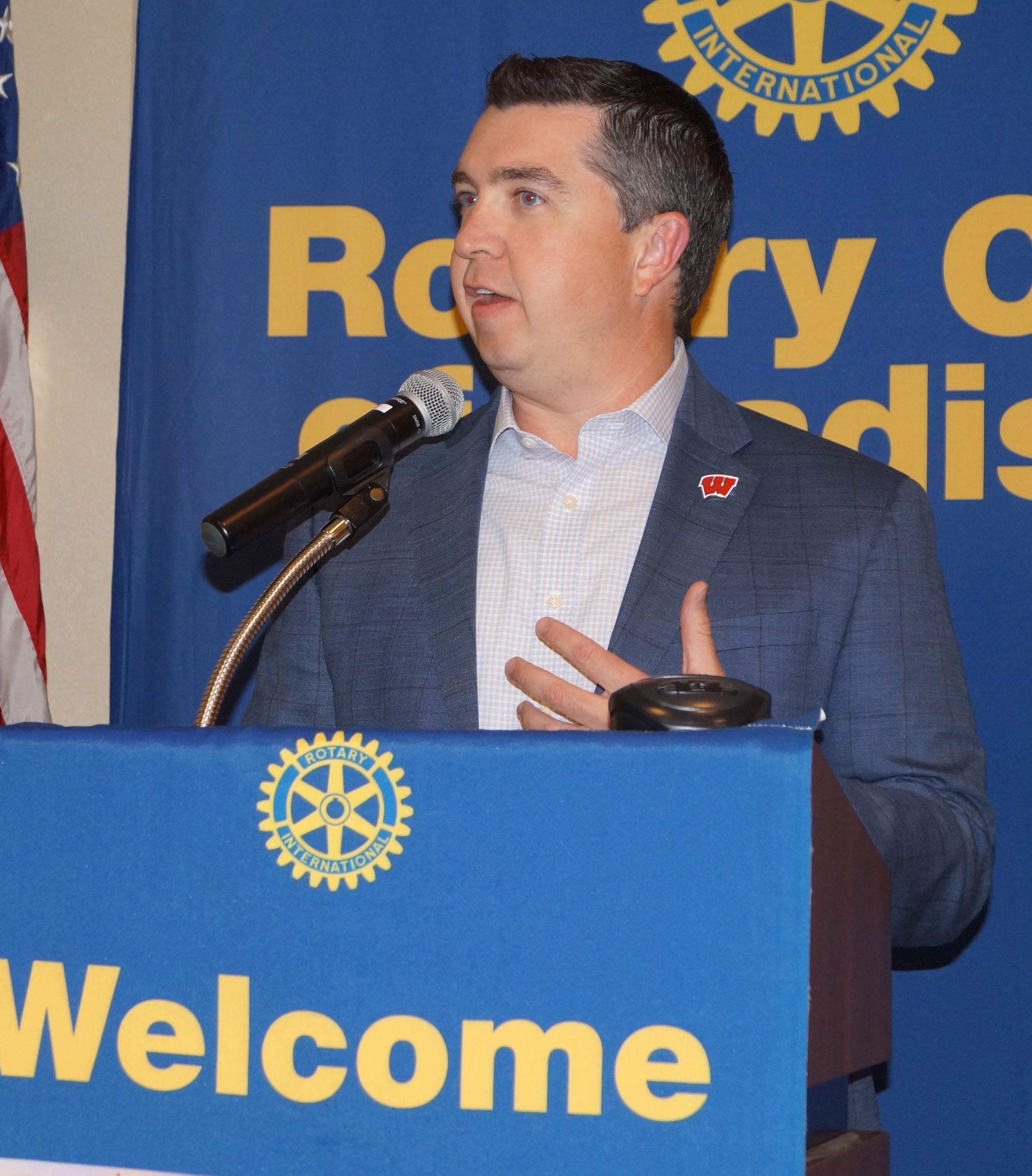
Brian Mason is the Director of Name, Image, Likeness (NIL) Strategy with the UW Athletic Department.  Under recent state legislation and Supreme Court decisions the rights of student athletes to control and use their name, image and likeness for monetary gain was established. There is also federal legislation pending with the objective of creating a level playing field for all athletes and programs instead of fifty different sets of laws to follow. He clarified that NIL cannot be used as a recruiting inducement by schools.

The NIL strategy at UW seeks to facilitate the connection between student athletes and businesses. In addition to the traditional pillars of athletic performance, academic achievement, and personal development, the impact of financial advancement is also positively guided and supported. The UW Athletic Department works toward helping the student athlete develop the business and life skills to manage NIL benefits.

If you missed our meeting last week, you can watch it here: https://www.youtube.com/watch?v=7za6kqTh-uQ&t=1918s.

July 19 Program: Changing Behaviors

–submitted by Kevin Hoffman

UW-Madison psychology professor Markus Brauer punctured some myths and practices in programs designed to bring about change and good behavior; specifically, with application to Diversity, Equity, and Inclusion (DEI) efforts. These efforts include providing information in the hopes people will change; targeted initiatives such as mandatory training; and relying on good people with knowledge, interest and common sense. They are all ineffective and sometimes counterproductive.

Methods that have worked include using a structured, studied approach that targets behaviors, audiences, identifies barriers and benefits, and uses social marketing elements to achieve DEI goals. Importantly, changing people’s perceptions of social norms by creating conditions for social pressure and conformity has great benefit for DEI success for marginalized groups. Additionally, having committed, supportive, and positive leadership and adequate resources devoted to DEI is critical.

If you missed our meeting last week, you can watch it here: https://youtu.be/if_Axz-1vcI.

June 28: Annual Changing of the Guard Program Highlighted Multiple Milestones & Accomplishments

–submitted by Sharyn Alden

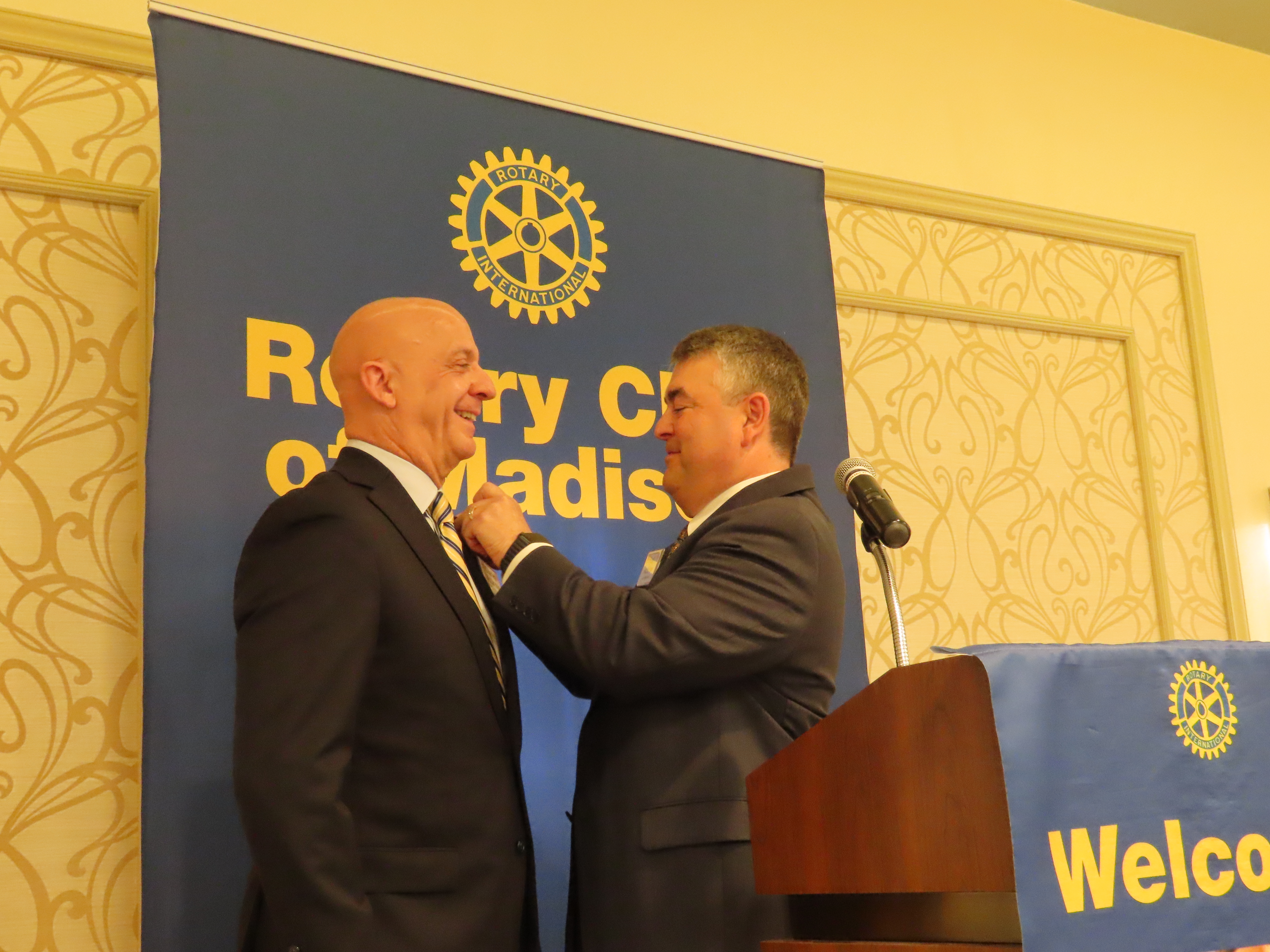
Outgoing Rotary President Paul Hoffmann Transferred the Gavel to the Club’s 2023-24 President Charles McLimans

On June 28, Paul Hoffmann was given a resounding send-off during the Changing of the Guard Rotary Program. He told Rotarians and the 40 guests present that he was proud to have been the club’s 110th president. “Wow, that went fast?” (referring to the past year) I know Charles McLimans is going to be a fantastic president.”

Paul pointed out many ways Rotary continues to give back to the community. He noted, “When I asked someone to do something, I almost always received a yes.” From reaching and exceeding goals when asked to contribute to community grants programs, to heading programs and fellowship groups, he paid tribute to club members for making contributions on all levels of involvement.

“I appreciate that Rotarians stand up in their resolve to make the world a better, different place,” he said.

A brief video roasted the outgoing president by focusing on his attention to numbers, since, after all, he is a banker.

One number of the screen was the #1 –indicating the number of Rotary meetings Paul missed during his tenure as president.

Another was the #42—indicating the number of times he “appreciated” the program presenters over the last year.

Many Rotarians would probably say, we appreciate you, too, Paul!

If you missed our meeting last week, you can watch it here: https://www.youtube.com/watch?v=ZFtn7qcmt70.

June 21: The Importance of Insects in Our Gardens

–submitted by Jessika Kasten

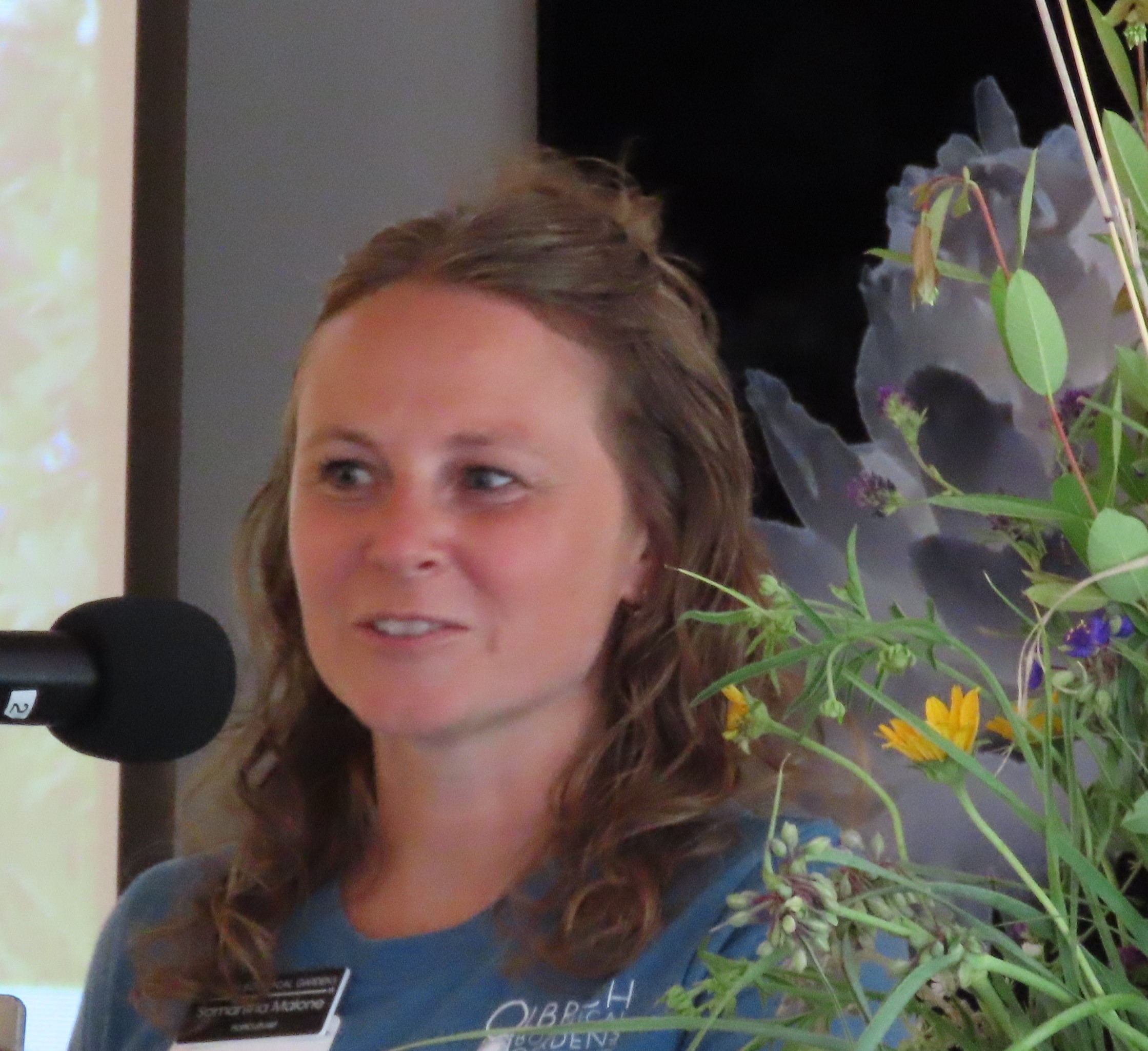
This week’s meeting was held at Olbrich Botanical Gardens, featuring horticulturist Samantha Malone. Sam spoke on the important role inspects play in our gardens, as well as the mutualistic relationship many plants and insects have with each other. Sam also presented on the resilient nature of insects due to their size (they don’t need much food to survive), their strength (many have a strong exoskeleton) and their reproductive systems that allow for millions of eggs. Sam’s calls to action for the group were to keep your fall clippings onsite over the winter and to focus on growing native plants.