Category Archives: Weekly Rotary Guest Speaker

April 13: Monona Terrace: Building On A Dream

–submitted by Rich Leffler

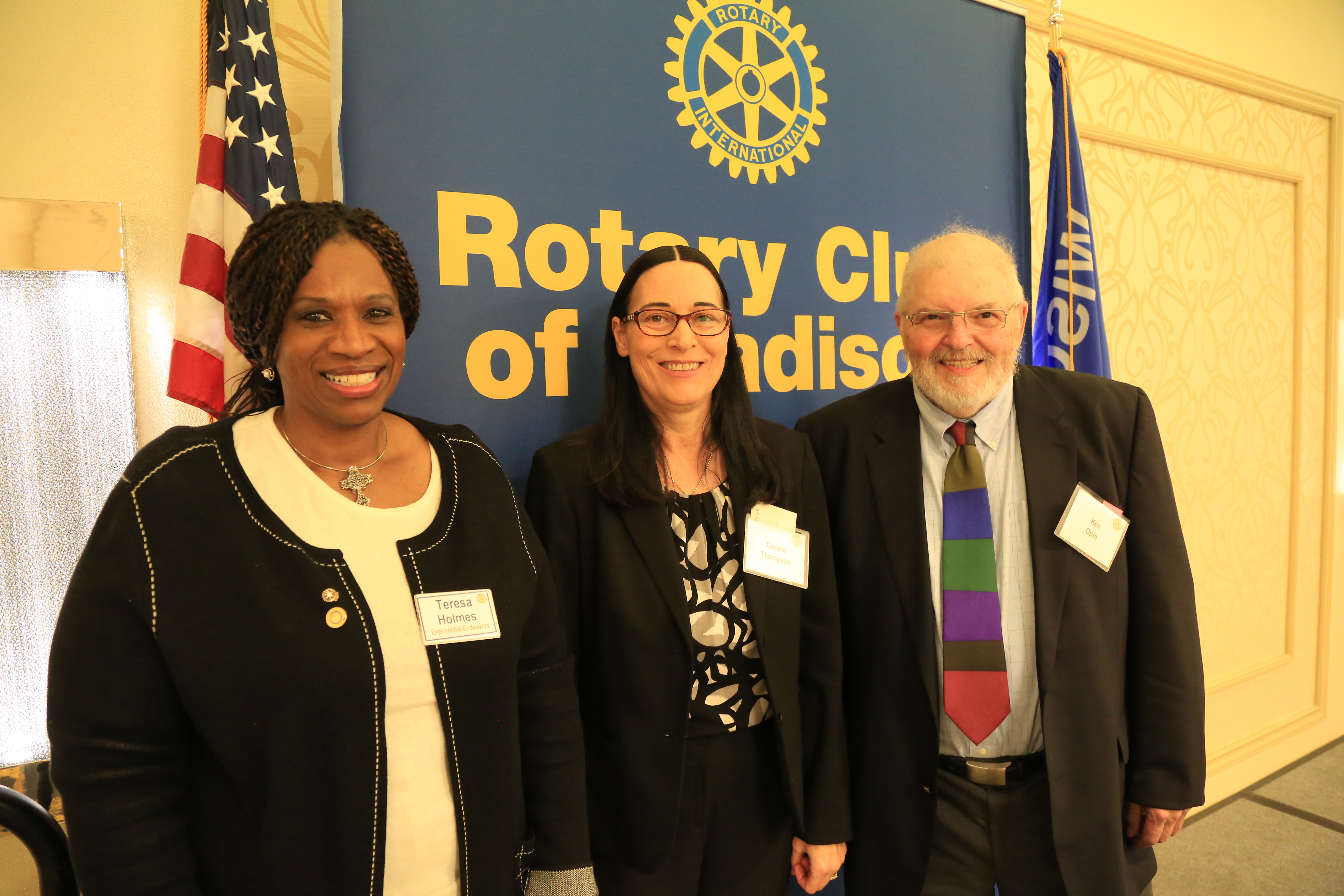
From left: Club President Teresa Holmes, Connie Thompson and Ken Opin

Ken Opin, who was a leader in the effort to pass a referendum authorizing the construction of the Monona Terrace, and Connie Thompson, Executive Director of the Monona Terrace, spoke to us about history and reality. The original Frank Lloyd Wright plan was for a “Civic Center” of grand aspiration. For many years this plan languished and failed in two referendums. After the referendum calling for a less ambitious convention center passed 1992, newly elected mayor Paul Soglin, with the assistance of George Austin, and Roberta Gassman, began the planning and building of the Monona Terrace. Also involved were Rotarians Don Helfrecht, the late Wayne McGown, Fred Mohs, and Mary Lang Sollinger. Construction began in November 1995 and was completed in July 1997. Since it opened 25 years ago, the Monona Terrace has hosted 16,661 events with an economic impact of $697 million. Along with the Overture Center, it has revitalized downtown Madison.

If you missed our meeting this week, you can watch the video here: https://www.youtube.com/watch?v=OS0eQao5GOs

January 19: State Line Distillery: Building Community One Bottle at a Time

–submitted by Andrea Kaminski

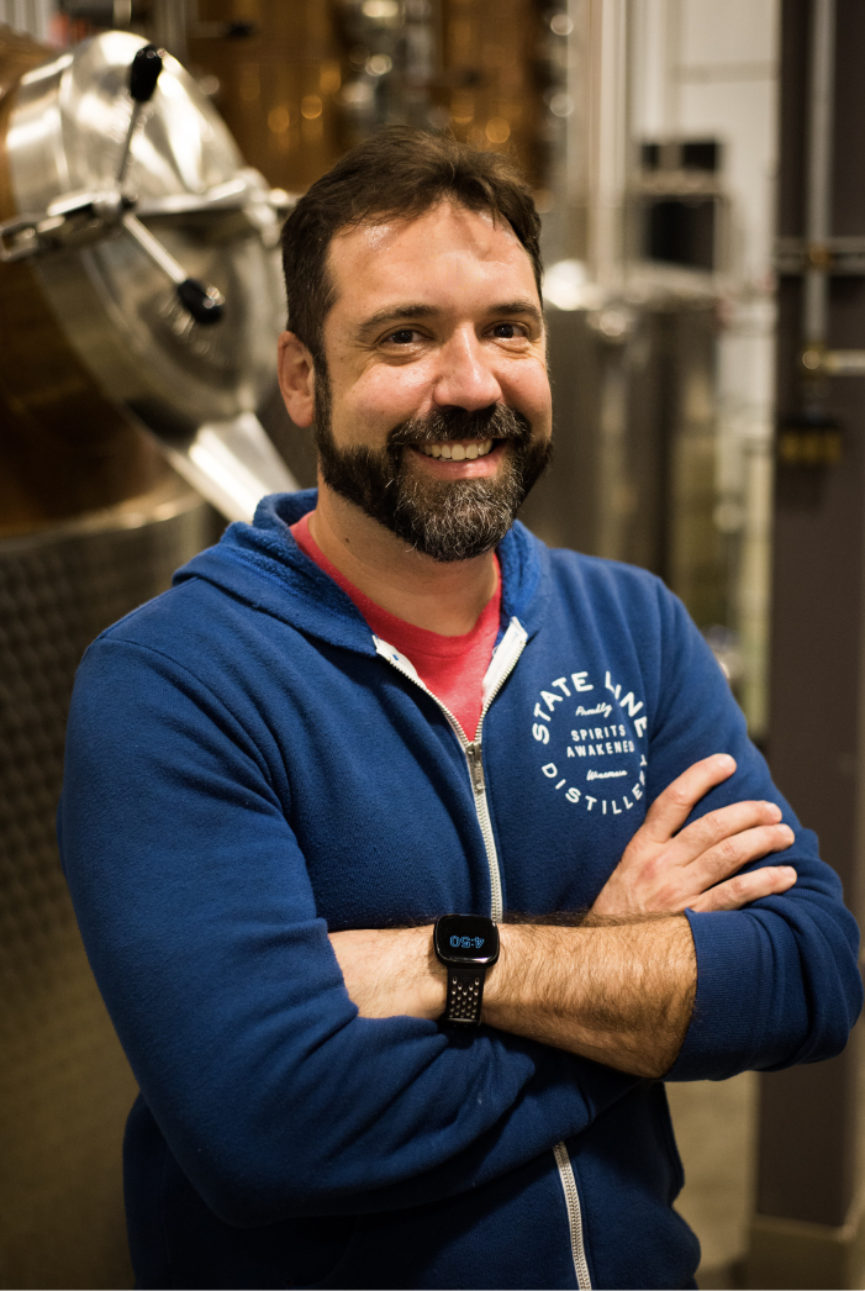
As a biology major at UW-Eau Claire several years ago, John Mleziva was interested in the science behind fermentation and brewing. Eventually he came to Madison to teach at Edgewood College. In 2012 he enrolled in a second master’s program, this time in Scotland and specializing in brewing and distilling. Then he returned to Madison, bought a small still and began testing recipes in his kitchen. He opened State Line Distillery in a beautifully rehabilitated facility on Madison’s east side in 2017. The first few years saw tremendous growth, but they had to shut the doors in March 2020 because of the pandemic. One day as John sat in the empty cocktail lounge wondering if the distillery would survive, he was asked to produce hand sanitizer for the state of Wisconsin. This kept State Line and many other distilleries afloat through the pandemic.

If you missed our meeting this week, you can watch it here: https://www.youtube.com/watch?v=Vb-FaNWmXZM&t=405s

DAIS: Making Adjustments to Provide Services During a Pandemic

–submitted by Andrea Kaminski

On January 12, Shannon Barry, executive director of Domestic Abuse Intervention Service, spoke about how her organization adjusted to support survivors through the pandemic. This required new strategies just when their clients’ own situations were more dire. During the Covid lockdowns, victims were isolated with their batterers. DAIS provides an array of personal services and advocacy and has the only domestic violence shelter in Dane County. The volunteers who previously staffed the DAIS 24-hour helpline were let go, and all staff members had to help staff the line. With a Paycheck Protection Program loan, DAIS has purchased additional phones, improved its technology and made the workplace safer.

If you missed our meeting this week, you can watch it here: https://www.youtube.com/watch?v=0_vVhluFXRI&t=2269s

December 8: Impact of Large and Small Capital Projects on Their Communities

submitted by Kevin Hoffman

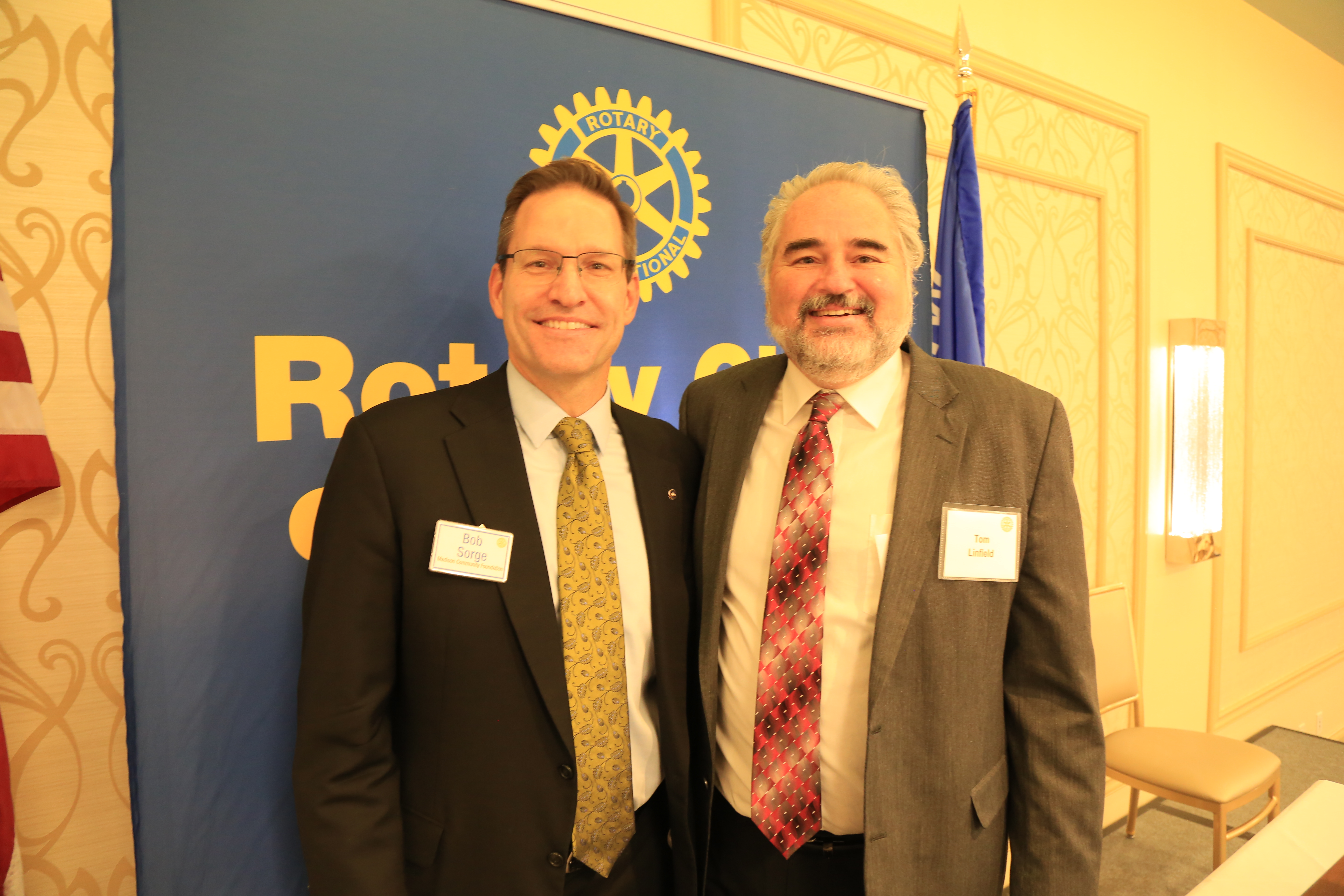
Club Member and Past President Bob Sorge (left) and Tom Linfield (right) of the Madison Community Foundation (MCF) gave an informative, eye opening and thought-provoking presentation on the tangible benefits of non-profit capital projects on the Madison area. 

Bob gave background information on the MCF and the financial resources directed into the community.  MCF distributed about $29M in grants in 2020 that were largely directed by individual fundholders.  The MCF was also able to help other non-profits in the area leverage another $114M in resources from outside agencies for a total impact of $143M.  In addition, to create an authoritative reference for making informed giving decisions, the MCF has spent the recent past developing capabilities for researching and evaluating area non-profits.  The result has been the Greater Madison Nonprofit Directory which can be found on the MCF website.  This is a resource open to all community members. 

Tom covered the impact of capital campaigns on the Madison area by pointing out that buildings quickly become a community asset elevating the area surrounding the structure and becoming a center of development in the neighborhood.  New buildings also transform the non-profit’s capacity for services and development of resources to benefit the community.  Think about the impact that libraries, schools, health centers, community centers and affordable housing (to name a few) has on a given area.  There are about 15 building campaigns a year.  The financial impact is large not just for the physical buildout, but it also creates momentum within the non-profit for increased services, outreach, performance space, work efficiencies, and hosting/meeting space.  Once complete, this allows the non-profit entity to leapfrog to the next level to the community it serves.

If you missed our meeting on December 8, you can watch the video here: https://www.youtube.com/watch?v=QybkuIpEtT4&t=5s.

Jorge’s Last Stand

I’m not a sentimental guy, but I have to think back to the time I was selected to be our Club’s next President.  It was a great honor, but it also made me wonder how I could become the one President Rotarians would remember the most.  What if I doubled the amount we raise for the Foundation?  Reached one thousand members?  If only Godzilla came out of Lake Mendota during my Rotary year and I fought him off, that would make my presidency unforgettable.  Well, nowhere in my wildest thoughts did I think that I would have to deal with a once a century pandemic.

So I became the very best virtual president this Club has ever had.  It wasn’t what I’d hoped for, to be honest, but at least it had its perks [photo of Jorge in suit jacket, tie, sweatpants/shorts during Zoom]. 

Of course you must remember that even though things seemed to come to a standstill, they never really did.  Our Rotary office staff got our Club up and running in short order; they even went to members’ homes to show them how to join our virtual meetings.

Brian Basken and Jason Beren gave their time, expertise, and even facilities to ensure we could live stream meetings.  Granted, we told them they could invoice the Club for their services, but we never told them we’d pay the invoice.  We owe them a great deal of gratitude for their year-long effort and tremendous contribution to the club. 

At the same time, our Committee chairs made sure the work of the Club went on, and the Fellowship chairs made sure the fun of the Club went on.  It wasn’t easy to do, and it was especially important at a time when lockdowns and uncertainty resulted in a great deal of stress for all of us.  The Board was able to revise our Strategic Plan and put together four task forces whose work will help our club thrive in the long run. 

And of course there’s all of you: Despite a once in a century pandemic our Club donated over $750K worth of community grants, programs, and scholarships.  We continued to mentor Scholars whose life was turned upside down by COVID.  We expected the pandemic to reduce our membership to 400, and 419 of you stayed on board, attended our meetings and participated in the life of the club.  Rotary was there for the community when it was needed the most, and all of you refused to give up on Rotary when Rotary needed you the most. 

And you still refuse to give up.  You are our future.   There’s still a lot of need in the community; need for basic services like food and shelter, need for education, need for reconciliation and unity.  It is not going to happen unless we make it happen.  So I call on you to reach out to other Rotarians and encourage them to come back to in-person meetings, keep building goodwill and better friendships right where we left off.   Our work is not done.  It has gone on for over a hundred years, and we stand on the shoulders of giants.  Let us live up to their legacy for another hundred years or more.

Thank you for the opportunity to serve.  I bid you a fond farewell.

Patrick Lucey’s Lasting Legacy for Wisconsin

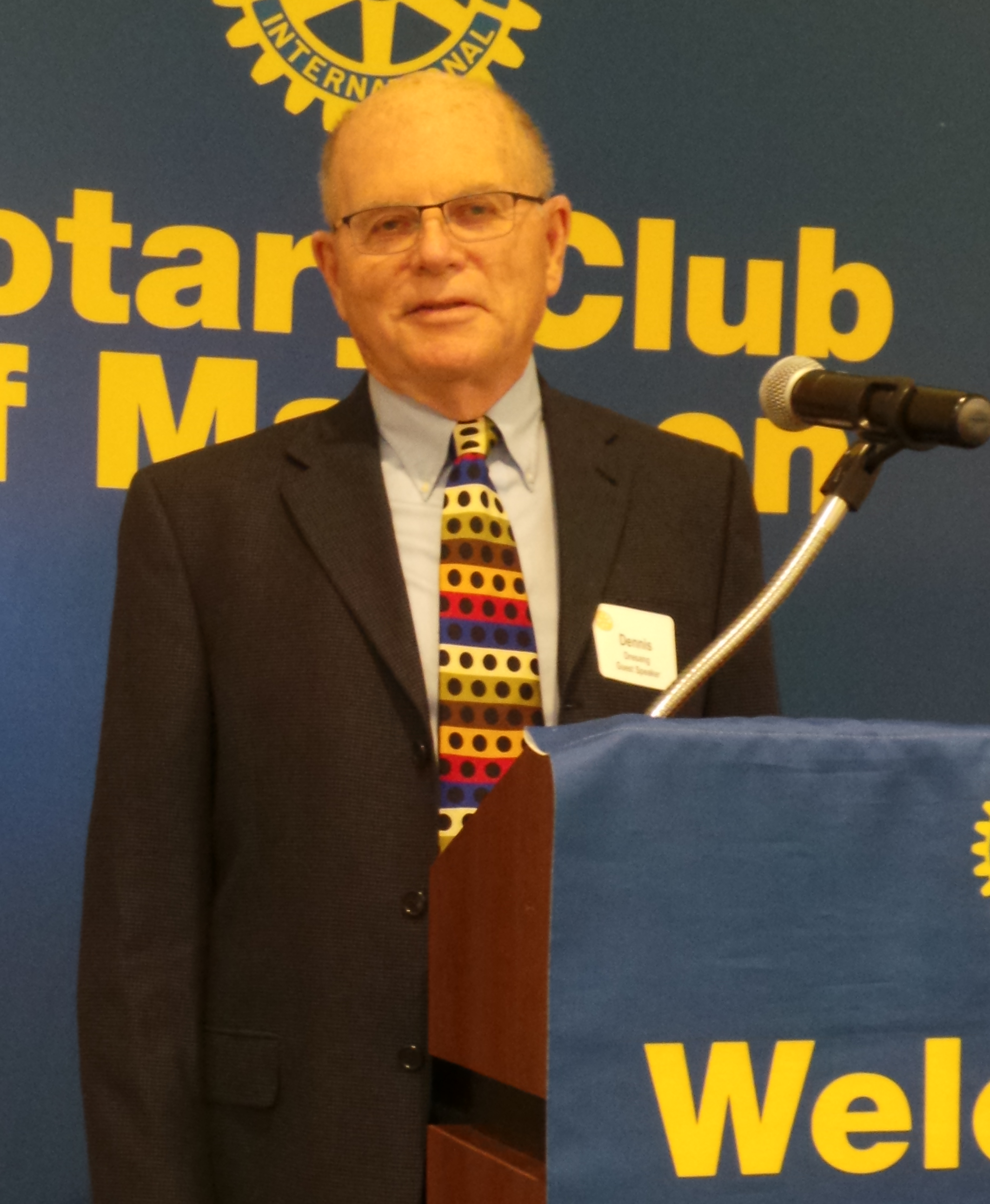
Dennis Dresang shared the legacy of former Governor Patrick Lucey May 5.

“Lucey professionalized state government from part-time citizen boards to professional civil service.  He reconceptualized taxes and spending to the system still with us. His term saw the most productive performance period, outdoing LaFollette,” Dresang said.

Growing up in rural Ferryville, shy Lucey wasn’t charismatic. He was described as analytical, professorial and demanding of staff.

Father Gregory Charles ran the family business, asking Lucy to join.  He now faced a crossroads: business or politics?  Faced with his fear of Joe McCarthy, Lucey chose politics.

In 1951, Lucey decided to marry, needing a career to support that. After turning to Jim Doyle, Sr, for advice, he became Dane County’s largest real estate dealer.  By 1969, when running for Governor, he’d embarked on $500 million Wexford Village.  

He was a progressive, with a reputation for bipartisanship, often reaching across the aisle. His first year in office, 50 years ago, his first initiatives were to create the UW System and to transform state taxing and spending systems. These were based on changes suggested by previous Governor Warren Knowles.

Local taxes at that time were rising 10% annually, because municipalities were responsible for schools and other taxes now elsewhere. Lucey was concerned about this burden on poorer communities. He created “equalization” formulas to give children the same education regardless of their community. He created a machinery and equipment tax exemption saying, “let’s tax income, not property.”  He also developed property tax levy limits. 

His ambitious agenda started as 24 items on one page; no-fault auto insurance was the only one not adopted during his term. He resigned to become Ambassador to Mexico when asked by President Carter.

His passion for social justice, opportunities for everyone to experience upward mobility, and problem solving are his legacy. 

Dresang is Professor Emeritus and founding director of La Follette School of Public Affairs.

Our thanks to Dennis Dresang for his presentation this week and to Valerie Renk for preparing this review article. Our thanks also to Mystery to Me Book Store for selling books at our club meeting as a convenience to our members. If you missed our meeting, you can visit Mystery to Me Book Store in person or click on this link to order it at their book store online:  https://www.mysterytomebooks.com/search/apachesolr_search/patrick%20lucey.  If you missed our meeting this week, you can watch it here:  https://youtu.be/wagy5bpFU7M.