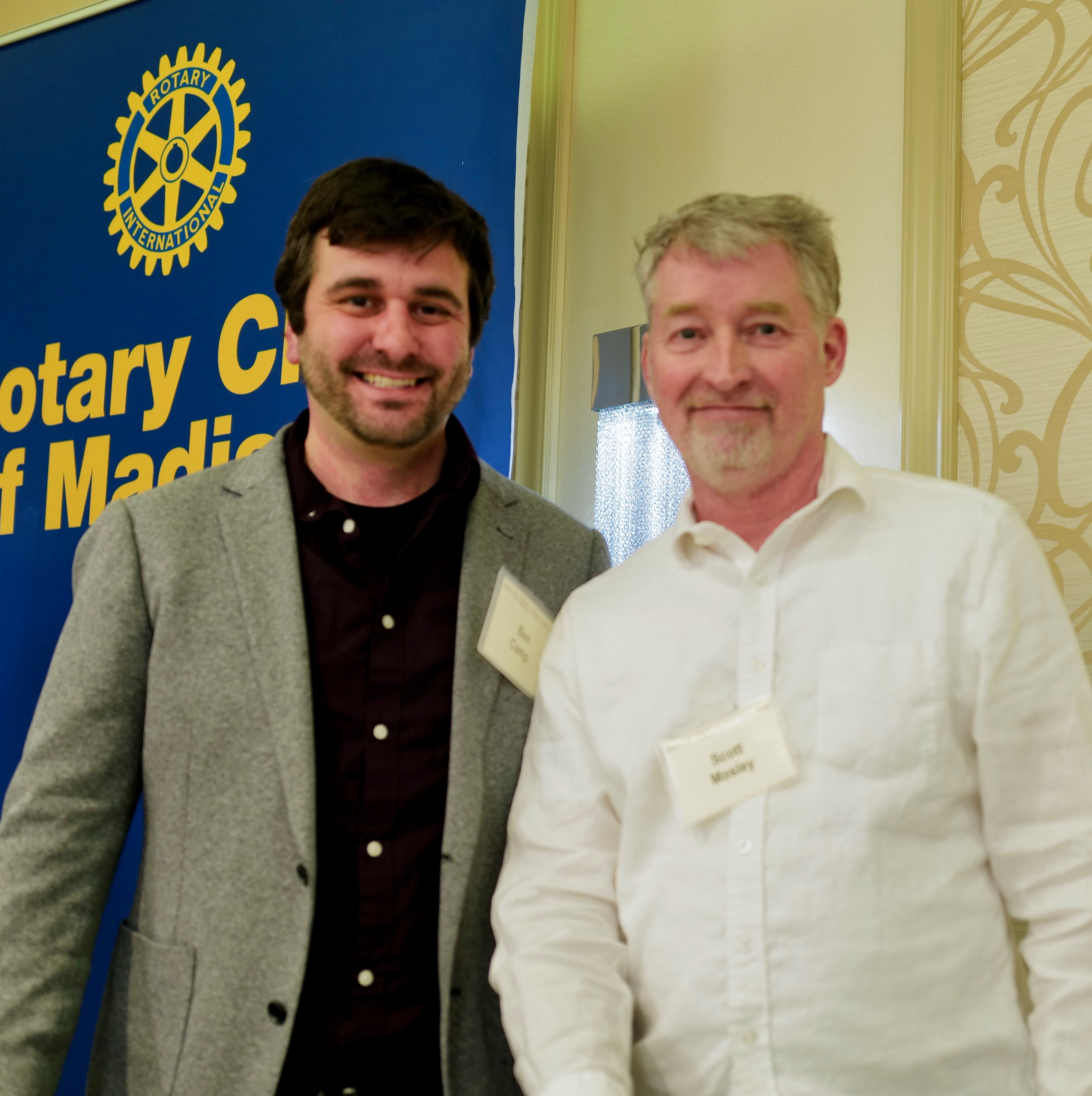
Why should we care about startups? The CEO of StartingBlock, Scott Mosley, asked and answered that question in his presentation before the Rotary Club of Madison. Mosley says startups are the economy’s net job creators, not small businesses as is commonly believed. He says small businesses tend to stay small, while startups grow.
That’s been the case with one of the startups that has benefited from the programs, funding, mentorship, office space and other services made available through StartingBlock. Rehab Path is an online service that matches patients with mental health providers. CEO Ben Camp says StartingBlock helped his company grow from five employees in 2019 to 60 employees today.
Mosley also noted that Madison’s startup ecosystem is thriving and is considered the number one potential growth center in the nation.
Rotarians were taught a lesson on the evolution of the English language and why we spell certain words the way we do – on the same day we honored the top spellers of the recent All-City Spelling Bee.
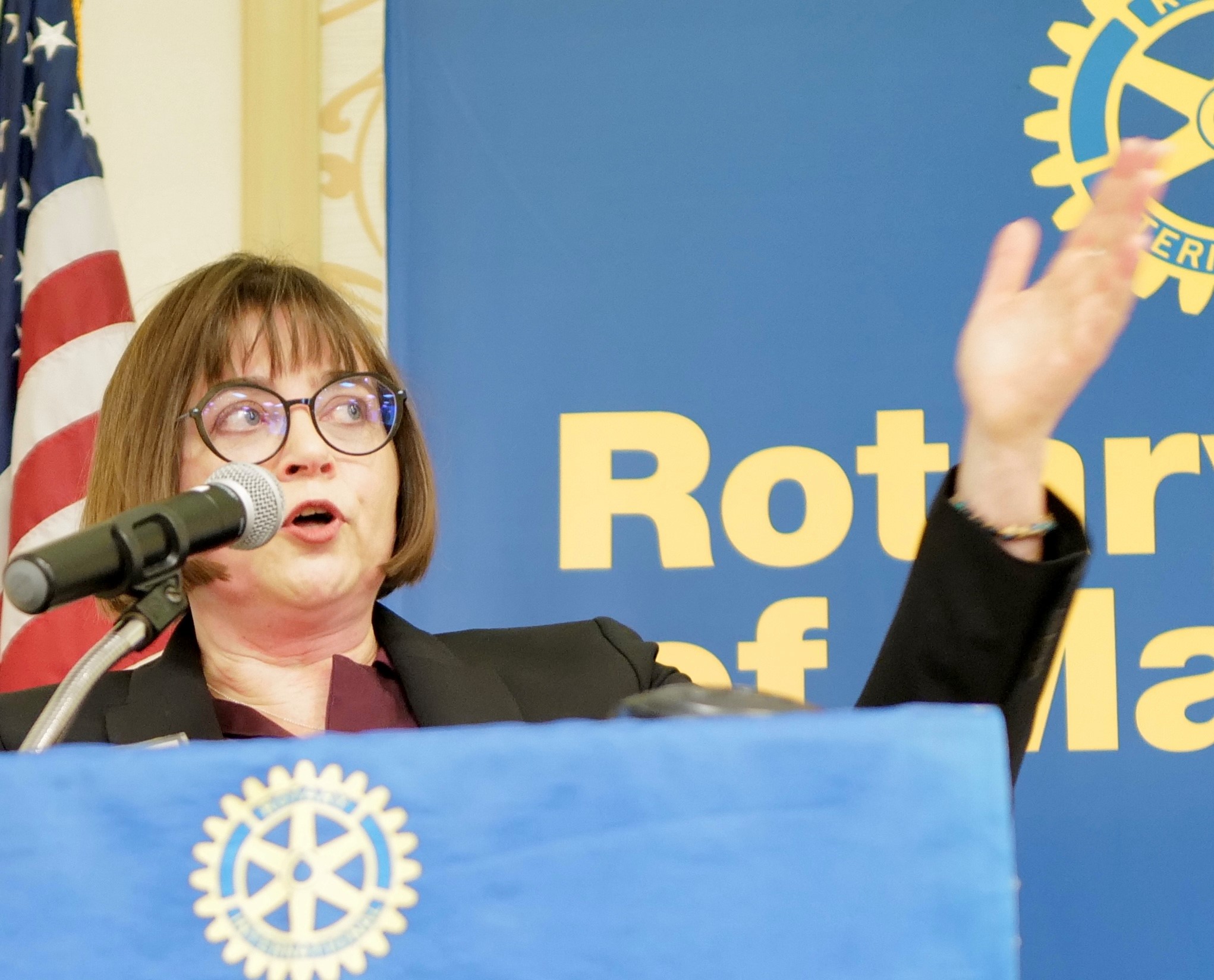
UW-Madison Professor of English Anja Wanner explained the many factors that influenced our spelling system – including word origin, politics, and even human error. For example, there is a “g” in the word sign, because it comes from the word signal; there is an “s” in the word island, because a printer made a mistake; and dictionary maker Noah Webster took the “u” out of honour and many other words because he wanted the United States to have its own distinct English language.
And why do we have words that sound the same, but are spelled differently and have different meanings? There are TOO many reasons TO go into here, so take a moment or TWO and check out the recording of the program here: https://youtu.be/3Tr-SQt33Wc.
Our program on Feb. 28th was our fellow Rotarian, Joy Cardin, formerly with WPR, interviewing Lindsay Christians, the Cap Times Food editor, regarding the long running, 21 years, food competition, Top Chef, filming this season’s series which is totally dedicated to Wisconsin Chefs and Wisconsin food. Lindsay said Wisconsin was chosen, not for its gourmet restaurants but for its culinary and food cultures. While the Top Chef winner will receive $250,000 and huge exposure, the state will receive immeasurable positive publicity throughout the nation. She enumerated the intricacies of filming the competition around the state as well as her brief role as a dishwasher for the production. The first episode is March 20th on Bravo or Peacock.
The CapTimes included an article about Lindsay’s appearance at our Rotary meeting, and here is a LINK to the article if you’d like to read more about Top Chef Wisconsin.
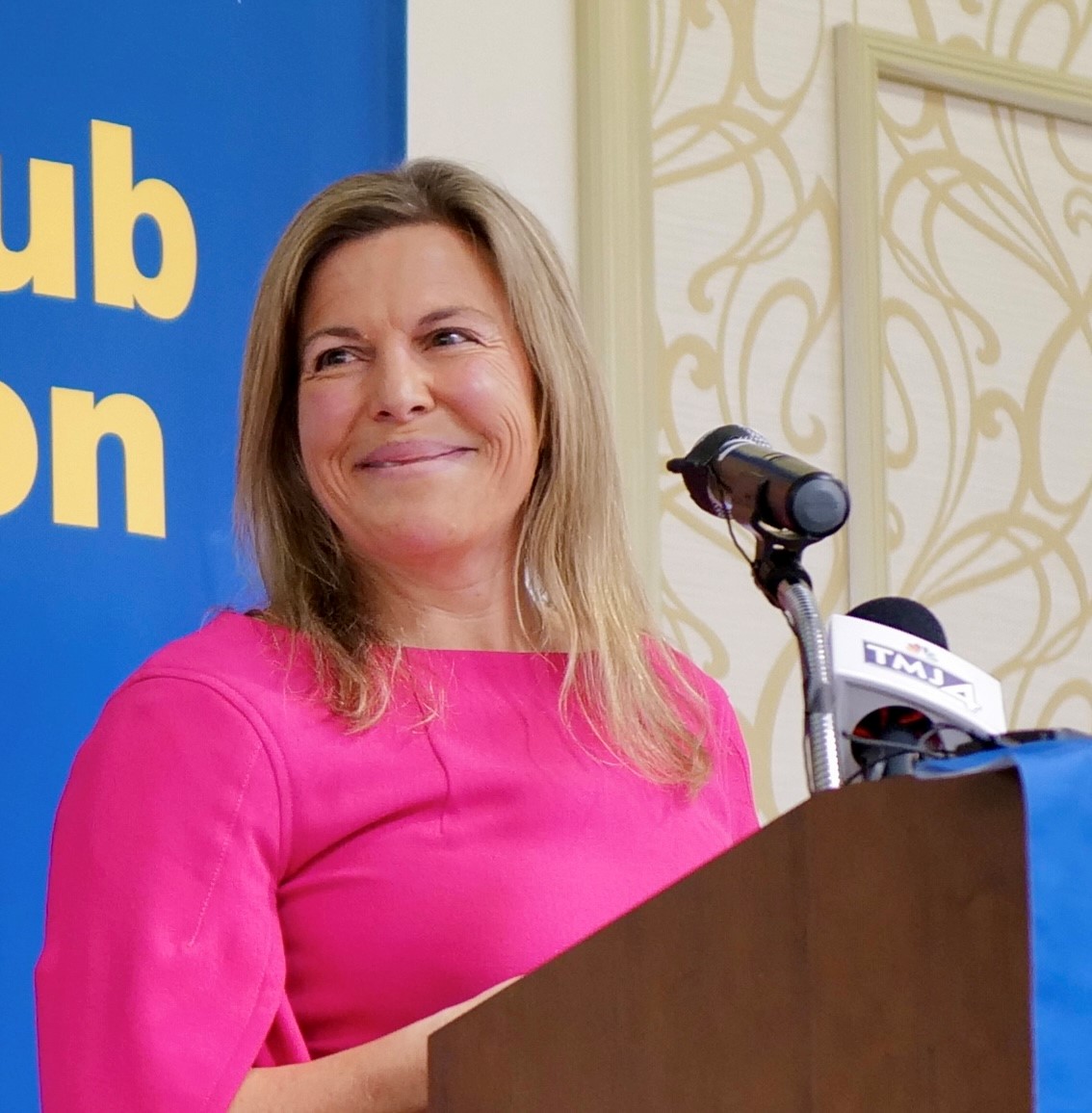
On February 21, former Downtown Rotary member, Alison Prange, shared with us the role the 2024 Host Committee plays in working with the National Republican Committee to prepare Milwaukee and Wisconsin for the invasion of 50,000 additional visitors including 5,000 delegates attending the National Republican Convention July 15th to the 18th. She is the COO of the Host Committee, a non-partisan, not-for-profit organization.
Alison emphasized the role of her organization is to help the RNC have a smooth convention by facilitating 8,000 vendors in their effort to serve the convention and its attendees who will spend $200M as well as promote Milwaukee and Wisconsin to 24 million television viewers.
On February 14th, our Rotary Club was privileged to hear a presentation by Blake Roberts Crall. She is the Program Manager for the Madison Forward Fund which in 2022 launched the Basic Guaranteed Income Experiment granting individuals $500 per month for one year. The participants’ income was below the poverty level of $14, 580 per year. Of the 3000 individuals who qualified, 2000 applied for the program with 150 being selected at random. Of the participants, 82% were women with 49% being Black and 18% being Latino. The yearend analysis is not yet complete, but the 8 effectiveness measures included such things as financial stability, mental and physical health, work force participation and housing security.
The future of Dane County is in good hands! That was my biggest takeaway from my first experience with the Rotary Ethics Symposium. At a time when so many things divide us, it was incredibly affirming to witness the thoughtfulness and compassion of our next generation of leaders.
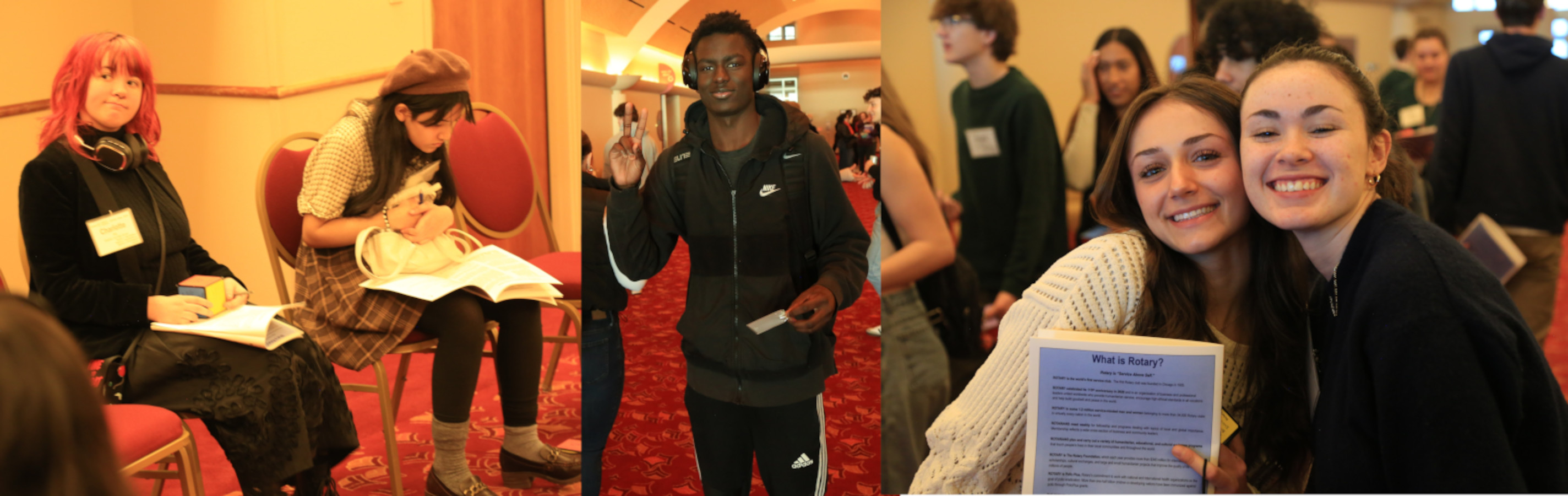
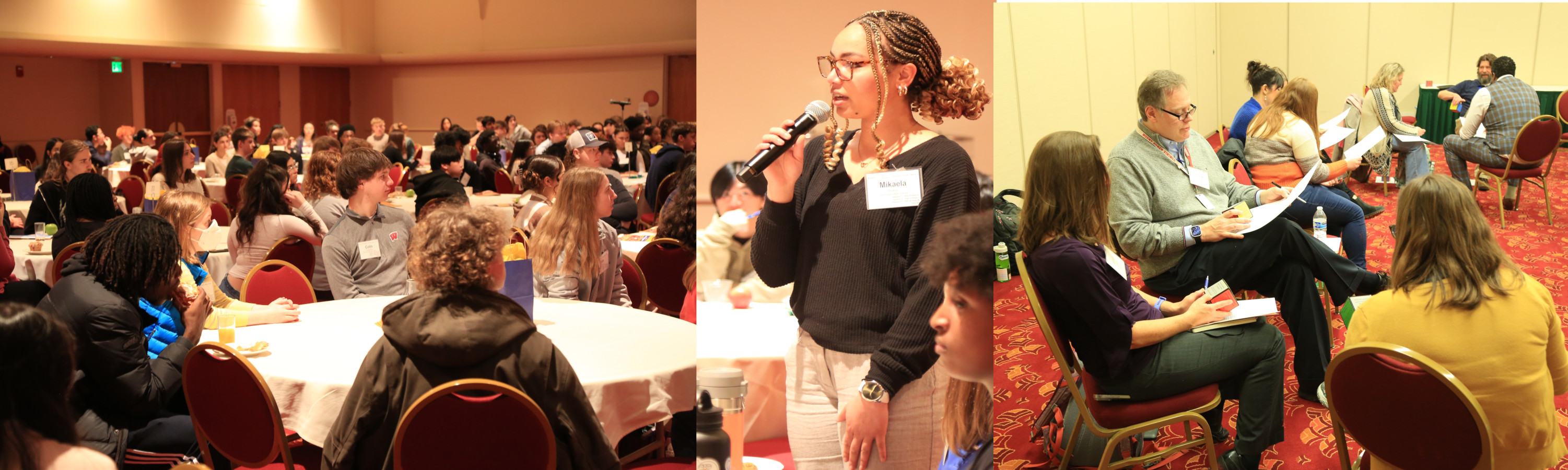
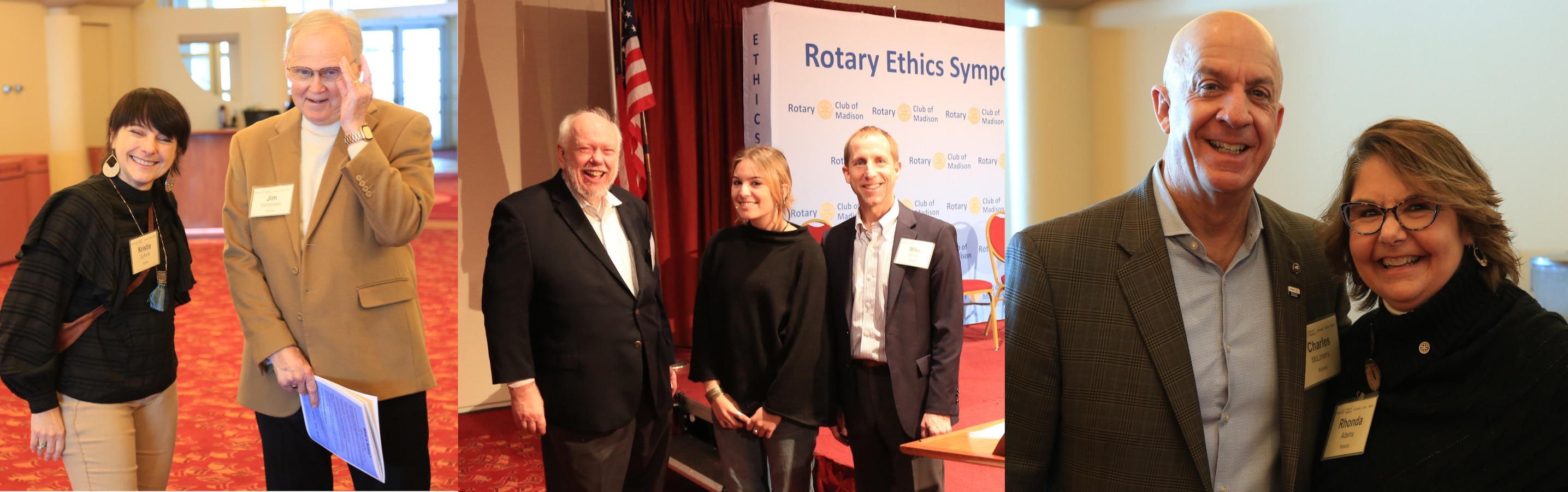
On February 9th, the 2024 Rotary Club of Madison Ethics Symposium brought together 160 high school juniors from 19 Dane County high schools at Monona Terrace, accompanied by 62 dedicated Rotary volunteers.
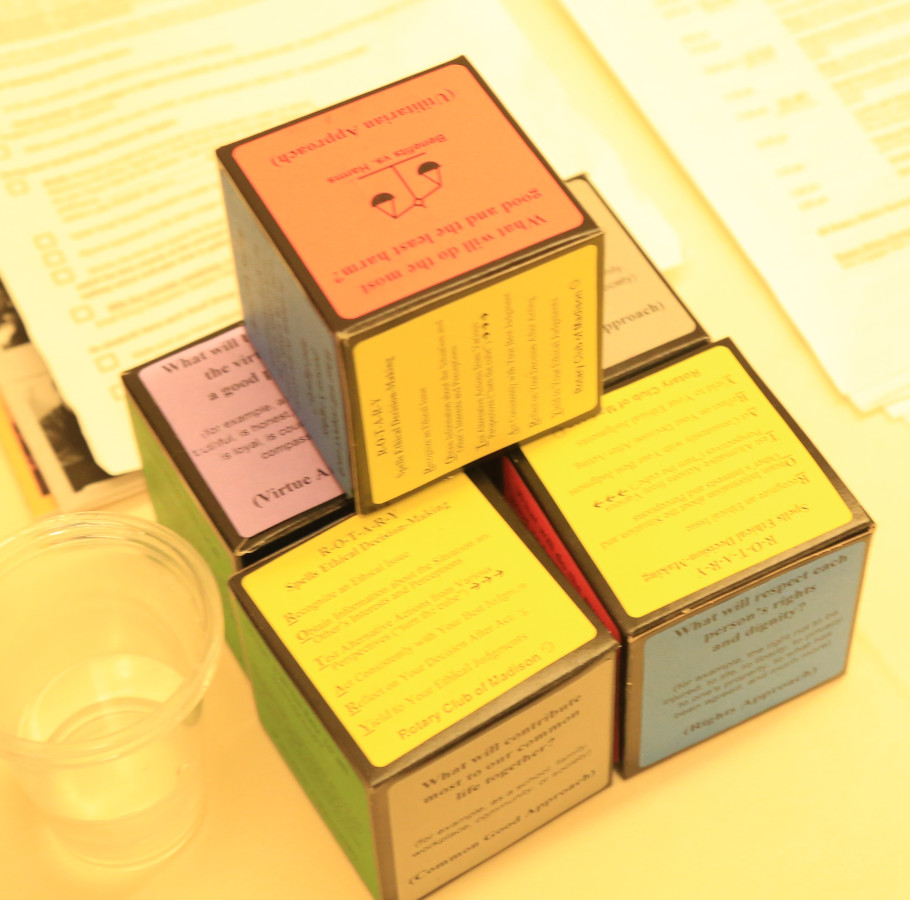
The symposium centered around the “R-O-T-A-R-Y Framework for Ethical Decision-Making,” aimed to equip these young minds with the tools and perspectives necessary to navigate the complexities of ethical dilemmas they may encounter in their lives.
The students were selected by invitation from their social studies teachers or through their AP Government classes. For many, being chosen to participate was an honor, marking them as emerging leaders in their communities.
The event was not just about theoretical discussions; it was a transformative experience for the students that gave them real-life experience with tough ethical dilemmas. One ethical quandary involved a high school student who confided in a fellow student that she was being bullied, and that she “couldn’t take it anymore,” but who asked her friend not to tell anyone. Another scenario asked students to take sides in a debate over allowing non-US citizens to vote in local elections.
Throughout the day, students learned how to approach difficult conversations, realizing that different perspectives could emerge from the same set of facts. The small group discussions were particularly instrumental in fostering an environment where students felt safe to express themselves without fear of judgment. As one participant astutely observed, “Every decision comes with a consequence,” highlighting the importance of thoughtful consideration before acting.
Most importantly, the experience instilled confidence in these young leaders. They learned the value of empathy, critical thinking and logical reasoning in making ethical decisions. Moreover, they discovered the power of their voices and the importance of being heard in a respectful and supportive environment.
The students were hesitant and quiet as the day started. In the first breakout session, voices were barely audible, and you could hear a pin drop. As the day progressed, a transformation occurred. Students gradually found their voices and embraced the opportunity to share their thoughts and opinions. The symposium provided a platform for them to gain confidence and step into leadership roles, empowering them to effect positive change in their communities.
It was evident that the symposium had a profound impact on both students and volunteers alike. Volunteers were inspired by the passion and enthusiasm of the young participants. And the students were reminded of the importance of ethical leadership and the role they play in shaping the future.
One of the most significant takeaways from the symposium was the realization that ethical decision-making is not just about following rules; it’s about understanding the consequences of our actions and considering the perspectives of others. By providing students with a framework for ethical decision-making, the symposium equipped them with the tools they need to navigate the complexities of the modern world with integrity and compassion.
At the end of the day, participants were asked to put their newfound knowledge into action. They were challenged to share the R-O-T-A-R-Y framework with at least one other person and encouraged to invite Rotarians to lead ethics symposiums at their schools, suggesting that students lead a symposium with their high school faculty as participants.
In its 22nd year, our Rotary Ethics Symposium continues to be a beacon of ethical leadership in the community. Through its commitment to fostering dialogue, empathy, and critical thinking, the symposium empowers the next generation of leaders to create a better, more ethical world.
As the students of the 2024 symposium embark on their journey, they carry with them not only knowledge but also a sense of purpose and responsibility to make a positive difference. And create a more ethical world.
For more photos, visit our club’s Facebook and LinkedIn Pages as well as Instagram.



 Rotary Club of Madison, Wisconsin