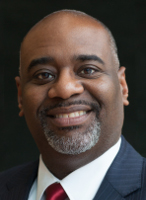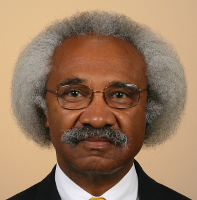
2020 Manfred Swarsensky Humanitarian Service Award To Be Presented November 18

Dr. Floyd Rose was chosen to receive this year’s Manfred E. Swarsensky Humanitarian Service Award for his decades-long contribution to education in Madison.  The November 18th Rotary meeting will be allocated to this award, and Floyd Rose will be presenting the Rotary program that day.  We look forward to his presentation on November 18. 

This year’s Swarsensky Award Selection Committee was impressed by the caliber of this year’s nominees, and below is a listing and brief summary of each of these candidates who are also building bridges in our community:      

Paul T. Ashe:  If you wonder, “what can one person do?” think of Paul T. Ashe. In 1979, while he was in his mid-20s, he began distributing sandwiches to people in need out of a small Christian bookstore above a convenience store on Gorham Street.  That was a band-aid on a systemic problem.  From that, he formed a partnership with St. Paul’s University Catholic Center on State Street to secure space for a noon meal.  He reached out to leaders of a wide range of faith communities to recruit small teams of volunteers to cook and serve balanced hot meals.  Soon more than 50 faith communities were participating.  This became the Community Meal Program that welcomes strangers.  The Community Meal Program grew to meet the growing needs of the community.  Through the benevolence of the community, and without any government support, a commercial building was purchased and rehabilitated and became Luke House which serves guests 9 meals each week—4 noon meals and 5 evening meals.  Here meals are shared at round tables—family style.  After Mr. Ashe’s retirement, the program remains, as the model of dignified hospitality that Paul established. This nomination submitted by Ernie Stetenfeld.

Dr. Patricia Tellez-Giron Salazar:  Dr. Patricia Tellez-Giron Salazar immigrated to the United States in 1993 and settled in Madison.  She practices medicine at the Wingra Clinic and serves a very diverse and underserved population and reaches out into the community to help build bridges for the Latinx community.  She serves people, primarily Latinx, with limited access to healthcare services by maintaining extensive involvement across a variety of different healthcare organizations that include counseling at Agrace about end of life care issues; educating about nutrition and healthy eating with Centro Hispano, healthcare and family planning; serving as medical director for the Latino health summit, Teen Health Bash, and chronic disease summit; and caring for the geriatric population.  She also supports other organizations in the community including Latino advisory council to the United Way; Chair of Dane County Latino Health Council; advisory to UW-Madison professional association for Latinos for medical school; and the Metropolitan Madison School District Multilingual Guiding Coalition.  This nomination submitted by Ron Luskin.

Becky Steinhoff:  Becky Steinhoff is recognized for her vision to address an underserved area of Madison with a community center—and with her belief that people will come together to do the right thing.  Through her tenacity, the eastside of Madison has the Goodman Community Center.  She found supporters and philanthropists and marshalled other organization to create a state-of-the-art community center from the bones of vacant historical industrial buildings.  She grew the size of the staff from 3 to more than 100 to meet the needs of the 35,000 people who use the Goodman Community Center.  Becky and her staff maintain a safe place where conflict is addressed honestly and in good faith—and joy reigns.  Becky retires after 31 years of leadership, but her legacy and the foundation of a healthy community center survives.  This nomination submitted by Linda Baldwin O’Hern.

Nancy Young:  Nancy Young exemplifies volunteerism.  As a professional mental health counselor skilled in conflict resolution, she uses her training in any way that it is needed.  She has consulted with community adolescent programs and worked on women’s and poverty issues to help women achieve their potential as leaders, and she is active in several capacities in her church.  Her most profound humanitarian contributions have been her service to the American Red Cross where she has been deployed to 14 national disasters that include multiple mass casualties.  The American Red Cross selected Nancy as one of only four mental health professionals in the country to be deployed to the Sandy Hook shooting.  Nancy and her husband Ed host children of Chernobyl each year who come to Madison for relief from the aftermath of the contamination of the nuclear accident in 1986.  In addition, they have opened their home to host numerous international students attending the UW.  She also volunteers for the Madison Symphony Orchestra League and serving on its Board.  This nomination submitted by Mary Helen Becker.
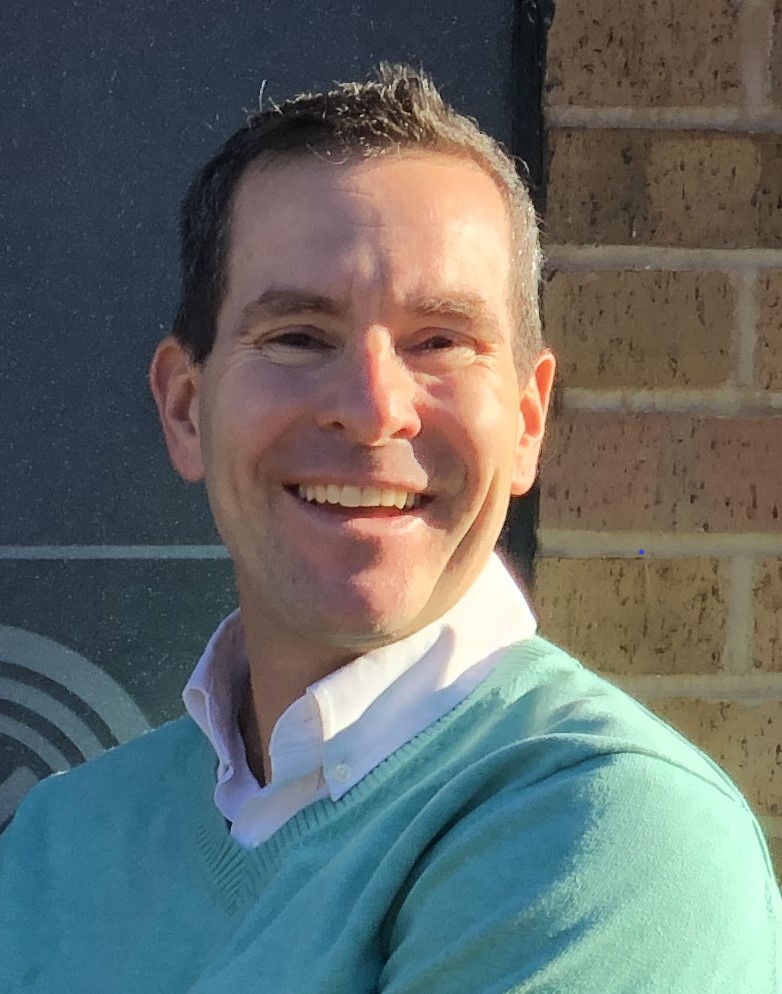
Rotarians Glean Zoom Meeting Tips from Author, Speaker, Darin Harris

 It was a mere nine months ago when rumblings of a pandemic were unfolding, and the word ‘zoom’ as a communications tool was all but foreign to many people.

 That was then, this is now. Today, Zoom connects people across the globe as a way to conduct business and enjoy other people’s company as Covid-19 has reshaped how the world works.

On October 28, Darin Harris presented “This is Not TV: Networking and Best Practices in Zoom” to over 80 Rotarians.

Harris joined Rotary in July of this year. He is co-founder of Living Giving Enterprises, an organizational and leadership development company which houses http://www.Journeyofcollaboration.com. He also guest lectures at UW-Madison, Edgewood College and Northland College in Ashland.

At this week’s Rotary presentation he showed some ways Zoom is used in addition to traditional face-to-face screen time. 

No matter what you use Zoom for – social meetups or for business the platform offers numerous opportunities for engagement. He emphasized this is, after all, interactive communication, not TV!

 Among some of the Zoom controls that can be useful is the survey option. In another example, he pointed out the Reactions tab if you want to show people how you’re feeling–use icons like clapping hands or a heart. Other features include CHAT, break-out groups, and Google Documents.

 In advance of dividing Rotarians into small break-out groups Harris explained, “Networking is all about getting to know each other better. Go into it with a ‘cup half-full’ attitude and then be an active listener.”

Harris then instructed participants to find something nearby that means something to them, then share it with the person on the other side of the screen.

In a break-out session with this author, Ellis Waller held up a model railroad car. On a shelf behind him he explained the 54-inch long miniature train was indicative of his interest in railroads, something he has enjoyed all his life.

 It was a superb example of how intriguing objects around you can jump-start fascinating Zoom conversations that will long be remembered.

Our thanks to fellow Rotarian Darin Harris for his timely presentation this week and to Sharyn Alden for preparing this review article.  If you missed our meeting this week, you can watch it here: https://youtu.be/cBiE_YpbA5s and

“Madison is an Outlier,” says Eileen Harrington, Chair of Madison’s Taskforce on Government Structure

Eileen Harrington, who spent her career in public service, recently served as Chair of Madison’s Taskforce on Government Structure (“TFOGS”). At the Rotary podium on October 21, she pointed out Madison’s city government needs restructuring. For example, fewer Madison residents are represented by local government compared to cities like Minneapolis and Austin.
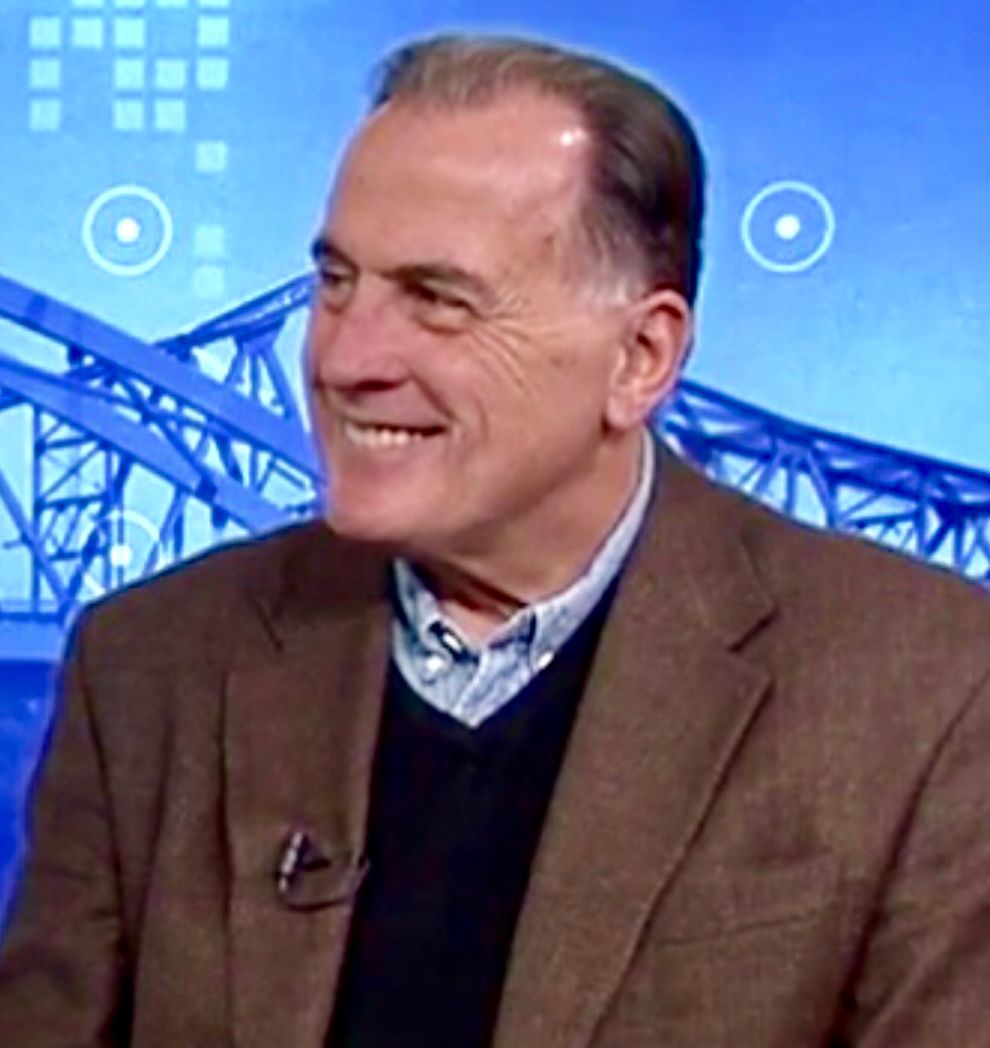
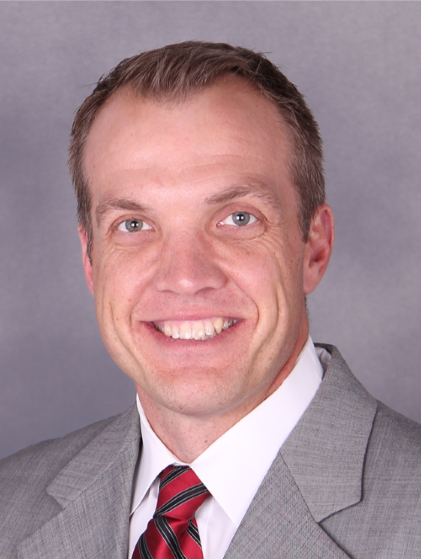
She opened the program by asking, “What would it cost to have a full-time Common Council so that our city can thrive when we have excluded so many people?  We need all hands on deck.”

Harrington, who grew up in Madison, retired from the Senior Executive Service of the United States Government at the end of 2012 after a distinguished twenty-eight year career protecting American consumers and leading change and programs in two different federal agencies.  From 2010 through 2012 she served as Executive Director of the Federal Trade Commission, the senior career staff position at the FTC.  Before that, she served as Chief Operating Officer of the U.S. Small Business Administration. 

In 2004, she was awarded a Service to America Medal for her work creating the National Do Not Call Law and Registry. This is the same medal Anthony Fauci, M.D., Director of the National Institute of Allergy and Infectious Diseases, and member of the White House Coronavirus Task Force, recently received.

Madison’s Taskforce on Government Structure (seven residents and four alders) spent two years working together holding more than 90 meetings and making 42 recommendations.

Harrington said recommendations include the following:  alderpersons should serve full time, the number of alders be reduced from 20 to 10 and that they serve four years instead of two years.

Currently, the Madison Common Council is a city council that consists of 20 alderpersons elected from 20 wards who serve two-year terms.

Another issue with the current structure is the disjointed source of information. Harrington explained, there are 102 boards, committees and commissions connected to Madison government but no one place to find information.

She ended the program by saying, “We need more full-time engagement on city boards, commissions and committees.”    She also noted that there’s a lack of diversity in Madison’s city government and that is especially true with economic diversity.

Our thanks to Eileen Harrington for her presentation this week and to Sharyn Alden for preparing this review article. If you missed our meeting this week, you can watch it here:  https://youtu.be/-_j9_uB1dPQ.

Ethical Leaders in Government – What Can We Do?

This week’s presentation was by Lee Rasch, the Executive Director of LeaderEthics Wisconsin, a non-profit that promotes ethical leadership in elected officials and develops ideas and programs that enable individuals and groups to support achieving that goal. 

As we all are fully aware, America’s political divide has become a chasm in recent years, and digital media has played a critical role in developing and exacerbating the problem.  To counteract that trend, Rasch’s group emphasizes that ethical leadership involves truthfulness, transparency and a dedication to unification of the populace, not polarization. 

While most of us are often nonplussed when asked what each of us can do individually, he provided several examples of practical actions Rotarians can take to address this growing societal problem.   Some of these suggestions were: 1) make personal efforts to promote government transparency; 2) identify misinformation whenever it arises and follow websites that identify and rate media for factual accuracy and bias; 3) support those individuals who do ethical work, regardless of their political affiliation; 4) learn about and support organizations that are committed to ethical contributions to society (e.g. Rotary); 5) reach out to and support ethical next-generation leaders; and 6) most importantly, vote for candidates that will provide ethical leadership and let them know you expect them to meet that expectation. 

Given the fractionated state of our nation, we all have much to do in order to get us on a course leading to ethical leadership in government, but Rasch emphasized the time to start is now.  Hopefully, every Downtown Rotarian will begin by voting in the upcoming election and starting individual efforts that will lead to a more ethical and unified government for our country.

Our thanks to Lee Rasch for speaking to our club this week and to Linn Roth for preparing this review article. If you missed our meeting this week, you can watch it here:  https://youtu.be/hi9q0Ves07s.

We apologize for the technical difficulties experienced during this week’s speaker presentation when we were testing the use of Skype.  We realize now that the internet can be too unpredictable, so we will use a pre-recorded video for any future speaker who is unable to appear at our livestreamed meeting. 

A Launching Pad for Young People to Do Great Things in the World

Chris McIntosh opened the October 7 Rotary program with a question. “What do you think of when you think of the Badgers?”

You may imagine sitting in the stands watching football at Camp Randall, but there’s a lot more to it when it comes to Badger athletics.

Each year, the UW-Madison Department of Intercollegiate Athletics makes available the opportunity for approximately 800 student-athletes to obtain a world-class education while competing on a grand athletic stage.

Chris McIntosh was named Deputy Athletic Director in July 2017. He oversees daily operations of the department, student‐athlete recruitment, business development, human resources, and strategic planning.

McIntosh was a consensus All‐America offensive tackle and Outland Trophy finalist for the Badgers in 1999. He captained Wisconsin’s back‐to‐back Big Ten and Rose Bowl champions in 1998 and 1999 and started 50 straight games during his college career. He was a first‐round draft choice of the Seattle Seahawks in 2000 and played in Seattle for three seasons.

He emphasized that UW-Madison athletes gain far more than lasting memories and trophies; they have numerous opportunities ahead due to their world-class education. 

Athletes receive support from several organizations like W-Club which includes UW-Wisconsin alumni around the country. Interestingly, 63 percent of Badger athletes settle in the Upper Midwest after graduation.

Where does the revenue come from for the UW athletics?  McIntosh said the sport of football, including filling the stands at Camp Randall on seven Saturdays a year is an important cog in the wheel. But this year there have been revenue shortfalls given the widespread impact of Covid-19.

Eight hundred young people in 23 sports are developing life skills that can take them far. The mentoring and support they receive at the UW during these formative years is crucial to their success. Much of that support comes from relationship building.

McIntosh showcased several athletes’ stories and how UW-Madison was a launching pad for their doing great things in the world.

By and large UW athletes recognize their exceptional educational opportunities. That shows in the 3.2.46 GPA earned by the vast majority of UW-Madison athletes.

Looking back on their athletic experiences at the UW-Madison, McIntosh said, “These young people discover they are capable of far more than what they thought was possible.—all because of football.”

Our thanks to Chris McIntosh for speaking to our club this week and to Sharyn Alden for preparing this review article. If you missed our meeting this week, you can watch it here:  https://youtu.be/YB626jHUsdk.

Call for November 3 Referenda

This week, Rotarians heard from new Madison Metropolitan School District Superintendent Dr. Carlton Jenkins that there is a critical need to pass referenda on the November 3 ballot. Board Chair Gloria Reyes was also in attendance. 
There are two referenda questions. The first seeks $33 million for operations such as full day 4K education; language classes, arts/music/science, and strategic equity projects.

The second questions seeks $317 million to replace aging facilities. This equates to $50/year for every $100,000 in home value. Overall, the referenda totals $350 million over all years.

If the referenda fails, Jenkins says they will continue to work with reciprocal accountability to seek the resources needed for the job.    

Jenkins said, “We look to collaborate with One City School and others.  We have reciprocal accountability, and we will build on those relationships.”  He reported over 100 MMSD science, technology, engineering and math (STEM) students are collaborating with Madison College and also looking at skilled trade and other pathways.  “Children are interested in many programs, he said.  “We want to give them the skillsets they need to have a choice of what they want to do in the future.”

Community collaboration plans from food distribution to college planning were also shared.

When asked if he would build on plans of the previous administration or make his own plans, Jenkins said he has read existing plans, will build on them and quoted Maya Angelou, “When we know better, we do better.”

Before coming back to MMSD, Jenkins previously served as Superintendent of Robbinsdale School District; prior to that served as Chief Academic Officer for the Atlanta Public School System. He earned his PhD and MS degrees from UW-Madison. He holds a BS degree from Mississippi Valley State.

If you would like to learn more about the referenda, visit: https://www.madison.k12.wi.us/2020-referenda-future-ready.

Our thanks to MMSD Superintendent Carlton Jenkins for speaking to our club this week.  We also thank Valerie Renk for preparing this review article, and, if you missed our meeting this week, you can watch it here:  https://youtu.be/CaLtyeAnWhg.