Creating Meaningful Conversations About Immigration

submitted by Valerie Renk; photo by Margaret Murphy

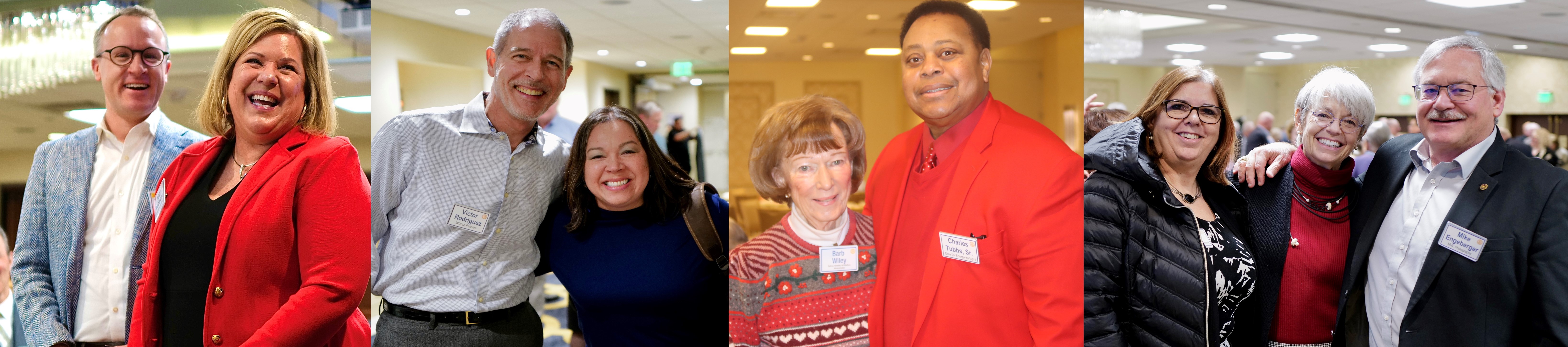
Karen Menendez Coller 9 25 19Karen Menendez Coller, Centro Hispano of Dane County Executive Director, shared how recent policies affect the Latino community.

Dr. Coller started with an overview of the state’s Latino community.  Seven percent of the population is Latino, and 27 percent are foreign born.  One fourth are K-12 students, and 34 percent live in poverty.

Opportunity barriers:  segregation, poverty, language, mobility, single parent households, housing cost and education.

Coller shared three policies impacting Latinos and our economy she hopes Rotarians will talk about with their networks.

Drivers’ Licenses for all is the first policy Coller highlighted.  The bill has support from the business community as it will increase safety and bring needed employees, especially on dairies where half of workers are Latino. Coller shared the story of Mario, from Honduras.  He is now a herdsman in DeForest with a close bond to his employer family.  He needs a license to drive to the farm.

Public Charge laws are the second policy Coller is concerned with.  These laws are designed to make it harder for families who use government benefits 12 out of 36 months to get citizenship. Coller shared the story of Jennifer, a legal permanent resident originally from Colombia, now a certified doula.  Jennifer has used government services and just wants to improve her family’s life.

In-state tuition is the third policy Coller would like to offer deferred action students, i.e. those who are citizens but with undocumented parents.  They are forced to pay the $40,000-$45,000 out of state UW-Madison tuition rate despite graduating from a Wisconsin High School having citizenship. Coller shared the story of Gilberto, a dreamer working three jobs.

Coller urged Rotarians to vote and learn about the estimated ten percent of Wisconsinites who are undocumented.

If you missed our meeting this week, you can watch the video here.
Wisconsin’s Dairy Revolution

submitted by Dave Mollenhoff; photo by Margaret Murphy

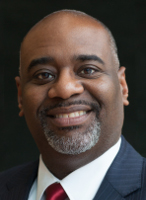
Dan Smith 9 18 2019Everything in Wisconsin’s dairy industry has changed!”  That was the keynote hit by Daniel Smith, the president and CEO of the Cooperative Network, in a clear and well-organized talk to the club on Wednesday.

You must understand the scale and depth of change in the last 40 years—1978 to 2018—he began.  The number of dairy farms dropped from 47,000 to 8800.  The size of the average dairy herd increased from 36 to 140.  Milk production soared from 11,735 to 23,725 pounds at the same time the number of cows dropped from 1.8 to 1.2 million.  (Some cows are producing 200 pounds of milk per day!)  And all of this occurred at a time when milk prices fluctuated by 75%.

These changes were driven by advancements in technology, genetics and nutrition, changes in the cost of credit, farm consolidation, specialization, and access to international markets.

What have we gained from this revolution?  Smith asked.  We Americans enjoy the lowest cost of food in the world, the most productive farms, and a consistent, safe, and dependable supply of food—all of which freed up millions to pursue non-farm occupations.

What have we lost?  His answers included 40,000 farm families, thousands of farm-related businesses, family-focused husbandry, and a sense of who we are as a nation.

The transformation of Wisconsin’s dairy industry has been fueled by a five-year slump in prices, rapidly increasing infrastructure and equipment costs, intense global competition, and an aging farm population.  (Today, the average age of a dairy farmer is 58.)

Looking ahead, Smith warned that highly mechanized, vertically integrated agriculture was already evident in poultry, hogs, and grain and that dairy farming was rapidly moving in this direction.

If you missed our meeting this week, you can watch the video here.

The 2019 Wisconsin Book Festival

submitted by Rich Leffler

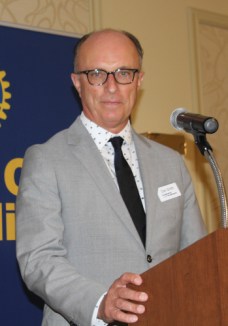
Conor Moran   Conor Moran, the director of Wisconsin Book Festival, spoke to us today. Conor has been the director of the Festival for the last seven years, since it has been presented by the Madison Public Library and Foundation. He updated us on what has been happening with the Festival since his last appearance before us five years ago. The Festival has become a year-round event, which has made it more prominent among publishers, and they are now eager to participate. As a result, the Festival is able to attract some of the best authors of the most important books in the country, with many from the New York Times Best Sellers list. In addition, C-Span now programs the Festival.
In the last seven years, the Festival has doubled its attendance. As the Festival kicks off its new year, the first program will be Friday, September 13. The speaker will be Christopher Leonard, the author of “Kochland: The Secret History of Koch Industries and Corporate Power in America.” His talk will be at the Central Library. Following on that, on September 19, Bud Selig will speak at the Wisconsin Historical Society Auditorium about his new book, ”For the Good of the Game: The Inside Story of the Surprising and Dramatic Transformation of Major League Baseball.” And then on September 24, Samantha Power will speak at the Central Library about her book “The Education of an Idealist.” Ms. Powers’ appearance is sponsored by Cheryl Weston, who was a member of the Club.

On October 17-20, there will be the annual four-day Wisconsin Book Festival Celebration, which used to be all there was. As should be apparent, Conor has transformed the Festival into a major literary event of national importance.

If you missed our meeting this week, you can watch the video here.

Changing the Study of Native American History and Culture

submitted by Kevin Hoffman; photo by Margaret Murphy

Patty Loew 9 4 2019

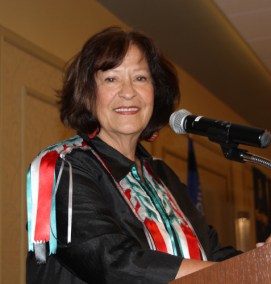
Patty Loew, Ph.D. is a well-known Wisconsin broadcast and print journalist, producer, educator, writer and proud member of the Bad River Band of the Lake Superior Ojibwe.  After retiring as a professor from the University of Wisconsin, she accepted a position as the inaugural Director of the Center for Native American and Indigenous Research at Northwestern University in Evanston, IL.

When she accepted the position at Northwestern she wanted to change the paradigm that Native American studies had typically been carried out under; that is, in the framework and context of academic study and peer review, and then describing what eras and influences affected the life and culture of the Native American through history.

Dr. Loew’s concept was to build relationships and draw in related and disparate disciplines to bring a fresh perspective on contributions that Native American cultural knowledge brings to our understanding of the world.

In a convergence of science and cultural history the story was told of a fish warden that oversaw when spear fishing could be opened on certain lakes.  He approached his task from a strictly scientific benchmark methodology:  When the lake temperature hit 48 degrees it was time to open spearing season because spawning was about to begin.  A Native American friend of his had a different method handed down from his ancestors: “Frogs chirp before spearfishing in the spring”.  Over time he discovered the results were much better when he melded the two methodologies, but the real trigger was waiting until the frogs chirped!

Dr. Loew related that there are many other ecological heritage stories that have as much validity as western science methodologies.  She has created a minor in Native American & Indigenous Studies to build on the knowledge of historical, scientific and cultural contributions of Native American populations.  Learning in this context is expected to be experiential in nature by building relationships through tribal and Native American institutions.  She also hopes to raise the visibility of Native American culture and language as indigenous cultures become increasingly rare and dormant.

If you missed our meeting this week, you can watch the video here.

US Rep Mark Pocan Addresses Club

submitted by Jessika Kasten; photo by Karl Wellensiek

Mark Pocan 8 28 2019

From left: Club President Andrea Kaminski; UW Rep Mark Pocan and Mike May

Today, U.S. Representative Mark Pocan shared updates and insights from Washington D.C. Rep. Pocan began by giving some background on the Second Congressional District which is much larger than most assume, including Dane County as well as more rural counties surrounding Dane. This array of both metropolitan and rural areas greatly impacts Rep. Pocan’s areas of focus in Washington.

This fall, Rep. Pocan is hopeful to see movement in a few major areas: investment in infrastructure, prescription drug pricing (more generic drug equivalents) and gun violence prevention (background checks). He also anticipates that there will be a Continuing Resolution (CR) that would bide leaders some additional time (November/December) after the September 30 fiscal year end to develop an omnibus house appropriations bill and hopefully avoid a government shutdown.

Rep. Pocan finished by answering some submitted questions from Rotarians, including:

Q: What opportunities to do you see for bipartisanship?

A: There are a few areas called out above where we could see movement ahead of the Presidential election cycle. The biggest threat to bipartisanship is gerrymandering, which creates non-competitive districts. Competitive districts would force candidates to speak with all of the district constituents, encouraging additional voices to be heard.

Q: How do you feel Medicare for All would work?

A: The U.S. is the only industrialized nation to not offer universal healthcare. He believes we should focus on the value of having healthcare for all first, and then dig into the how best to accomplish it. Healthcare is the number one concern of his electorate.

Q: Why hasn’t Congress started impeachment proceedings?

A: Congress has requested testimony from those involved, but invitations have been declined. They have now begun an impeachment investigation in order to compel witnesses to come forward and share their honest stories. After these testimonies, next steps will be developed.

We thank WisconsinEye for videotaping our meeting this week.  If you missed our meeting this week, you can watch the video here.

A Good American Family

submitted by Stan Inhorn; photo my Margaret Murphy

David Maraniss 8 21 19

David Maraniss pictured here with Club President Andrea Kaminski

David Maraniss, Associate Editor of the The Washington Post and seasonal Madisonian, in his latest book, A Good American Family: The Red Scare and My Father, described the issues that his father faced as a result of becoming radicalized in the 1930s. To gain a better understanding of the history of his career, David visited the National Archives in D.C. in 2015. He found the transcript of a statement that his father, Elliott, wanted to read in an appearance before the House Unamerican Activities Committee in 1952. The title of the article was “What it means to be an American.” For the first time, David understood how difficult life was for his father in the subsequent years. He said that, of his twelve books, it was the most difficult book to write.

Elliott was born in Brooklyn during the depth of the Depression. At this time, many “isms” were arising – communism, fascism, anarchism, etc. During this time, Elliott became radicalized. Later he entered the University of Michigan where he became an accomplished writer. In 1944, he enlisted in the Army for Officer Training, and upon completion, he was assigned to lead an all-black unit. From his experiences in this assignment, he gained insight into one of the most serious wrongs that still persists in our society.

Elliott’s journalist career was affected by his early history as a radical, causing him to be fired from several newspaper editorships. These included the Detroit Times, the Cleveland Plain Dealer, and a small paper in Iowa. During his work at the Iowa paper, he became a friend of William Evjue, editor of The Capital Times in Madison. Evjue invited Maraniss to join the staff in Madison, which he did in 1957.

David gave a brief thumbnail sketch of his latest book, which deals with how the lives of Elliott and his family dealt with all the many disruptions and problems affecting their collective and individual lives. Downtown Rotarians have been fortunate to have David as a summer Madisonian. This was his eight talk to Rotary.

If you missed our meeting this week, you can watch the video here.