February 26: Crisis Management Services in Madison

–submitted by Larry Larrabee
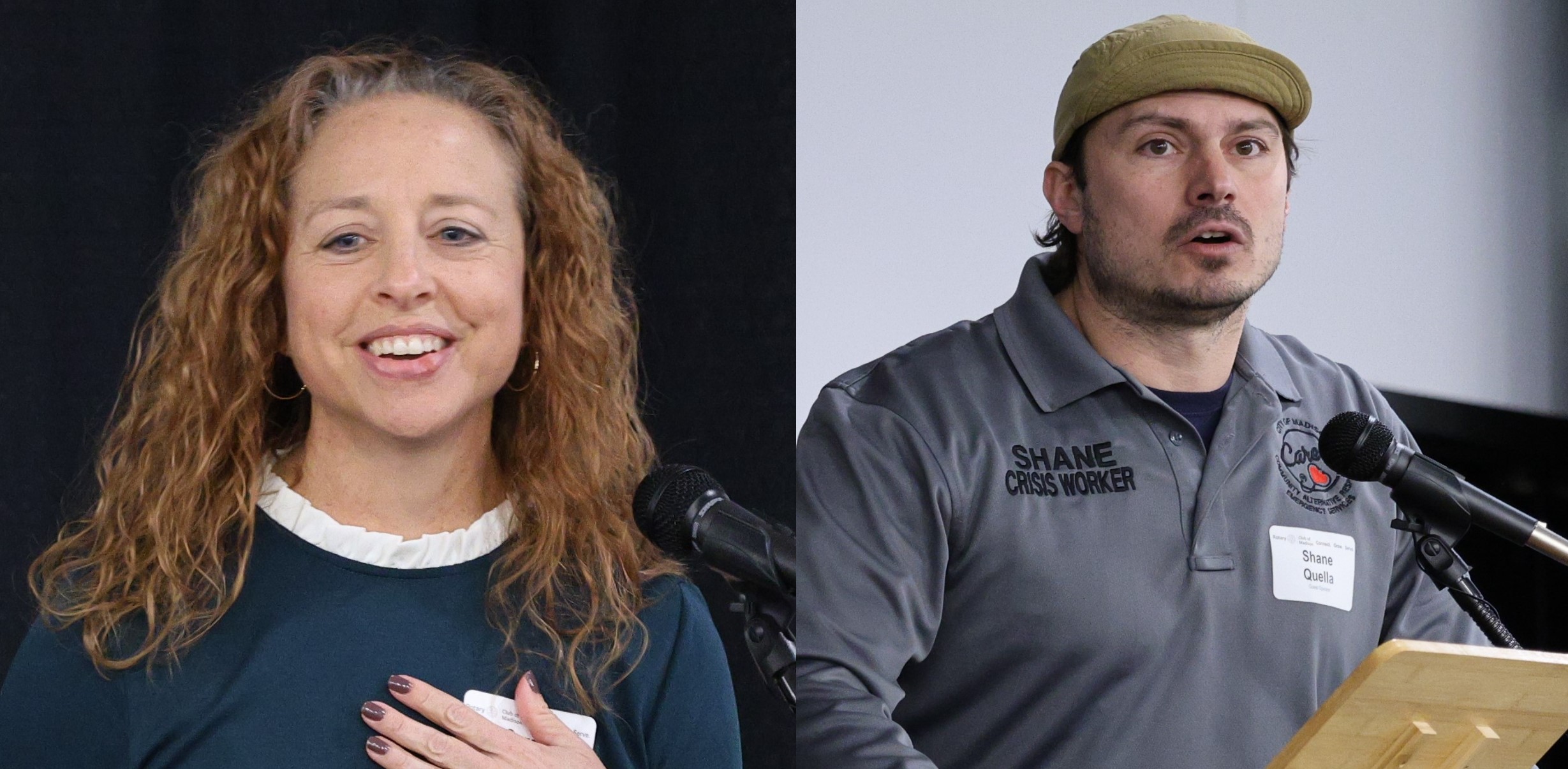
Sarah Henrickson, Clinical Team Manager at Journey Mental Health Center, and Shane Quella, Crisis Response Team Member shared a description of CARES (Community Alternative Response Emergency Services) that is funded by the City of Madison. Because uniformed officers responding to a behavioral crisis can send the wrong message and inadvertently escalate the situation, CARES provides non-threatening support to individuals by listening to them and trying to direct them to various support organizations. It can provide transport to different places and facilities that will give immediate assistance such as shelters and hospitals. Shane described an example of one of his recent interventions.

If you missed our meeting this week, you can watch it here: https://youtu.be/IQ2p7s0KLdE.

February 19: Climate Change in Wisconsin

–submitted by Larry Larrabee

Steve Vavrus, Director of the Wisconsin Climatology Office, shared numerous fascinating, but critical, facts about our state’s changing climate. He summarized his message as “warmer and wetter.” Significant increases in costs for major weather events have climbed as the state went from an average of two such events per year into the 1980’s to 2 events per month. Winter has seen the most increase in temperatures, especially in northwest Wisconsin. Dr. Vavrus said we can expect more heat waves and for winters to be even wetter with increased amounts of rain in single events.

If you missed our meeting this week, you can watch it here: https://youtu.be/Xi-ZrBGpw9c.

February 5: Celestial Events in 2025

–submitted by Larry Larrabee

Jim Lattis, director of the UW Space Place, who manages the UW Washburn Observatory and teaches courses in introductory astronomy, provided a tour de force of what’s occurring in our heavenly skies. Dr. Lattis told us what to expect this year in the way of lunar (2) and solar eclipses (2, but not visible in the US.). He also explained sun spots and their effect on earth. We were informed about T. Coronae Borealis, the Blaze Star, that concludes an 80-yr. cycle with a 3-day burst of brightness. He also invited us to witness space events at the campus observatory two Wednesday evenings each month, weather permitting. Visit https://go.wisc.edu/washobs.

If you missed our meeting this week, you can watch it here: https://youtu.be/NTtVuKhSWxk.

January 29: Bald Eagles in Wisconsin: Remarkable Recovery Story

–submitted by Jessika Kasten

Ecologist Jeb Barzen shared the remarkable recovery of bald eagles in Wisconsin. In 1973, there were only 108 nesting birds, but following the elimination of DDT, this number increased to 1,684 by 2019. Research shows that eagles are dynamic birds, moving based on food availability. More ice on rivers results in fewer nesting eagles in that particular area during winter. Considering various needs and perspectives is key to achieving win-win outcomes in ecological issues. To reach solutions, Barzen emphasized the importance of a common vision, iterative collaboration to build trust, and approaching outcomes with an open mind.

If you missed our meeting this week, you can watch it here: https://youtu.be/P17mbtMJ_YI.

January 22: For the Good of Wisconsin

–submitted by Jessika Kasten

At the January 22 meeting, Universities of Wisconsin President Jay Rothman emphasized the need for more public funding for our public universities, noting Wisconsin ranks 43rd in the U.S. for such support. The universities will request $855 million in the next biennial budget, which would avoid tuition hikes and allow them to maintain high-quality, world class education standards. Rothman highlighted that our public universities offer a 23:1 return on investment and urged Rotary members to advocate for this funding to their legislators.

If you missed our meeting this week, you can watch it here: https://youtu.be/5ShbKBC0mOE.

January 15: Untold Stories of Blacks in History

–submitted by Jessika Kasten

From a young age, Judge Derek Mosley was encouraged to learn and share the untold stories of Blacks in History. Did you know that Eston H. Jefferson, son of Thomas Jefferson and his slave Sally Hemmings, lived and is buried here in Madison? Have you ever heard of the Black female Battalion the Six Triple Eights, who worked to get mail to U.S. soldiers during World War II? How about the “White Lion,” which was the boat that began the Trans-Atlantic Slave Trade? Judge Mosley encourages all of us to learn and share these (and many more) important stories, which are central to our history as Americans.