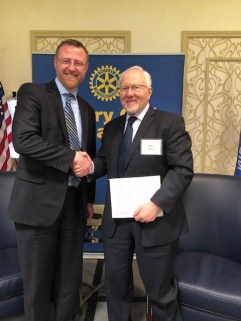
Madison Youth Arts Center Coming in 2020

submitted by Dave Mollenhoff; photo by John Bonsett-Veal

MYAC Presenters 4 3 2019

Madison is blessed with many amazing performance spaces, but 20 youth performing arts organizations don’t have affordable and appropriate places to practice.  That was the problem that motivated leaders of the Children’s Theater of Madison (CTM), Madison Youth Choirs (MYC), and many others to find a cooperative solution.

Their answer is the Madison Youth Arts Center, a 65,000 square foot $35 million facility that will break ground in May and open in the fall of 2020 at the intersection of East Mifflin and North Ingersoll.

The handsome four-story facility will provide a central and permanent location featuring rehearsal classrooms, dance studios, production and costume shops, a community room, office space, and a 400-seat theater.  The facility will allow up to 25,000 school-age youth—including many from Madison’s minority communities—to participate in the performing arts every year, a substantial increase over the number now served.

The Madison Youth Arts Center was made possible by a $20 million gift from Pleasant Rowland.  “I can’t think of a gift I could give that would impact more than this in the arts and for young people,” said Rowland.  A capital campaign is underway to raise the rest of the money including a special endowment fund that will cover ongoing maintenance and operating costs.

The four leaders who gave a spirited and tightly scripted summary of the new facility were: Allen Ebert, CTM executive director; Roseann Sheridan, CTM artistic director; Lynn Hembel, MYC managing director; and Michael Ross, MYC artistic/executive director.

The Center is a part of a larger proposal for the 1000 block of East Washington Avenue by Stone House Development that will include an 11-story building featuring apartments, commercial space, and a parking ramp.

If you missed our meeting this week, you can watch the video here.


Russia — Up Close & Personal

submitted by Sharyn Alden; photo by Mark Moody
Presenters 2

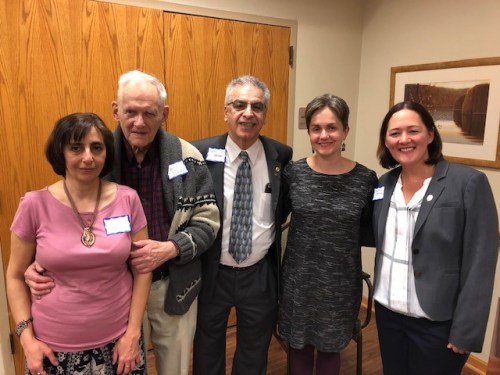
From left: Helen Bryan (chef of the Russian cuisine), Al Bryan, Majid Sarmadi, UW-Madison Professor Polina Levchenko & UW-Madison Professor Yoshiko Herrera

On March 28, Rotarians were treated to a bountiful buffet and an evening of programs when the Cultural Awareness Fellowship Group met at Heritage Oaks, Oakwood to explore Russian culture.

The marvelous buffet, prepared by Al Bryan’s wife, Helen, included such Russian specialties as borsch, chicken and beef in bread crumbs (otbivnaya) and Russian cabbage stuffed with ground beef in tomato sauce (golubtsy). After enjoying plates of pasties, the programs began.

Travel Highlights

The first portion of the evening, “Russia from a Tourist Point of View,” was presented by UW-Professor Polina Levchenko.  Before viewing a variety of hand-picked places of interest, we gained an overview of this vast country’s history, and a window into its art, architecture, culture and fascinating facts.

For example, the Russian Federation is comprised of a dizzying mix of 190 ethnicities, 21 national republics and nine time zones.

Levchenko’s tour was introduced as some of Russia’s most important places to visit. Yet these spots are often overlooked, off the beaten path or simply not available to those traveling via a guided tour.

We started with Moscow’s subway system. You could hear the audible gasp in the room when Levchenko’s photos showed what you might miss if you don’t journey underground. I can attest to the extraordinary sights seen below –massive paintings, sparkly chandeliers and art abound when you reach tunnels below.

First, we journeyed to the Veliky neighborhood Novgorod, the birthplace of literacy, Levchenko noted. We saw a setting where the Eternal Flame was the focus. Levchenko pointed out an Eternal Flame is found in every town in Russia so people can pay gratitude for the peace of today.

Before dinner I shared a few photos of my visit to mystical Kizhi Island in northern Russia with its rare collection of massive, onion-domed wooden churches and buildings. The story goes that one man with an ax created these masterpieces. Continuing the tour of memorable, offbeat places, it was wonderful to see Levchenko include this magical place in her itinerary.

Continuing the magic, we moved on to Lake Baikal in Siberia north of the Mongolian border. The massive, crystal clear lake, circled by hiking trails, is considered to be the deepest lake in the world.

Trending -Russian-U.S. Relations

Next, our evening transitioned to political science with UW-Madison Professor, Yoshiko Herrera, presenting the timely topic, “US-Russia Relations –Challenges and Opportunities.” She provided insight into political relations between Russia and the U.S.

In response to the question, “Are we seeing a new Cold War?, Herrera noted, “We no longer have a bi-polar world, and in fact, the threat of nuclear war is probably lower today.” Yet she went on to explain that distrust between the two super powers –U.S and Russia is very high.

As an example she noted that since 2014, the Department of Defense does not allow students to study abroad in Russia, which is especially discouraging for students including those at UW-Madison who have spent years learning to speak Russian and honing their knowledge about the country.

In conjunction with this point, Herrera said, “About 25% of offices at the Department of Defense are unfilled and this has been a factor in the breakdown of relationships between the two countries.”

Other areas of interest Herrera referred to as “underappreciated facts” is this one. Unlike what some may think, “Putin does not reside over a seamless, well-oiled regime.”  She went on to say there is a fragility in the region (Russia), economic decline, and an anti-Americanism sentiment.

Still, she ended the program on a positive note when she said, “There are opportunities to improve U.S.-Russian relations.”

WI Supreme Court Candidate Judge Brian Hagedorn

submitted by Andrea Kaminski; photo by Mark Moody

Hagedorn 3 27 2019

Judge Brian Hagedorn with Steve Walters

On Wednesday, March 27, Steve Walters, Senior Producer at WisconsinEye, moderated a Question and Answer session with Wisconsin Supreme Court candidate Brian Hagedorn, a Court of Appeals judge who serves in the court’s Waukesha-based District II. While both Supreme Court candidates were invited to speak, Judge Lisa Neubauer had another commitment and declined Rotary’s invitation. Per our policy on inviting candidates to speak (see our March 8 newsletter for the policy), a person from Neubauer’s campaign was invited to attend and distribute campaign materials in the back of the room.

Rotary members were invited prior to the program to submit questions for Judge Hagedorn, and these were passed on to Walters for consideration. In addition to providing an opening and closing statement, Hagedorn responded to the following questions, including some that referred to his comments at a recent Milwaukee Press Club forum:

  1. You quoted Alexander Hamilton who said the judiciary should be the “least dangerous” branch of government, and then you said, “That’s not really where we are at nowadays.” Please explain what you meant by that.
  2. In several forums you have asked Judge Neubauer to cite specific examples where your personal beliefs influenced an opinion you wrote. At one event she said you “acted on your beliefs” by starting a school with a code or mission statement that discriminates. You have said there has been a “lot of misreporting” on the school, so please set the record straight.
  3. Given your blog statements on same-sex marriage and bestiality when you were a law school student, how you would convince members of the LGBTQ community and their supporters to vote for you?
  4. Wisconsin Supreme Court Rule 60.03 governs the behavior of all Wisconsin judges and requires a judge to avoid the appearance of impropriety at all times, whether on the bench or off, as well as the appearance of impropriety as judged from the standpoint of a reasonable person. Given your previous statements about marriage equality and Planned Parenthood, can those appearing before you on any case involving either of those groups see you as impartial?
  5. You have said of your opponent, “I don’t have a problem with people having any kind of political background coming onto the court [but] she (Neubauer) has far more political background than I do.” Please explain what you meant by that.
  6. About your time working for Governor Walker, you have said, “I didn’t do politics. I did law. I was his lawyer. I didn’t make any decisions.” But you participated in the drafting of Act 10, restricting the role of public unions, as well as Act 2, making it more difficult to sue nursing homes for negligence or malpractice. If matters related to either of these or other laws you had a part in drafting were to come before the court, would you recuse yourself?
  7. Do you consider these cases to be settled law: Roe v. Wade, the 2015 U.S. Supreme Court decision allowing same sex marriage, and the Washington, DC, case affirming individual gun ownership as a 2nd Amendment right?
  8. How would you approach the constitutional question of “first impression”?
  9. If ethical complaints are filed against a Supreme Court justice, and all or most of the justices recuse themselves from the matter, what should happen to that complaint?
  10. You have said that one of the biggest challenges for the courts is fighting the opioid crisis. Explain how the Supreme Court can address that problem.

To hear Hagedorn’s answers in his own words, and to find other candidate interviews, go to Wisconsin Eye’s coverage on the Wisconsin Supreme Court.

If you missed our meeting this week, you can watch the video here.

Leading for Equity

–submitted by Larry Larrabee; photo by Mark Moody

Photo7AAt the March 20th meeting, Madison Metropolitan School District (MMSD) Superintendent Dr. Jen Cheatham explained her approach to “Leading for Equity,” the title of her presentation.
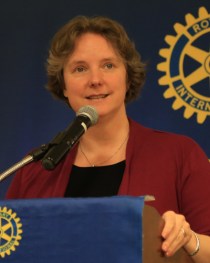
As she explained, she was not going to provide us with her usual update on the Madison Schools.  Instead, she wanted to share her personal leadership story on how she has become a stronger leader in education, particularly in the area of equity.  Dr. Cheatham said that her presentation was related to MMSD’s new strategic plan or framework which emphasizes a renewed approach to racial and gender equity.  Copies of the plan were available to Rotarians after the presentation.

In her personal story, Supt. Cheatham spoke of her childhood growing up in greater Chicago and her subsequent years as a classroom teacher at the high school and middle school levels.  From this, she chose to enter graduate school at Harvard because of her new interest in effecting instructional programs on a larger basis than an individual classroom.

There, her mentor of color helped her to see how her being a product of a white middle class upbringing could be used to power greater, larger and better programs that could address and improve on disparities in racial equity.

Last year she listened to over a thousand individuals of color: students, educators, community members and parents.  An example of one of the things she learned from the parents was that they wanted less emphasis on remediation of underachievers and more investment in students learning in a different, more accepting atmosphere of instruction.  This could lead to students feeling better about themselves and their abilities resulting in higher achievement levels.

It is this and other insights that are incorporated into the new Strategic Framework of the Madison Metropolitan School District.

If you missed our meeting this week, you can watch the video here.

Soglin vs. Rhodes-Conway

submitted by Stan Inhorn; photos by Mike Engelberger

Paul Soglin 3 13 2019    Satya Rhodes-Conway 3 13 2019

Abigail Becker from The Capital Times moderated the March 13th forum for the two mayoral candidates–incumbent Paul Soglin and Satya Rhodes-Conway. In his opening remarks, Soglin pointed out that when he became mayor in 2011, race and poverty were critical issues in Madison. Madison was not a racist city, but the national legacy of economic disparity, a biased criminal justice system, and lack of leadership have created this problem. Under his leadership in the last eight years, African-American unemployment has been reduced four-fold and household income has increased appreciably. Rhodes-Conway, who served on the City Council for three terms, now chairs the UW-Madison Center on Wisconsin Strategy. As mayor, her goals would include increasing affordable housing for residents at all levels of income. Another objective is to create a system that brings public transportation to more residents, by examining systems that work in other cities.

Regarding climate change, Paul indicated that most of the problem resides at the state and federal levels. Madison is one of many U.S. cities that stays focused on the Paris Accord. He is promoting the use of electric buses and solar power in cooperation with MG&E. Satya would promote the reduction of greenhouse gases by developing a better rapid transit system that would keep more cars off the road and by pushing for buildings that are more energy efficient.

In answer to the question on how to reduce debt service, Satya indicated that there is a need to improve the infrastructure and to distinguish between wants and needs, with the Judge Doyle Square an example of an unnecessary project. Paul suggested that from 2003 to 2011 the City Council failed to provide for infrastructure although the budget skyrocketed.

Satya addressed racial inequality by noting that housing is restricted and middle-class minorities have difficulty moving into white-only neighborhoods. She suggested that police should be held accountable for their actions. Paul believes that minority businesses must be promoted. He believes that the city must work with developers to build apartments that included minority accessibility. Regarding the work of the City Council, Soglin believes that the council is too large for a city of its size. Rhodes-Conway noted that the committee system demands lots of time from its members, often without substantive results.

If you missed our meeting this week, you can watch the video here.

Culinary Arts at The Edgewater

submitted by Kathy Blumreich; photos by Charles McLimans

IMG_0071    IMG_0002 (1)  IMG_0052  IMG_0060

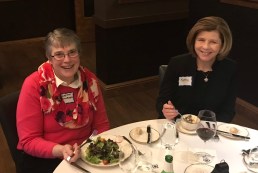
On Monday evening, March 11th, nearly 30 Rotarians and guests gathered in the Wine Room at The Edgewater for an event organized by the Culinary Arts Fellowship.  The Wine Room is an intimate venue on level 7 of The Edgewater right next door to Auggie’s Bar.  The room’s large windows allowed guests to enjoy the later sunset after “Springing forward” the day before.

IMG_0034  IMG_0036  IMG_0027

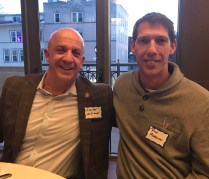
(Photo 1: Loretta Himmelsbach & Kathy Blumreich; Photo 2: Helen Sarakinos; Photo 3: Charles McLimans & Richard Merrion)

As the group gathered, we enjoyed a wonderfully presented assortment of local cheeses including jam, marcona almonds and house-made lavash. Following the social hour, the group enjoyed the 2nd course with a choice of Smoked Corn Chowder topped with fried shitake mushrooms or Organic Greens with lemon vinaigrette garnished with tomato and radish slices.

IMG_0019

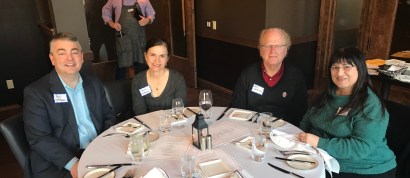
From left: Paul & Sharon Hoffmann & Bob & Angie Garrison

The 3rd Course was a choice of Crispy Skin Chicken or Braised Beef Short Ribs both served with rosemary mashed red potatoes and roasted baby carrots. A delicious dessert of Blueberry Buckle served with vanilla bean ice cream completed the meal.

Thank you to Lynne Sexten for graciously organizing a very enjoyable evening. The Culinary Arts Fellowship group is planning several more events this year and hope others will join us.