Henry Vilas Zoo – Something for Everyone

–submitted by Kevin Hoffman; photo by Mike Engelberger
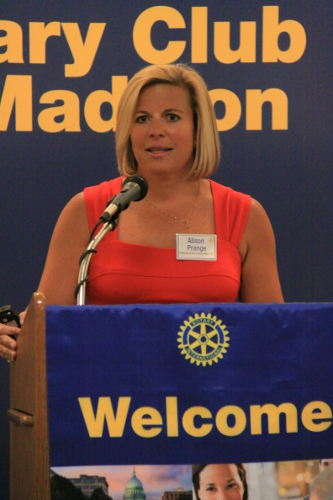
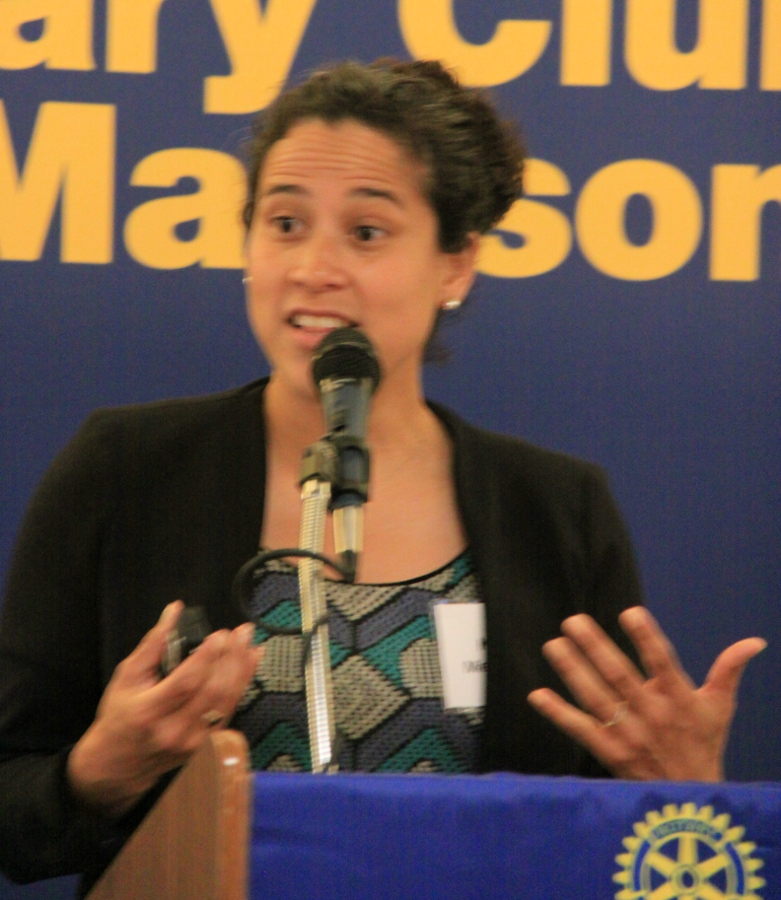
Alison PrangeFellow Downtown Rotary member Alison Prange, Executive Director of the Friends of Henry Vilas Zoo since 2013, gave an energetic and passionate presentation on June 17 about the Zoo and its many programs, and the Zoo Travel Program that went to Tanzania in 2014.

The Zoo was founded in 1911 after a land grant was made by the Vilas family with the stipulation that the zoo charge no admission fee.  It remains a free zoo today – one of 10 in the country that is accredited by the AZA.  In 2014 it had over 725,000 guests that came from Dane County and all the surrounding states making it one of the top attractions in the area.

She hastened to point out that although the Zoo is free it is not free to operate and has a budget of $2,600,000.  There are three main sources of support:  Dane County provides $1,400,000, the City of Madison provides $350,000, and the Friends of Henry Vilas Zoo raise $850,000 through on-grounds revenue such as food and gift shop sales, special events, education programs, memberships, and fund raising.

On Memorial Day weekend the new Arctic Passage exhibit opened with over 3,600 visitors.  The exhibit is the new home for polar bears, grizzly bears, and harbor seals and features underwater viewing for an interactive and engaging experience for both humans and animals.  It also features the Glacier Grill with a dining area that looks onto the polar bear exhibit.

Alison reminded us of upcoming events that help support the Zoo.  On July 17 is a concert featuring the Wisconsin Chamber Orchestra, the 10th annual Zoo Run Run 5k and 10k race, and Halloween at the Zoo – a fun and safe way to spend Halloween with the kids.

The Zoo Travel Program in 2014 was a safari to Tanzania to learn about and understand wildlife in its natural habitat.  The goal of this program is to learn about animal conservation efforts and needs, instead of acquisition.  The travel group was immersed in the habitat of wild animals and were required to be in a vehicle or escorted by trained guides when moving around at night!

The group visited Tarangire National Park, Lake Manyara, Ngorongoro Crater, the Masai tribe, Olduvai Gorge, and the Serengeti.  They saw (among many other animals) elephant, ostrich, giraffe, lions (including witnessing a group of female lions hunt zebra), flamingo, hippopotamus, wildebeest, cheetah, leopard, and the rare black rhinoceros (only 14 left).  It was the experience of a lifetime!

The next program, Great Wildebeest Migration in Tanzania, is scheduled for February 2016.

Hikers Take to the Trails at Pheasant Branch Conservancy on June 6, 2015

–submitted by Dawn Crim; photos by Rob Stroud

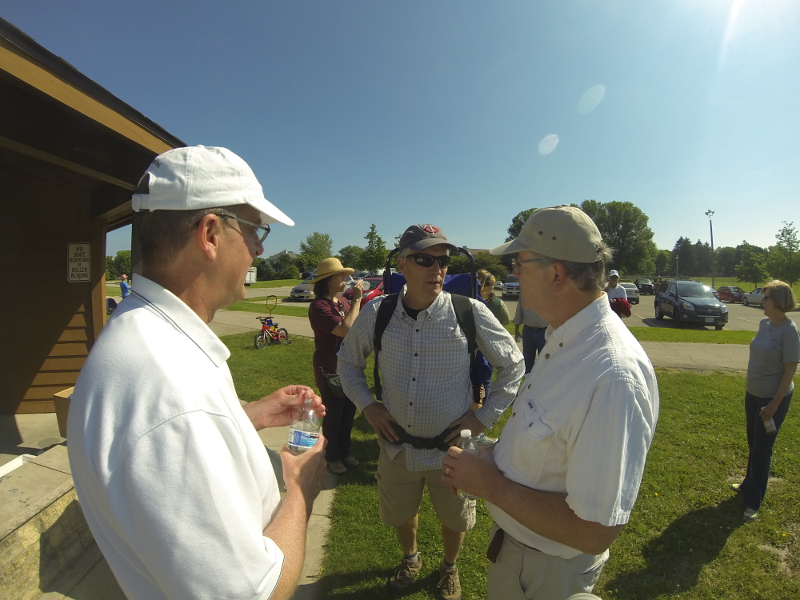
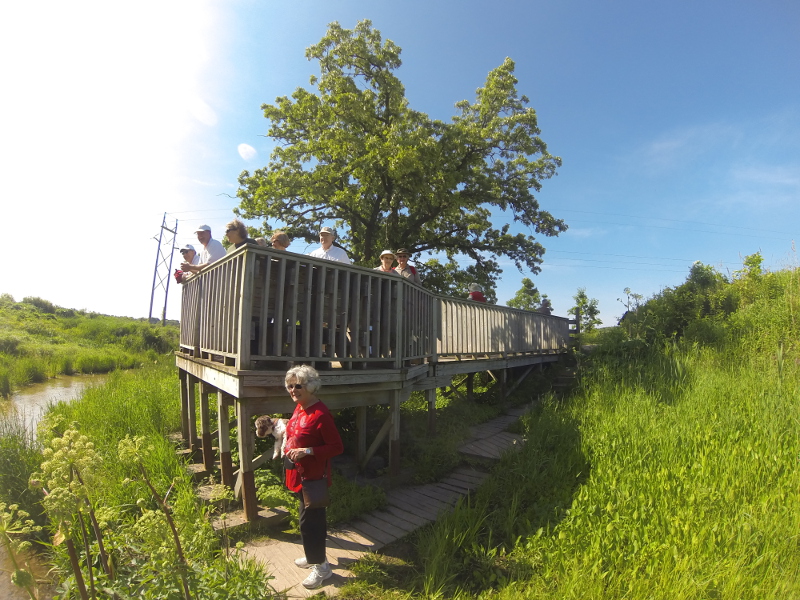
On Saturday June 6 over 20 Rotarians and guests enjoyed an invigorating 3-mile hike through the beautiful Pheasant Branch Conservancy in Middleton. Once again, we fortuitously scheduled our hike on a perfectly gorgeous summer day. We were doubly rewarded to discover that we’d unknowingly selected National Trails Day for this outing, as mid-way through the hike the gracious Friends of Pheasant Branch Conservancy loaded us up with snacks and water.

DCIM101GOPRO  DCIM101GOPRO  DCIM101GOPRO

Other highlights included a stop at the ancient and fascinating Frederick Springs and a sighting of a Sand Hill Crane.

Though several in our group are frequent visitors to the Pheasant Branch Conservancy, many others were delighted to discover this natural gem in our community for the first time. The Conservancy gained quite a few new friends on Saturday!

3rd Annual SummerPalooza Held on June 13, 2015

DSC_0259

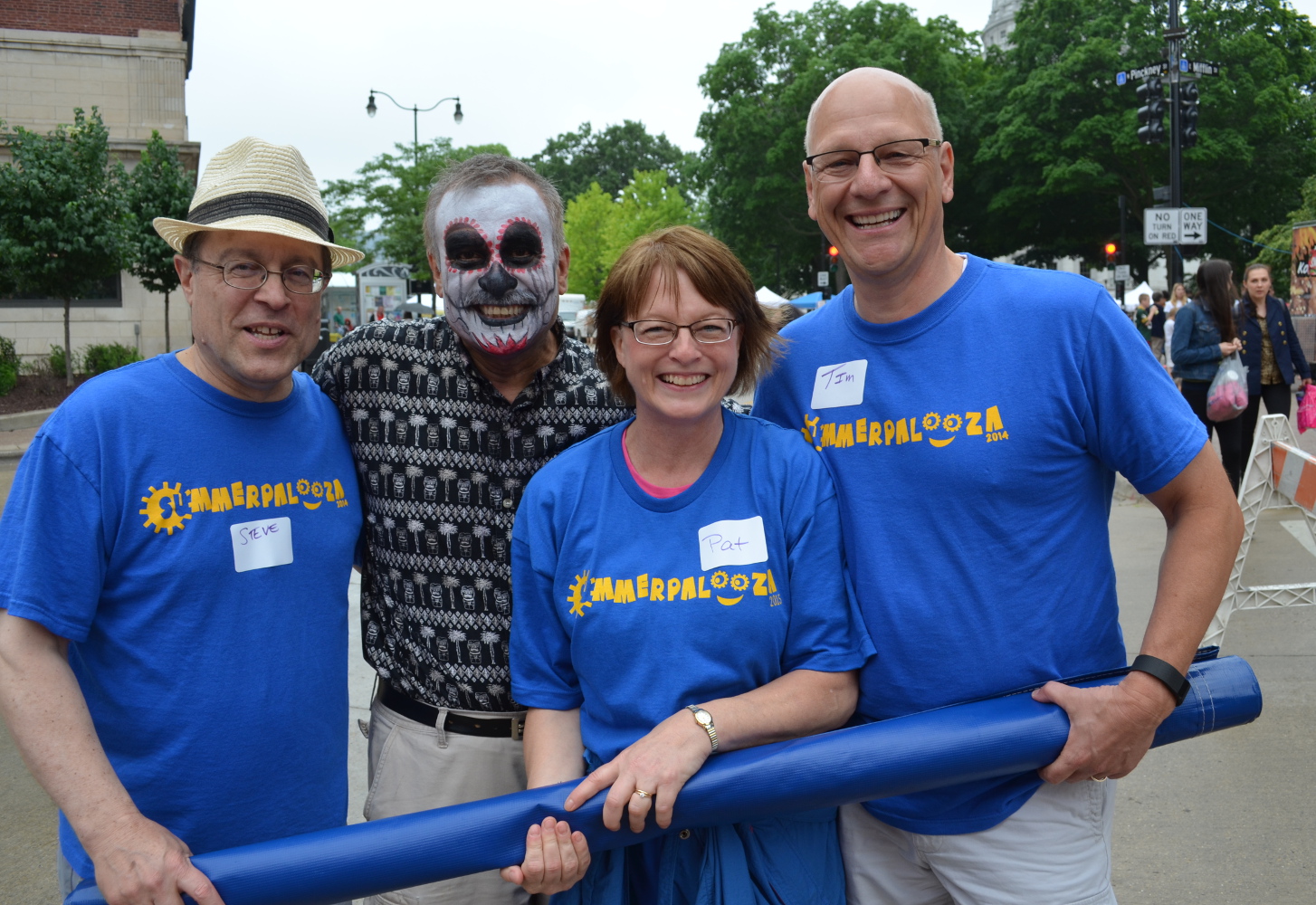
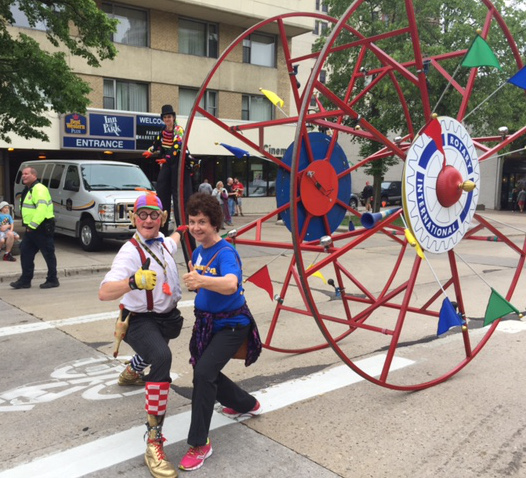
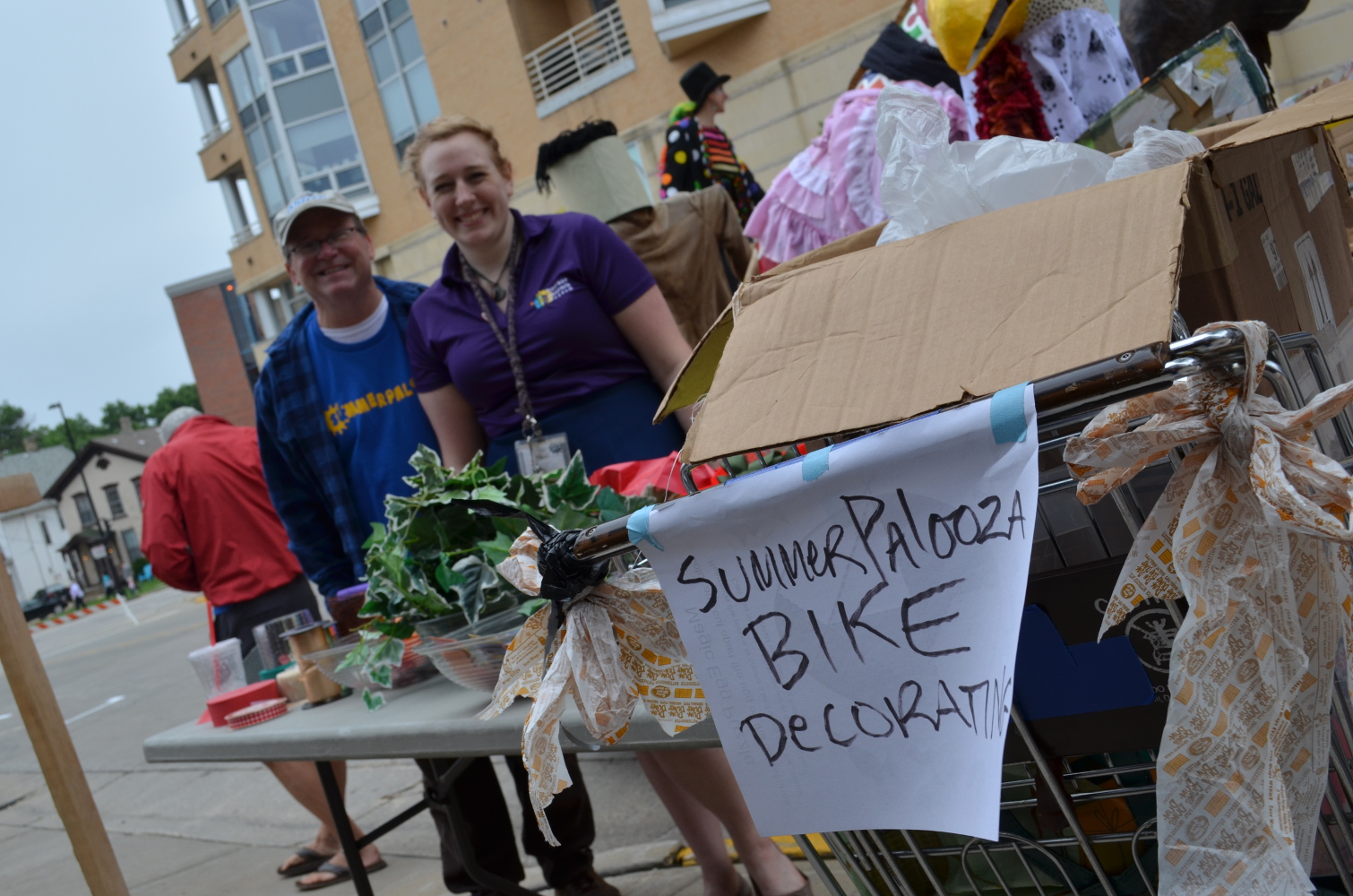
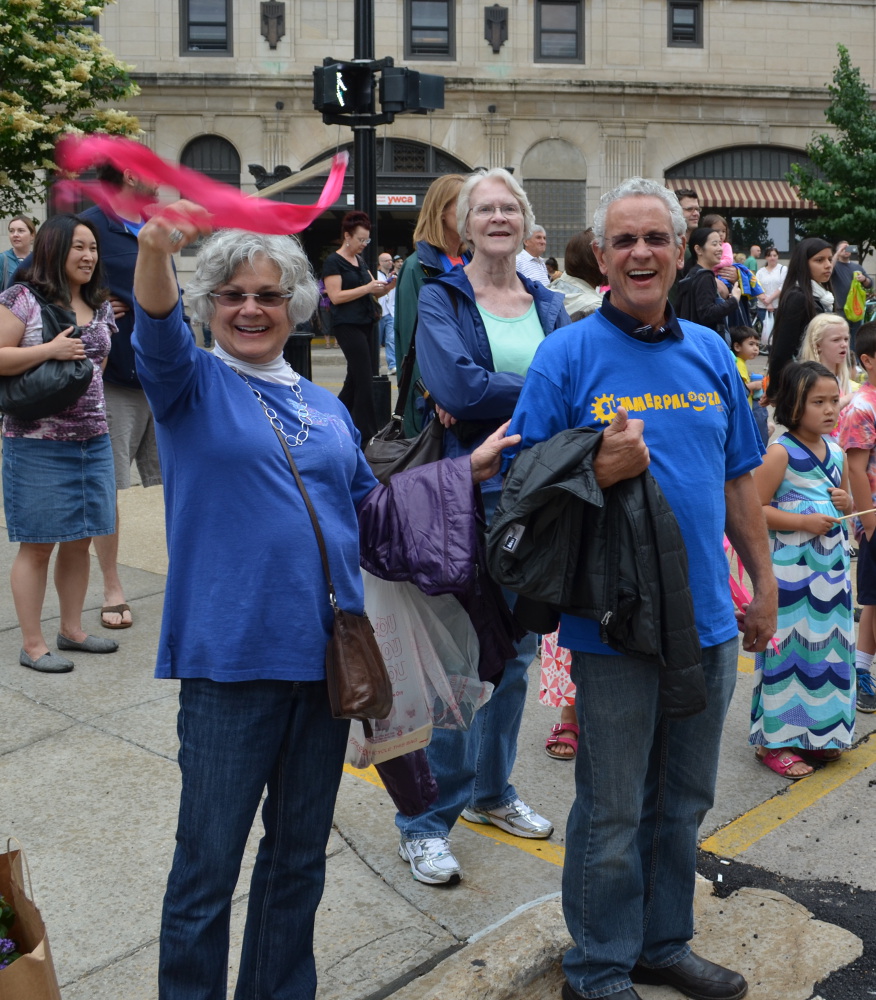
The 3rd annual SummerPalooza event was held around the Capitol Square on Saturday, June 13.  SummerPalooza was created during our club’s Centennial year as a celebration to kickoff the summer season, getting all kinds of people and families to look forward to this annual event.

DSC_0248   Summer2  DSC_0077

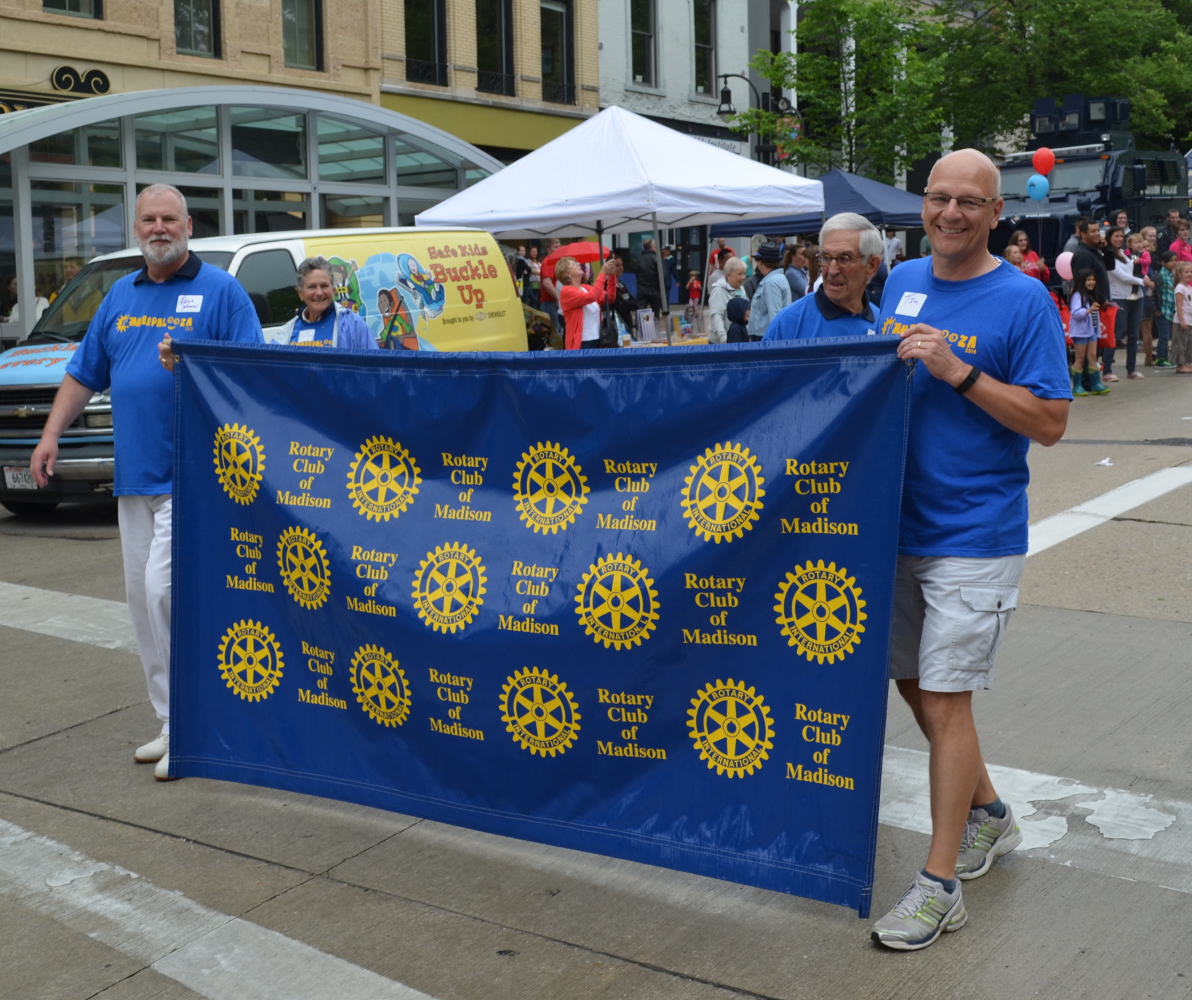
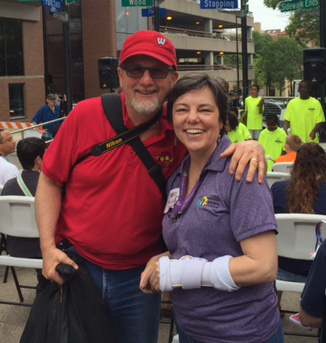
Photo 1: Dave Johnson (left) and Tim Stadelman carrying the Rotary banner in the parade; Photo 2: John Bonsett-Veal and Deb Gilpin 

We had over 25 Rotarians volunteer during the day, and a parade was held around the Capitol Square at noon.  Our thanks to Deb Gilpin and Bryan Chan for coordinating the planning for this year’s event and to John Bonsett-Veal for serving as photographer and videographer.

DSC_0017  DSC_0181  DSC_0014

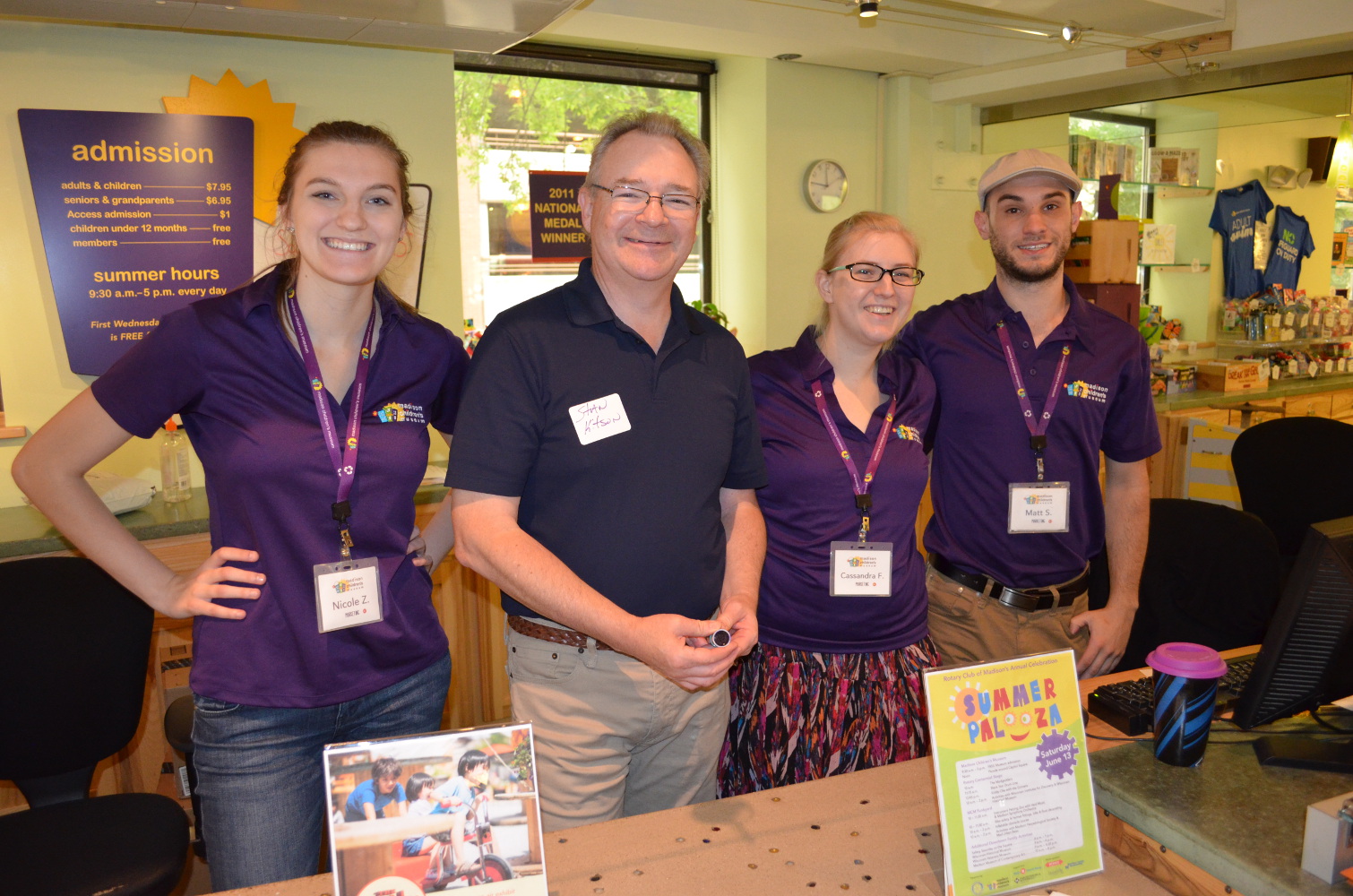
Photo 1: Bryan Chan with his son; Photo 2: Stan Kitson (second from left) with Museum staff; Photo 3: Floyd Rose

20150613_095325  DSC_0023  DSC_0291

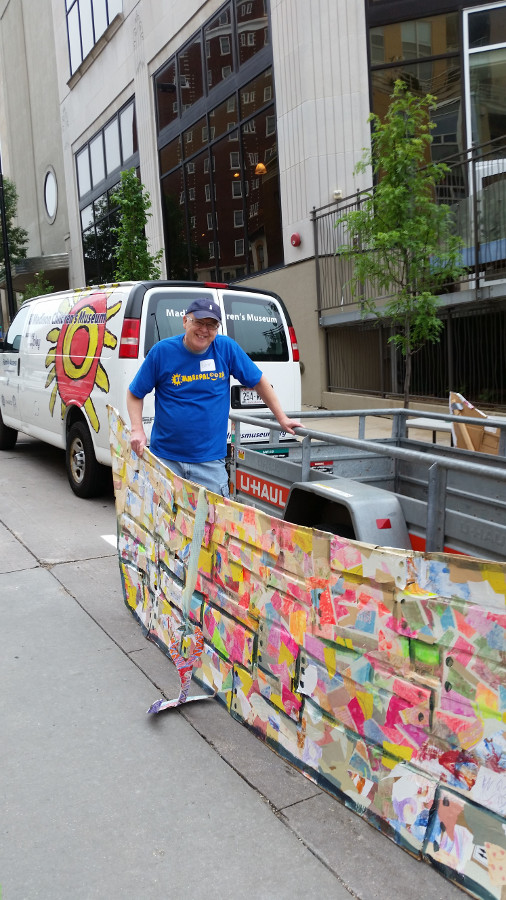
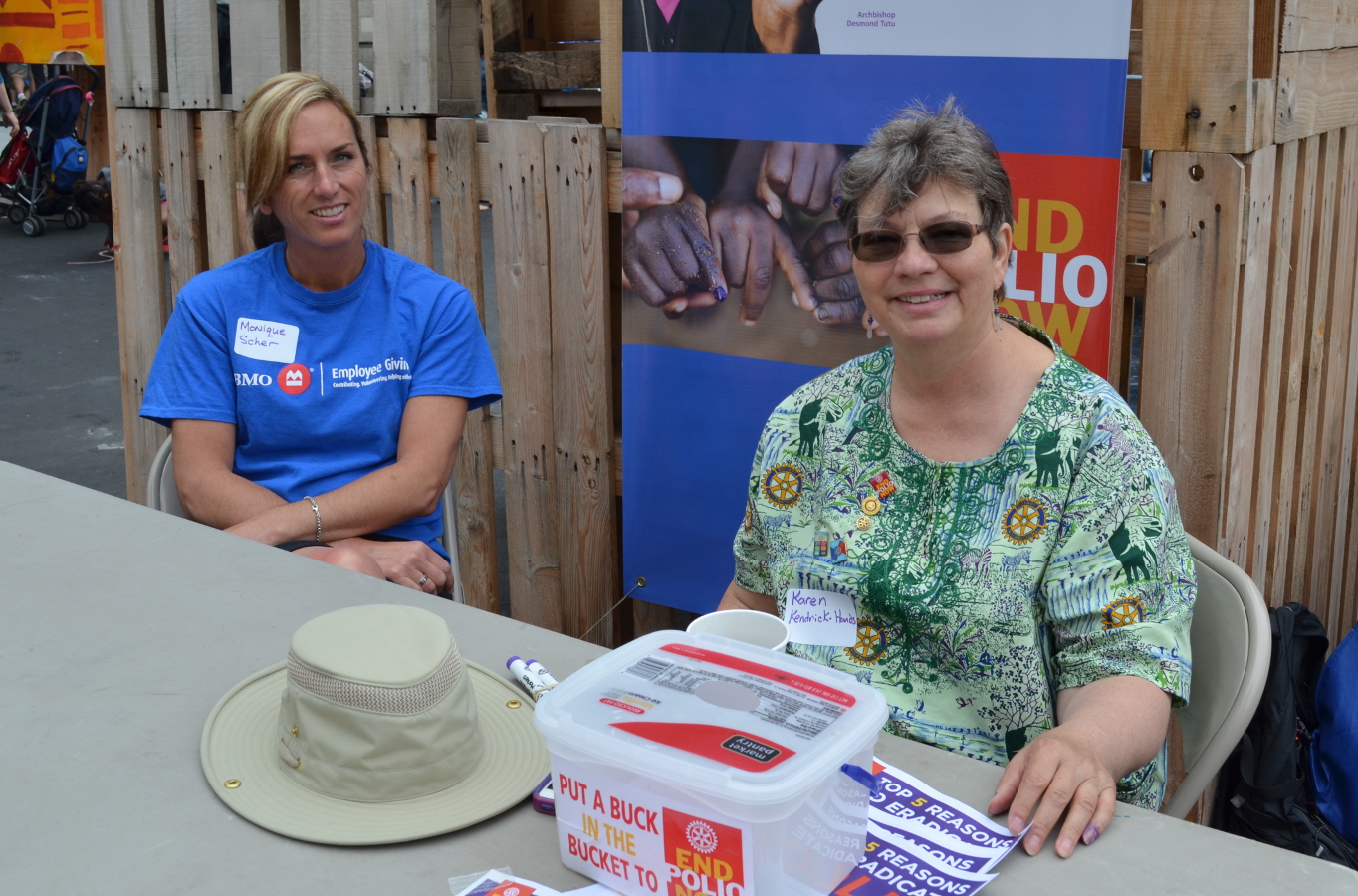
Photo 1: Dick Lovell; Photo 2: Monique Scher and Karen Kendrick-Hands; Photo 3: Steve Goldberg, Oscar Mireles, Pat Jenkins and Tim Stadelman

IMG_0320   DSC_0039  Summer6

Photo 1: Highlight from parade; Photo 2: Paul Riehemann (right); Photo 3: Kris Ashe (right)

DSC_0050  DSC_0211  DSC_0113

Photo 1: Ted Waldbillig (left); Photo 2: Angela & Jeff Bartell; Photo 3: Oscar Mireles (left)

We Succeed: Latinos in Dane County

–submitted by Ellie Schatz; photo by Mike Engelberger

Coller KarenKaren Menendez Coller, Executive Director of Centro Hispano, began her passionate and substantive discourse by reminding us that Latinos in Dane County are a) a growing community, b) here to stay, and c) a presence.

Statistics show that Latino numbers in our community are great. An 80% growth in population in 5 years, 2010-2015, puts their current buying power at $1.5 trillion. There is a 5:3 ratio of men to women as migrant work brings men to the area. Yet, all the charts and statistics, including those documenting low incomes, poor education rates, and housing problems show us nothing about who Latinos are as fellow community members. Most of us, she says, know little about how they are hardworking, take care of their own, and live by strong family values.

Karen emphasized three key ingredients for equity. First is Stability in the Home. Chaos, unemployment, and chronic stresses work against such stability. Many have lost their social network and cope through addiction. Quality support services are critical, but the fact that a single staff member at Centro Hispano now sees 400 cases per year demonstrates the need for change. An example of one new program that provides a pipeline for job placement and career advancement is Caminos Certified Nursing Assistant Program, a collaborative effort between Centro Hispano and Madison College. Of 70 students enrolled since January 2015, 73% graduated and 82% are employed. Their incomes rose from as low as $7.25 per hour to as high as $20 per hour. 79% of the students went from unemployed or part-time employed to full-time positions.

The second ingredient is Youth Aspirations. Karen says that 31% of the Latino population in the county are under age 18, most of them living with the heavy issues of alcohol, drugs, and risk of pregnancy. The answer is to foster hope and meaning, and the way to do this is to engage the students in school. Centro is using a technique called asset mapping to help youth create a pipeline to graduation. Mentors in the community help student see themselves as well as their peers as assets in the community. Centro Hispano provides a base where each young person can feel safe as he or she engages in fun and meaningful activities.

The third ingredient is the Neighborhood Environment. Outreach, including wellness activities and food equity opportunities, smooths the way toward the end goal:  A Thriving Community. Reframing Latino Community Solutions means full inclusion: a community that tells us what they want and becomes engaged in getting there. Solutions include having a community development perspective, using a strategic perspective, and knowing who drives the agenda: the families themselves.

May We Succeed. Here’s to Karen’s call for innovation and engagement NOW.

Second New Zealand Wine Tasting on June 2

–submitted by Mike Wilson

Photo6

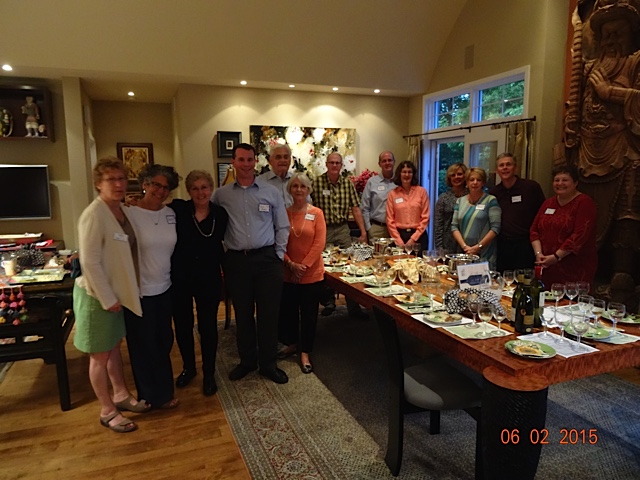
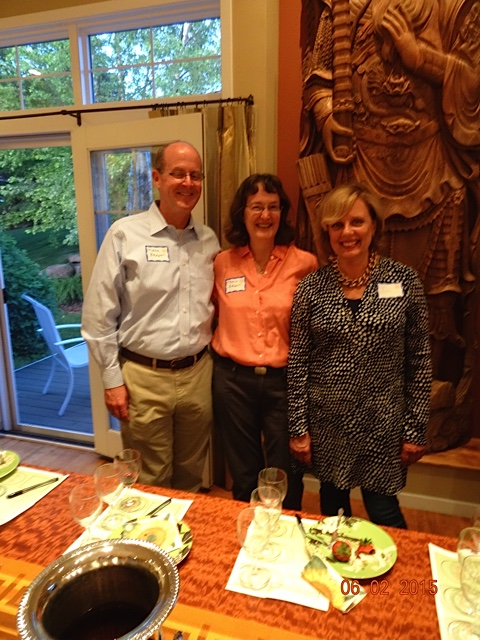
Ten Rotarians with some of their spouses met at the Wilson’s to taste wine with a NZ influence.  This was a second NZ tasting as the first was oversubscribed. Because at least two couples (Wilson’s and Mixtacki’s as co-Chairs of the Wine Fellowship) attended both tasting’s there were changes in most of the wines selected but ~5 wines were common and the theme was nearly identical.

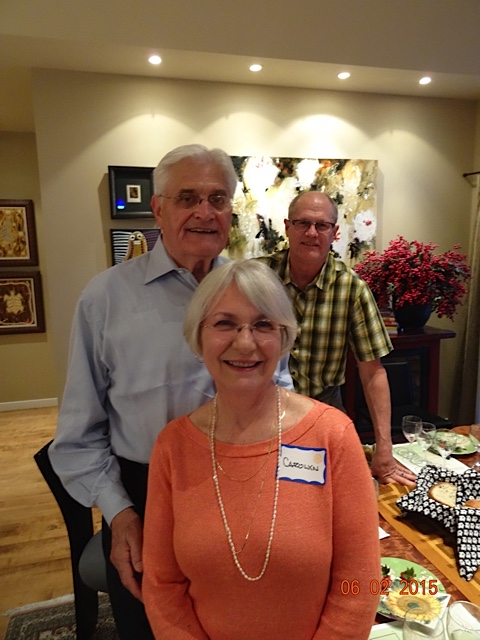
Mike & Carolyn Casey with Bill Montei

Mike & Carolyn Casey with Bill Montei


Mike Wilson selected thirteen wines from NZ and the world.  These included wines (wines with winemakers from both NZ and the USA – Washington and Oregon), and with a very large emphasis on Sauvignon Blanc (from NZ of course and also the Loire and California).  These SB’s  represent most NZ wine now produced (75% SB and 9% Pinot Noir).  We also tasted NZ Chardonnay and Pinot Gris which with SB and Pinot Noir makes up 94% of total wine production – an extraordinarily high percentage of the majority of NZ wine being of the four top classical varieties.  In some ways this results from NZ being a New World wine region, where there are no historical precedents of local native grapes having been  grown over the prior centuries.

Because of the early influence of Muller Thurgau (a Riesling and Chassalas hybrid) in the 1970’s when more than half the wine produced in Germany and NZ, and likely most other countries making white wines was made from this sweet, rapid growth, abundant yield grape that was the bane of classical wine drinkers (who were few and far between at the time).  I dislike this wine generally but we tried one from the heights of the Alto Adige (1000 meters) that was excellent with this minimally pink color.  It had been recommended by Pat Ducey at Steve’s University Avenue.

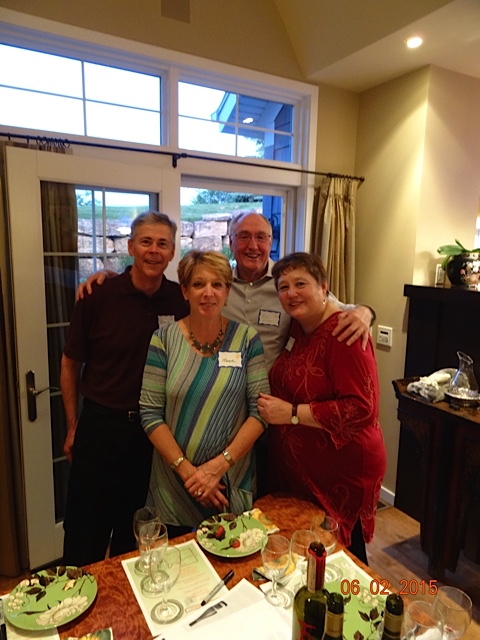
Steve & Meryl Mixtacki with Mike & Patty Wilson

Steve & Meryl Mixtacki with Mike & Patty Wilson

We discussed the history of wine making in NZ and the influence of the Dalmatians (from coastal Croatia) who came to dig up the Kauri tree gum, and then restarted the NZ wine industry that then prospered after the Muller Thurgau was finally dispatched.  An added wine (that the first NZ Tasting group had) was from a winemaker that came to dig gum but when that ran out, bought land in the 1930’s, and planted vines.  His wife remains the patriarch of Kumeu Vineyards (the region where wine making was reinvigorated) and his son is the winemaker and the only winemaker with a Master of Wine (~ 8 get this exam each year, and there are only 300 MW’s worldwide) making him quite unique. Jancis Robinson is a MW too.

We tried some Kim Crawford wines.  Kim is famous as being the first Virtual Winemaker of NZ (no vines and no winery) who with his marketer wife sold half of his 40,000 case output overseas to the UK.  He rapidly became winemaker of the year twice in NZ during the wine resurgence of the late 90’s and had top 100 wines in the Wine Spectator for many years from 2006 to 2010.  We discussed his sale to a Canadian Conglomerate (Vincor) in 2003 of the no longer virtual vines, winery and real estate for US$50,000,000.  There was a subsequent 2006 hostile transfer to Constellation which strictly enforced the Crawford name trademark they had purchased. The Crawford’s were no longer able to use the Crawford name, and not make/sell wine for 10 years.  Crawford now has land in Marlborough and Central Otago (the two prime NZ sites) and sells wine under the Loveblock label, with their name selection relating to the care they used in selecting and preparing the land and vines for their second wine making adventure and released their own Loveblock (not Crawford) wines recently.  We tried their latest SB and compared to their “sold” Crawford namesake wines, with their own wine naturally being the better!

Photo9

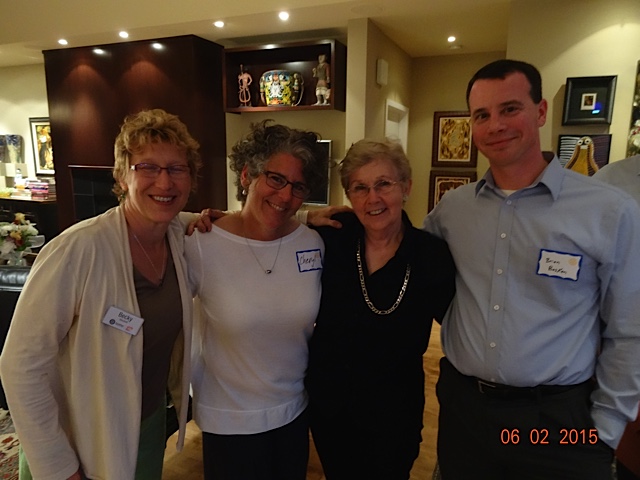
Becky Steinhoff, Cheryl Wittke, Noel Pearson and Brian Basken

Lastly we tried two Church Road wines.  The original owner of this property was Tom McDonald a second cousin of Mike Wilson.  In the early 80’s Tom told Mike some of his stories and one that when Tom made Chardonnay in the 70’s there was no market for it so he kept some for himself each year and threw (blended) the rest into the dreaded Muller Thurgau. Tom began in the wine business at the Mission Vineyards run by the Marist Brothers that happens to be the oldest continuously running winery in NZ.  Tom bought the land next door and began his own business and is widely acclaimed as the Father of the Red Wine Business in NZ.  Mike Wilson received two bottles of red wine from Tom a year or two before his demise in the 1980’s (a 1968 and 1980 Cabernet Blend) which Mike returned to the Church Road Winery museum this year when the Wilson’s and Mixtacki’s traveled to NZ.  We tried an older Chardonnay and a “Tribute to Tom” Cabernet/merlot blend and the latter was both corked and wax sealed (NZ has 99% Stelvin “screw” caps usage).

Photo4  Photo2  Photo1

All in all, a nice tasting with a fun learning experience for all!

Gee Shares a Tale of Two Cities

–submitted by Valerie Johnson; photo by Mike Engelberger

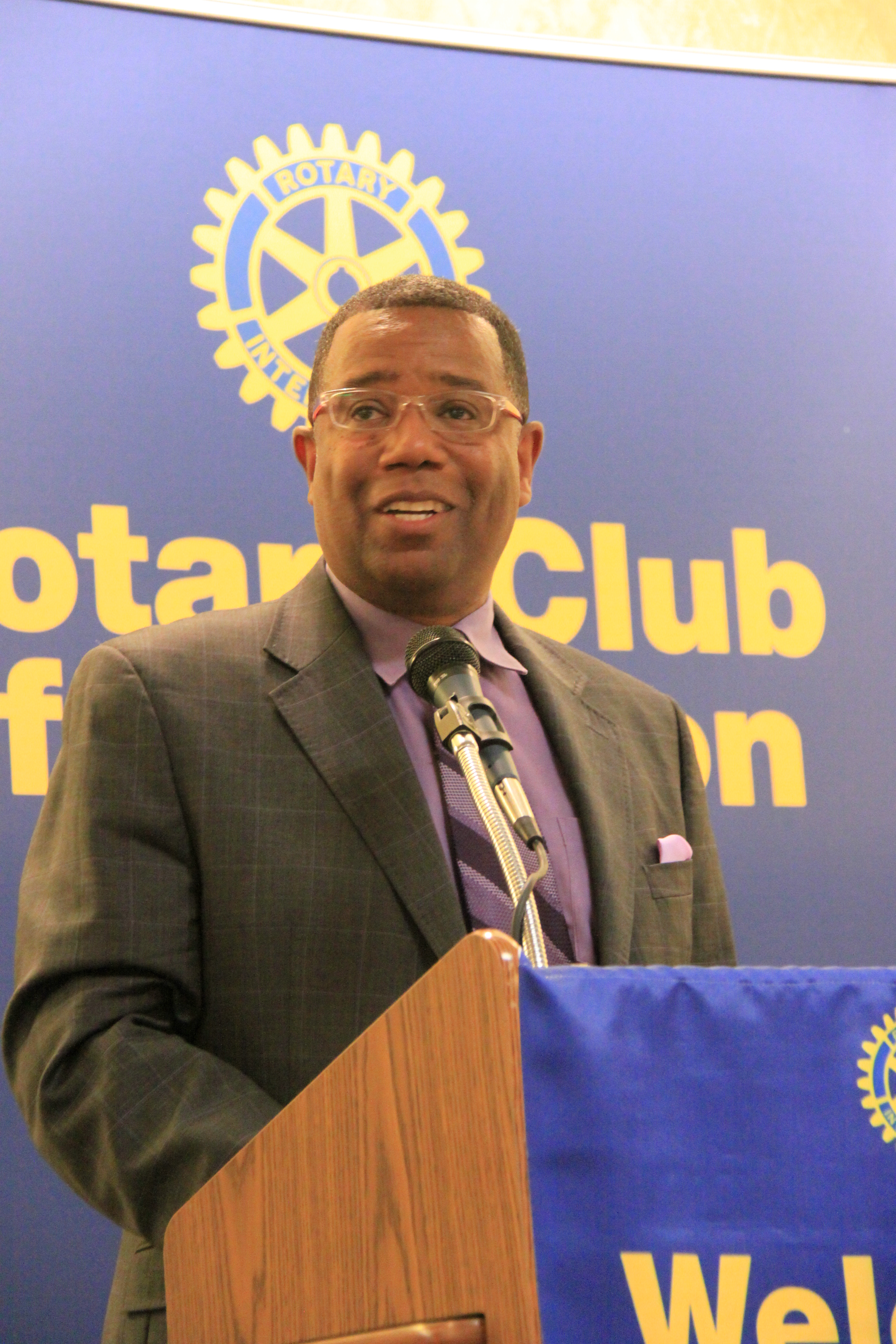
Alex GeeFollowing a song with the line “greater things are still to be done in this city” sung by a group from his church’s choir, The Rev. Dr. Alexander Gee, Jr. told Rotarians Madison is often accused of being a tale of two cities: the best place for some and the worst for others.

For the past fifteen months, Gee and members of the Justified Anger Leadership Team convened countless meetings with hundreds of African American Madisonians. They asked what the African American community thinks about racial disparity in Dane County and what suggestions they would make to address the disparity. Five focus areas were identified: education, economic development, incarceration, leadership and capacity development, and family and community wellness.

A framework document was developed, and community leaders were asked to sign up for workgroups in the five focus areas.  The next phase will be for African-American leaders to sit with community stakeholders to find common measurables, stand together and then carry out plans for these focus areas.  “This is an opportunity to stand on the same side,“ Gee said.

The group also plans to raise $1.5 million by January of 2016 to hire staff.  Gee says they will not create programs but rather they will advocate for equity, train for diversity and build capacity for change.

“Designing this document was historical,” Gee said, “Implementing it will be magical.”

In addition to his ministerial, consulting and academic activities, Gee is a co-author (Jesus & The Hip Hop Prophets, InterVarsity Press 2003) and author (When God Lets You Down, InterVarsity Press 2006). He received his Doctoral Degree in Transformational Leadership for Global Cities at Bakke Graduate University (BGU), in Seattle, Washington in June 2009.

The 50-page report is available by clicking: www.MobilizeMadison.com.

We would like to thank the Fountain of Life Covenant Church Choir members who sang the opening song at our Rotary meeting on June 3: Becca May Grant, Alicia Cooper, Lena Archer and Cynthia Woodland.