
submitted by Stan Inhorn; photo by Mary Ellen O’Brien
 Kurt Paulsen, UW Associate Professor of Urban Planning, reviewed the issues regarding the workforce housing shortage in Dane County and its impact on the economy. Currently, Dane County’s population is increasing 1.3% a year, with job creation at 1.7%, and new housing units at 1.1%, so housing is not keeping up with population demand. In addition, rents are rising faster than income, so many are excluded from living in Madison. Presently, more than 100,000 workers live outside Dane County, which means that they have long commutes.
Affordability is another major issue. Affordability examines price to income ratio, which should be below 3. So for a $150,000 home, the household income should be over $50,000. In Dane County, affordability is a challenge since few new homes are in the middle income range. Rents are just barely affordable for middle-income workers. The large, new apartment buildings downtown were designed for the influx of high-salaried employees at companies such as EPIC. Too few new apartments have been built for lower-salary workers who can’t afford to live near where they work.
If builders were encouraged by federal or state programs to build affordable housing, it would reduce the burden, but it would take about 30 years to complete. Furthermore, it would not address the issue of African American ownership. Wisconsin has the 6th worst record in the United States for ownership by African Americans which is also reflected in the county and city.
To address the problem in Dane County, it is estimated that 53,000 to 59,000 new housing units should be built in the next 20 years. So greater Madison will either grow up or grow out. There will be more density in the central area and more neighborhoods in the suburbs. Smaller homes will help to keep down the costs of building, and mass transportation will relieve the congestion on the highways.
Did you miss our meeting this week? You can watch the video here.
 UW System President Ray Cross gave an impassioned talk about the past and future of the UW System, and the role it has played in the development of the state and impact on the world.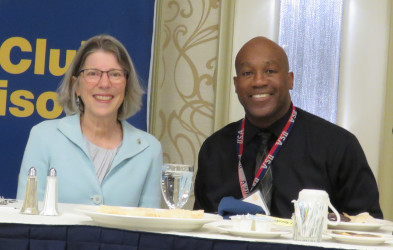
 Sara Eskrich, Executive Director of Democracy Found, spoke to us this week. She has herself been in electoral politics, as a Madison alder, and she is concerned that policy decisions are often stymied by politics. There is an inability to get anything done, even when a large percentage of the electorate favors a particular policy. Elected officeholders believe that there is no connection between acting in the public interest and getting reelected. One of the major problems lies in the two-party system today, which, in business terms is a duopoly, able to eliminate third-party and independent competition. This is done through legislation that makes it very hard to offer substantial money to independent candidates. This makes it extremely important for officeholders to ask themselves not whether a policy is good but rather whether support for that policy will lead to opposition in their partisan primary. Another practice that hinders effective governance is plurality voting, in which the candidate with the highest number of votes is the winner, even if the vote total is less than a majority.
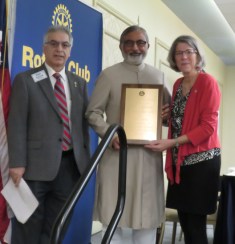 Dr. Masood Akhtar received our club’s Manfred E. Swarsensky Humanitarian Service Award at this week’s meeting. Along with this award, a $2,500 grant is presented by the Madison Rotary Foundation to an agency of the recipient’s choice. Dr. Akhtar has chosen United Against Hate to receive this grant. After presentation of his award, he took the stage to share information about the state-wide non-partisan movement he started called “We Are Many-United Against Hate.”
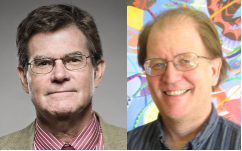 Rotarians were treated to excerpts of some of the most memorable hit songs of the 1960s while presenters Doug Bradley and Craig Werner explained the purpose behind their recent book, We Gotta Get Out of This Place: The Soundtrack of the Vietnam War. The title of their book comes from The Animals’ song, popularly known as the “national anthem” of Vietnam veterans. In fact, there is no such thing as THE Vietnam War experience.

 Rotary Club of Madison, Wisconsin