
submitted by Dave Mollenhoff; photo by Margaret Murphy
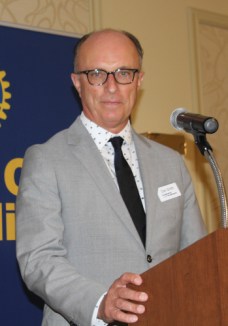 “Everything in Wisconsin’s dairy industry has changed!” That was the keynote hit by Daniel Smith, the president and CEO of the Cooperative Network, in a clear and well-organized talk to the club on Wednesday.
You must understand the scale and depth of change in the last 40 years—1978 to 2018—he began. The number of dairy farms dropped from 47,000 to 8800. The size of the average dairy herd increased from 36 to 140. Milk production soared from 11,735 to 23,725 pounds at the same time the number of cows dropped from 1.8 to 1.2 million. (Some cows are producing 200 pounds of milk per day!) And all of this occurred at a time when milk prices fluctuated by 75%.
These changes were driven by advancements in technology, genetics and nutrition, changes in the cost of credit, farm consolidation, specialization, and access to international markets.
What have we gained from this revolution? Smith asked. We Americans enjoy the lowest cost of food in the world, the most productive farms, and a consistent, safe, and dependable supply of food—all of which freed up millions to pursue non-farm occupations.
What have we lost? His answers included 40,000 farm families, thousands of farm-related businesses, family-focused husbandry, and a sense of who we are as a nation.
The transformation of Wisconsin’s dairy industry has been fueled by a five-year slump in prices, rapidly increasing infrastructure and equipment costs, intense global competition, and an aging farm population. (Today, the average age of a dairy farmer is 58.)
Looking ahead, Smith warned that highly mechanized, vertically integrated agriculture was already evident in poultry, hogs, and grain and that dairy farming was rapidly moving in this direction.
If you missed our meeting this week, you can watch the video here.
 Conor Moran, the director of Wisconsin Book Festival, spoke to us today. Conor has been the director of the Festival for the last seven years, since it has been presented by the Madison Public Library and Foundation. He updated us on what has been happening with the Festival since his last appearance before us five years ago. The Festival has become a year-round event, which has made it more prominent among publishers, and they are now eager to participate. As a result, the Festival is able to attract some of the best authors of the most important books in the country, with many from the New York Times Best Sellers list. In addition, C-Span now programs the Festival.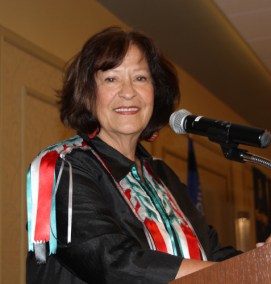


 Tom Lynch, Director of Transportation for the City of Madison, began his presentation by acknowledging the significant contribution of 13-year Director of Metro Transit, Chuck Kamp, for his energy and foresight in bringing the system into the future. Mr. Lynch then shared important aspects of Madison’s transportation system and its future.

 Rotary Club of Madison, Wisconsin