Tag Archives: Rotary Club of Madison

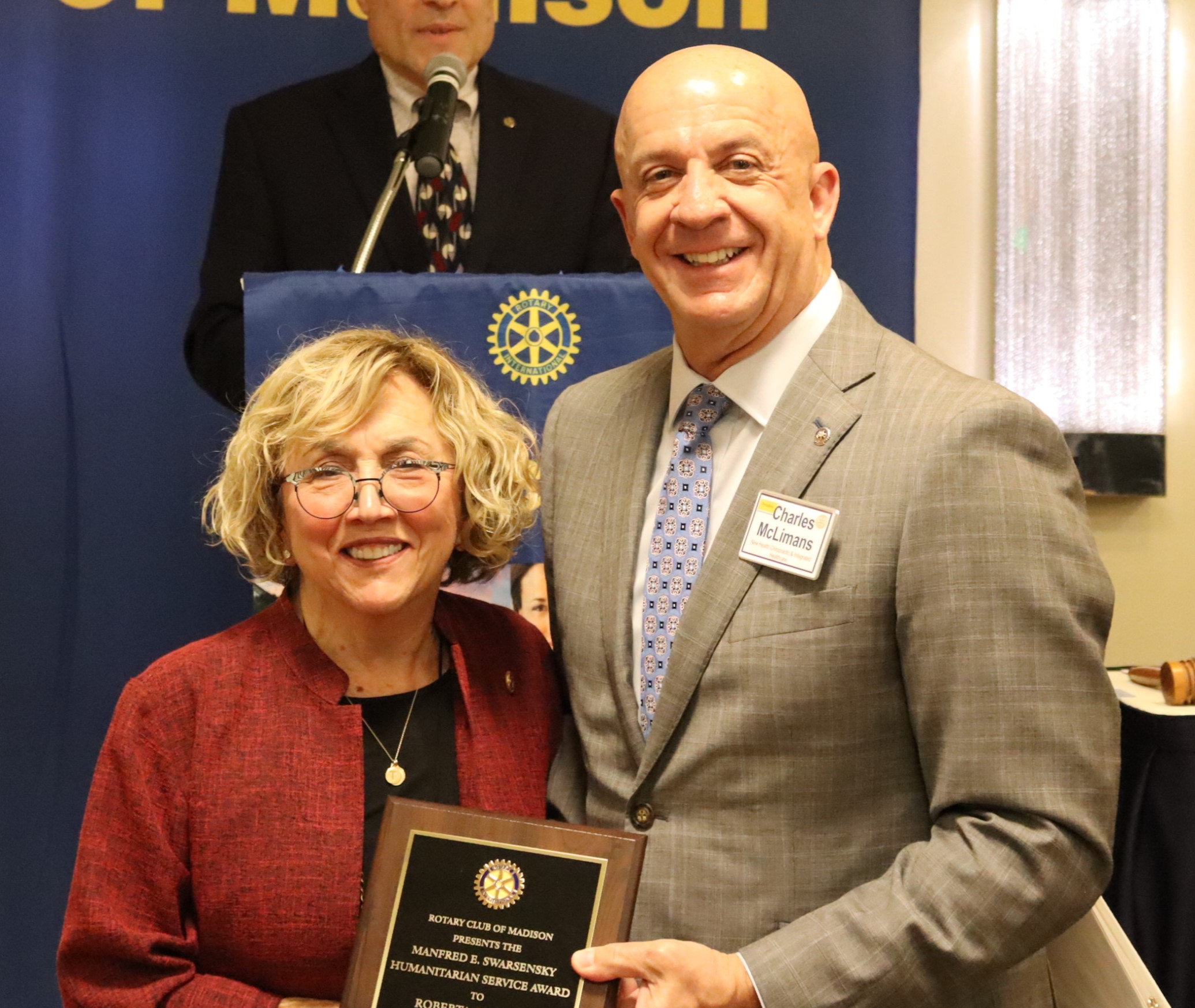
November 8: Club Member Roberta Gassman Receives 2023 Manfred Swarsensky Humanitarian Service Award

For decades, Roberta Gassman has performed volunteer community leadership work and public service at the highest levels of local, state and federal government well beyond what was required by her paid employment.  Since her youth, she has been motivated by the values of the civil rights movement, her own family’s personal experience with religious persecution and the principles of her Jewish faith – seek justice, heal the world, do good deeds.  As Allan Koritzinsky, nominator of Roberta Gassman for this award, says, “In multiple ways, she has demonstrated a commitment to opening doors for all, whatever their color, religion, sex or income level and building bridges, working across the aisle, furthering public/private partnerships and advocating for social justice and against intolerance.”

Within the Madison area, she has served on many boards, often in leadership roles, including for major civic organizations such as the Madison Community Foundation, United Way of Dane County, Edgewood College, Overture Center, Madison Equal Opportunities Commission, Temple Beth El, Jewish Federation of Madison, UW-Madison School of Social Work Board of Visitors, Downtown Madison, Inc., Madison Museum of Contemporary Art, Madison Repertory Theatre, Chancellor Becky Blank’s task force to address history of bias at UW; and, the Rotary Club of Madison where she is a Paul Harris Fellow and has chaired multiple major committees including Fund Drive, Program, Public Relations, Classification and Swarsensky Humanitarian Service Award.

Gassman has won numerous honors over the years and has been active in mentoring young women.

She served in Washington, D.C., in President Barack Obama’s administration at the U.S. Department of Labor as Deputy Assistant Secretary for Employment and Training; in Governor Jim Doyle’s Cabinet as Wisconsin’s longest serving Labor Secretary; as Governor Tony Earl’s Policy Advisor on Employment and Women’s Issues; as a top aide to a Madison mayor & a Dane County Executive; as Senior Vice-President of Marketing and Community Investment at Home Savings Bank; and, as Senior Fellow at the UW-Madison School of Social Work teaching macro practice and public policy to advanced graduate students from multiple departments.

Gassman and her husband Lester Pines have two grown daughters and three grandchildren.

Congratulations to Roberta Gassman on receiving this year’s Manfred E. Swarsensky Humanitarian Service Award.

If you missed our meeting this week, you can watch it here: https://www.youtube.com/watch?v=K8cYj7v1awc.

ROTARY VETERANS FELLOWSHIP: AIR NATIONAL GUARD TOUR

–submitted by Rob Stroud; photos by Rob Stroud and Rhonda Adams

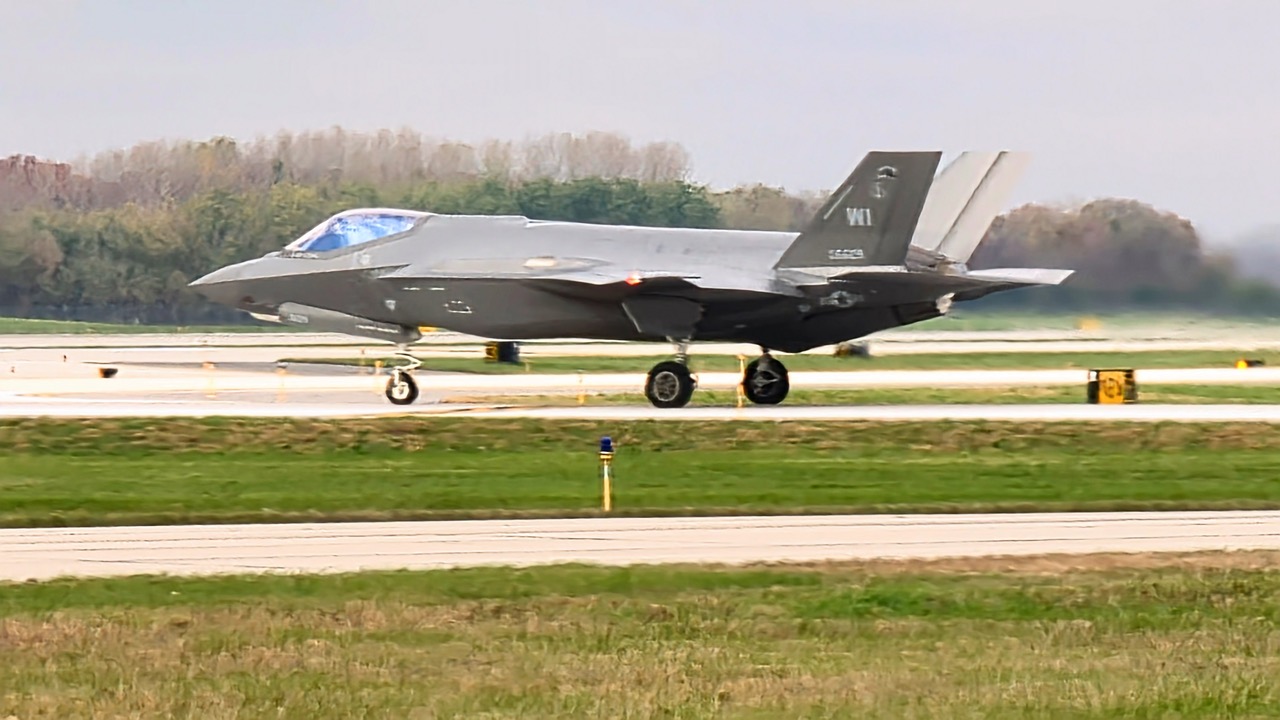
On Tuesday, October 31, our Veterans Fellowship met at noon for a tour of the Wisconsin Air National Guard 115th Fighter Wing.  We were greeted by Lt. Col Ben Gerds, who has been a guard member since finishing high school, more than 30 years ago.  Although he joined the unit as an enlisted airman and worked as a mechanic on the unit’s planes to help pay for his college education, once he finished college, he applied for and was accepted to fighter pilot training and has flown for the 115th ever since.  He was about as thoughtful, personable, and knowledgeable of a guide as one could be. 

Ben covered the history and the mission of the 115th Fighter Wing, from its creation to today, with the newest, fifth generation F-35 A fighter jets.  We visited the hanger, where we were able to get close to one these amazing $148 million aircrafts.  At the moment, the 115th has only six of these aircraft, but they expect to have twenty of them once production catches up with demand.  We learned of the science fiction-like features of the aircraft, with electronic systems that allow the pilot and the plane to carry out a wide range of missions in every possible condition. Unlike the F-16 fighters that these planes replace, the F-35 is extremely stealthy, with fuel, weapons, radar, cameras, and ammunition all being within the hull and with the hull designed so that no radar signal is bounded back from the sending radar.

After viewing the aircraft, we were shown the pilot’s equipment, including an incredible helmet ($500,000 each!) that shows virtually all of the information that the pilot needs displayed on the inside of his visor.  The F-35 has cameras mounted in a number of places on the plane and, with computer technology, the pilot has a seamless camera view of his entire surroundings (including below and behind the plane) that can be displayed on the visor and changed in response to eye movements.  The visor can also display systems information at the touch of a button. 

We observed four pilots (the wing currently has 10 pilots certified on the F-35) being briefed for their afternoon mission and then Ben took us to a spot close to the runway where we watched the four planes take off at 20 second intervals. 

Many thanks to our Fellowship co-chairs, Chris Kolakowski, who gave us a contact person at the Air National Guard and Rhonda Adams, who arranged for this wonderful outing  and thanks, too, to all of the personnel we met at the Air National Guard, who were courteous, professional and friendly. 

If you are curious about how are national defense dollars are being spent, this would be a great place to start.  I am confident that those of us who attended are all in agreement that the visit was even better than we expected, thanks to the men and women of the Wisconsin Air National Guard, 115th Fighter Wing.

November 1: An Introduction to Native American Pow-Wows

–submitted by Bill Haight

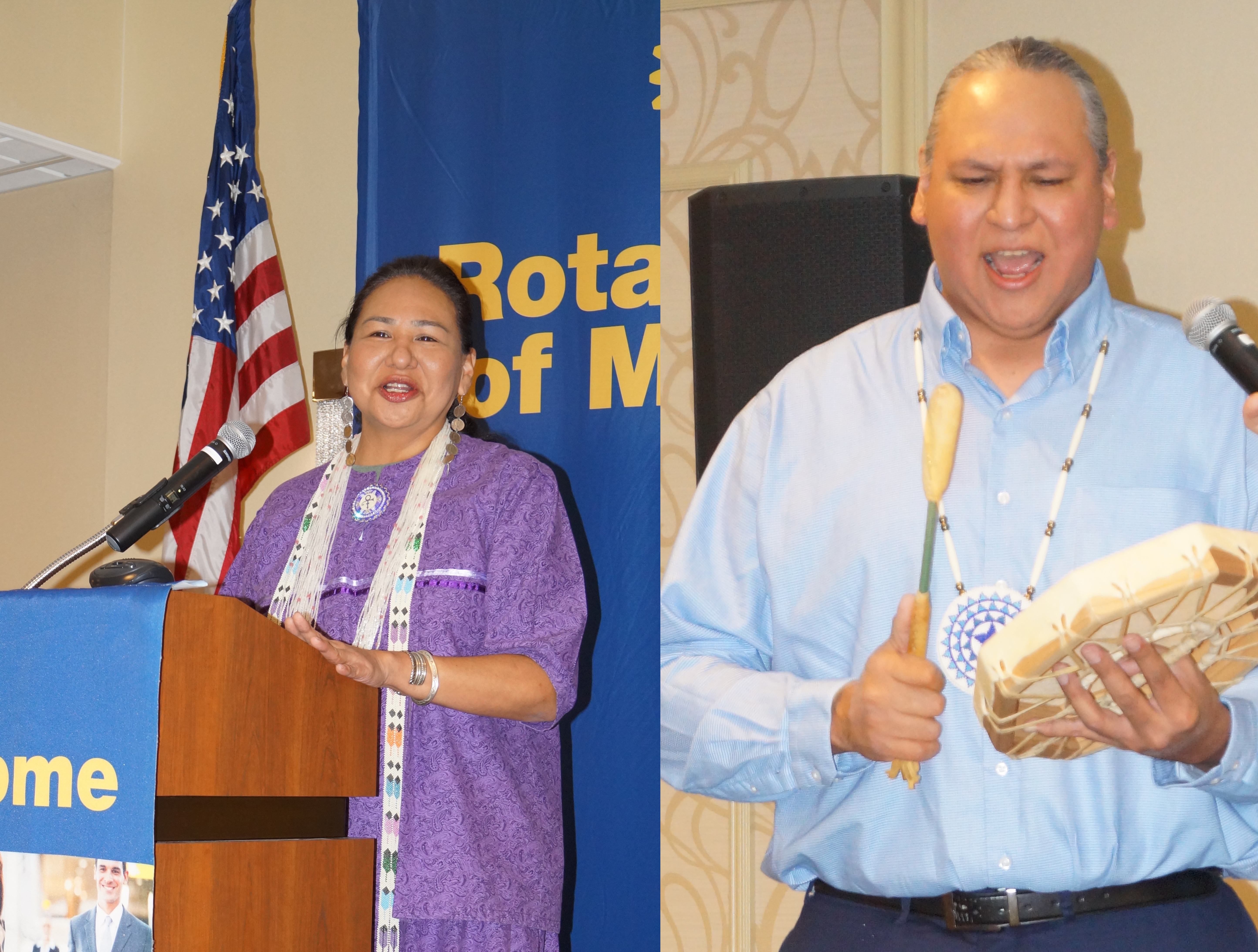
Anne and Josh Thundercloud of the Ho-chunk Nation spoke on Native American pow-wows, which are social gatherings held across the country. A traditional pow-wow focuses on social dances and songs of the hosting tribe. The American flag is often displayed aside the tribe’s flag in honor of the esteem the Native Americans hold for military veterans. The public is always welcome.

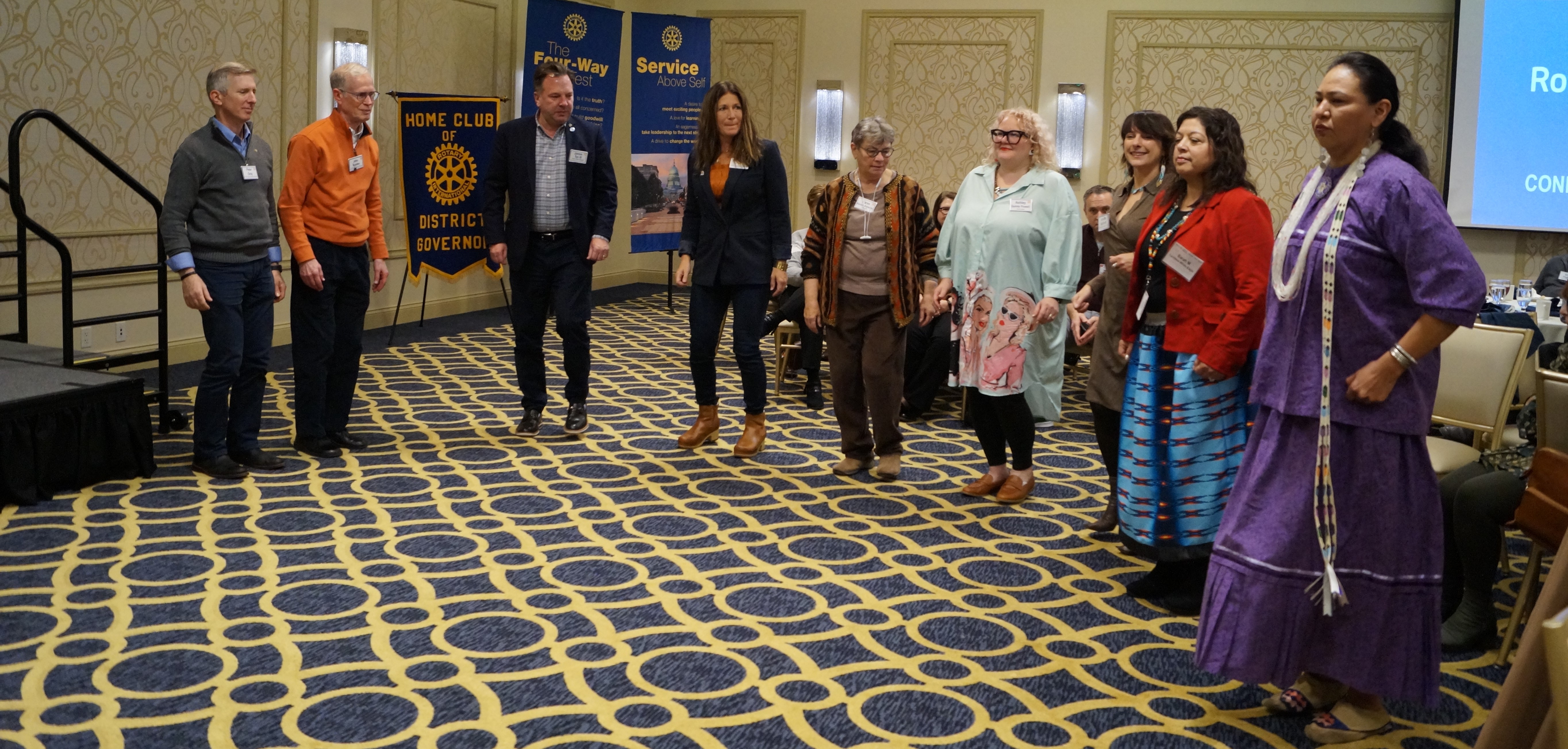
The brother and sister team ended the program with music and a dance, which soon had a couple dozen Rotarians joining the rhythm in a circle at the front of the room.

If you missed our meeting this week, you can watch the video here: https://youtu.be/7r2XOpDSMyY.

October 25: Lynch Talks Transportation from Mules to BRT

–submitted by Valerie Renk

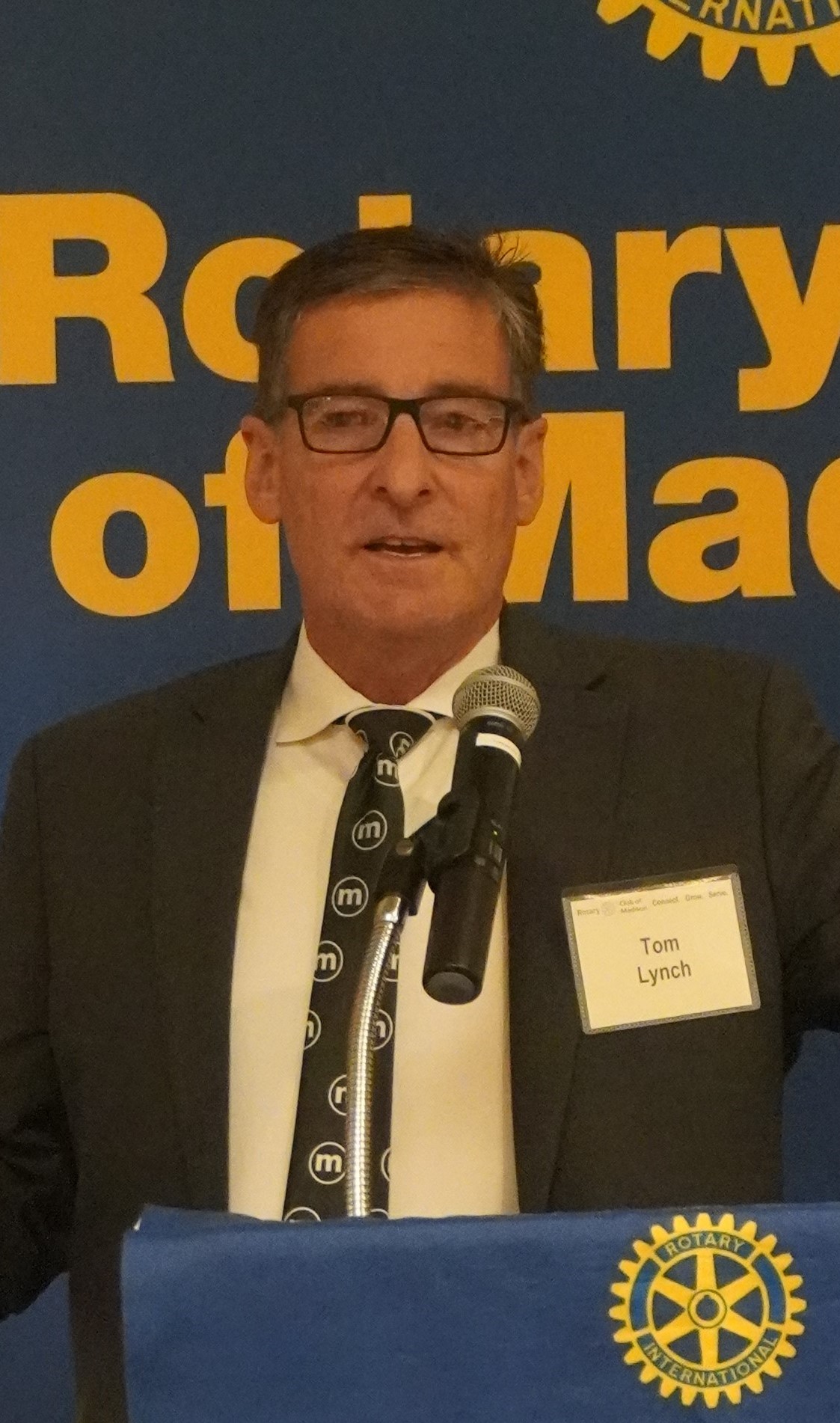
   Madison City Transportation Director Tom Lynch shared how transportation evolved in Madison at the October 25 Rotary meeting. Milestones:

  • 1869: Rail service begins; by 1899 Madison has 184 trains a day. State had to pass law limiting time streets can be blocked.
  • 1884:  Street cars begin; pulled by mules until 1892.
  • 1901: First modern cars appear. By 1916 cars outnumber horses in Madison.
  • 1949:  First beltline built (now W Broadway).
  • 1962: Passenger rail lost.
  • 1965: Cycling on state street/square outlawed.
  • 1968: Bus company leaves; city buys to maintain service

   Lynch shared that both public and private transportation are subsidized. Those first mule-pulled street cars offered 5 cent rides but cost the city 9 cents. Today’s Lake Street Ramp costs the city about $700/stall/year with revenue of $212, a subsidy gap of almost $500 per car. Streets are also 40% wider to accommodate parking, another cost covered by property taxes. 

   Three initiatives were reviewed by Lynch. Vision Zero is designed to safely and equitably prioritize traffic needs. Bus Rapid Transit (BRT) is finally happening. Modest means and BIPOC citizens are especially helped by new schedules and technology moving buses more quickly. Passenger Rail could bounce back from that 1961 loss if the city wins part of 102 billion available federal rail grants. Watch for November announcements and January public meetings.

If you missed our meeting this week, you can watch the video here:  https://youtu.be/5mE3TKrILW4.

October 18: Transformational Ideas Recognized

–submitted by Valerie Renk

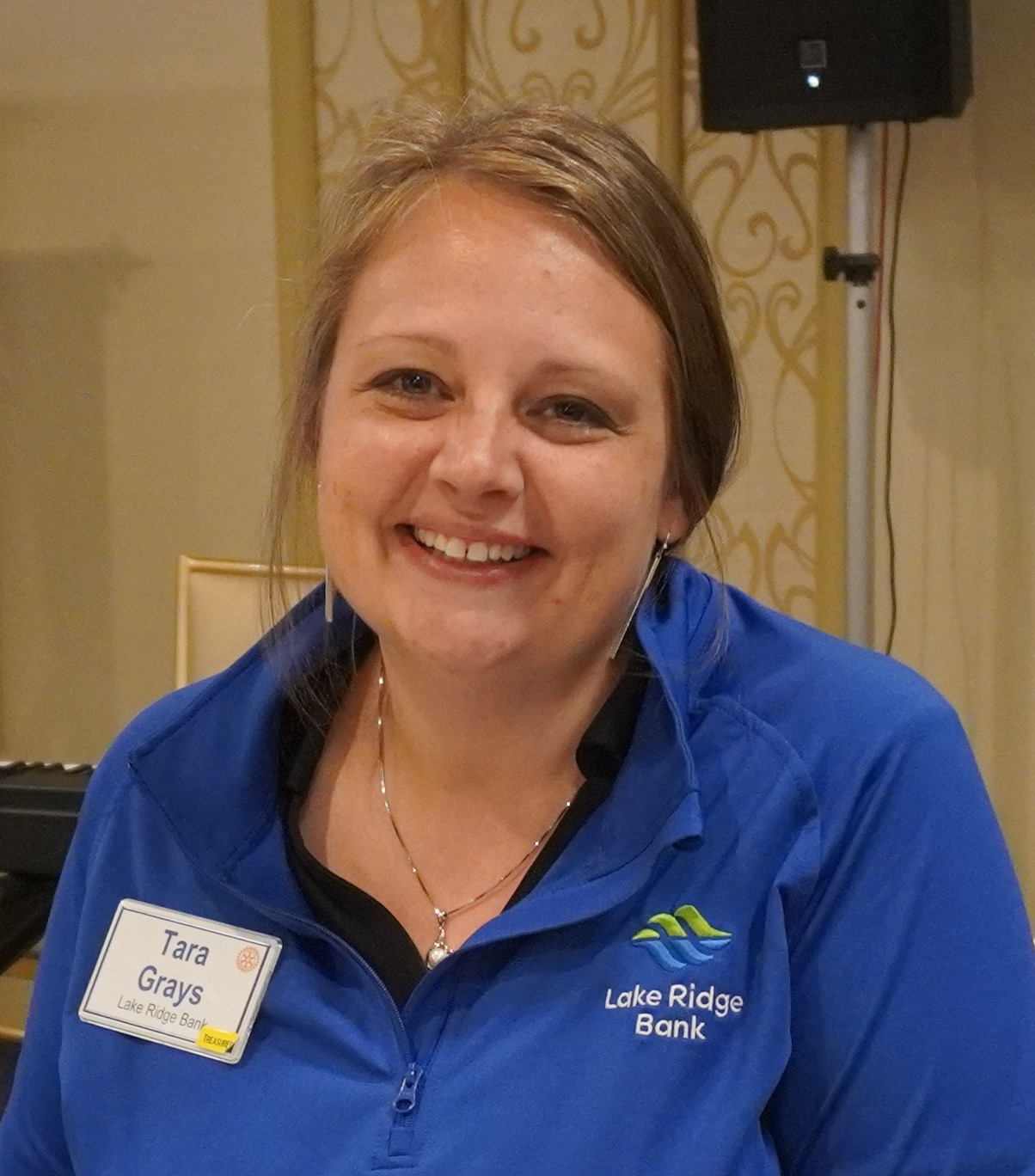
Rotarians heard from fellow Rotarian Tara Grays how several ideas are transforming Wisconsin businesses. Great ideas were celebrated by honoring nine recipients of Wisconsin Innovation Awards. 

Hello Loom, a small-scale loom, makes it easier for people to start a fiber arts hobby, and was the first honoree example. Hello Loom is the size of a cell phone and just as portable.

Another honoree, Elephas, images a live Cancer tumor to predict which immunotherapy the tumor will best respond to.

Nurse Disrupted helps close the nursing shortage gap by deploying virtual nursing sessions from current staff.  

Other honorees included:  Synthetaic, NECTO, Virtual Foundry, Community Clothes Closet, and Managecore. 

If you missed our meeting this week, you can watch the video here: https://youtu.be/a6BkBYDX0wc.

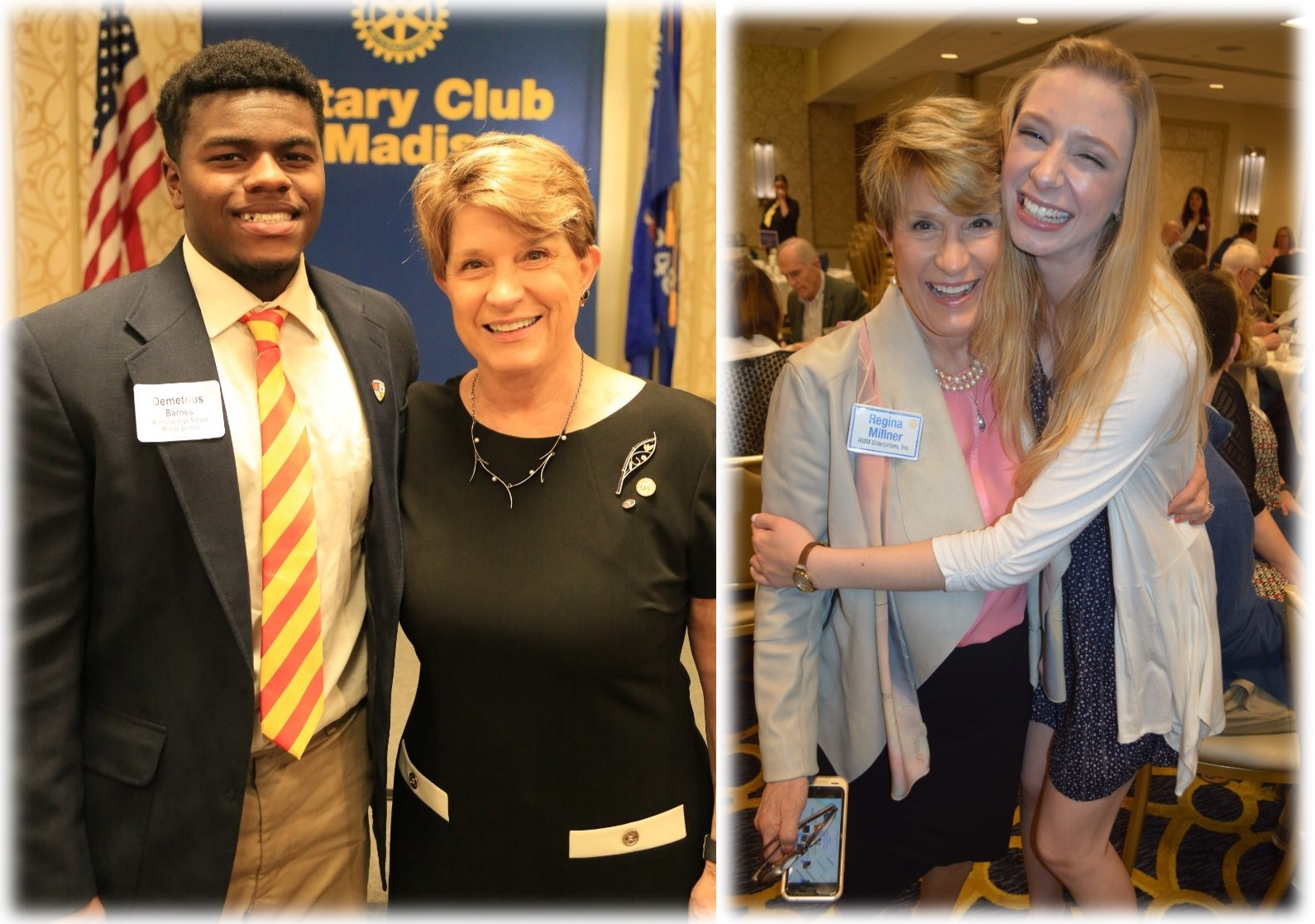
Regina Millner Receives Club’s Joseph G. Werner Meritorious Service Award

–presented by Ellie Schatz on October 18, 2023

From left, Ellie Schatz, Club President Charles McLimans and Regina Millner

It was 1994 when Regina and I, already friends, joined Rotary. The professional element of membership is part of her story, but the friendship element prevails for me. It gives me great pleasure to be part of honoring Regina with the Joseph G. Werner Meritorious Service Award.

This award was established in 1974 in remembrance of Joseph G Werner, a dedicated Rotarian, who served as club president in 1953-54, district governor in 58-59, and a director of Rotary International in 69-71. He was in line to become Rotary international President at the time of his death in 1973. Throughout his life, Joseph G. Werner epitomized the Rotary objective and vision of “Service Above Self” at home and abroad.

Regina has been active in so many city and Rotary groups and committees that I can highlight only a couple of areas in which she has made major contributions.

First, her role in the creation of Monona Terrace. She believed that having a cultural center would be a catalyst for resurgence in downtown Madison. She helped make clear to developers the economic and fiscal benefits of such a center and then brought Rotary into the picture by encouraging members to serve as guides.

Second, her service on the Board of Regents. At the time the legislature was pushing to eliminate tenure.  Regina was among those who fought for policy-driven tenure. This provided UW-Madison faculty the freedom to pursue bold research and teaching agendas, and ensured that scholarship was allowed to flourish.

In both the Monona Terrace and tenure track debates, Regina says her role was to promote an understanding of longterm traditions and how to align those with current ideas for needed change. She says, “I throw out ideas because I want to get things started. I then surround myself with people who will take up the dialogue.”

In Rotary, Regina is proud to have promoted the growth of our scholarship committee. Early on the vast majority of applicants were girls and thus awards to boys were sadly lacking. That situation may not be as dire as it was back then, she says, but giving scholarships and mentorships is the most important thing we do, and the role of maturation must be examined as applicants are being considered by school leaders and Rotary committee members.

As club President in 2006-07, Regina’s first focus was to bring in good, new members. Then she concentrated on advocating for excellent programs. Her leadership is now focused on the Program Committee. She feels strongly that the podium in not a pulpit. Bringing in entertaining as well as thought-provoking programs is most important.

Last but not least, Regina points out the power of Rotary International. She recommends following her commitment to Rotary while traveling. It was through visits abroad, she says, that she came to understand the common goal of “service above self” in clubs around the world but with different local goals that express cultural individuality. 

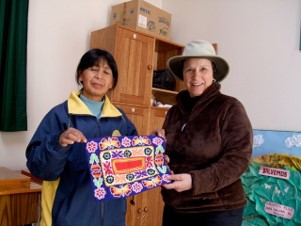
In 2008, Regina and I were a part of a Rotary delegation to a project in Peru called Cecade. We visited schools, shared stories in English, Spanish, and Quechua, and interacted with children, who are wonderfully alike worldwide. Our hosts invited us to their home, took us into the mountains, and insured that we got to see their native citizens at rest, at work, and at play.

And finally we were driving home at something like 1-2 o’clock in the morning after a flight that had been rerouted from Peru to Panama because someone had died on board. We’d spent hours in a closed airport in the middle of the night because our large plane blew out 2 tires landing on a short runway and the replacement tires had to be flown in from Atlanta. Regina had her car at her son’s house not far from O’Hare and offered us a ride home. Needless to say we were all a little wobbly after a harrowing flight. We were nearing home when red lights and a siren were upon us from behind. In answer to the officer’s question as to why we were on the road, Regina said, “We’ve just come from Peru.” Evidently there had been a game at Perdue that day, because he exclaimed Perdue! “Not Perdue,” Regina replied, PERU. He let her drive on, warning us to stay alert.

So here’s to Rotary, friendships, the Werner award and the well deserved 2023 recipient, Regina Millner!