
–submitted by Mary Thompson; photos by Vicki Holschuh and Eagan Heath
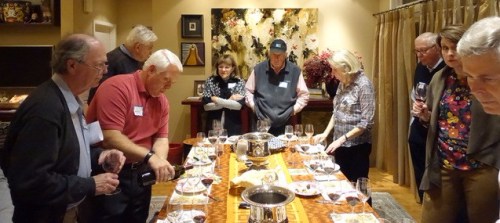
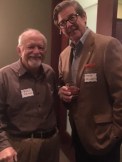 Twenty Rotarians enjoyed an evening of haute cuisine and interesting conversation during our Culinary Arts Fellowship on December 4, 2017. Many thanks to Boris Frank (pictured here with Steve Wallman) for planning an innovative dining experience with Chef Tim Van Doren from Johnny Delmonico’s Steakhouse. Our server, Cynthia McDonald, was well known to our group for her service at our weekly Rotary meetings. She made the evening special.
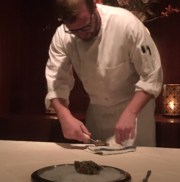 Our first course began with Chef’s demonstration on how to correctly shuck oysters as we learned the difference between the briny East Coast oysters and the more fruity flavor of the West Coast variety. Also, it’s OK to eat oysters year round because they are farmed around the world dispelling the idea of eating them only in a month ending in “R”. The oysters were accompanied by a charred scallion mignonette and sparkling wine.
The entree played with our senses as the chef prepared beef tartare (a hit!), with warm grilled lettuce and horseradish blue cheese ice cream. For the less adventurous, like me, the tartare was cooked. And those who selected the vegetarian option delighted in beet tartare. The 2016 Meomi Pinot Noir was a perfect complement.
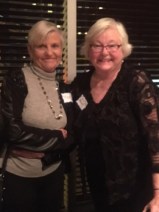
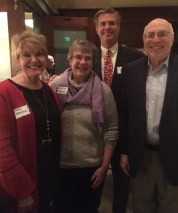
Photo 1: Mary O’Brien and Christine Beatty; Photo 2 from left: Mary Thompson, Loretta Himmelbach, Robert Holschuh and Larry Jenkins
To complete our dining experience, Chef prepared deconstructed s’mores finished with hickory smoke under glass.
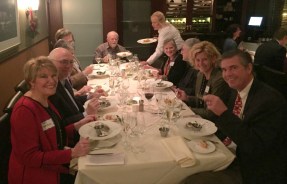
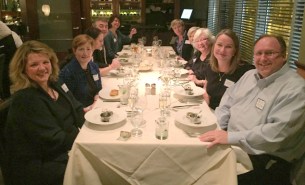
Chef Van Doren received applause for our dining adventure. We will certainly return for another ultimate dining experience. And, Culinary Arts Fellowship Chair Loretta Himmelsbach reminded everyone of the next Culinary Arts Fellowship Event on February 5, 2018 at the Vignette Dining Club.
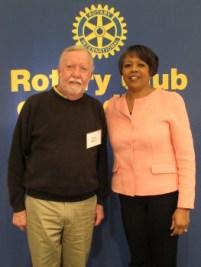 The river that stretches 2,350 miles dissecting the United States has earned many monikers throughout its storied history– it has been referred to as America’s lifeblood, Ol’ Man River, or the Big Muddy. Dennis McCann, who addressed the members of the Rotary Club of Madison on November 29, refers to the Mississippi as “This Storied River,” which is the title of his recently published book that celebrates particularly the Upper Mississippi’s history and role in shaping the Midwest.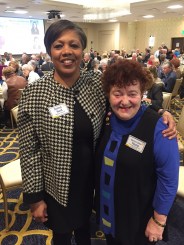
 When the US entered World War 1 in 1917, the war came to dominate the daily life of citizens in Wisconsin. There were initially concerns about our state since 38% of the population had been born in Germany or had a parent born in Germany. Riots were expected on the first day of the draft, yet they did not materialize. Instead 218,000 people (106% of the estimated eligible number) registered, and 5% of the state’s population served in the military. Families were urged to conserve food, grow a garden and avoid eating wheat, sugar, meat, and fat, all of which were critical to the war effort. There was not just social pressure, but aggressive action to ensure that people bought war bonds, and volunteers told those who bought fewer than their means allowed that they would be reported to the County Council on Defense. Dozens were indicted under the Espionage Act for criticizing the war, insulting the flag, opposing war bonds, and other “unpatriotic” remarks. Vigilante groups like the Knights of Liberty took the law into their own hands against “disloyal” citizens, and German language school books were burned.


 Rotary Club of Madison, Wisconsin