Tag Archives: Rotary Club of Madison

Cultural Awareness Group at KJ’s Curry Bowl on June 30

–submitted by Melanie Ramey; photo by Majid Sarmadi
20150630_202625

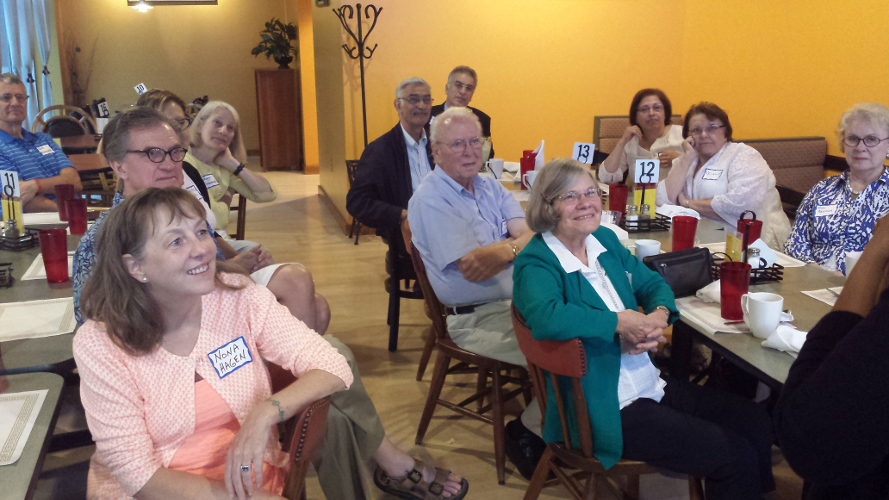
The Cultural Awareness Fellowship met on June 30th at KJ’s Curry Bowl on Madison’s west side to experience Sri Lankan food and learn about Sri Lanka. There was time for fellowship before the meal.  Twenty-three Rotarians and guests attended. A interesting buffet was served featuring 2 tasty appetizers and 2 different curries and rice,  concluding with mango ice cream and a unique pudding.  In addition to coffee and tea, a special Sri Lankan drink of avacado was offered.

Following dinner, the owner’s sister spoke to the group about Sri Lanka, from the time it was under British colonial rule until 1972 it was known as Ceylon..  It is an ancient country of 20 million people located in South Asia near South-east India. Its documented history is 3000 years old with some pre-historic relics dating back 125,000 years.  The country was involved in a 30 year civil war that ended in 2009 .  It is a republic with a presidential system.

Sri Lanka is a diverse multicultural country with many religions, ethnic groups and languages. It has a long Buddhist tradition dating back to 29 BC.  Coffee, tea, gemstones, coconuts and cinnamon are the primary products that are grown and produced.  A film was shown revealing the natural beauty of the country.  The speaker also shared some of her personal experiences when she came to the US in adjusting to the cultural differences.  It was a very pleasant, interesting evening.
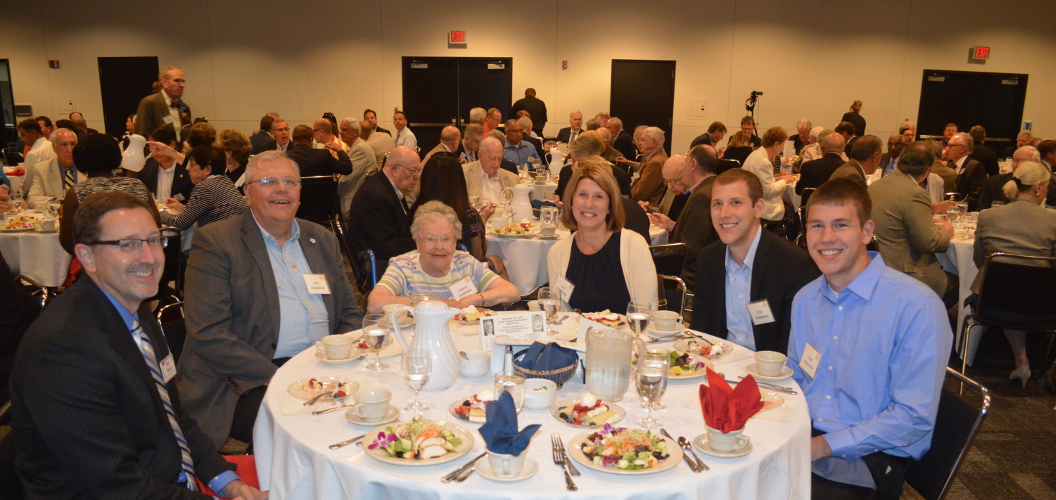
The Roast of Tim

–submitted by Stan Inhorn; photos by Pete Christianson

Special guests from left: Fellow Rotarian and high school classmate Dan Olson, Rick Stadelman (Tim’s brother), Arlene Stadelman (Tim’s mom), Lori Stadelman (Tim’s wife), Ross Stadelman and Justin Stadelman (Tim’s sons).

Special guests from left: Fellow Rotarian and high school classmate Dan Olson, Rick Stadelman (Tim’s brother), Arlene Stadelman (Tim’s mom), Lori Stadelman (Tim’s wife), Ross Stadelman and Justin Stadelman (Tim’s sons).

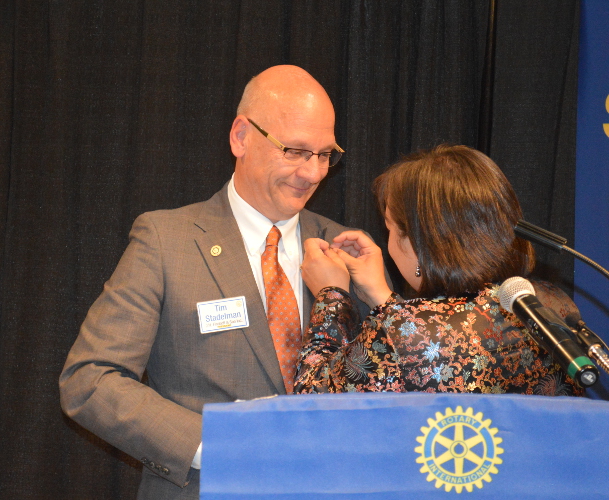
The annual passing of the gavel turned out to be a rather poignant affair. Starting with the welcoming into the Past President’s club, to the thanks that went to all who guided Tim in his memorable year, there were tears and applauses galore. Tim passed out a year-end summary, which included a list of large-scale impact projects in which great progress was made.

DSC_0008   Tim S Photo2  DSC_0036

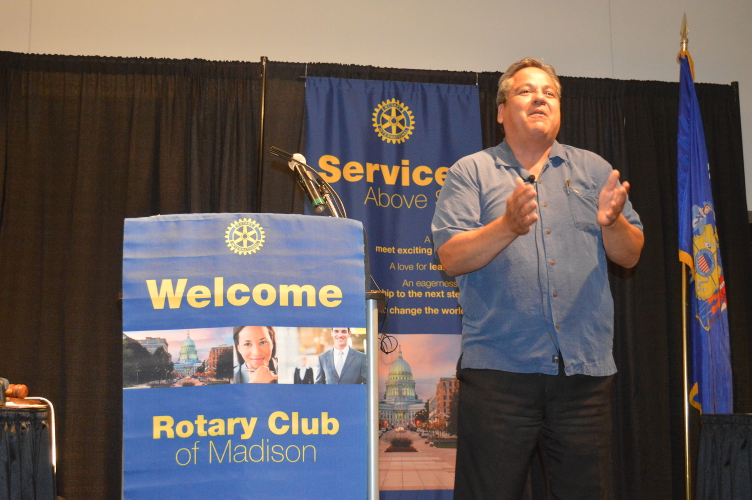
Photo 1: President Tim prepares to deliver his “Swan Song”; Photo 2: Tim places the President’s pin on Ellsworth Brown; Photo 3: Renee Moe places the Past President’s pin on Tim 

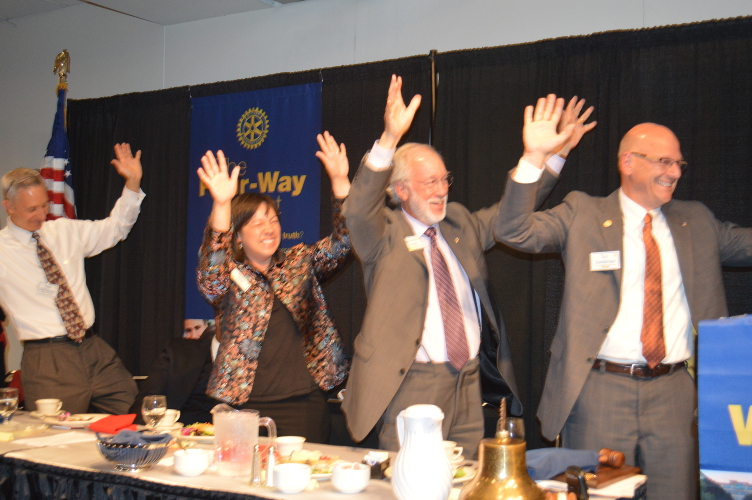
The roast, co-chaired by Lee Schwartz and Mark Fraire, started with a Jump Around that had all the Rotarians on their feet in recognition of Tim’s strong Wisconsin roots. Then there was recognition of Tim’s most significant attributes, starting with his hair or lack thereof. His penchant to cry when moved emotionally was seen, not as a sign of weakness, but a sign of strength, love, caring and sexiness. His college exploits at Whitewater in baseball and table tennis were extolled.

DSC_0006  Tim S Photo3  DSC_0040

Photo 1: From left: Michelle McGrath, Paul Riehemann, Wes Sparkman, Renee Moe, Ellsworth Brown and Tim Stadelman sitting at the head table; Photo 2: Mark Fraire gets everyone to “Jump Around”; Photo 3: The head table “Jumping Around!”

DSC_0059   DSC_0062  Tim S Photo4

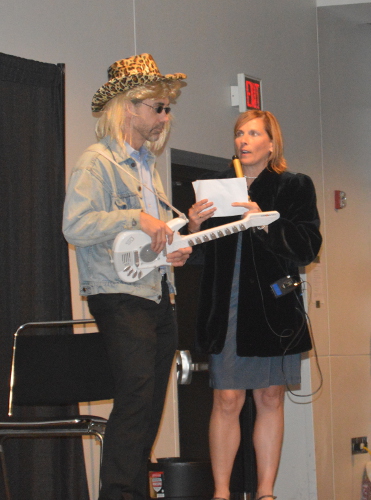
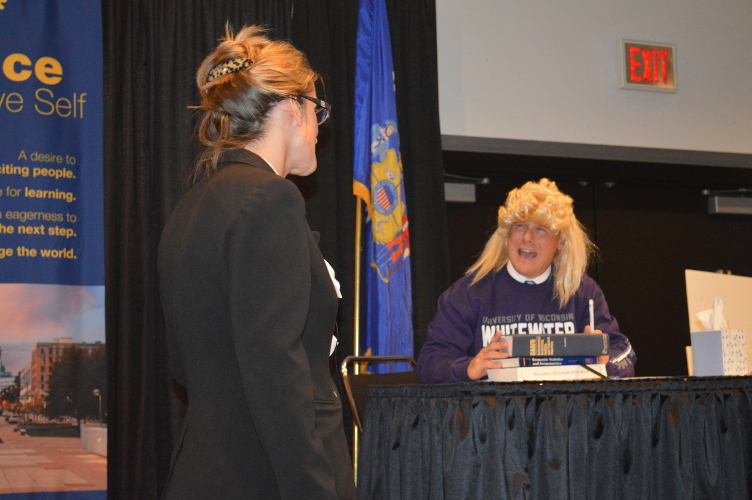
WHAT IF…..Photo 1: “Tim” became a world star table tennis player; or Photo 2: “Tim” was a Rock Star interviewed on the red carpet by Tina Fey; instead, Photo 3:  “Tim” complains about his accounting homework at UW-Whitewater

While at Whitewater, Tim had some difficulties with his major in accounting, and had concerns that he might not succeed. So he thought of other possible fields of endeavor. Perhaps he could return to cheese-making. A long shot would be to play in a Rock and Roll band. What if a career in professional table tennis could lead to fame and glory? As he nervously pondered these possibilities, his accounting professor announced that he had passed his final exams. So then he applied for a job at several accounting firms – Enron, Arthur Anderson. Fortunately, they rejected his applications because a savior arose right here in Madison–J. H. Findorff & Son was looking for an individual with Tim’s unique talents. So today, Tim is living the good life in Madison, Wisconsin, with his wonderful wife, Lori, and family. Though he is still a young man, he has already achieved his goal of becoming President of one of the nation’s largest Rotary clubs.

DSC_0072

Maraniss on Race and Sports in the South

–submitted by Donna Hurd; photo by Mike Engelberger

Andrew MaranissAndrew Maraniss, son of Pulitzer Prize-winning journalist David Maraniss and trailblazing environmentalist Linda Maraniss, and native of Madison, presented a depiction of sports pioneering through the eyes of the first African-American basketball player to join the historically all white Southeastern Conference in college basketball, Perry Wallace.

The biography,  Strong Inside, chronicles the journey of a young athlete who with trepidation, but with great hope, accepted the invitation to join Vanderbilt University men’s basketball team in 1970.  During a time when many southern, college-bound African-American athletes headed north to play for teams that recognized their talent and championship prospects, Wallace took a chance, while knowing the obstacles he faced and stayed at home in Nashville.  Maraniss tells a story of great courage amidst what may have been insurmountable adversity for some.

Wallace tells of the indignations endured during this time; racist taunts, physical affronts and unsportsmanlike cheers upon leaving the game injured.  He still endured.  He felt that people can be treated in three ways: 1) well, 2) poorly or 3) not at all; he experienced all three.  While Vanderbilt’s Chancellor and Chaplain were encouraging and accepting, his student colleagues were not as accommodating.  Persistent isolation outside of the home basketball court, in classes and even in a place of worship, Wallace did not give up or out.  While that treatment was harsh and inhumane, Wallace had the most difficulty with the third type of treatment of not being treated at all.  Noting that having his humanity denied presented the harshest psychological and emotional challenge of them all.

While clearly a gifted athlete, Wallace’s academic aspirations were equally important to him.  When told not to worry about academically performing well, he refused to “trade one plantation for another.”

Upon graduation from Vanderbilt, Wallace took the opportunity to share his story with a Nashville journalist, the story which proved to be detrimental to Wallace and the newspaper, with many subscribers canceling their subscriptions and expressing their enthusiasm with his decision to leave the city.  While he understood that his remarks would not be initially welcomed, he was hopeful with the passage of time that the words would eventually resonate with people and his wish was realized when he returned to Vanderbilt to discuss the book.  After a standing room only discussion about the biography, Wallace was met with tearful regrets and apologies from many of the students who meted out some of the harsh treatment he endured.

Perry Wallace went on to become an attorney with the Justice Department and is currently a Law Professor at American University in Washington, D.C.

Maraniss interviewed Perry Wallace in 1989 for a black history class he was enrolled in at Vanderbilt.  Strong Inside, Maraniss’ first book, was the first sports related book to receive the Robert F. Kennedy Journalism Award.

Henry Vilas Zoo – Something for Everyone

–submitted by Kevin Hoffman; photo by Mike Engelberger

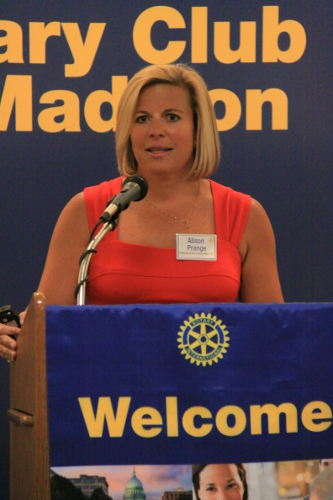
Alison PrangeFellow Downtown Rotary member Alison Prange, Executive Director of the Friends of Henry Vilas Zoo since 2013, gave an energetic and passionate presentation on June 17 about the Zoo and its many programs, and the Zoo Travel Program that went to Tanzania in 2014.

The Zoo was founded in 1911 after a land grant was made by the Vilas family with the stipulation that the zoo charge no admission fee.  It remains a free zoo today – one of 10 in the country that is accredited by the AZA.  In 2014 it had over 725,000 guests that came from Dane County and all the surrounding states making it one of the top attractions in the area.

She hastened to point out that although the Zoo is free it is not free to operate and has a budget of $2,600,000.  There are three main sources of support:  Dane County provides $1,400,000, the City of Madison provides $350,000, and the Friends of Henry Vilas Zoo raise $850,000 through on-grounds revenue such as food and gift shop sales, special events, education programs, memberships, and fund raising.

On Memorial Day weekend the new Arctic Passage exhibit opened with over 3,600 visitors.  The exhibit is the new home for polar bears, grizzly bears, and harbor seals and features underwater viewing for an interactive and engaging experience for both humans and animals.  It also features the Glacier Grill with a dining area that looks onto the polar bear exhibit.

Alison reminded us of upcoming events that help support the Zoo.  On July 17 is a concert featuring the Wisconsin Chamber Orchestra, the 10th annual Zoo Run Run 5k and 10k race, and Halloween at the Zoo – a fun and safe way to spend Halloween with the kids.

The Zoo Travel Program in 2014 was a safari to Tanzania to learn about and understand wildlife in its natural habitat.  The goal of this program is to learn about animal conservation efforts and needs, instead of acquisition.  The travel group was immersed in the habitat of wild animals and were required to be in a vehicle or escorted by trained guides when moving around at night!

The group visited Tarangire National Park, Lake Manyara, Ngorongoro Crater, the Masai tribe, Olduvai Gorge, and the Serengeti.  They saw (among many other animals) elephant, ostrich, giraffe, lions (including witnessing a group of female lions hunt zebra), flamingo, hippopotamus, wildebeest, cheetah, leopard, and the rare black rhinoceros (only 14 left).  It was the experience of a lifetime!

The next program, Great Wildebeest Migration in Tanzania, is scheduled for February 2016.

3rd Annual SummerPalooza Held on June 13, 2015

DSC_0259

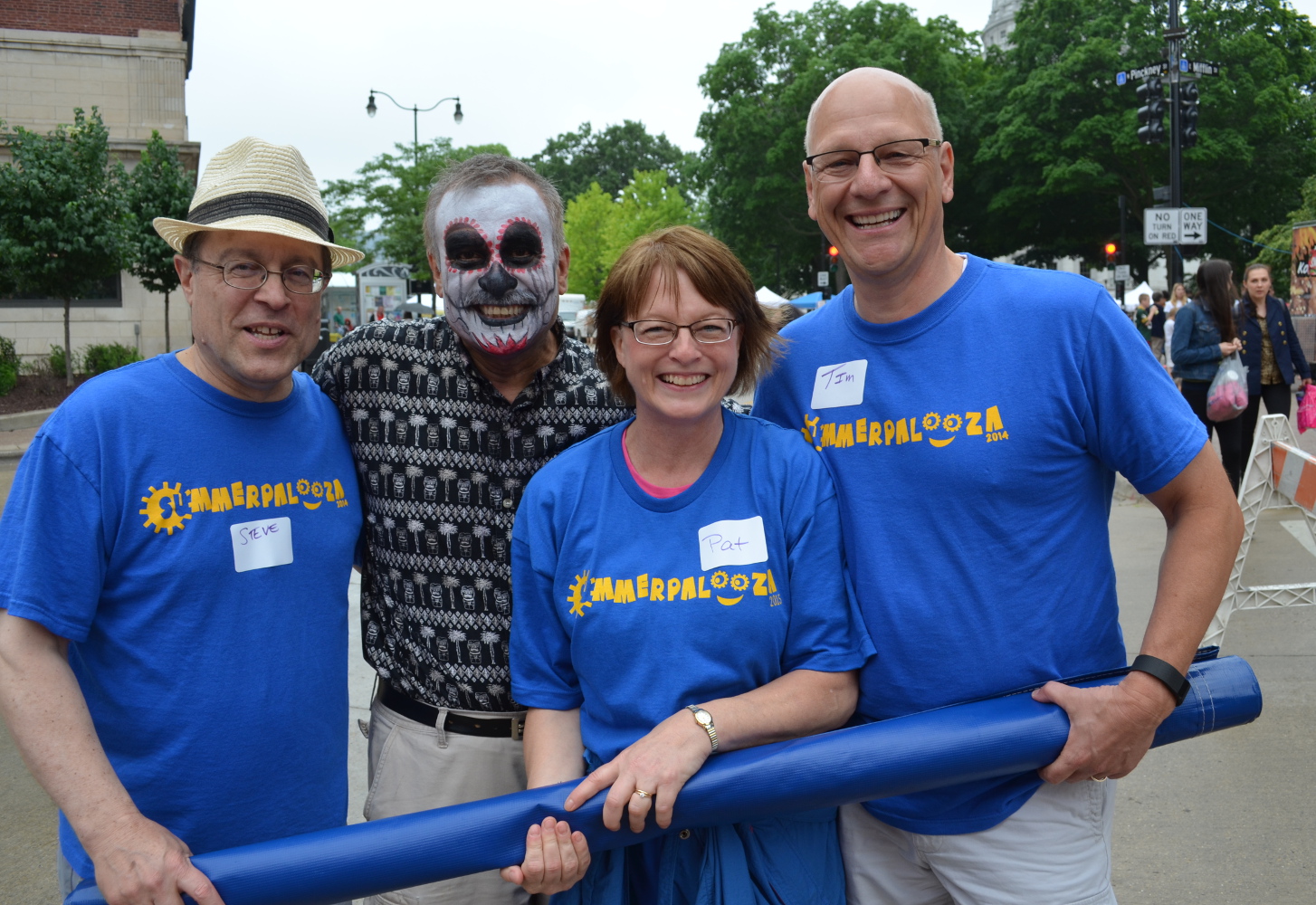
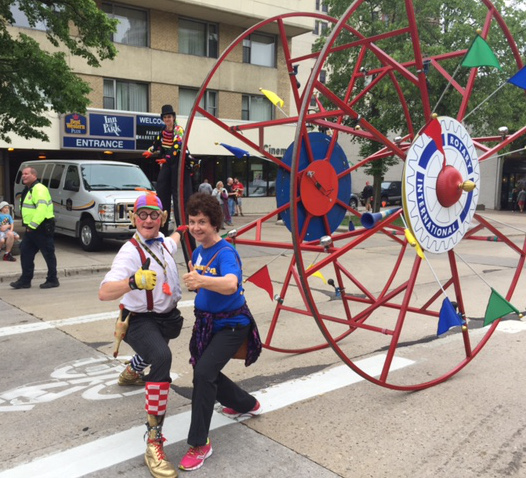
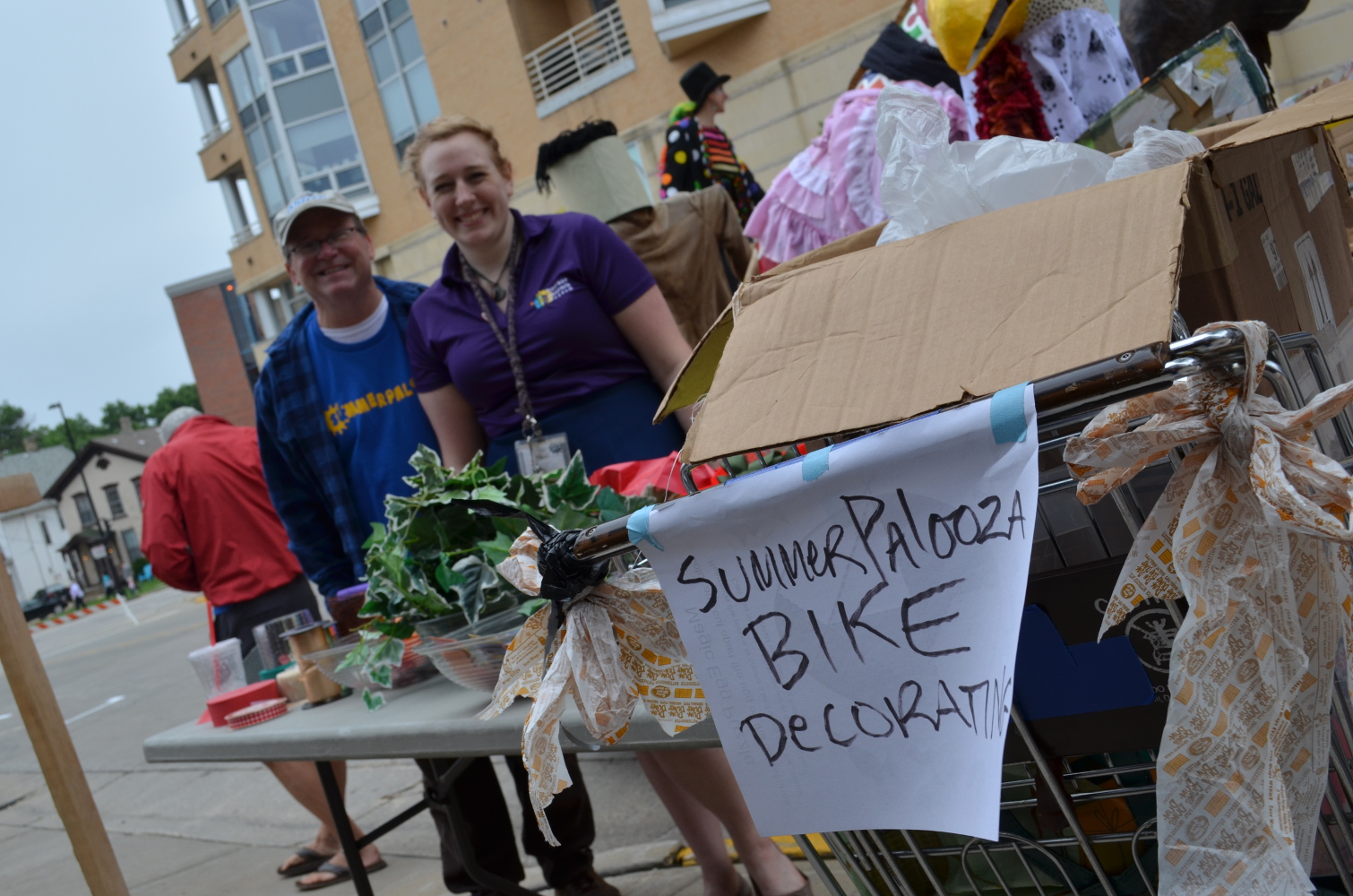
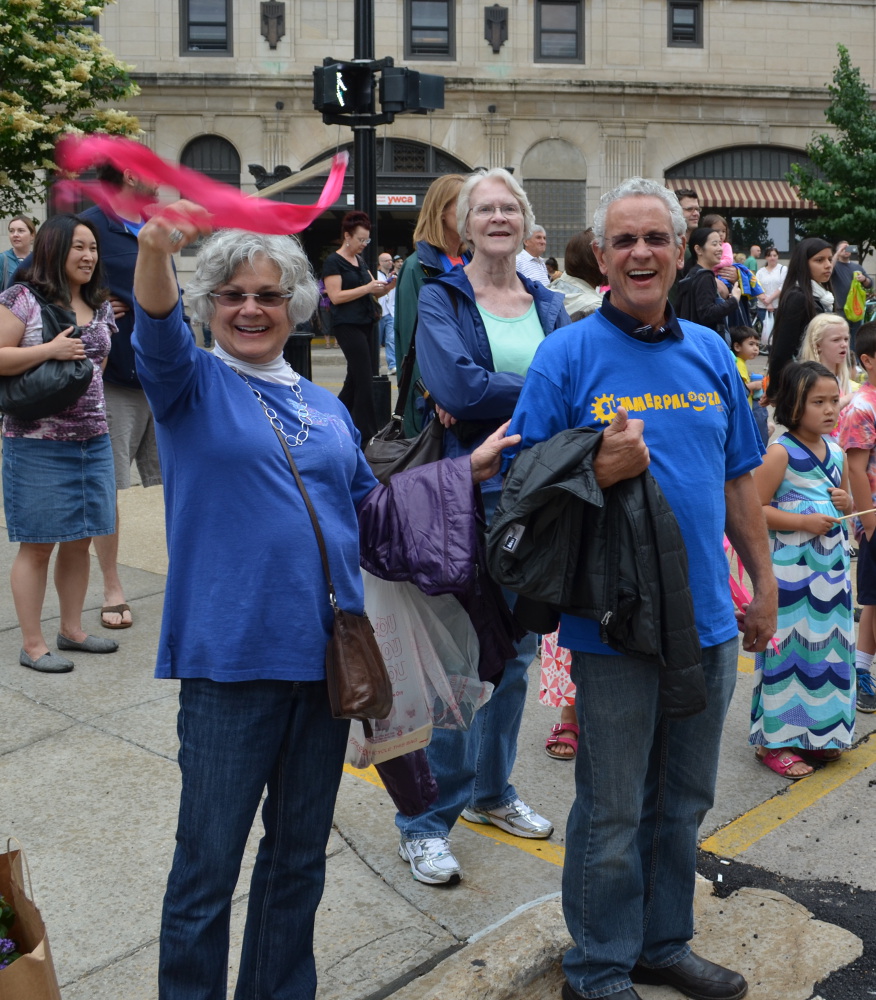
The 3rd annual SummerPalooza event was held around the Capitol Square on Saturday, June 13.  SummerPalooza was created during our club’s Centennial year as a celebration to kickoff the summer season, getting all kinds of people and families to look forward to this annual event.

DSC_0248   Summer2  DSC_0077

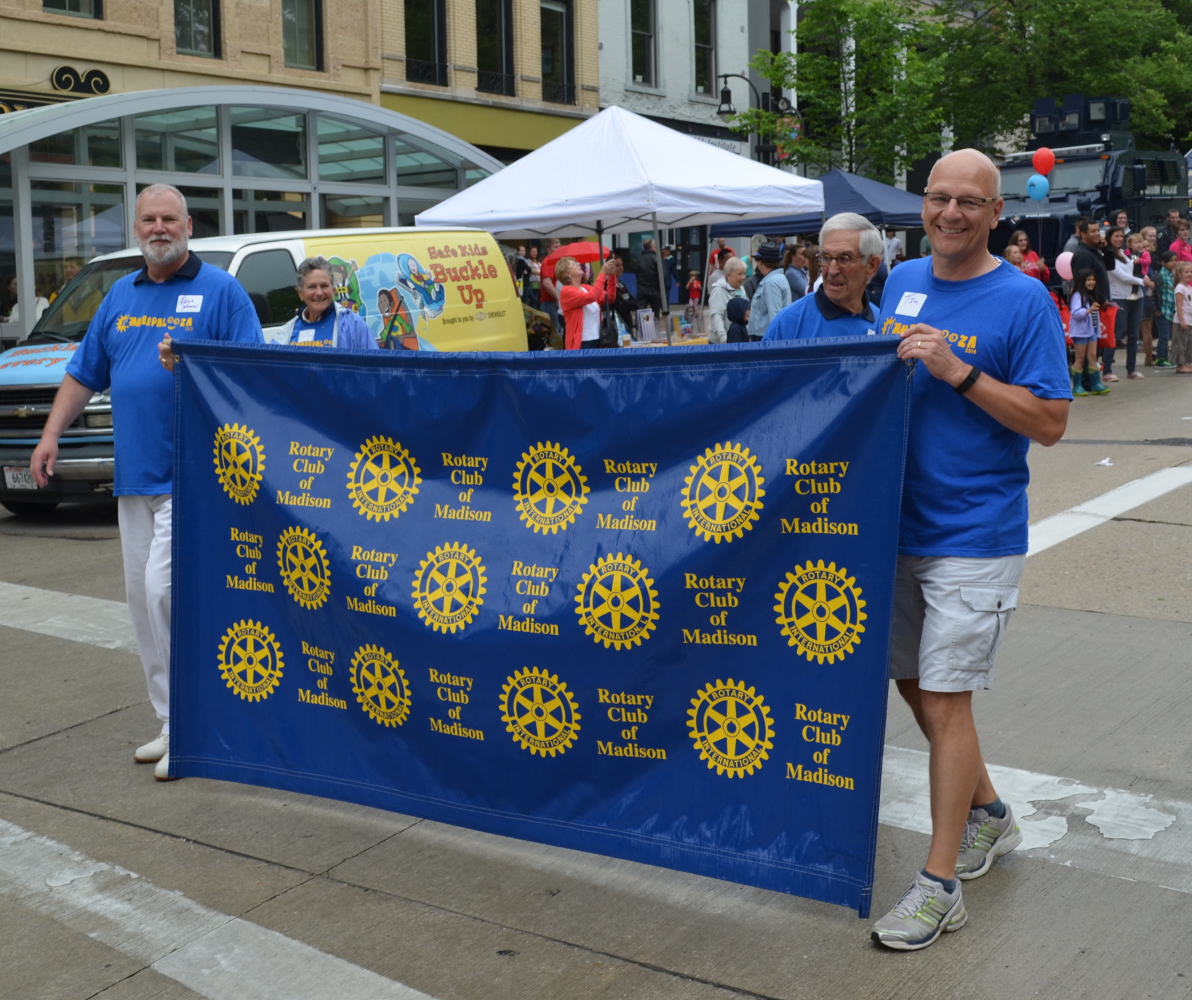
Photo 1: Dave Johnson (left) and Tim Stadelman carrying the Rotary banner in the parade; Photo 2: John Bonsett-Veal and Deb Gilpin 

We had over 25 Rotarians volunteer during the day, and a parade was held around the Capitol Square at noon.  Our thanks to Deb Gilpin and Bryan Chan for coordinating the planning for this year’s event and to John Bonsett-Veal for serving as photographer and videographer.

DSC_0017  DSC_0181  DSC_0014

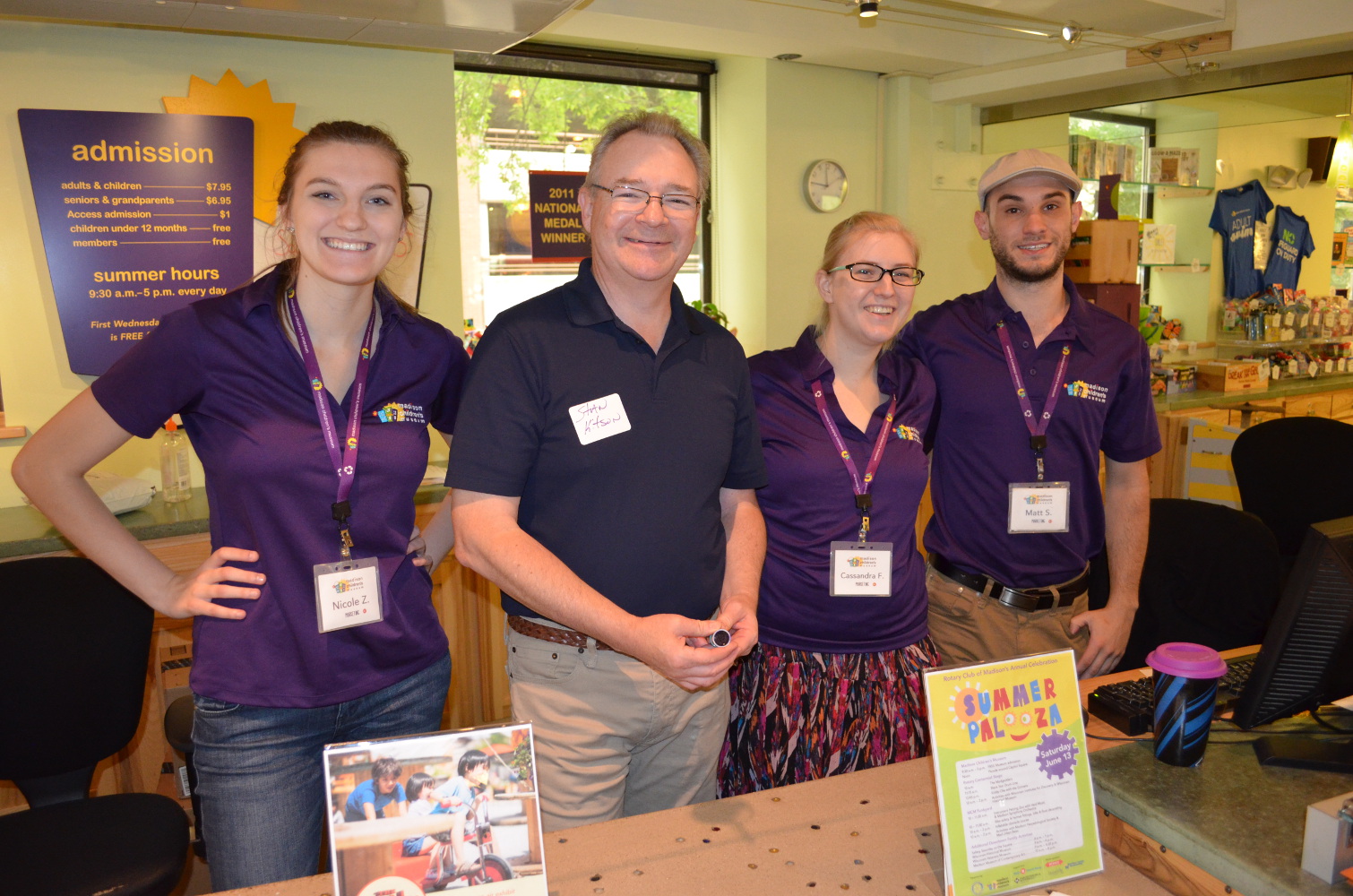
Photo 1: Bryan Chan with his son; Photo 2: Stan Kitson (second from left) with Museum staff; Photo 3: Floyd Rose

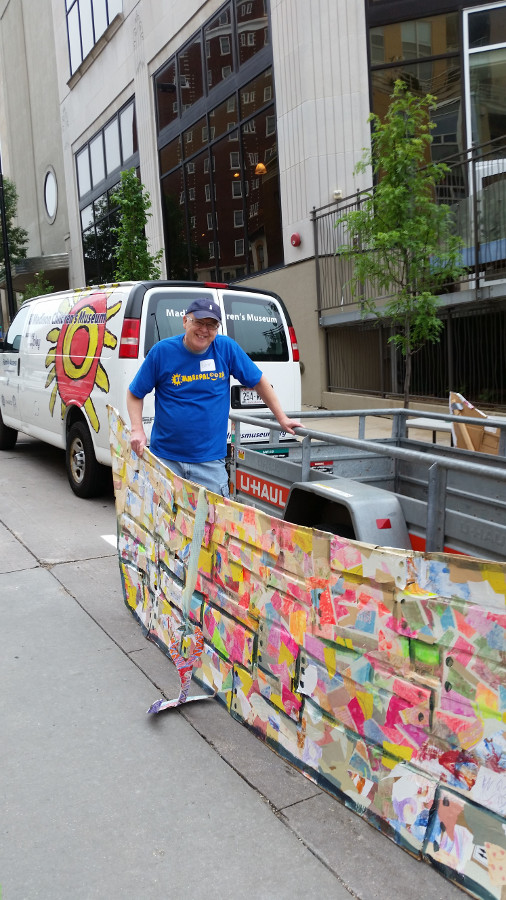
20150613_095325  DSC_0023  DSC_0291

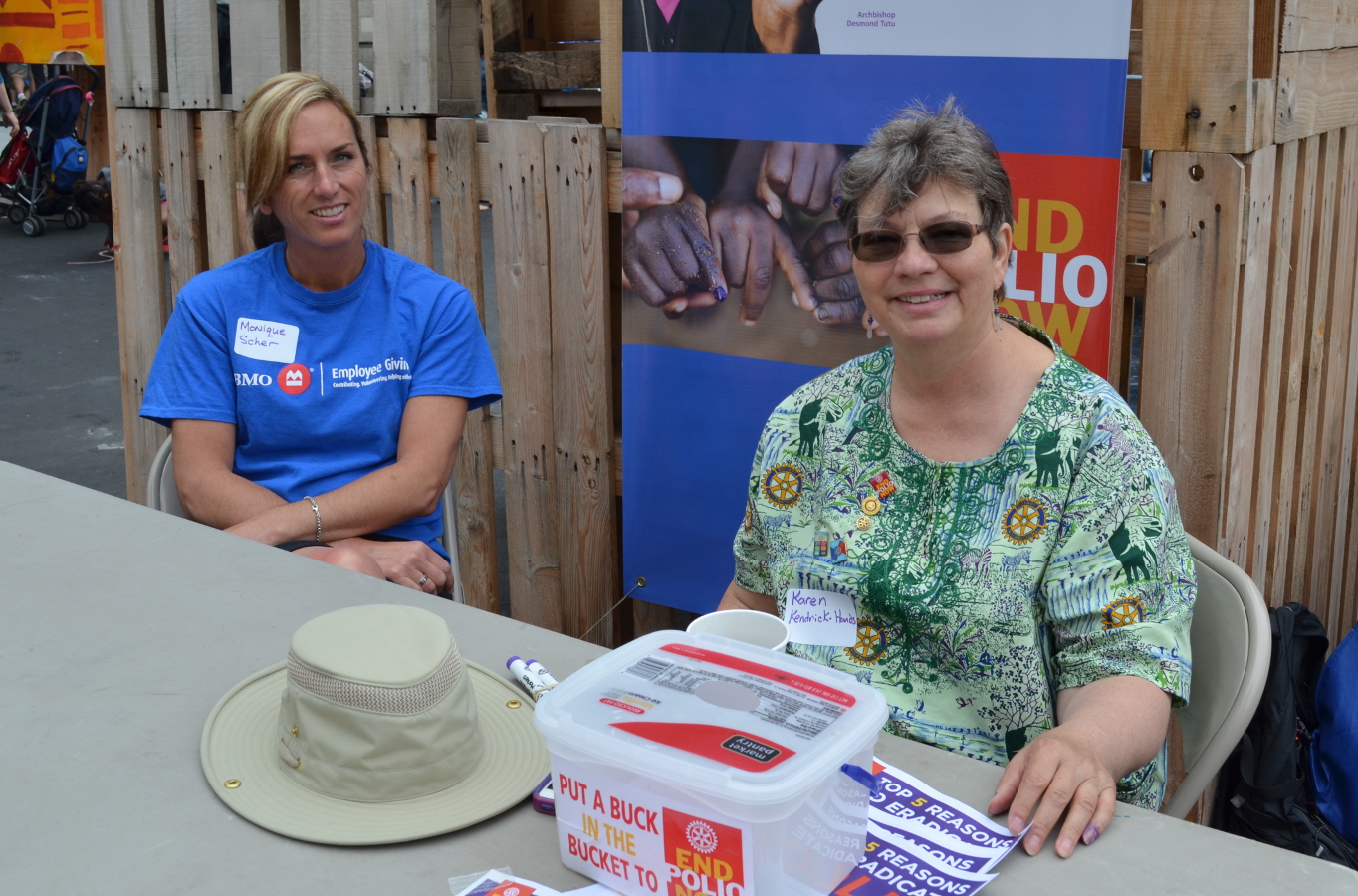
Photo 1: Dick Lovell; Photo 2: Monique Scher and Karen Kendrick-Hands; Photo 3: Steve Goldberg, Oscar Mireles, Pat Jenkins and Tim Stadelman

IMG_0320   DSC_0039  Summer6

Photo 1: Highlight from parade; Photo 2: Paul Riehemann (right); Photo 3: Kris Ashe (right)

DSC_0050  DSC_0211  DSC_0113

Photo 1: Ted Waldbillig (left); Photo 2: Angela & Jeff Bartell; Photo 3: Oscar Mireles (left)

We Succeed: Latinos in Dane County

–submitted by Ellie Schatz; photo by Mike Engelberger

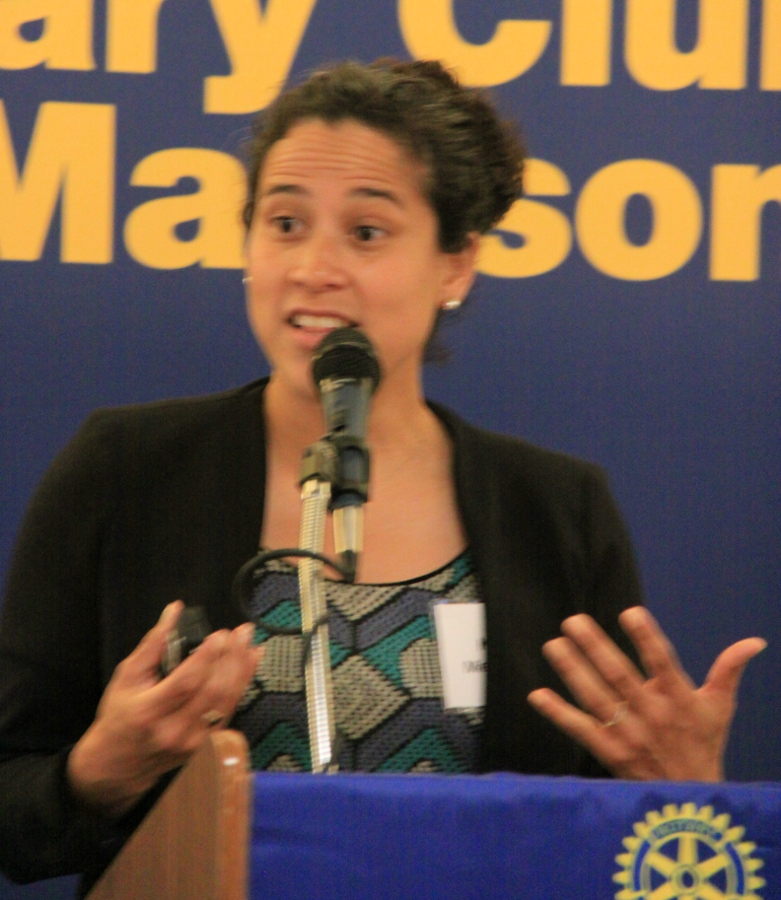
Coller KarenKaren Menendez Coller, Executive Director of Centro Hispano, began her passionate and substantive discourse by reminding us that Latinos in Dane County are a) a growing community, b) here to stay, and c) a presence.

Statistics show that Latino numbers in our community are great. An 80% growth in population in 5 years, 2010-2015, puts their current buying power at $1.5 trillion. There is a 5:3 ratio of men to women as migrant work brings men to the area. Yet, all the charts and statistics, including those documenting low incomes, poor education rates, and housing problems show us nothing about who Latinos are as fellow community members. Most of us, she says, know little about how they are hardworking, take care of their own, and live by strong family values.

Karen emphasized three key ingredients for equity. First is Stability in the Home. Chaos, unemployment, and chronic stresses work against such stability. Many have lost their social network and cope through addiction. Quality support services are critical, but the fact that a single staff member at Centro Hispano now sees 400 cases per year demonstrates the need for change. An example of one new program that provides a pipeline for job placement and career advancement is Caminos Certified Nursing Assistant Program, a collaborative effort between Centro Hispano and Madison College. Of 70 students enrolled since January 2015, 73% graduated and 82% are employed. Their incomes rose from as low as $7.25 per hour to as high as $20 per hour. 79% of the students went from unemployed or part-time employed to full-time positions.

The second ingredient is Youth Aspirations. Karen says that 31% of the Latino population in the county are under age 18, most of them living with the heavy issues of alcohol, drugs, and risk of pregnancy. The answer is to foster hope and meaning, and the way to do this is to engage the students in school. Centro is using a technique called asset mapping to help youth create a pipeline to graduation. Mentors in the community help student see themselves as well as their peers as assets in the community. Centro Hispano provides a base where each young person can feel safe as he or she engages in fun and meaningful activities.

The third ingredient is the Neighborhood Environment. Outreach, including wellness activities and food equity opportunities, smooths the way toward the end goal:  A Thriving Community. Reframing Latino Community Solutions means full inclusion: a community that tells us what they want and becomes engaged in getting there. Solutions include having a community development perspective, using a strategic perspective, and knowing who drives the agenda: the families themselves.

May We Succeed. Here’s to Karen’s call for innovation and engagement NOW.