Tag Archives: Rotary

The 15th Annual Rotary Ethics Symposium Expands Students’ Bandwidth for Ethical Decision Making!

–submitted by Maggie Peterman; photos by Donna Beestman and John Bonsett-Veal
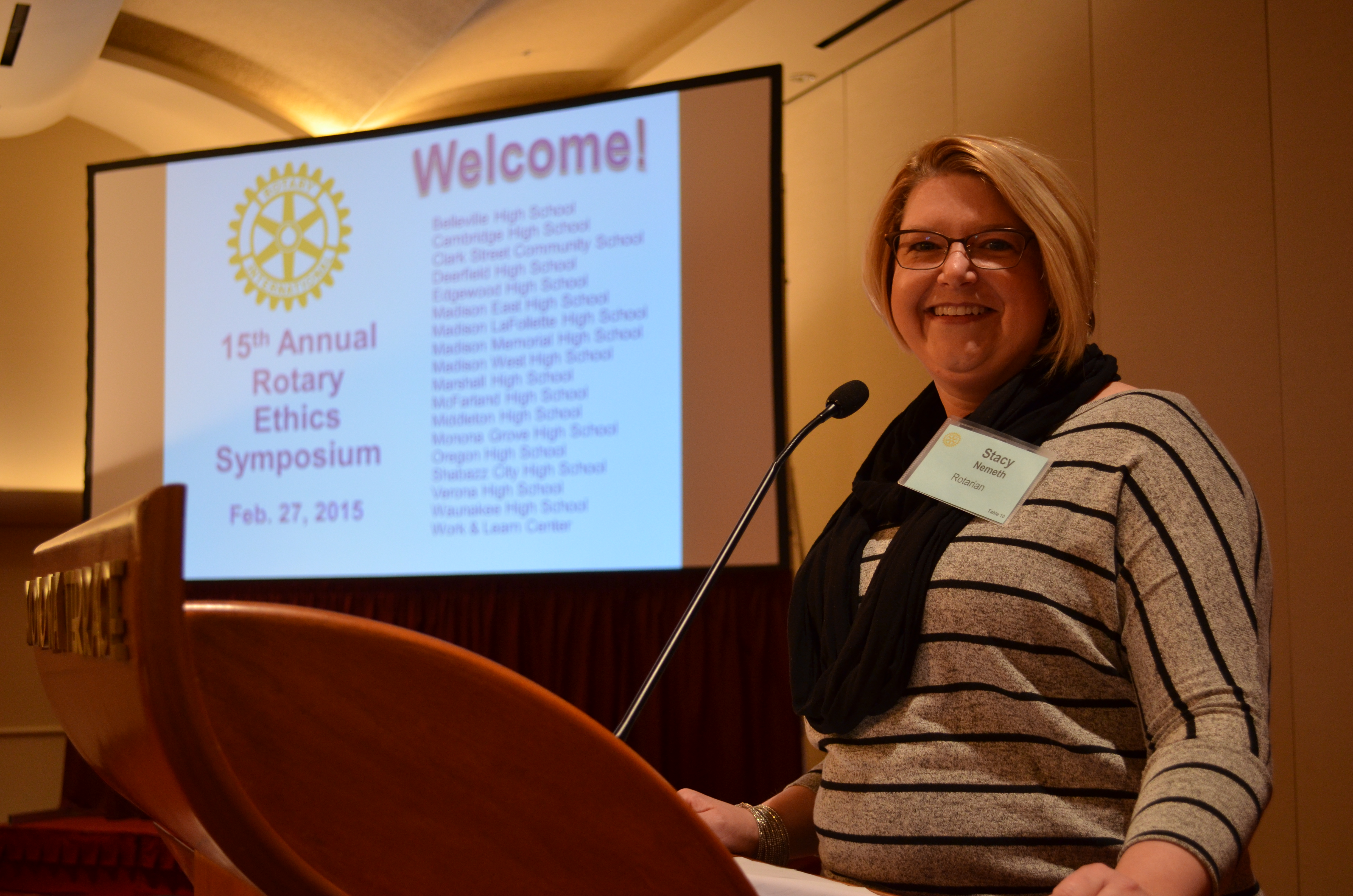
Stacy Nemeth, Chair of 2015 Ethics Symposium Committee

Stacy Nemeth, Chair of 2015 Ethics Symposium Committee

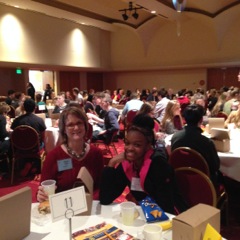
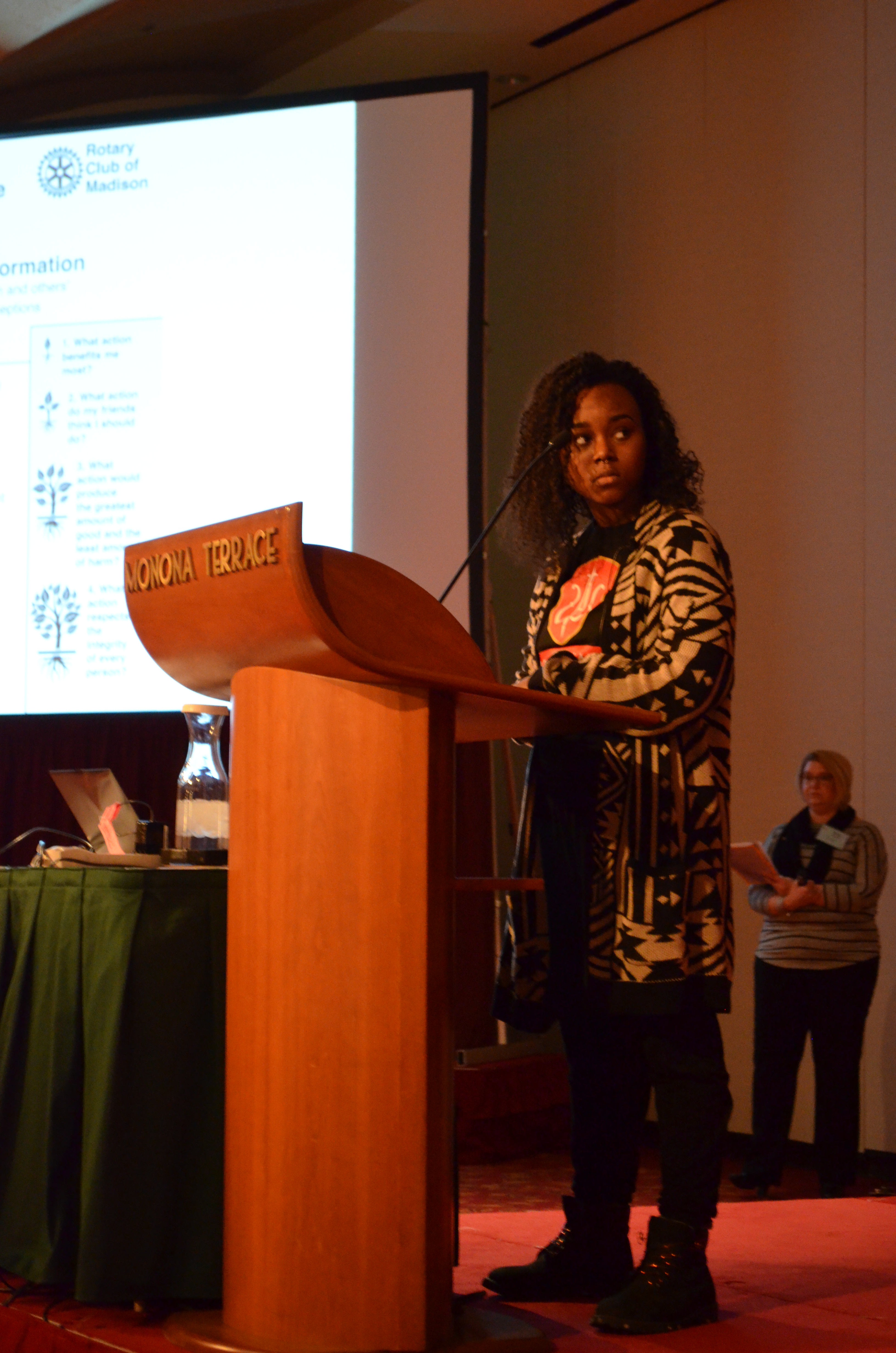
More than 200 students from 18 Dane County high schools were challenged to examine the decisions they make every day in a new way Friday, February 27, at the 15th annual Rotary Ethics Symposium at Monona Terrace.

With dramatic performances on edgy teenage issues – teenage pregnancy and a father confronting his adolescent son about drug use – members of the UW-Madison First Wave Hip Hop Theater, a cosmopolitan multicultural artistic program, set the stage for high school students.
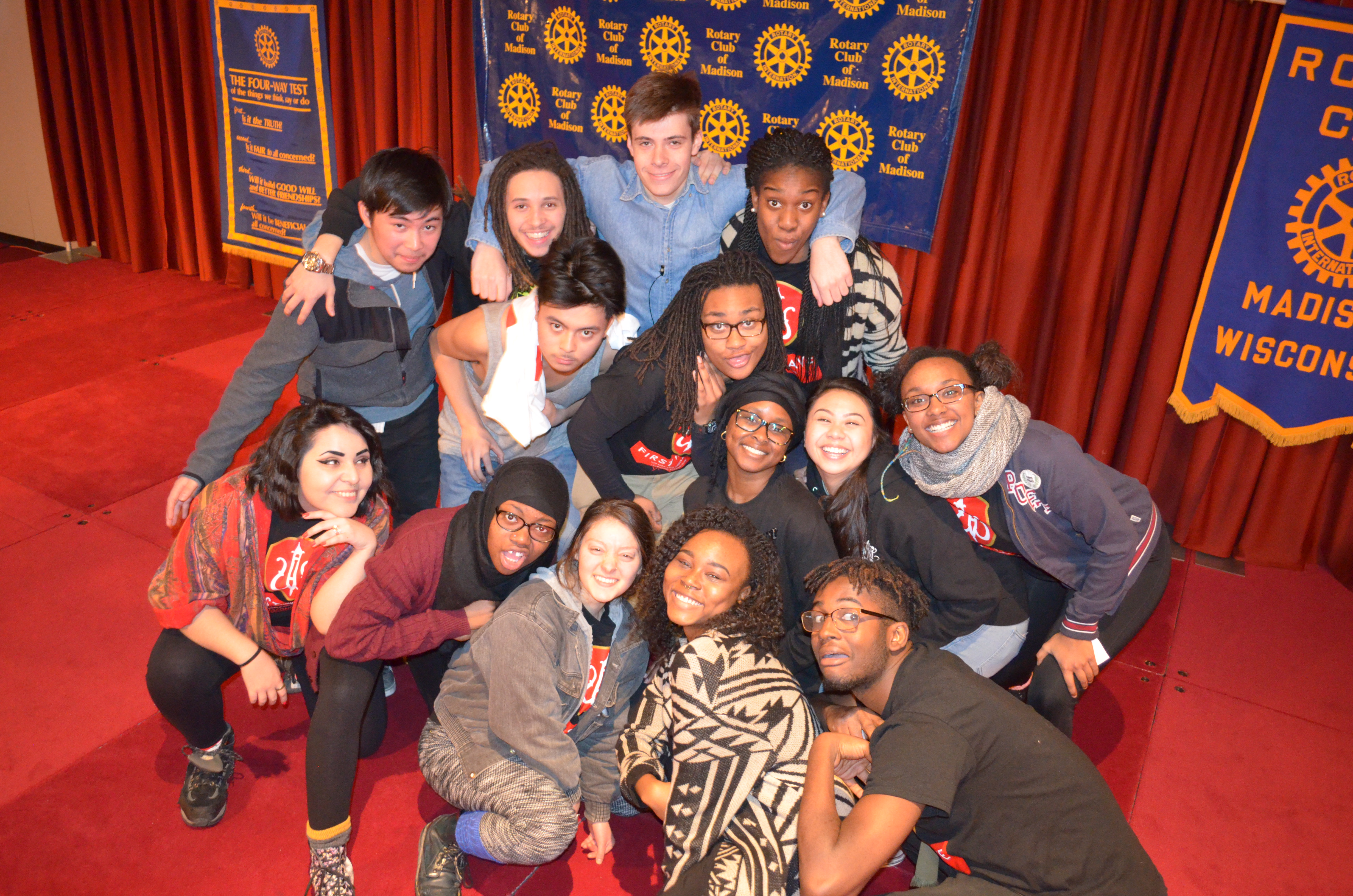
DSC_0072

And First Wave led the students through the R-O-T-A-R-Y Framework for Ethical Decision Making, which is a six-step process of thinking through a dilemma and making a decision.

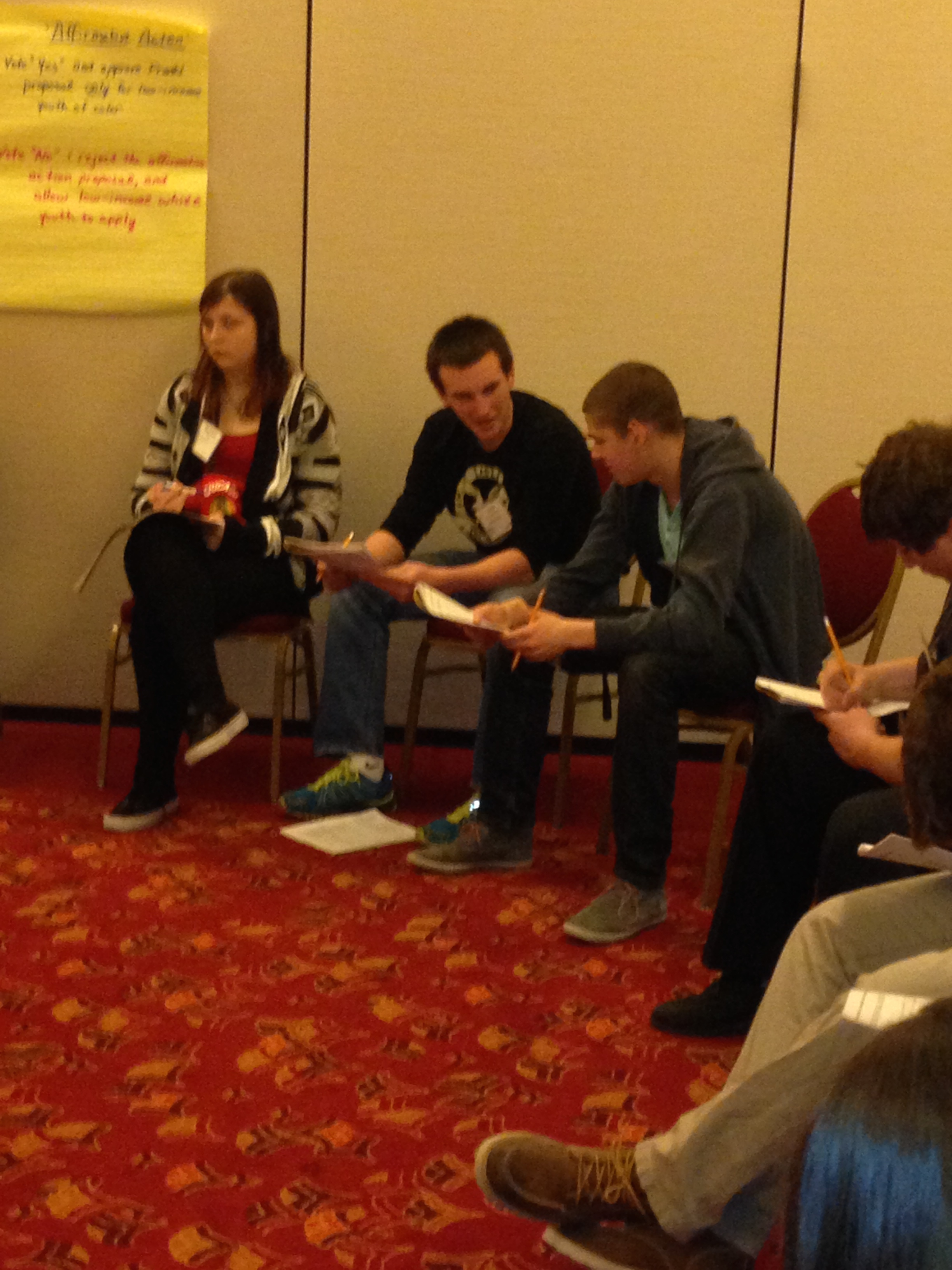
Then the high schoolers went to work. They were confronted with two dilemmas: Hostile Messages and an Affirmative Action Proposal.

“It was fun to be able to discuss realistic problems,” said Desmond Lawrence, 17, a junior at Madison’s Memorial High School, following the workshop. “I like that they (Rotarians) want us to reach out to our own high schools to get these (workshops) going.”

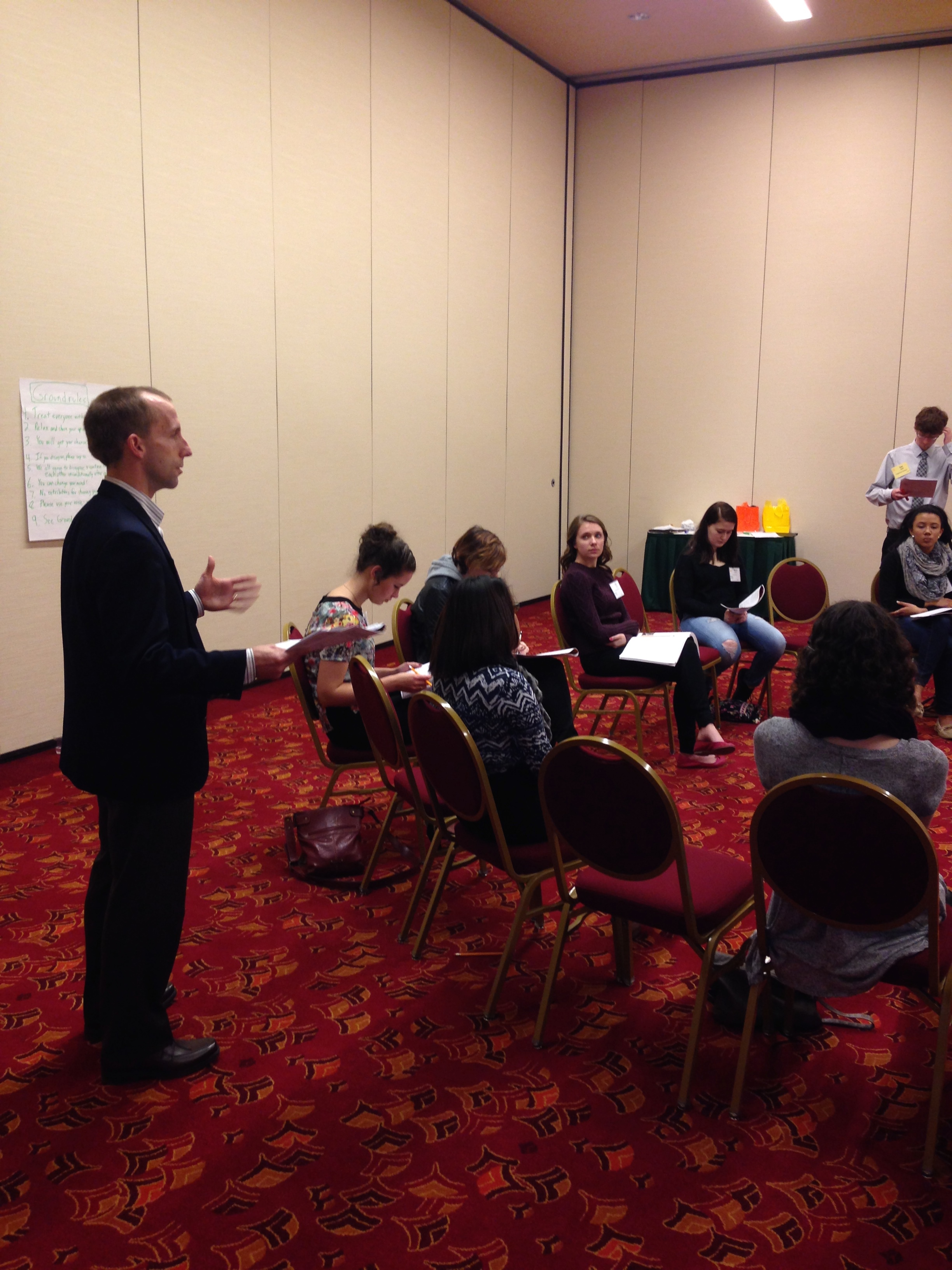
Rotary members along with participants from Rotaract clubs at UW-Madison and Edgewood College led the workshops. Students learned the ground rules, which emphasized: “Treat every single person in the room with complete and unconditional respect.”
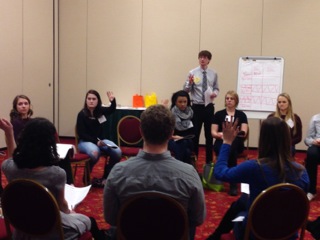
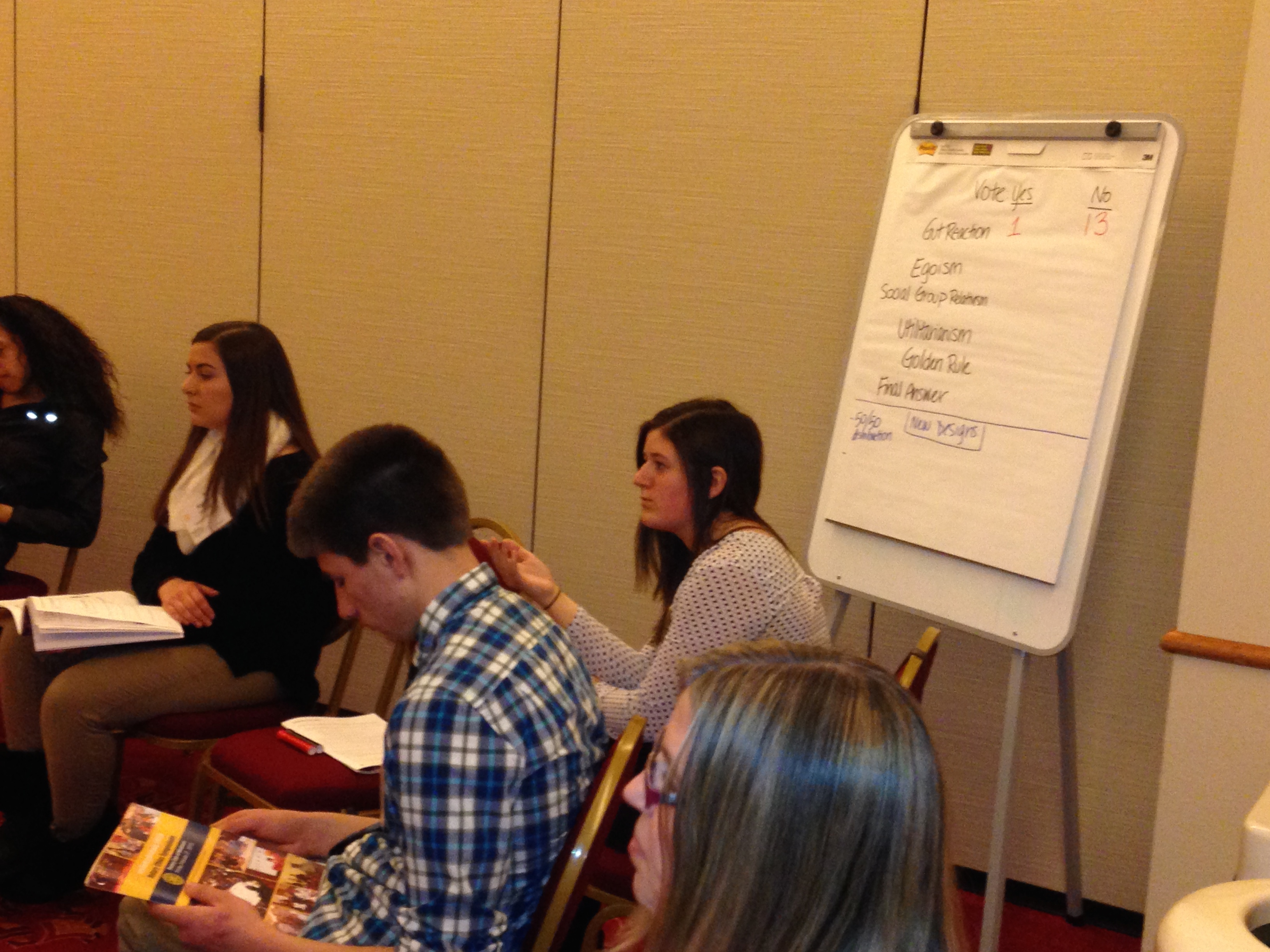
Photo10  Photo5  Photo 11

“I liked that whatever you had to say, you were going to be respected,” noted a student from Belleville High School. “It was nice to see that my friends had a serious side.”

“The coolest thing of all,” said a student from Monona Grove High School, “someone from my school and I, we had different opinions and we still like each other.”

The ROTARY Framework for Ethical Decision Making is as follows:

R = Recognize an ethical issue
O = Obtain information about the situation and others’ interests and perceptions
T = Test alternative actions from various perspectives
A= Act consistently with your best judgment
R = Reflect on your decision after acting
Y = Yield to your ethical judgments

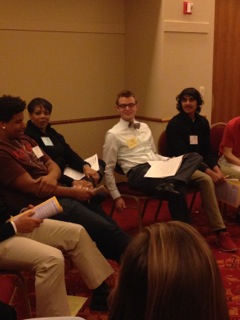
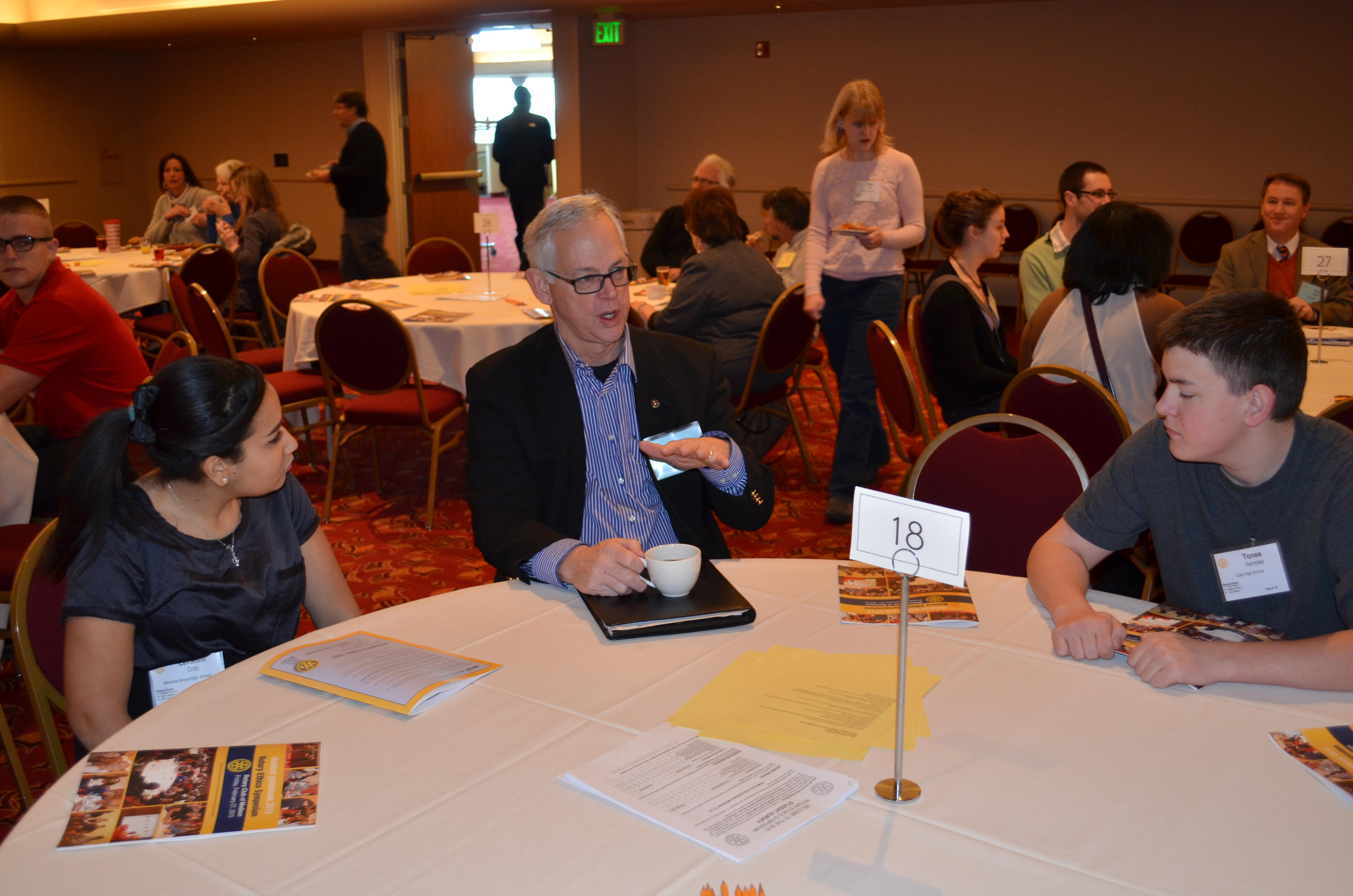
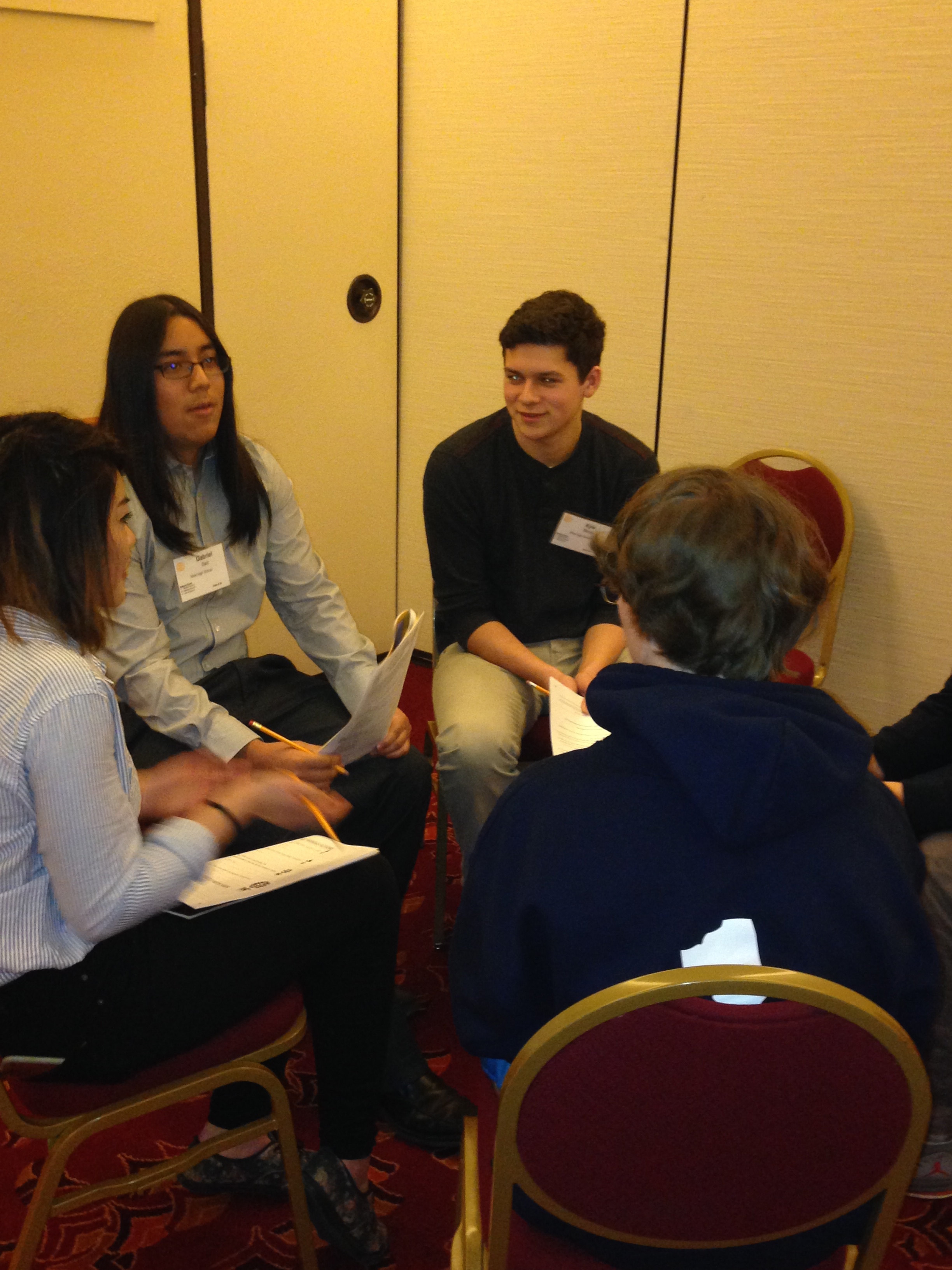
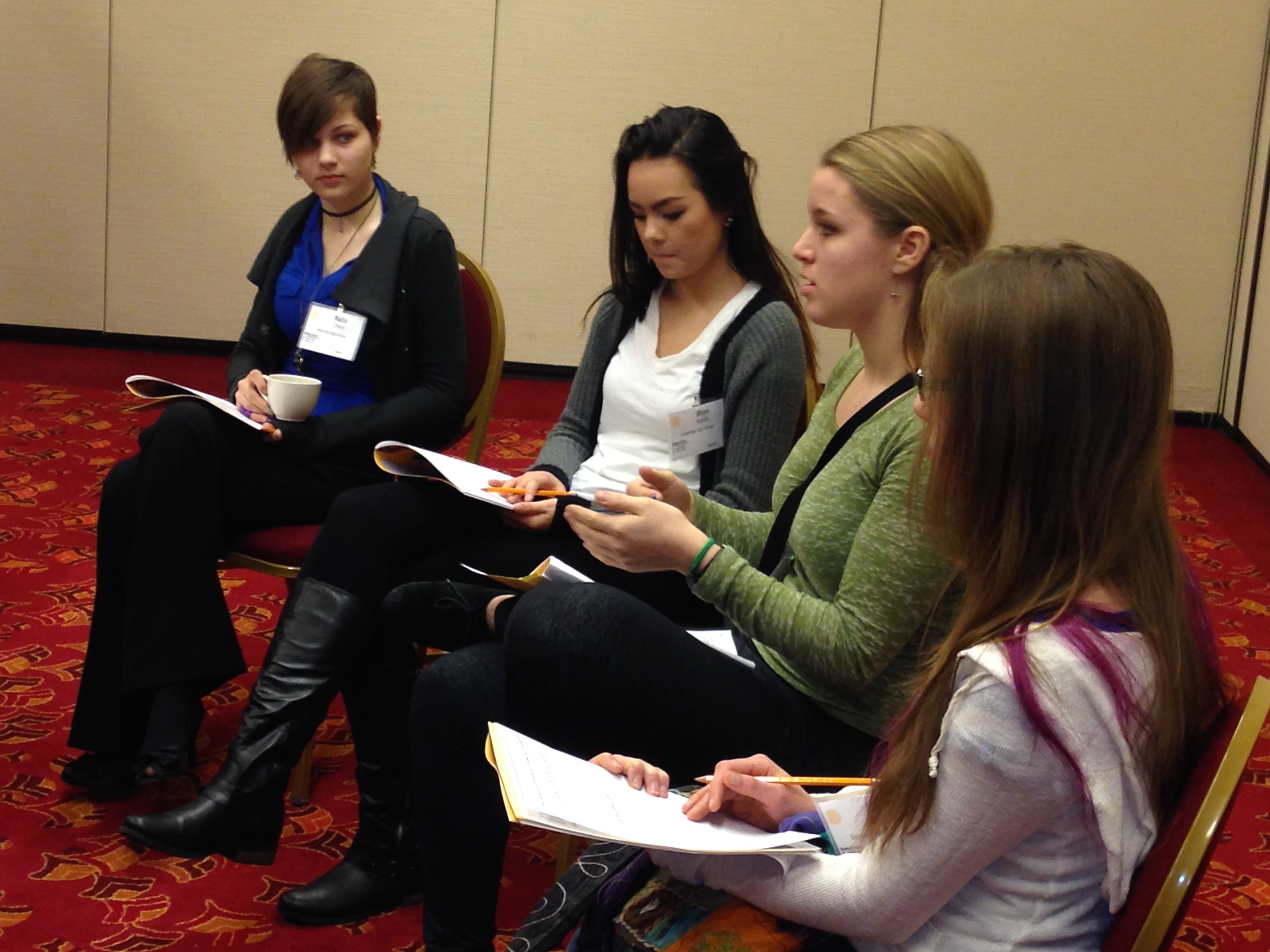
Students dispersed into workshops to learn the practical application of the Rotary Framework. The sessions were designed to group together students from a variety of high schools.
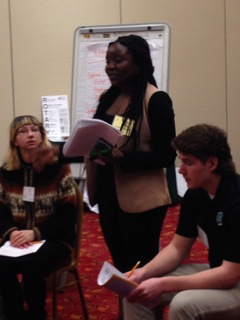
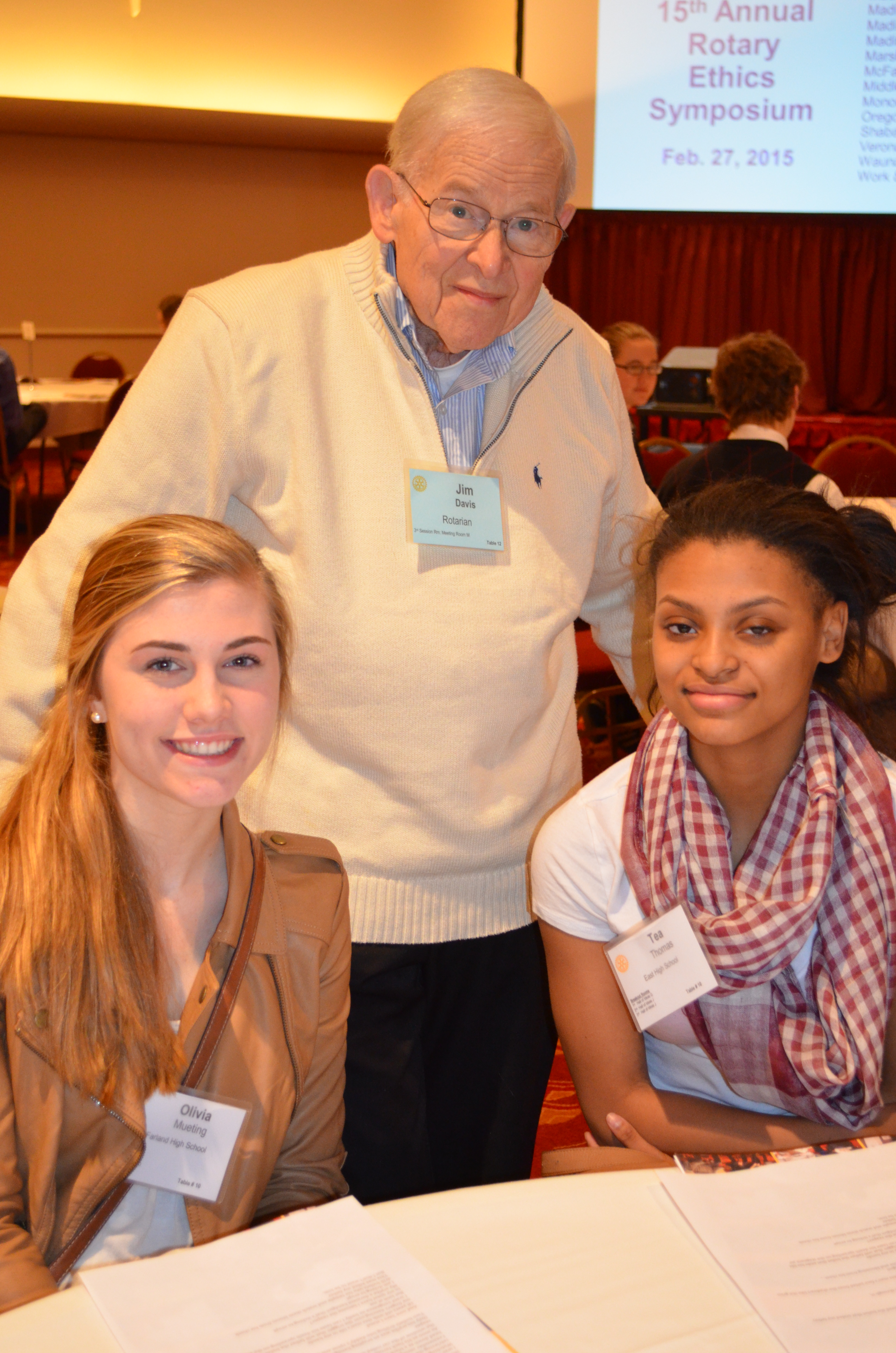
Photo2  DSC_0048     Photo3   DSC_0065

“Once students were in the smaller groups, they were willing to delve into the issues,” said Sophie Chadli, 17, a senior at Madison’s Shabazz High School.

At first, many participants felt isolated. They later discovered a new-found freedom as they listened to each other and even gained the confidence to rethink their stand.

“When we were doing the panel on affirmative action, others’ opinions changed mine about certain things,” said Dominique Taylor, 16, a junior at Middleton’s Clark Street Community School. “Me and some other students want to inform our teachers about the process so we can start training and recommend (the Ethics Symposium) to other students.”
IMG_9530  IMG_9514   IMG_9506

It was a new learning experience, most students agreed.

“I really enjoyed today,” said a student from Madison’s East High School. “It’s something that will stick with me. It’s a tradition that will keep on giving. I met lots of new people.”

The students’ willingness and enthusiasm to embrace a new experience impressed Rotary leaders.
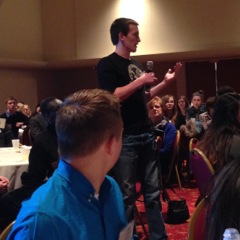
Photo12   IMG_9517   IMG_9516

Sarah Gempeler, 20, a junior at Edgewood College and a Rotaract member, grew up in Monroe, a south-central Wisconsin city of about 45,000 residents.

“It’s great to see how passionate these kids are about (relevant) issues,” Gempler said. “I grew up in a town where there wasn’t much diversity in our high school.”

A first-time volunteer for the symposium, Janet Piraino, a Rotary member and district director for a Wisconsin representative, praised the next generation of Wisconsin voters.

“This is my first time and I’m blown away by their ability to stand their ground,” she said. “There were students of color on both sides of an issue that spoke very passionately for their position. One African American girl spoke in opposition to affirmative action because she felt it didn’t honor equality.”

Discussions on controversial topics showed that students are listening and collecting information as they go about their daily lives, said Steve Johannsen, a Rotary member and Madison business advisor.

“The (affirmative action) statistics were eye-opening for all the students,” Johannsen said. “It gave them a much better feel for real community issues. The conversations were unbelievably insightful and respectful.”

Rotary leaders are willing to assist high schools students and faculty with developing an “Ethics in Action” project at their schools, said Stacy Nemeth, Chair, 2015 Rotary Ethics Symposium.

Monona Grove High School Principal Paul Brost led a discussion with judicious students from his 925-student school. Students were enthusiastic about working with trained facilitators – Rotaract students and Rotary leaders – to deliver the project to Monona Grove.
IMG_9507   IMG_9511  DSC_0049

“People need help learning about ethical decisions, but we need someone to help facilitate our conversations,” noted a Monona Grove student who voted in favor of assistance from Rotaract students. “We’re too used to just listening and taking notes. We need a role model to help us get going.”

Throughout the discussion, Brost encouraged students to take a leadership role.

“I’m willing to preload the idea at a staff meeting,” he offered. “If it’s student-led, it’s up to you to take the lead and find a coach or a teacher willing to make it work. It needs to be bite-sized and meaningful.

“Part of our goal in school is to get kids to different leadership opportunities,” added Brost who has attended the conference 13 years. “Students always find this very worthwhile. It has high value for us.”
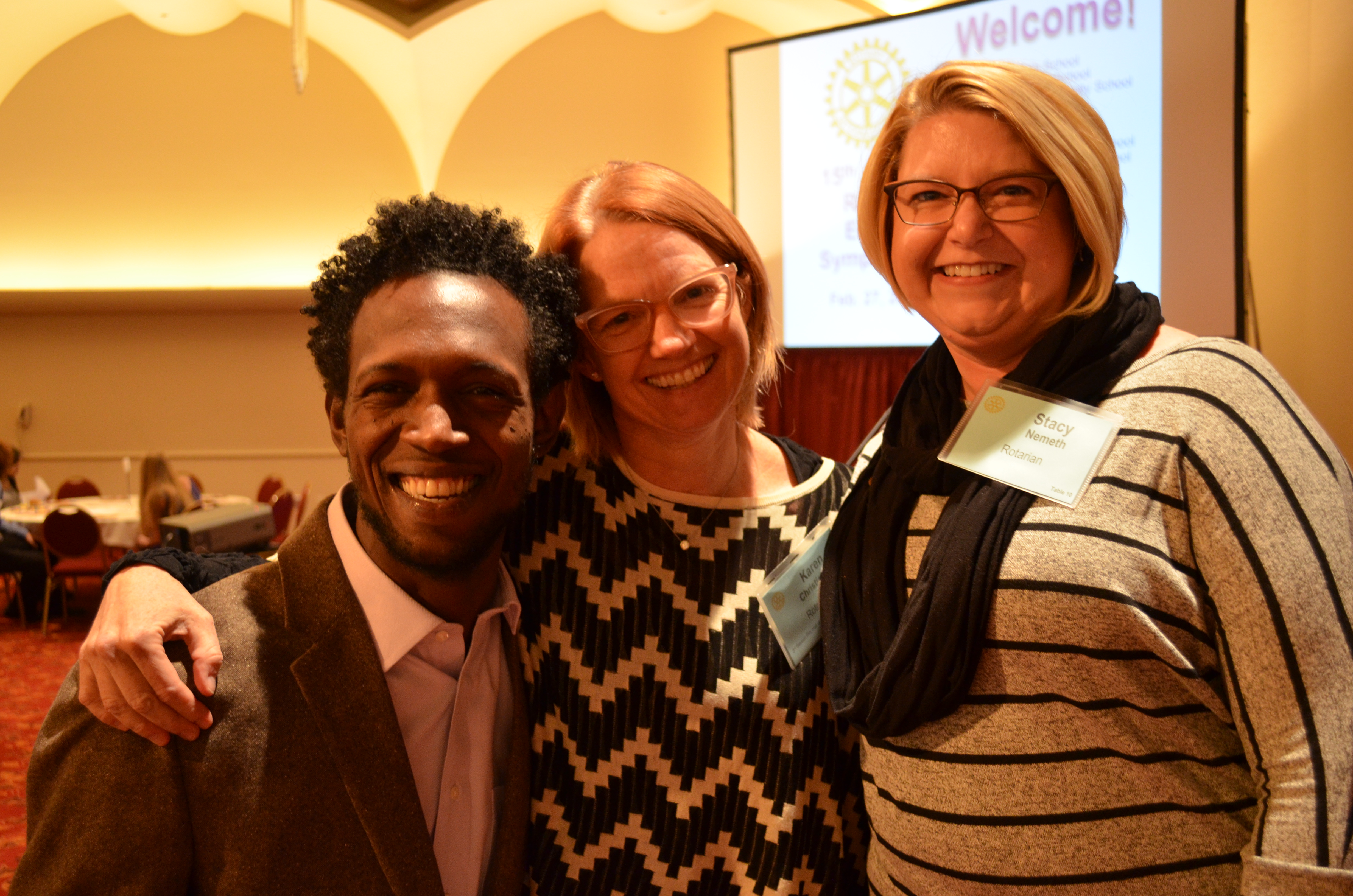
DSC_0034  DSC_0041  DSC_0033

Rotary member, Donna Beestman, is a veteran participant at the Ethics Symposium. She praises students and school leaders for their dedication and applauds the annual work of the more than 50 Rotaract and Rotary volunteers.

“It’s like students go through a transformation in the course of four hours,” she said.
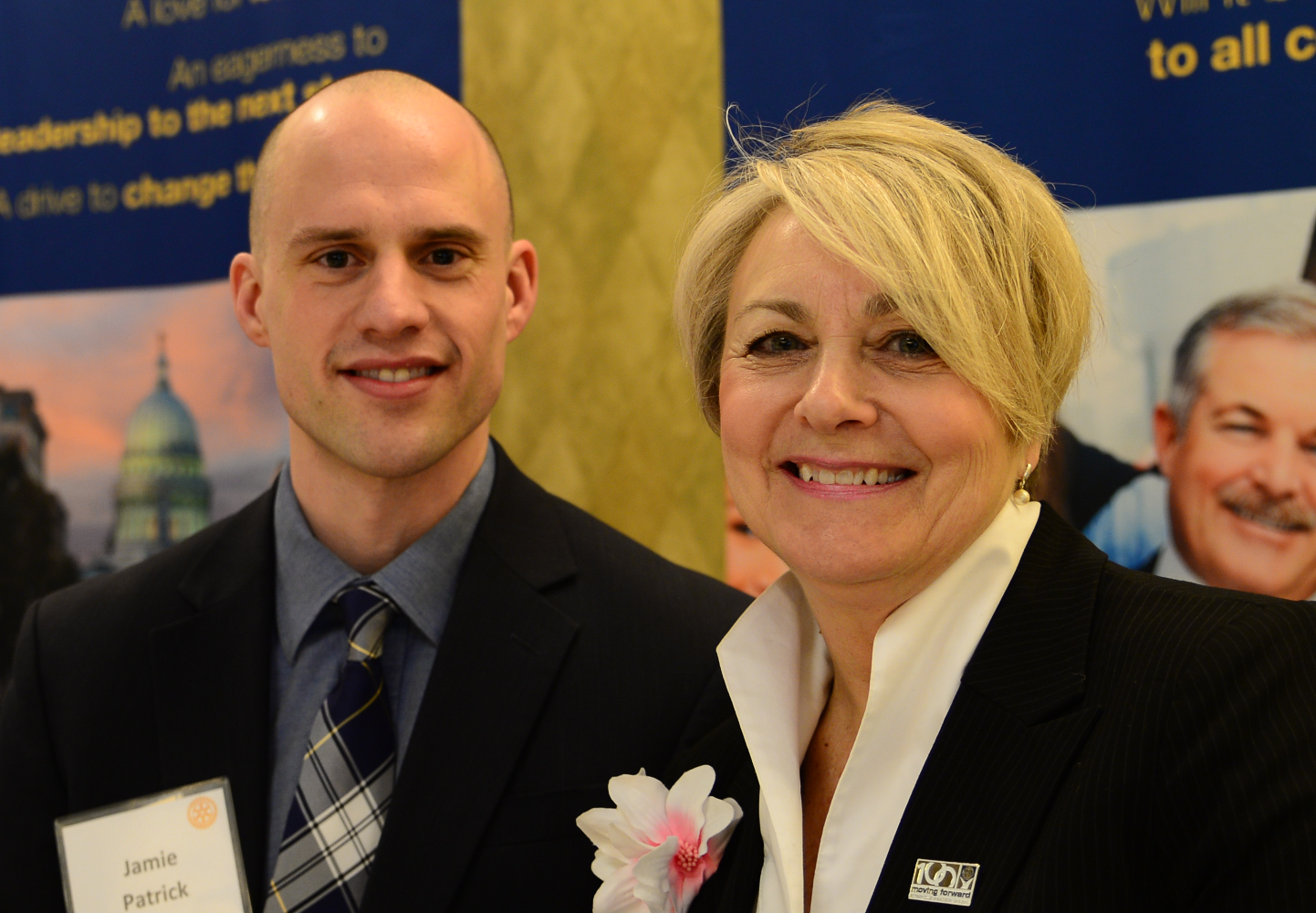
Deb Archer and Jamie Patrick, Madison Area Sports Commission

–submitted by Linda Maremont; photo by Karl Wellensiek

Archer Patrick 2 25 15

Do you know what the Madison Area Sports Commission does?  Deb Archer and Jamie Patrick, leaders of the Madison Area Sports Commission, provided a great education for many of us at this week’s meeting.    As the President  & CEO of the Greater Madison Convention & Visitors Bureau, Deb talked about the lengthy research that had been done over a number of years regarding the benefits of hosting sporting events in the Madison area.  During the economic downturn in 2008, they realized that while the economy suffered significant blows in other areas of tourism, the sporting events that lured visitors to Madison were virtually recession proof, and knew they were on the right track.

The Sports Commission was formally founded in 2010 with the goal of focusing on bringing additional sports tourism events to the local community that would in turn have a significant positive economic impact.    Since the inception of the Commission five years ago, there has been $48,000,000 in direct spending in the community through sports tourism.  There were 36 sporting events in 2014 alone that were hosted in the Madison area.

Through a rigorous 18-step sales process that can take months or years to bear fruit, the Commission is working toward their goal to make the area the “championship capital” for local, regional, national and international sporting events.  In March, Madison will be the proud host of the 100th Anniversary of the Boys State Basketball Championships.

The Commission is also focusing on product development in order to determine whether there are additional specialized sporting facilities that may be worth consideration that would help attract additional sporting championships and also afford more options for the local residents.

The great success our community has enjoyed recently in numerous rankings touting Madison as a great place to live, work and play helps underscore our community as a viable option to host championship events as well and bring more tourism dollars to the area.

Climbing for Hospice – Putting One Foot in Front of the Other

–submitted by Andrea Kaminski; photo credit to Loretta Himmelsbach

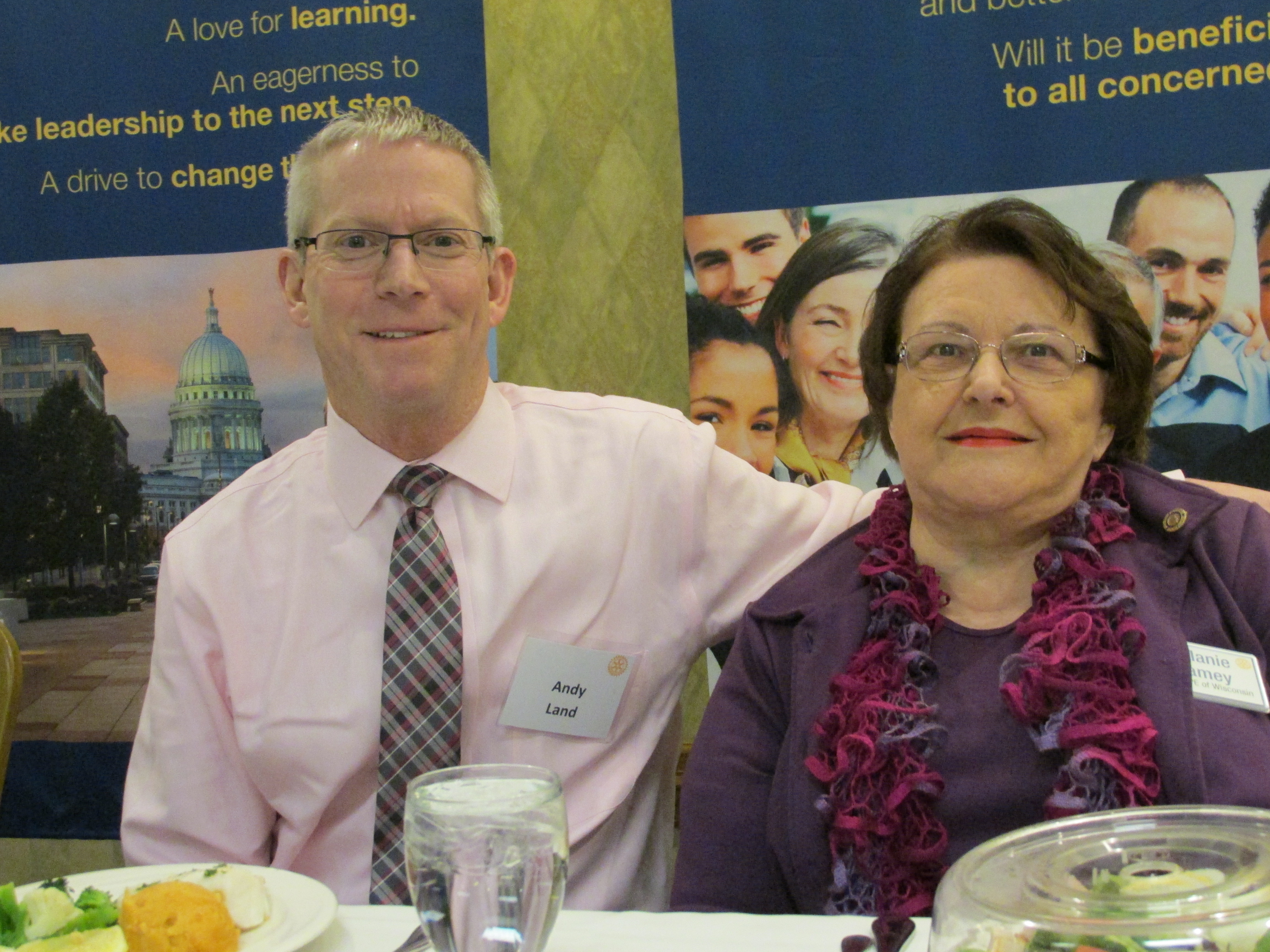
Andy Land and Melanie Ramey

Andy Land and Melanie Ramey

Mountain climbing and hospice are the passions that drive Andrew Land, Director of Hospice and Palliative Care at Agnesian HealthCare in Fond du Lac. On February 18, he treated Rotarians to stunning shots of snow-covered mountain peaks and explained how his avocation and his professional mission are interwoven.

Land began climbing mountains in 1992 with a trek up Mount Rainier. He was working at a hospital in Chicago at the time and was inspired by an article he read. He made the climb with a group and a guide, but never got near the summit. It was so windy people were being blown off their feet.

Land caught the climbing “bug” and eventually took his kids with him on his climbs. It was on Mount McKinley in 2002 that climbing and hospice came together for him. This was a difficult, month-long expedition, and sometimes he wondered why he was there. However, he thought about a hospice patient named John who was excited about Land’s climb. John had told Land to “think of me” when the going got tough. Hospice patients have to keep putting one foot in front of the other, he said, and so do mountain climbers even when they think they cannot go another step.

A few years later, while climbing Mount Aconcagua in Argentina, Land had long discussions with others in his group who had lost family members. When they learned he was “a hospice person” they talked about their experiences and asked questions. What would they have liked to say to their loved ones before they died? And how could someone die so young?

This year, Land will climb Mount Everest funded by his brother Chris, who is two years older and very ill. Chris changed his life insurance policy in order to allow his younger brother to fulfill a dream. Chris only asked Andy to “use my story to help others.”

Having served two terms as President of the Board of HOPE of Wisconsin, Andy is working with Melanie Ramey to make his climb a fundraiser for hospice. For more information, visit: CLIMBING FOR HOSPICE.

Michael Edmonds: Bold (Not to Say Crazy)

–submitted by Valerie Johnson; photo by Karl Wellensiek

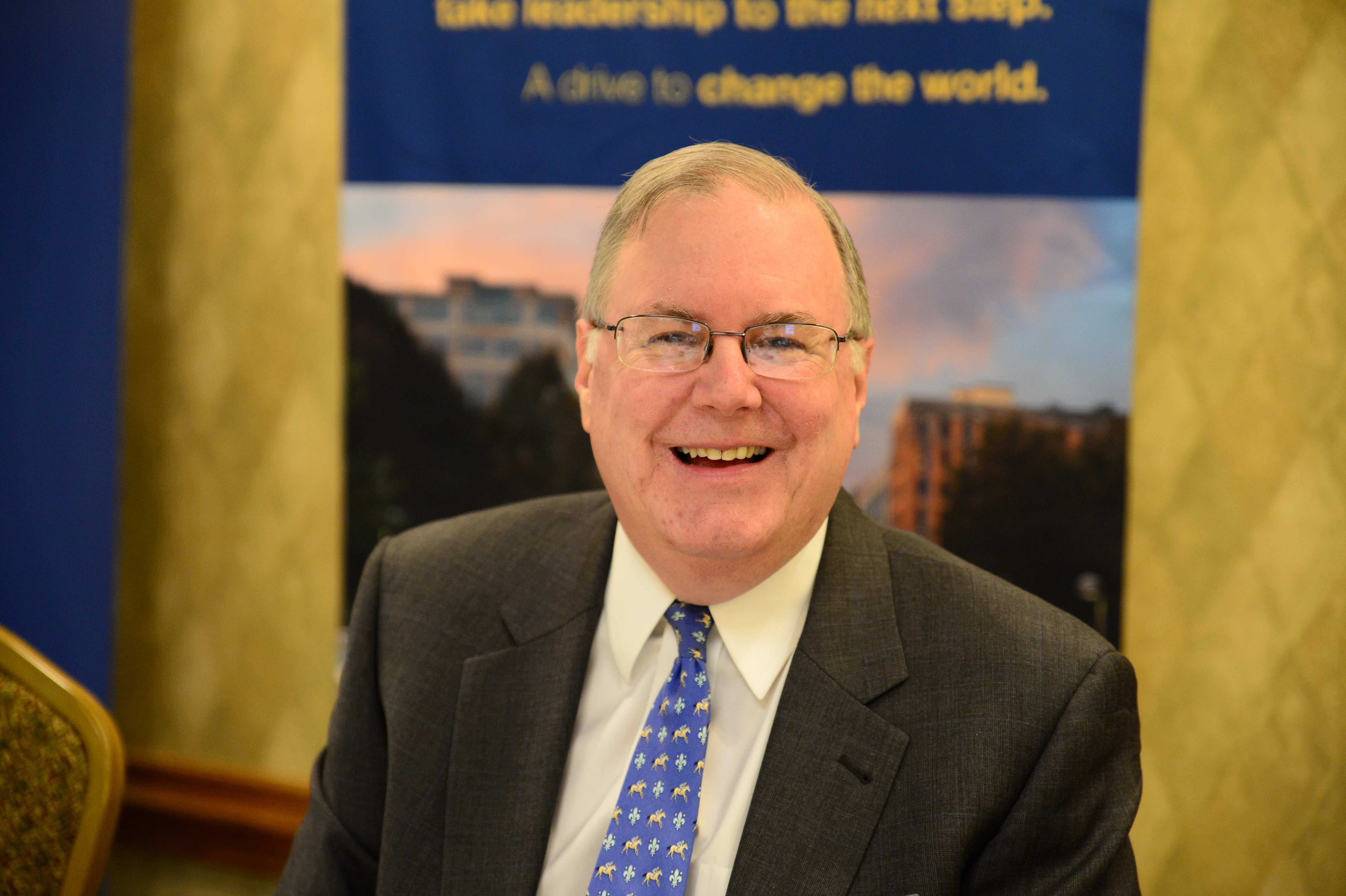
Edmonds Michael

History is not only made by celebrities, it’s made by each of us and the choices we make every day.  That’s the lesson Michael Edmonds says we should take away from the 43,000 documents and images compiled by the Wisconsin Historical Society on the civil rights movement.

Edmonds brought to life the 1964 Mississippi Freedom Summer Project with some of the stories behind the people collecting these historical documents for Rotary members Feb 11.  This was the summer when volunteers arrived in the Deep South to register voters and teach nonviolence, and more than 60,000 black Mississippians risked everything to overturn a system that brutally exploited them.

Wisconsin has one of the richest civil rights collections anywhere, and the largest American history collection anywhere, according to Edwards.

Edmonds is Deputy Director of the Library–Archives at the Wisconsin Historical Society and curator of its online collection of more than 25,000 pages documenting Freedom Summer. A 1976 graduate of Harvard University, he earned an MS degree at Simmons College in 1979 and taught part-time at the University of Wisconsin–Madison.

These vivid primary sources shared by Edmonds, collected by the Wisconsin Historical Society, provided both firsthand accounts of this astounding grassroots struggle as well as a broader understanding of the civil rights movement and the work to collect them.

Edmonds closed by saying, “Remember, an archive is not a dusty old place, it’s an engine to remember our place in the world quite differently. For example, your grandmothers didn’t know they had to be so brave.”

For information on Edmond’s book Risking Everything: a Freedom Summer Reader click www.wisconsinhistory.org.  To view 43,000 pages of historical civil rights documents click: www.Wisconsinhistory.org/freedomsummer.

Mattoon Addresses Rotary on 2015 Economic Outlook

–submitted by Rick Kiley; photo by Karl Wellensiek

Mattoon Rick

Our guest speaker this week was Rick Mattoon, Senior Economist and Economic Advisor for the Federal Reserve Bank of Chicago.  Mr. Mattoon’s talk, “U.S. and Wisconsin Economic Outlook for 2015”, reviewed the current state of our national and local economy as it emerges from the Great Recession of 2008-2009.

The past year has seen the strongest GDP growth since the recession, with second and third quarter growth of 4.6% and 5%; however, this growth is weaker than the recoveries following the recessions of 1981-1982 and 1974-1975.  This slow recovery reflects a variety of conflicting trends.  For example the oil price collapse of approximately 50% has generated a $550 annual household benefit, but wage gains are modest; employment has reached prerecession levels, but increases in wealth are the result of stock market gains, so household wealth increases are unevenly shared.

There are a variety of factors to watch in 2015 that will influence the near future.  Examples include a number of states increasing minimum wages, the prospect of continued growth of construction spending after several years of below average investment.

With regard to Wisconsin, the southern part of the state is closely tied to the economy of the Chicago area, which has underperformed national growth.  And, while personal income in the state has recovered well, only half the jobs lost in the recession have returned.  The business climate in the state is generally positive, about the middle of the pack among the states.

Mr. Mattoon concluded saying the U.S. economy has good momentum and should have GDP growth in the coming year approaching 3%.  Wisconsin, however, has made slower progress since the recession.  Our biggest challenge as a nation will be weak international markets as a result of their slower growth and the strength of the dollar.

Robyn Kitson Receives Rotary Club of Madison Youth Service Award

Presented by Deb Archer on Feb. 4, 2015; photo by Karl Wellensiek

Kitson AwardEach year, our club recognizes six members for their service to our Rotary Club in one of the five avenues of service which are club, community, international, vocational or youth services.  Today, I am pleased to introduce you to one of our Rotary Club of Madison 2015 Youth Service Award recipients.

Robyn Kitson (pictured here with Club President Tim Stadelman)  is Director of Marketing and Communications for the Wisconsin Historical Society and is married to fellow Rotarian Stan Kitson.  She joined our Rotary Club in 2009 and became very active in committees from the start.  She has chaired our International Grant Review process, co-chaired the 2013 Rotary District Conference, and she is currently on our board of directors.  In addition, and what I’d like to focus on today, is her service to our club in the youth service area.  Robyn has served on our Ethics Symposium Committee and chaired last year’s event.  In that role, she spent countless hours in organizing the breakout sessions.  She also designed a workbook for the student participants that they could take with them and continue to use after our event, and she is helping to update that booklet that will be used by this year’s participants in just a few weeks.  Robyn is a member of our Foundation Scholarship Committee.  This is another committee that involves extensive volunteer hours.  She reads through lengthy applications each year, is involved in the personal interviews of each of the applicants and the selection of recipients, and she is part of the planning of the annual scholarship luncheon.  Robyn also co-chairs our Scholar Mentor Committee along with Ellie Schatz.

For her extensive volunteer service in helping us with the success of our club’s youth activities, our Club Board of Directors has named Robyn as one of our Rotary Club of Madison Youth Service Award recipients.

Thank you for your continuing service, Robyn.

As is our club’s tradition, President Tim present Robyn with a special certificate and a pin, and our Club also made a $200 gift in her name to The Rotary Foundation of Rotary International.