
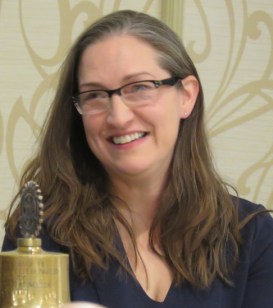
 “Hamilton: The Musical is the biggest tour of a Broadway show to hit the road in years, maybe decades,” Sarah Marty, Producing Artistic Director of Four Seasons Theatre in Madison, told Rotarians on Wednesday, February 26. “Hamilton represents an entire industry, with ripple effects that go far beyond the lights of Broadway,” she said, adding that it had surpassed the reach of any other Broadway musical, including the phenomenal popularity of Oklahoma following its 1943 debut.
Locally, Madison’s Overture Center sold over 53,000 tickets to Hamilton, and Marty cited an estimated additional economic impact of $37.36 per person beyond the ticket price. Both nationally and locally, Hamilton was hugely popular, inspiring people to stand in line for hours for tickets. There are currently six productions of Hamilton touring all around the country, bringing in millions of dollars every week.
Beyond the economic impact of its huge success, though, Marty points to Hamilton’s other ripple effects, including increases in actors, producers and audiences of color. Lin-Manuel Miranda’s Hamilton was inspired by Ron Chernow’s biography of Hamilton. When Miranda picked up the hefty Chernow book in an airport and then read it, he immediately thought, “This is a hip-hop story,” calling an early version of the piece The Hamilton Mix Tape. The elaborate musical production that eventually resulted is so complex that fans have put together a website at Genius.com to provide footnotes and links to all the many facts alluded to in the musical.
Marty cited the end of Hamilton as pointing to the importance of the work: It causes us to think about “who lives, who dies, and who tells your story.”
If you missed our meeting this week, you can watch the video on our club’s YouTube Channel here.
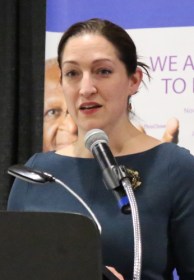 Sarah Marty, the Director of Arts programs at UW-Madison Continuing Studies, spoke to Rotarians about the vibrant arts program in the Madison and surrounding areas and the challenges they are facing. Sarah opened her remarks by sharing the lyrics to “No Business Like Show Business” and stating there is “no people like show people.” She proceeded to demonstrate how this is true by sharing information about the vibrant arts programs in Madison. Community theatre is made by, with and for the community and deploys local talent onstage and backstage and is responsive to the community in which it exists. Did you know:

 Rotary Club of Madison, Wisconsin