Tag Archives: UW-Madison

November 13: Wagner on 2024 Election Results

–submitted by Michael Shulman

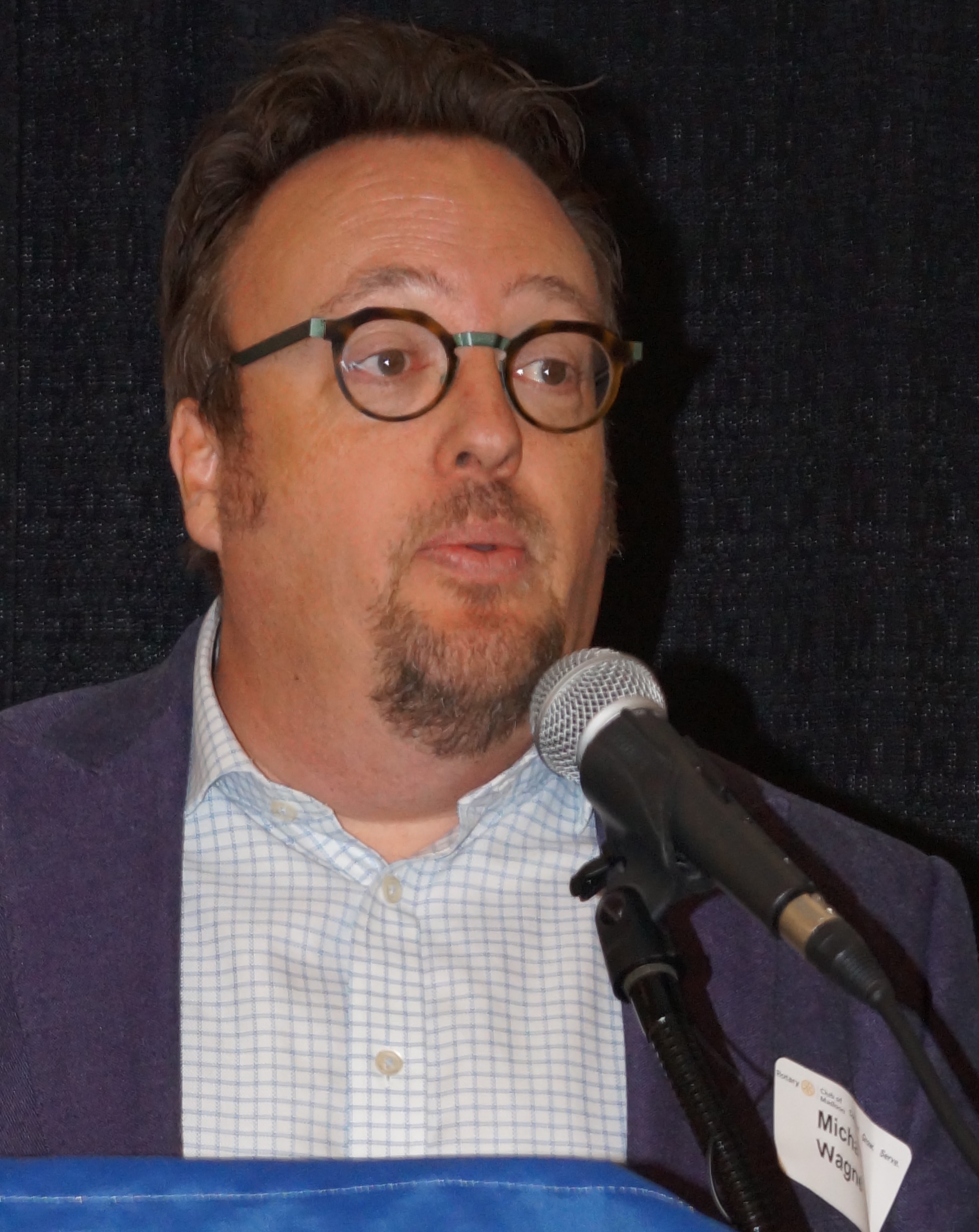
Michael Wagner is a faculty affiliate at the Elections Research Center at UW-Madison and provided a fresh analysis of the election. His data centric presentation emphasized the impact of voters’ low approval ratings of the current administration (41%) and voter indifference to a rebounding economy. Biggest surprises? 65% of people do not want to talk about politics, Harris lost the popular vote due to weak voter turnout in bright blue states and people who consume information from diverse sources split their ticket, re-electing Tammy Baldwin. Wagner’s presentation is easily followed in the video recording on our club’s YouTube Channel: https://youtu.be/_sb3EH5ntOg.

Do you want to hear more about the election results? The Elections Research Center at UW-Madison is hosting a 2024 Elections Symposium on Friday, Nov. 22. If you are interested, here is a link for more information and how to sign up: https://elections.wisc.edu/2024symposium/.

October 9: Leckrone Shares His Moments of Happiness

–submitted by Ellsworth Brown

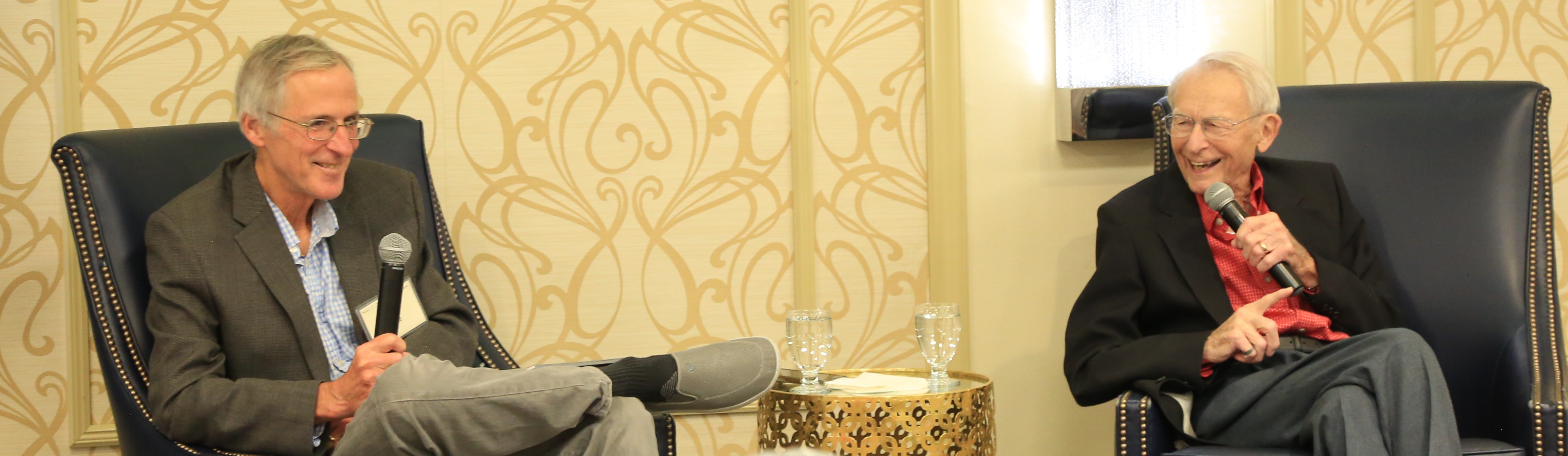
Moments of Happiness:  A Wisconsin Band Story, co-authored by Doug Moe and Mike Leckrone, provided more than a meeting’s worth of happiness for Rotarians as Moe interviewed Leckrone about his fifty years as UW-Madison Marching Band leader.

From a musical family, Leckrone’s inspiration was fueled by a stage-side seat at a non-stop two-and-a-half-hour performance by Louie Armstrong and his band in a small Indiana town.  Armstrong’s commitment to even a small audience was not forgotten by Leckrone.

Moe’s questions triggered endless stories about Leckrone’s life, band, students, and stage creations from 1969 on.  In fact, he began earlier with a story about meeting his future wife in seventh grade and extended it to sixty-two years of marriage.

Many UW Band traditions began accidentally:  “When you say Wisconsin, you said it all” was a commercial injected with “Wisconsin”.  The basketball “pep band” became the UW Varsity Band.  Leckrone’s famous concert entrances offset his boredom with standard entrances.  A career highlight: The 1994 Rosebowl parade where the band played “On Wisconsin” 137 times while passing by Wisconsin fans.  Pride: The band played for all UW sports except fencing (ended too soon).

In closing . . . career and life well-lived, and presentation very funny besides!

If you missed our meeting this week, you can watch it here: https://youtu.be/PJidZnF6uzc.

July 10: Ribbon in the Sky: Soul, Funk, and the Enduring Power of Black Art

–submitted by Kevin Hoffman

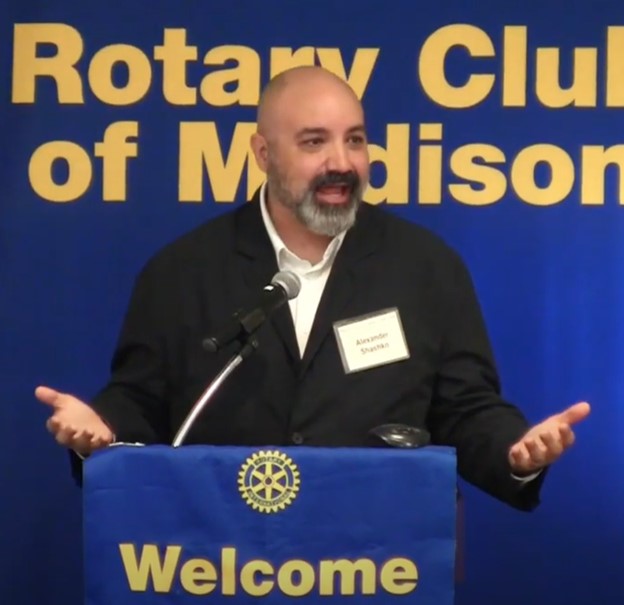
Professor Alexander Shashko of UW Madison and a lecturer in African American history, gave an illuminating overview of the exceptional and significant impact Black art, and music in particular, has had on American and world culture. From the times of the enslaved to the present-day Black music in its various forms (Gospel, Blues, Jazz, Soul, Funk and more) is the communication medium that expressed hope, survival, innovation, identity, joy and greatness through and between generations. If we want to understand the world and young people and what they are experiencing, Professor Shashko urge us to listen to contemporary music – not just the melody but especially the words and what they are saying.

If you missed our meeting this week, you can watch the video here: https://youtu.be/hfpOSng1TVY.

March 6:  English Language Lessons

Submitted by: Joy Cardin 

Rotarians were taught a lesson on the evolution of the English language and why we spell certain words the way we do – on the same day we honored the top spellers of the recent All-City Spelling Bee. 

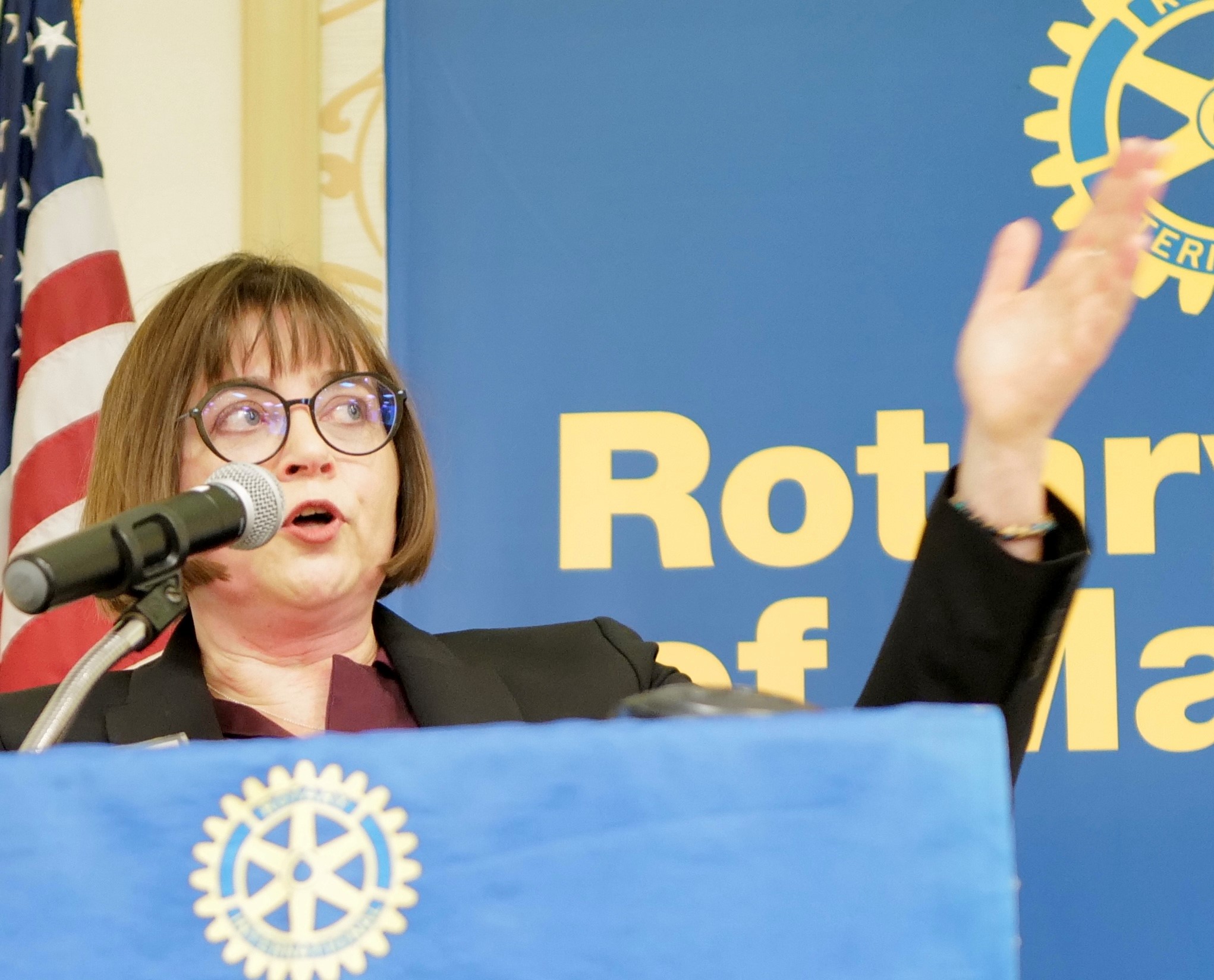
UW-Madison Professor of English Anja Wanner explained the many factors that influenced our spelling system – including word origin, politics, and even human error. For example, there is a “g” in the word sign, because it comes from the word signal; there is an “s” in the word island, because a printer made a mistake; and dictionary maker Noah Webster took the “u” out of honour and many other words because he wanted the United States to have its own distinct English language.

And why do we have words that sound the same, but are spelled differently and have different meanings?  There are TOO many reasons TO go into here, so take a moment or TWO and check out the recording of the program here:  https://youtu.be/3Tr-SQt33Wc.

November 2: “Research is Music to My Chancellor Ears”

–submitted by Bill Haight

UW-Madison Chancellor Jennifer Mnookin (center) pictured here with Music Committee members Darin Harris and Elaine Mischler

After just about three months on the job UW-Madison Chancellor Jennifer Mnookin says she’s been meeting with as many stakeholders as possible.

She got input from the Rotarians present by using an app (www.menti.com) that allowed her to gather responses to the question “What word or words come to mind when you think of UW-Madison?” Rotarians answered on their phones. Two of the most prominent were “Bucky” and “Research”.

“’Research’ is music to my Chancellor ears,” she said, and “Bucky, this mischievous, loving mascot, gives people a warm feeling about this university and that is a not insignificant.”

If you missed our meeting this week, you can watch the video here: https://www.youtube.com/watch?v=NPhexm9mHn4.

“Tiny Earth” – The Need for Antibiotic Research

–submitted by Jessika Kasten

Jo HandelsmanThis week, UW-Madison Professor Jo Handelsman talked virtually with the Downtown Rotary about a project she began while working at Yale University in 2012 called Tiny Earth. This important project was developed to increase the number of students pursuing STEM degrees as well as address the growing antibiotic crisis. Researchers estimate that unless we do something soon, by 2050 the leading cause of death will be related to bacteria-related illness.

Over time, humans have become resistant to many antibiotics that treat bacterial infections such as pneumonia, ear infections, strep throat and the like. At the same time, there have been far fewer new antibiotics put on the market. Antibiotics are simply not as lucrative to pharma companies, and many pharma companies felt as though the vast majority of known antibiotics (99%) had already been identified through the soil. They were generally not willing to put in the time and resources needed to find the new 1%.

Tiny Earth began with just 6 students at Yale but has now grown to participation by more than 10,000 students per year. All of the students are working towards the same goal of making antibiotic discovery cheaper and more efficient for pharmaceutical companies. Specifically, they are developing new screening methods and new targets to find that 1% of antibiotics that are either new or different than previously discovered. They will then share those with pharma companies, thereby reducing the cost. This form of crowdsourcing most recently has discovered three new chemical structures that are currently underway. The COVID pandemic forced the research to stop earlier this year, but students are looking forward to getting back into the labs soon to continue their research.

Tiny Earth is harnessing the power of crowdsourcing, a student workforce and the need for antibiotic research, in the hopes they can make a significant impact on bacterial resistance in the future.

If you missed our meeting this week, you can watch the video here.