
Introduced by Renee Moe on October 20, 2021

Our club’s Joseph G. Werner Meritorious Service Award is granted in recognition of outstanding club service in the Rotary tradition of “Service Above Self.” Joseph G. Werner was a committed Rotarian. He chaired many significant committees, both before and after serving as club president in 1953-54. He served as district governor and became the second member of this club to serve as director of Rotary International. He later served Rotary International in many other positions. Following his death, in 1974, the club established the Joseph G. Werner Meritorious Service Award as the club’s highest recognition for club service. The Werner honor is not an annual event, but is given under special circumstances when warranted.
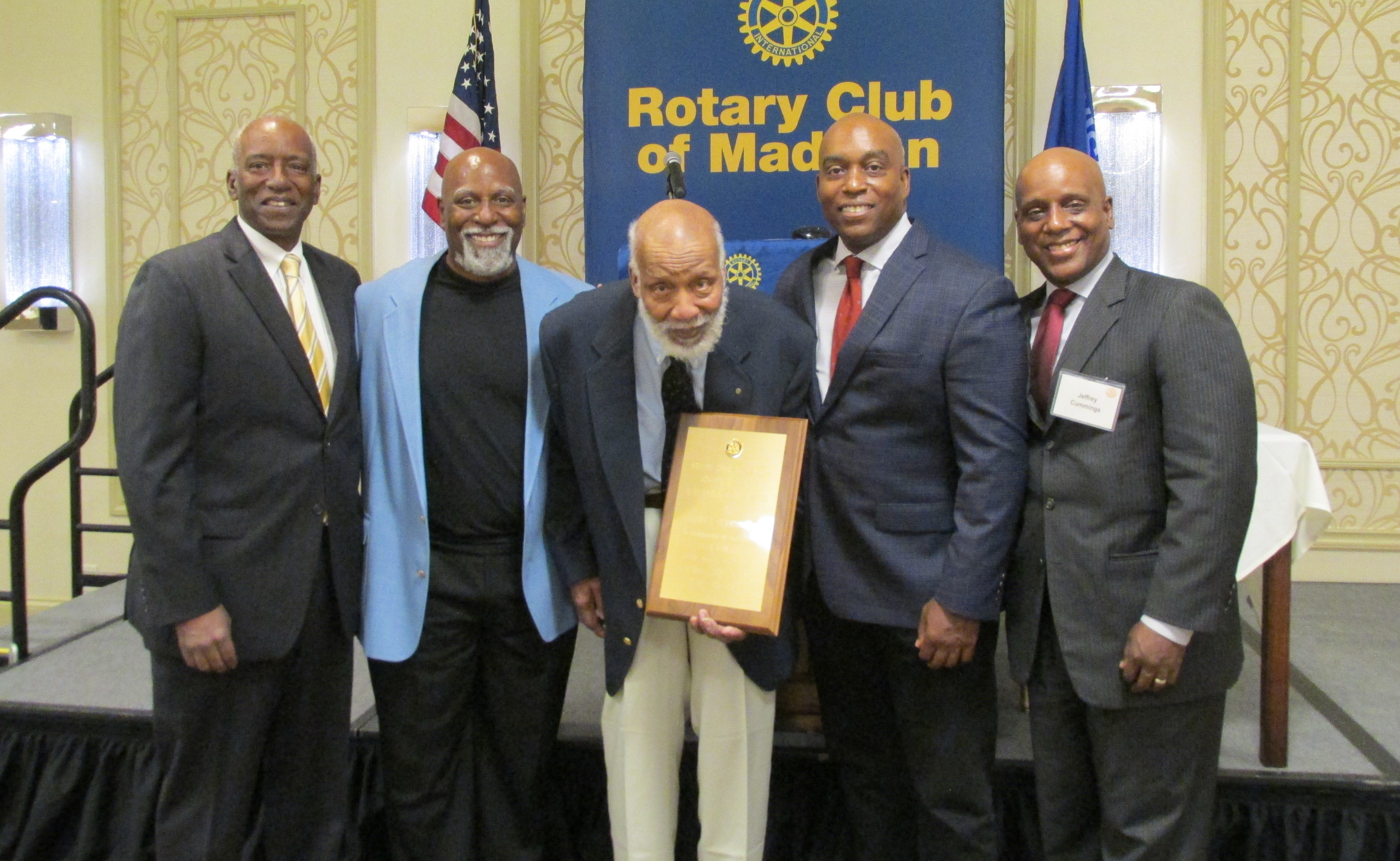
Today we are going to recognize Nelson Cummings, a valued member that we all adore, with this prestigious award. We are pleased that his four sons and other family members are in the audience today as we recognize Nelson.
Nelson was born in Springfield, Illinois on August 18, 1934. He received an A.B. Degree from Texas College and holds a Master’s Degree from St. Francis College.
He came to Madison in 1968 to become the first Director of the Madison Urban League. He later became a counselor at Beloit School System and worked for Madison Public Schools and Wisconsin Education Association.
Within the community, Nelson has served on the boards of Catholic Charities, Dane County Mental Health Center, Madison Hospital Foundation and Four Lakes Council of the Boy Scouts. He also was a member of the Madison Redevelopment Authority for 10 years.
In 1969, Nelson was the first African American to join our Rotary Club. He maintained 100% attendance starting in 1973 until the pandemic caused us to stop holding in-person meetings last year. In fact, Nelson holds the third longest record of 100% attendance in our club, and he has enjoyed seeing 52 club presidents up here at our podium.
He was on our club’s bowling team and led the Civic Bowling League for 40 years. He bowled every year until he retired. Nelson says that even though it was sometimes lonely because others in the league did not look like him, he was accepted and enjoyed the company of so many Rotarians. He says “I love Rotary! You meet so many fine people you would not otherwise meet. I come to meetings because I enjoy it. It has broadened my opportunities, and it is educational.” He takes Rotary’s Four-Way Test to heart, and he is especially proud of the scholarship program and the many students we are able to assist each year in obtaining a college education. Nelson says the greatest Rotary event he recalls is when women were allowed to join in 1987. Nelson has been a long-time volunteer of our annual Rotary Ethics Symposium, and he loves greeting the students and helping them feel welcome at our event. Nelson has also served on our Club Board of Directors.
Nelson is a pillar of our Rotary Club. He is always a friendly face in our audience, and he makes everyone he meets feel welcomed. We enjoy his company, and the recognition we are providing to him today is so well deserved.
It gives me great pleasure to recognize Nelson Cummings as our 30th recipient of the Rotary Club of Madison Joseph G Werner Meritorious Service Award. Congratulations, Nelson!

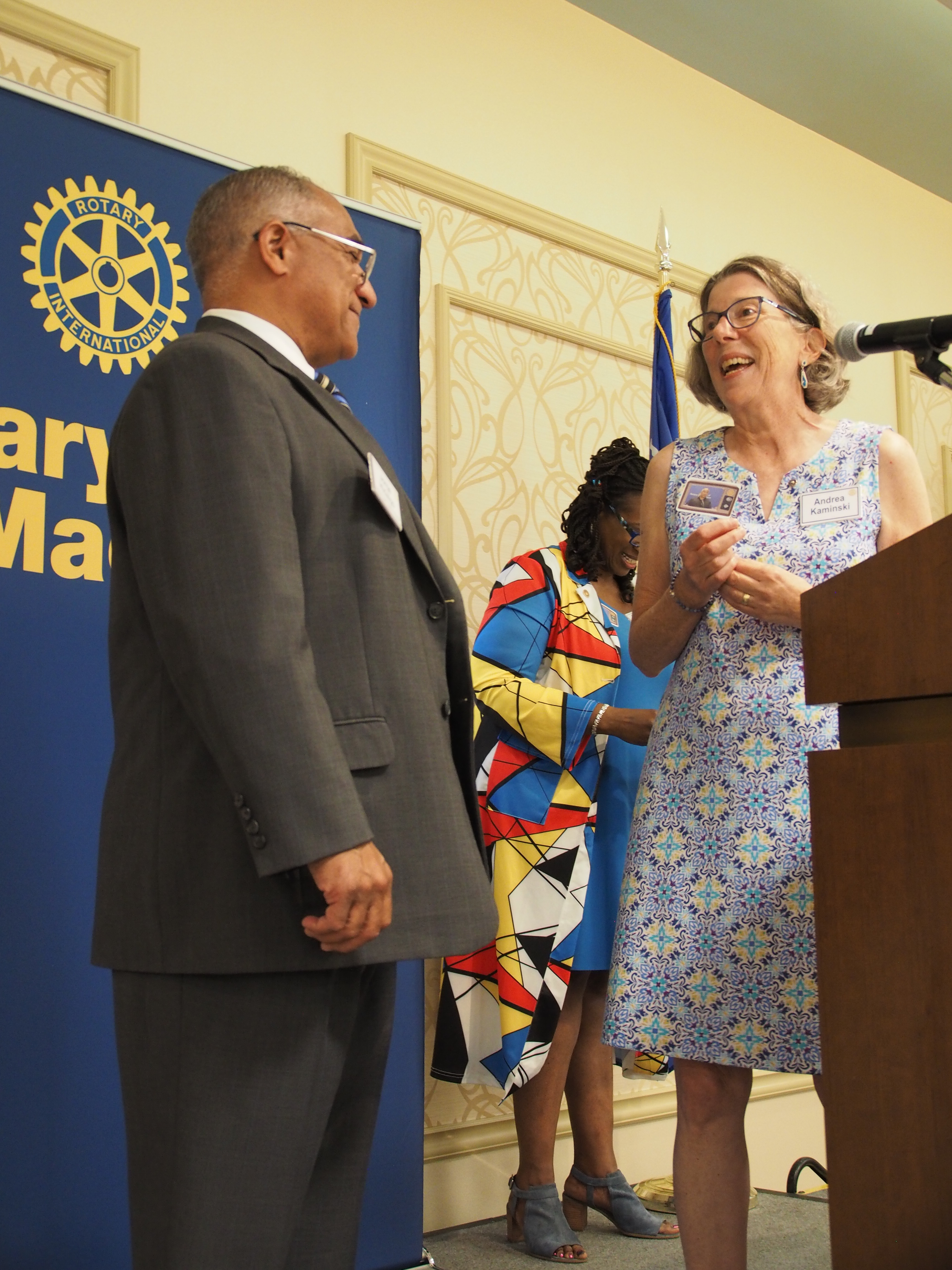


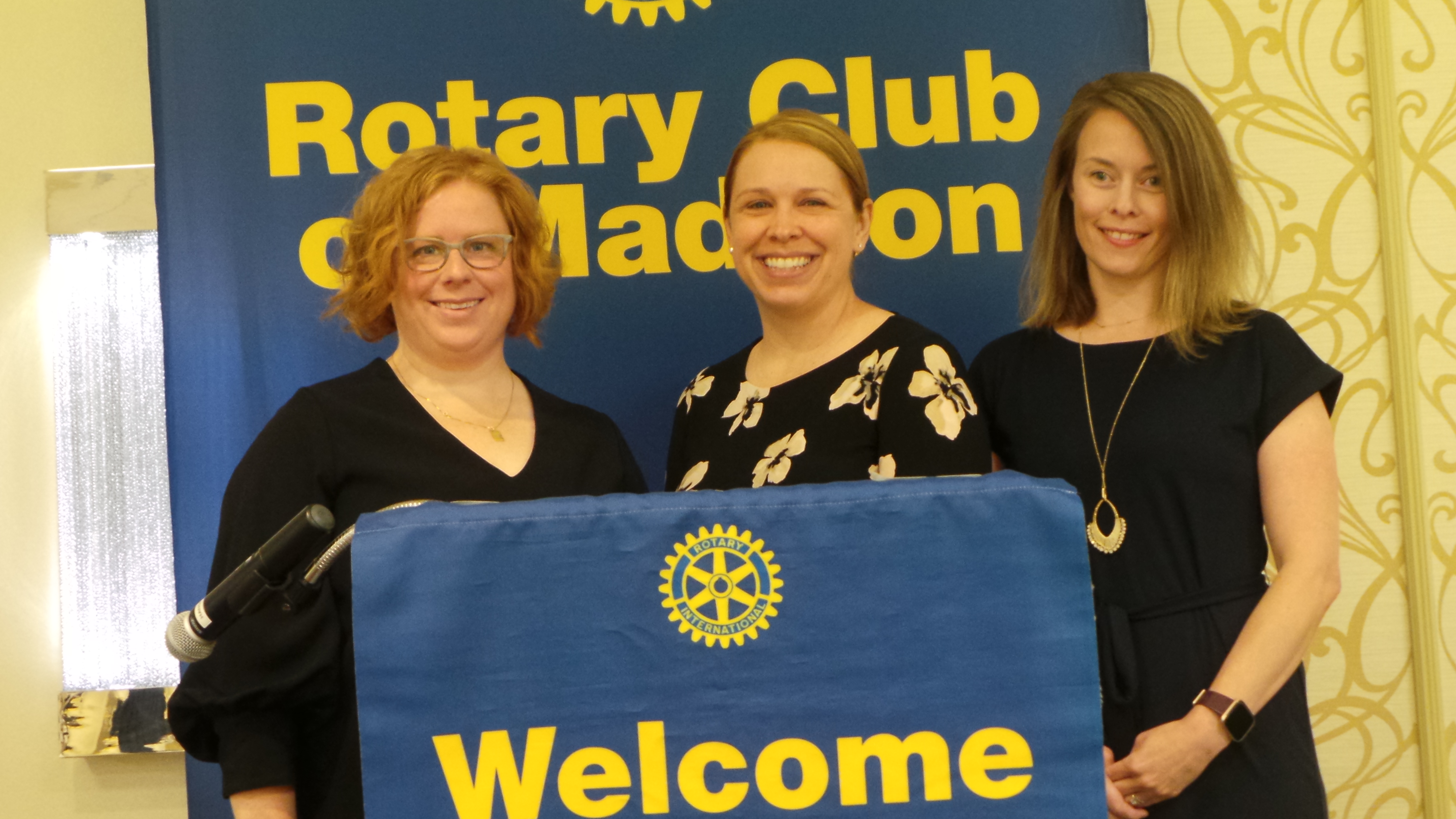 Rachel Sattler, Kim Curran, and Kate Walsh comprised a panel supplying a fast-moving presentation about the largely unaddressed scope of problems and possible solutions to sexual assault of UW-Madison women.
Statistics are startling: 26% of UW-Madison undergraduate women have experienced unwanted contact, 20% have been assaulted, and 6.8% have suffered violent attacks. The use of alcohol by men and women plays a large role in these abuses.
The consequences are several and can have life-long symptoms: rape victims often experience PTSD, depression, and substance abuse disorders. School dropouts occur.
The panel agreed that responses to sexual assault are unsatisfactory because a highly functioning, systemic, coordinated, multi-agency source of physical and medical, psychological, and legal services does not exist.
This problem is magnified by most victims’ lack of knowledge about these services, their sources and their unknown and disparate locations, the absence of transportation, and the lack of an advocate who could knit all of these together, provide a single point for reporting, and accompany a victim to the services.
One result of the absence of coordinated services is that only 2% of the victims report an assault to the University, and very few are reported to police.
The panel is deeply involved in ways to address the shortcomings described above. A U.S. Department of Justice grant has been awarded to hire a campus advocate who can begin to connect services, provide continuous and establish an example that can encourage the hiring of more advocates.
A multi-agency virtual portal is also being developed for reporting and coordination of services, to help with the connection not only between agencies but also among survivors.
At the close of the presentation, President Jorge asked what we as Rotarians can do to help. The answer: contact foundations you know for financial support of advocates or mental health programs or make personal contributions to these initiatives.
Our thanks to Kim Curran, Rachel Sattler and Kate Walsh for their presentation this week and to Ellsworth Brown for preparing this review article.
If you missed our meeting this week, you can watch it here:
Rachel Sattler, Kim Curran, and Kate Walsh comprised a panel supplying a fast-moving presentation about the largely unaddressed scope of problems and possible solutions to sexual assault of UW-Madison women.
Statistics are startling: 26% of UW-Madison undergraduate women have experienced unwanted contact, 20% have been assaulted, and 6.8% have suffered violent attacks. The use of alcohol by men and women plays a large role in these abuses.
The consequences are several and can have life-long symptoms: rape victims often experience PTSD, depression, and substance abuse disorders. School dropouts occur.
The panel agreed that responses to sexual assault are unsatisfactory because a highly functioning, systemic, coordinated, multi-agency source of physical and medical, psychological, and legal services does not exist.
This problem is magnified by most victims’ lack of knowledge about these services, their sources and their unknown and disparate locations, the absence of transportation, and the lack of an advocate who could knit all of these together, provide a single point for reporting, and accompany a victim to the services.
One result of the absence of coordinated services is that only 2% of the victims report an assault to the University, and very few are reported to police.
The panel is deeply involved in ways to address the shortcomings described above. A U.S. Department of Justice grant has been awarded to hire a campus advocate who can begin to connect services, provide continuous and establish an example that can encourage the hiring of more advocates.
A multi-agency virtual portal is also being developed for reporting and coordination of services, to help with the connection not only between agencies but also among survivors.
At the close of the presentation, President Jorge asked what we as Rotarians can do to help. The answer: contact foundations you know for financial support of advocates or mental health programs or make personal contributions to these initiatives.
Our thanks to Kim Curran, Rachel Sattler and Kate Walsh for their presentation this week and to Ellsworth Brown for preparing this review article.
If you missed our meeting this week, you can watch it here: 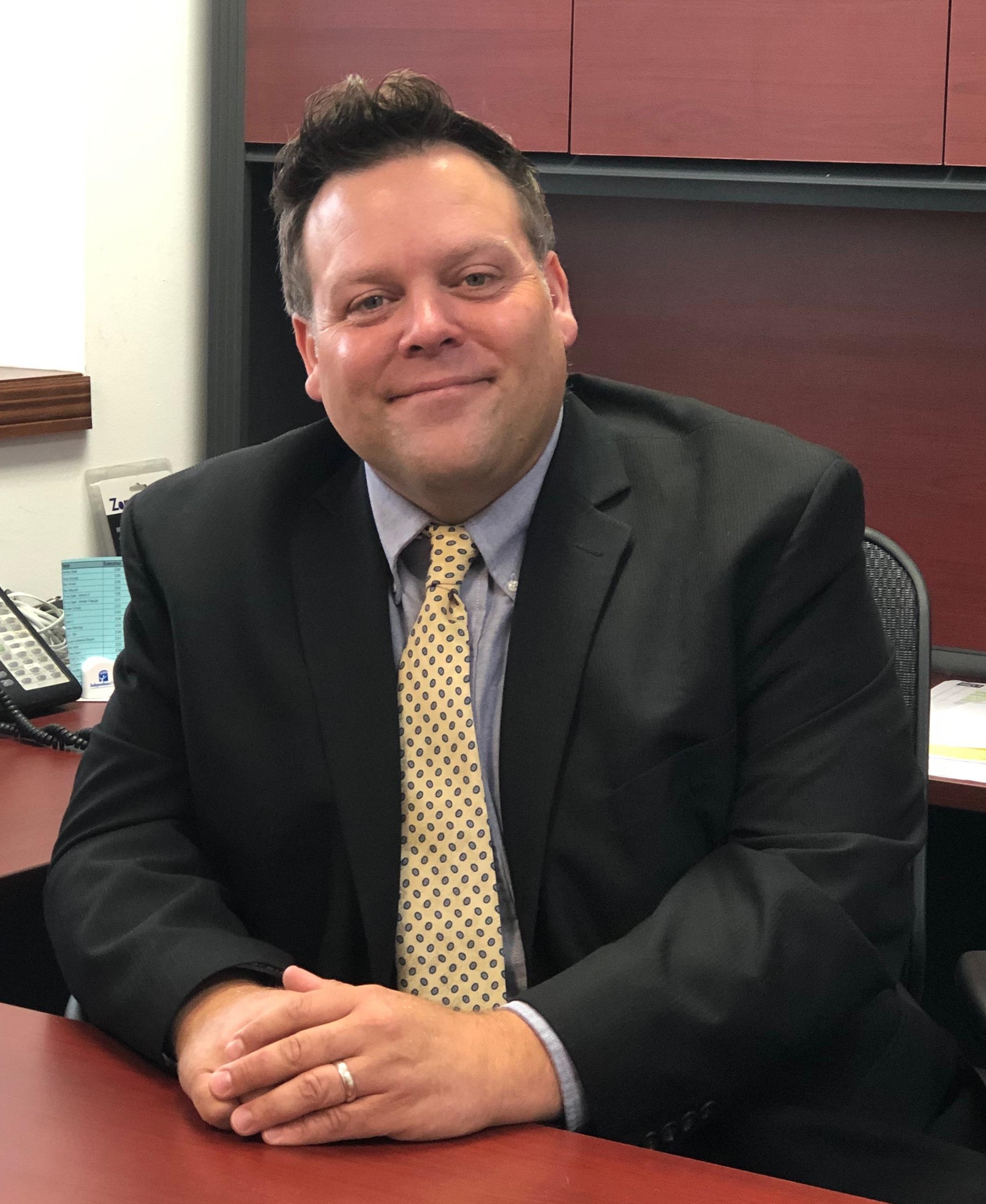 The speaker at our April 7th meeting was Jason Beloungy, Executive Director of Access to Independence, which is one of eight such organizations in Wisconsin. It serves Columbia, Dane, Dodge and Green counties. Today he spoke of the collaboration between his organization, the Downtown Madison’s Beyond Compliance Task Force, and the City of Madison’s Disability Rights Commission.
 Zach Brandon made an inspiring presentation at our March 24th meeting of the Rotary Club of Madison. As the president of the Greater Madison Chamber of Commerce and past Deputy Secretary of the Wisconsin Department of Commerce, he is well qualified to speak to us about Madison’s present and future in his titled address, “There is Light in the Darkness.” He structured his presentation around the intervening years since his prior Rotary presentation in 2018 which was his third.
 Rotary Club of Madison, Wisconsin