
–photos and summary submitted by Mike Wilson
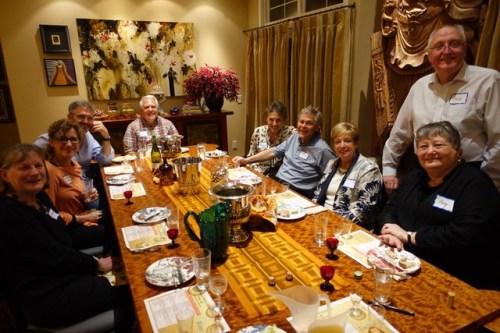
On Monday, the 8th of April, our club’s Wine Fellowship Group met at Mike Wilson’s home to compare six wines with a wine-cocktail counterpart. Two of the wine cocktails we tried were similar to some I had tried at local restaurants that were similar promoting these and another was recently published in the Wisconsin State Journal.
 We started with a Manzanilla from one of the corners of the Sherry triangle in Spain. This was La Guita (about $10 per half bottle) – a famous one. It was a very agreeable Dry Sherry. The cocktail contained the same wine plus Cointreau, Tequila and lime juice for a wine version of a Margarita. We next had a red fortified wine, Kopkes’s Fine Red Ruby Port, which was excellent and reasonably priced ($9.99 + tax per half bottle). This was compared to a Port Manhattan that was made with this Port and Maker’s Mark Bourbon and a couple of dashes of Angostura bitters. The wine became the vermouth substitute. In both these comparisons, the wine cocktail was preferred.
Next we had two white wines: a 95 pointer Doisey Daene 2014 Barsac – botrytis (noble rot) infected grapes that result in a honeyed wine. This was the most expensive wine ($45 + tax) tasted and was excellent. With this we had an Ice Wine Martini (Ice Wines are from Niagara and Germany, but French Sauternes and Barsac can be used interchangeably). We added Vodka to make the wine a martini. Next was a 92-93 Pointer Moscatini where we made a martini with Moscato (frizzante white wine from the Piedmonte region of Italy) with Plymouth Gin (least aromatic gin). The wine alone was preferred – but experimentation made the wine cocktail much better. Tasters added a little more of the wine to the cocktail from their wine sample and it significantly improved.
Lastly we tried two inexpensive Italian red wines – a Valpolicella (from the Veneto) and an Aglianico (from Campania), two favorites of the host. The Italian Red Wine Cocktail was Valpolicella with half the volume of Maker’s Mark Bourbon added. The other was an Aglianico Sour where copious amounts of simple syrup and lemon juice were added to Mile High Rye from Utah, and then the red wine was layered on top of the cocktail components which made for an interestingly layered visual appearance and the sensation of drinking the cocktail portion through the thin layer of red wine. Both the cocktail versions were preferred by the attendees.



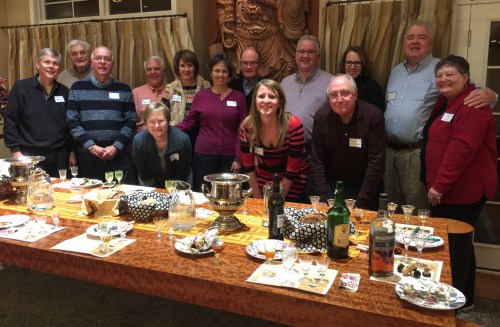
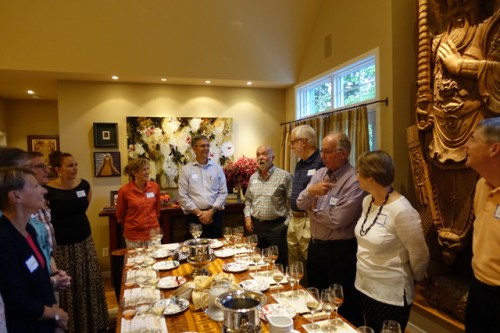
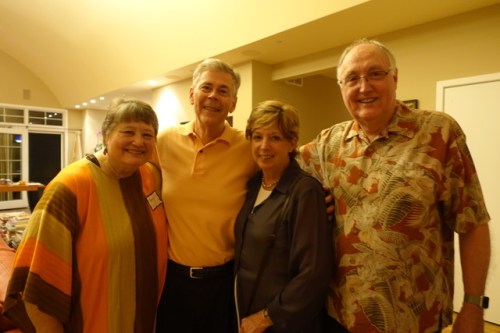
Photo 1: Jennifer & Bob Winding; Photo 2: Tim Muldowney & Jackie Hank; Photo 3: Keith Baumgartner & Peggy Lescrenier
Currently there is a real surge in Cocktails in the beverage industry while wine drinking has stalled. In 5 of the wine/cocktail comparisons the wine cocktail was preferred by our serious Rotary Wine Fellowshipper wine drinkers. The tasting provided excellent means of showing everyone how enjoyable these wine cocktails are, and minimal changes in the formulation of additional wine to the cocktail significantly modified the wine cocktail enjoyment to many attendees. There is room for considerable experimentation in this exploration of wine cocktails so that every wine drinker can enjoy them.
The tasting provided everyone with the drink formulas so the attendees could replicate them at home. It was of noted that the Wine Fellowshippers preferred the wine cocktail over the wine in 5 of the 6 pairings.
A great time was had by all, and excellent Fellowship resulted.







 but without the MSG salt contribution). They seek this out in their wines before release. The Puligny narrowly wins as the best tasting compared to the quintessential Robert Young Vineyards and the very different Kalin.
 We had two 2000 Bordeaux blend wines and compared this to a 2006 Rubicon Estate
 The last wine we tried was a Chateauneuf-du-pape (CNP) which is from the southern Rhone and has mainly Grenache, Syrah and Mouvedre (the GSM label made famous by Australia with their exports of this blend). Other red and white grapes provide an AOC appellation requirement minimum of six different varietals while the appellation allows at least 9 red and 6 white wines. The ground here is different, having huge heat retention stones (galets) extending from fist sized examples to huge boulders. When Patty and I visited Ch. Beaucastel in the mid 1980’s we wondered how they could even plant the vines in those “rock fields”.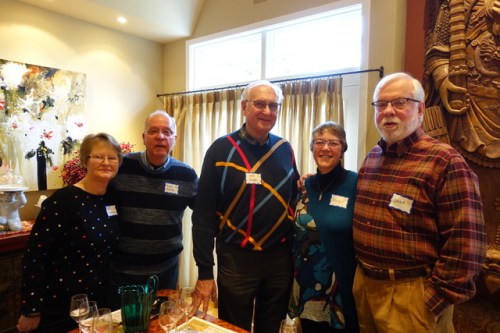
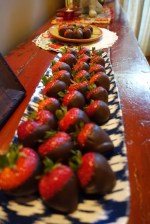
 This was a great tasting and we had 5 cheeses (3 of which are pictured here) selected for these wines and chocolate covered strawberries made by Patty. These included a local Mozzarella on melba toast, with Normandy Brie also on Melba Toast. We had Dubliner (invented by an Irish UW faculty while getting his PH.D. in Ireland – now sold by Kerrygold (but not currently banned like the butter). We had Cambozola, and Wensleydale cranberry cheese (another story of old English cheese slowly disappearing until owner of the last factory sold to the management who regenerated the business). The Mozzarella and Brie went well with the white and lighter Pinot Noir, while the other cheeses and chocolate strawberries stood up to the reds. Overall, the tasting was great fun for everyone.
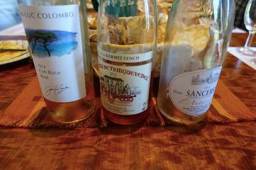 We started with three Roses: A Rhone from Jean Luc Colombo; a Kermit Lynch Tavel (AOC devoted entirely to Roses); and a Sancerre with 100% Pinot Noir. The resounding best was the Sancerre L’Authentique by Thomas Labaille in the Loire, sourced from Steve’s Liquor on University Avenue at a cost of $20.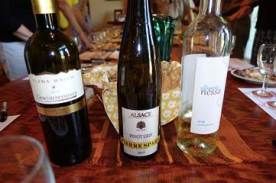

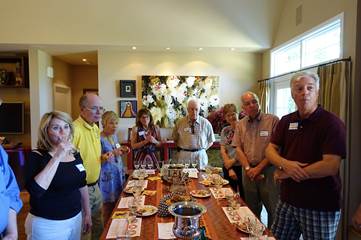
 We also tried two Shandy’s; a Pitosi lemonade beer and a grapefruit Schofferhoffer, which were very good. Back home in NZ 50 years ago we added lemonade to our favorite beer on a hot afternoon to get a refreshing drink. Here in America you can add Sierra Mist to your favorite beer or just purchase these Summer Shaddies. A Good Time Was Had By All.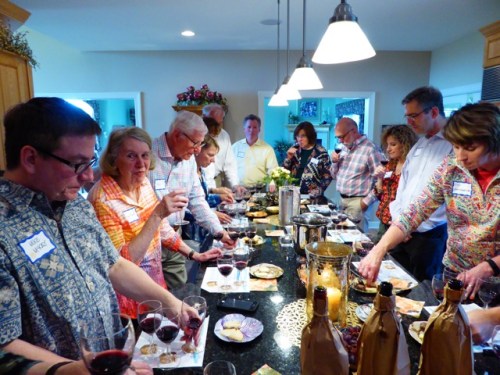


 The next round was a red wine presentation of Spanish Wines. Two were Rioja’s and the other a Priorat, and these regions represent the only regional DO’s with quality (i.e. DOCa) as classified by Spain. Both represent regional blends with Rioja’s having ~60% Tempranillo with additional Garnacha, Carignan, Cabernet Sauvignon, Merlot, and Syrah. The Priorat has more Garnacha but no Tempranillo but with the other wines also. We tried a 2009 Rioja Crianza (1 year in oak) at $20 and a 2009 Reserva (at least one year in oak and another year in oak or in the bottle) at $28. Incidentally there is a Gran Reserva with at least 2 years in oak and 3 years in bottle before release. The Priorat which is from the Catalonia region was a 2008 example at $30. These wines were very good and represent some of the best from Spain. All were very nice with no clear winner as I recall.
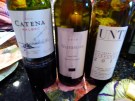 Lastly we tried 3 very different red wines – a 2013 Catena Malbec from Argentina ($15), a 2010 Napa Watermark Cabernet Sauvignon of great quality, and a 2013 Unti Zinfandel from California (~$30). The most impressive was the Watermark with ~2/3 of the group preferring that wine. Unfortunately this is not available for purchase locally.




 Rotary Club of Madison, Wisconsin