Category Archives: Rotary Club of Madison Guest Speaker

Panel of Rotarians Discussed How Pandemic Has Affected Local Businesses

Jan 6 2021 Panelists

From left: Juli Aulik, Ted Ballweg, Jeannie Cullen Schultz, Stacy Nemeth and Jason Ilstrup

The following Rotarians participated in a panel discussion moderated by Jason Ilstrup: Juli Aulik, Community relations Director for UW Health, represented the health care industry; Ted Ballweg, owner of Savory Accents, represented the Farm to Table industry; Jeannie Cullen Schultz, Co-president of JP Cullen, represented the construction industry; and Stacy Nemeth, Chief Operating Officer for Fiore Companies, Inc., represented the commercial real estate business.
Question: How Has COVID Changed the way you do business?
Juli: We learned how to be nimble, transparent, innovative and collaborative in ways we never dreamed of. We had to move more quickly than ever, be more patient than ever, and use technology in new ways: telemedicine and new forms of PPE.
Jeannie: We lost 25% of our business plan on April 1st. We had to learn how to negotiate and manage projects virtually. State projects and our backlog allowed us to stay in business.
Stacy: Our biggest challenge was helping our tenants–especially restaurants and small retailers–survive while facing our own financial challenges. Our buildings went from full occupancy to empty in 24 hours. We undertook large capital projects to make our buildings “touchless” while tenants were out of the buildings.
Ted: We used to reach 95% of our customers through farmers markets. We adapted by moving the Dane County Farmers Market to the Alliant Center, launching a new website, working with companies that provided weekly deliveries and growing our e-commerce four fold. I wouldn’t want to go through it again, but there were many positives.
Question: What are permanent changes?
Ted: Cash is going away. Now a business can’t survive without PayPal or Venmo.
Stacy: Rapid adoption of technology. Things that would’ve taken us five years to implement happened in a few months. We found great tools for teleworking. Companies will need to decide whether to bring employees back to a physical workplace. It will look different.
Jeannie: We couldn’t work remotely so we had to learn new job site protocols to stay safe and socially distance in small spaces with many workers. We held monthly town halls with our employees.
Juli: Telehealth is here to stay. It improved attendance, especially with older patients who are the least eager to drive. Also, loyalty is here to stay. We have an obligation to shop local.
Question: What were the positive lessons?
Jeannie: We’re proud of our company and community. Great employees and great cultures will persevere.
Juli: People are kind and giving. Staff worked extra shifts. The community showed their support.
Stacy: Creativity of human spirit. People adapt by pivoting their lives and their families to keep relationships strong.
Ted: Don’t be afraid to ask for help. Customers volunteered to help harvest when I couldn’t do it myself.
Our thanks to this week’s panelists: Juli Aulik, Ted Ballweg, Jeannie Cullen Schultz and Stacy Nemeth; to Jason Ilstrup for serving as moderator; and to Janet Piraino for preparing this review article. If you missed our meeting, you can watch it here: https://youtu.be/TWatwVjifqw.

Festival of Youth Arts – Closing 2020 on a Lighter Note

   Rotary members were given a sampling of performances from four of Madison’s outstanding youth arts organizations.  Program Committee member Amanda White provided an overview and arranged for this special program with video technical assistance from Program Committee Chair Neil Fauerbach.  

   The Black Star Drum Line was created in 2008 by Director Joey B. Banks as an opportunity for kids to creatively express themselves through the “Percussive Arts”; that is, drums and percussion musical instruments.  Core youth development values incorporate diversity, equity, inclusion, respect for self and others, and mastery.  They have performed over 600 times in Madison and around the state. 

   In a montage of kids describing what they received from Black Star Drum Line, the word “responsibility” came up most often with dedication, commitment, discipline, maturity, increased self-esteem and mental health, and connection rounding out the ideals the organization provided.

   The Children’s Theater of Madison is a non-profit theater company with longtime roots in Madison.  It seeks to provide theater experiences to youth that inspires, engages, and educates.  A collection of scenes from a performance of “The Wizard of Oz” was featured that exhibited the outstanding talent, production values, and audience engagement of the classic story of Dorothy in the Land of Oz.

   Madison Youth Choirs is a community of 11 ensembles that serves singers from 7 to 18 years old.  They have continued to practice virtually through Zoom even though live practice and performances are not possible during the pandemic.  They report that they remain strong and engaged even in a virtual space.  Their montage included four performances from different groups of varying ages and composition.

   Wisconsin Youth Symphony Orchestra is a large program that consists of five orchestras, a percussion ensemble, brass and harp choirs, a chamber music program, and top notch instrumental and performance opportunities.  Since 1966 they have served over 5,000 young musicians from South Central Wisconsin.  Their video featured an impressive performance from their 50th  anniversary concert at Overture Hall with over 500 musicians ranging in age from 5 to 18.  They performed Beethoven’s “Ode to Joy.”

   Youth arts programs, even under pandemic conditions, remain a powerful way to keep kids connected and engaged.  Non-profits in youth arts are continuing to work to nurture kids in a challenging time.  Rotarians are encouraged to reach out and support and look for ways to be involved.

   Amanda also wanted to make us aware of the new, game-changing Madison Youth Arts Center under development on Madison’s near east side.  It will be an affordable, permanent home for youth arts and help create better access to the arts for all neighborhoods and kids in Madison.

   Our thanks to each performing arts group and to Kevin Hoffman for preparing this review article.  If you missed our meeting, you can watch it here:  https://youtu.be/xQQJAPenF24.

Reflections on Wisconsin’s Economy


UW Economics Professor Noah Williams is the founding Director of the Center for Research on the Wisconsin Economy (CROWE) and gave a report on the economic situation since the start of the pandemic lockdown in March 2020 through November 2020. He also gave some insight on economic trends and expectations for 2021.

He examined the impact by looking at labor market statistics from official government sources (State of Wisconsin, Bureau of Labor Statistics), as well as private data collectors that utilize cell phone data and offer employment and business services that can produce data on a more contemporaneous basis.

Professor Williams started by saying the economy is secondary to the course of virus spread and infection. As the virus spread in March, April and May unemployment claims increased dramatically to a peak of over 300,000 compared to approximately 80,000 in 2019. New claims are at the rate of 15,000 per week compared to 5,000 last year. Continued unemployment has declined since the peak but there are still over three times the number of unemployed than there were in 2019. However, this only measures persons eligible for unemployment insurance. It is estimated that the actual number of unemployed individuals is double when you include ineligible and those who have stopped looking for work. In terms of raw numbers that translates to around 205,000 fewer employed than the same time last year.
The impact of job losses has been varied across sectors of the economy. The hardest hit has been Leisure and Hospitality with a 50% drop in employment at the peak in April. While it has recovered somewhat to about a 20% loss year-over-year it is still a dire situation as events, attractions and restaurants have been hampered or outlawed to curb the spread of the virus. Manufacturing and Retail employment took a dip in April (15%), as well, but is now only down from 3.0-4.5% as of October.

Changes in spending patterns and economic activity have been dramatic. For example, Madison has not fared as well due to the absence of students on campus. Foot traffic, measured by cell phone tracking, is down about 40% in Madison, compared to Milwaukee at 26% down and the rest of the state at 30% down. Also, there has been a shift from local and small business to large business and online: Retail purchases are down around 7% and online is up over 20%.

For 2021, the good news is that highly effective vaccines have been developed but we should expect continued economic headwinds (probably at least six months) as it will take many months to get enough people vaccinated. And, while negative surprises were on the downside and recovery surprises were on the upside the rate of improvement has slowed as government support programs are coming to an end. While the most dire of projections have not borne out, the economic consequences of the pandemic will continue to be a challenge.

Our thanks to Prof. Noah Williams for his presentation this week and to Kevin Hoffman for preparing this review article. If you missed our meeting, you can watch it here: https://youtu.be/WkOzn3reDmI.

Project 3000, A Community Response to COVID-19

After receiving our club’s 2020 Manfred E. Swarsensky Humanitarian Service Award in our November 18 meeting, our fellow Rotarian Floyd Rose spoke about Project 3000: A Community Response to COVID-19.

In response to the pandemic, most area schools last spring turned to virtual learning for the foreseeable future. This transition has presented significant challenges for children and parents, especially those limited-income families with little experience or access to computer-based education.

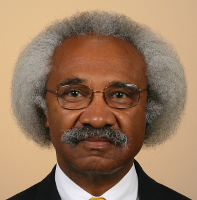
Dr. Rose explained that 100 Black Men of Madison, Inc., in collaboration with strategic partners in the community, launched Project 3000 to provide technical and conventional solutions to a targeted group of 3,000 low-income families in our community who have been particularly challenged by the abrupt transition to virtual learning. He noted that Rotarians Charles Tubbs and Willy Larkin serve with him on the organization’s board of directors.

100 Black Men of Madison has a legacy of helping youngsters start the school year right. Project 3000 grew out of the organization’s “Backpacks for Success” program, which has provided more than 38,000 free backpacks filled with school supplies to area at-risk youth over the past 25 years. Because of the pandemic, the organization enhanced the project by offering additional forms of support.

Through another program, partners 100 Black Men of Madison and the Urban League of Dane County already provide one-on-one mentoring and wrap-around support services for middle-school students. This year Project 3000 has applied this kind of assistance to kids from kindergarten through high school. The project works to serve the whole child in this special time, Dr. Rose explained, by providing technical support as well as mentoring and educational opportunities for parents. Nutrition is also a focus because school has long been a place where low-income children receive healthy meals.

The efforts of 100 Black Men are making a difference in our community. The Madison chapter helped area high school students win the national organization’s 2020 championship in the “Dollars and $ense” financial literacy program. Each participating student will receive a $4,500 scholarship for their first year of college.

In addition to virtual learning and financial literacy, 100 Black Men focuses on health and wellness for children and their families. Dr. Rose stressed the need for factual communication, and said the group has produced written and virtual communications by experts on such topics as: COVID-19 and high school athletics; talking to your kids about COVID-19; successful virtual learning; and the state of COVID-19 developments.

Dr. Rose said the work of 100 Black Men of Madison is predicated on the four pillars of respect for families, justice, integrity and spirituality. He said this is compatible with Rotary’s 4-Way Test and with the values of Rabbi Manfred E. Swarsensky, who wanted everyone to feel special, to feel they are valued and that they belong.

Our thanks to Floyd Rose for his presentation this week and to Andrea Kaminski for preparing this review article.  If you missed our meeting this week, you can watch it here: https://youtu.be/HdUALJNFij4.

Honoring Our Veterans and Their “Service Above Self”

It takes a special kind of person to have the courage to wear this nation’s uniform and stand ready for whenever they are needed. One who raises their right hand and pledges to protect this country at all costs, including giving their lives if necessary to defend our republic. This week, on Veteran’s Day, Brigadier General Joane Mathews provided a look into those service members who make up Wisconsin’s National Guard – 10,000 citizen soldiers and airmen that live in and work in every county. They are your friends, your neighbors, your coworkers, your employees, your children’s soccer coach. Remarkably, they balance their professional careers with their family lives along with their military service. Family, community and employer support is key to ensuring the strength of our Wisconsin National Guard.
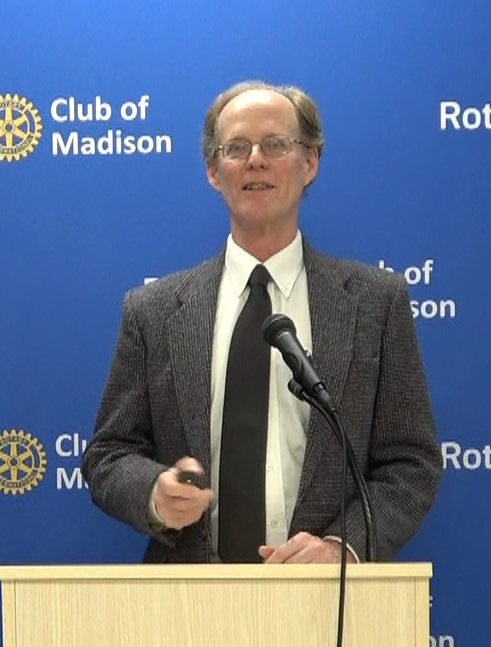
Veteran’s Day is a day to honor all of those men and women who have made such a noble commitment to their country and their communities. Brigadier General Mathews eloquently quoted U.S. Army Veteran Charles M. Provence, who wrote that it is the soldier, not the minister, who has given us freedom of religion, the soldier not the poet who has given us freedom of speech, the soldier not the lawyer who has given us the right to a fair trial, the soldier not the politician who has given us the right to vote. On Veteran’s Day we honor those soldiers for securing those rights we all enjoy every day.

Brigadier General Mathews explored the wide breadth of calls that our Wisconsin National Guard members answer. The National Guard’s roots go back to years prior to Wisconsin even becoming a state, when soldiers were called upon to fight in the Civil War. The National Guard sent servicemen to all wars following that and continue to do so into 2020, as members have been deployed to Afghanistan and throughout the Middle East. They provide top levels of support for the citizens of the State of Wisconsin as well, as the Wisconsin National Guard serves at the call of the Governor. In March of 2020, the National Guard mobilized over 1,400 soldiers to help with the COVID-19 response, from staffing testing sites, calling citizens to alert them of test results, to filling in at a senior living facility after an outbreak of COVID-19 caused a staffing shortage within the facility. There is no call that the National Guard cannot or will not answer to assist the citizens of Wisconsin. To date, WI National Guard members have administered more than 800,000 COVID-19 tests statewide.

More than 1,200 National Guard members mobilized to Milwaukee, Madison, Racine, Kenosha and Green Bay in the weeks following the death of George Floyd in Minneapolis to assist with unrest breaking out across those cities and have continued to answer calls to assist with unrest across the State over the subsequent months. Just last week, 400 National Guard members staffed polling places across the state due to a shortage of poll workers arising from the pandemic. It is truly an understatement to say that our Wisconsin National Guard members receive no call they cannot answer to support and protect and serve our nation. On this Veteran’s Day, we honor all of those who have served and sacrificed on our behalf— on each and every one of those calls stateside, nationwide and across international borders – where they were called to duty to secure and provide our country and people with the many gifts that we all enjoy as freedoms in this life.

Our thanks to BG Joane Mathews for her presentation this week and to Jessica Giesen for preparing this review article.  If you missed our meeting this week, you can watch it here: https://youtu.be/NcB7XdCg2GY?t=530

Election 2020: The Day After

   After being glued to our televisions, radios and phones for over twenty-four hours trying to dissect and understand what was happening with the 2020 United States Presidential election, it was a breath of fresh air to welcome Professor David Canon to the Rotary stage to help put things into perspective and answer so many nagging questions that many of us had had on our minds for years – and other questions that had arisen only minutes before the presentation began (Question: Will Wisconsin have a recount? Answer: Perhaps, but an election recount has never shifted a result where the vote margin was over 20,000 votes, which was the case in Wisconsin at the time of the presentation).
   However, Professor Canon reminded us, no election is over until every vote is counted and states laws in twenty-two states allow vote counting after actual Election Day (so long as ballots are post-marked by Election Day). Why the vast difference in voting procedure throughout the country? Why not put together a unified federal system so that everyone in the country knows the deadlines, guidelines and procedures for voting? Wouldn’t that help to clear up a lot of voter confusion leading up to and throughout our election days? The answer is yes, surely it would, but our Constitution mandates a federal system of government whereby each individual State legislature is tasked with determining the manner in which electoral votes are determined and the time, manner and place of its State’s elections. So until the Constitution itself is amended, the discretion and power to direct elections will always remain with each individual state.

   As the sun set on Election Day and the country entered election night, then woke up in the morning and turned the news back on – one thing was very clear – the polls seemed to have read things wrong just as they did in 2016. Professor Canon opined that the polls looked to be off in the same manner to which they were off in the last presidential election. While only time will tell as analysts dig down into the cause of this, Professor Canon pointed out that the same pollsters were spot on in other elections that were non-presidential, such as the 2018 elections – when the polls were spot on. Professor Canon posited that one reason may have been what is being referred to as “shy” Trump voters – that is, voters who tended to shy away from pollsters for one reason or another. It’s difficult to force someone to answer a poll and if answers are non-responsive or evaded, the pollsters cannot ever get an accurate read on that portion of the population.

   Professor Canon ended his presentation with something that we can all keep an eye on over the coming years and elections – that is, “ranked choice” voting – which is already being used in many local elections. Through ranked choice voting, a voter can rank their choices of candidates without the traditional fear of “wasting” a vote if they do not vote for the top democrat or republican candidate. In ranked choice, a voter can vote for a libertarian or independent candidate, for example, knowing that if that candidate does not gather a certain number of votes, the voter’s vote is reallocated to their second choice candidate. This method could prove to be a truer expression of voter preferences and may be an excellent way of letting voters really express their views at the ballot.

   Our thanks to UW-Madison Prof. David Canon for his timely presentation this week and to Jessica Giesen for preparing this review article.  If you missed our meeting this week, you can watch it here: https://youtu.be/Shqk2Z7acx8?t=573.  We also thank WisEye for co-streaming our meeting this week.