Category Archives: Rotary Club of Madison

For the Love of the Games

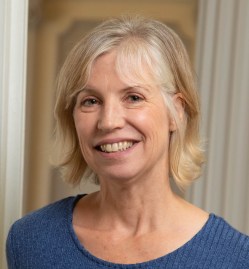
Jess Carrier

Our Rotary speaker on February 3 was Jessica Carrier, who leads the marketing team for Noble Knight Games in Fitchburg. She spoke to us from the company’s store, and her presentation included interviews with key employees.

Noble Knight Games boasts the largest selection of table-top games in the world, including traditional board games, new releases, and rare and/or out-of-print games. They buy and sell games from individuals and manufacturers locally and worldwide. About 20 percent of the company’s business is international. Vice President Dan Leeder explained that his brother Aaron is the owner and founder of the company. In the 1990s Aaron had an assembly job in the Janesville GM plant — and a love for the game Dungeons and Dragons. He began by purchasing games in Madison and selling them on his AOL.com site. In 1997 the company had five employees in Janesville. After 20 years the company moved to a newly built, 45,000 square foot building in Fitchburg.

The new structure includes a storefront with space for a mind-boggling inventory — hundreds of thousands of games, according to our speaker — and in-store game events, which were held every day of the week before the COVID shutdown. They are looking forward to resuming in-store events in the future.

Carrier said there are emotional, mental and physical benefits to playing table-top games. Even if a game is not marketed as an educational product, youngsters learn and grow by playing. They can develop reading and memorization skills, color recognition, cooperation and important social skills such as how to win or lose gracefully. She said that playing table-top games opens neural pathways that help you learn and retain information longer. It has also been tied to a slower onset of dementia in adults.

While one’s fate in many of the traditional games may depend on a roll of the dice or a card drawn from a deck, most newer games place more emphasis on strategy and, in some cases, cooperation with others. While the goal used to be to progress on a board, amass the most money or be the last person standing, now the goal is more likely to involve the management of multiple resources.

The presentation reminded me that I used to collect baseball cards, as much for the bubble gum as the players. Getting the card of a favorite player — for me it was Rocky Colavito, who played for Cleveland — was a matter of luck. Now there are games where you construct your own deck of cards which allows you to build a winning strategy in the game.

The presentation offered some suggestions for people who might be interested in gaming but don’t know where to begin. Start by talking with family and friends about the games they enjoy. For a group of two to four people, consider Azul or Catan. People who are used to playing Euchre might want to try the Wizard card game, which has additional suits along with Hearts, Spades, Diamonds and Clubs. The Haba games are great for young children. And if you want to move your teenager away from screen time, try to find table-top games in the same genre that is your kid’s obsession online. And, of course, the folks at Noble Knight Games will be happy to help!

Our thanks to Jess Carrier and her staff for their presentation this week and to Andrea Kaminski for preparing this review article.  Our thanks also to Neil Fauerbach who assisted in editing this week’s speaker video as well as our song at today’s meeting! If you missed our meeting this week, you can watch it here:  https://youtu.be/nXLv_P2y2gw.

Revitalizing Downtown Madison Post Pandemic

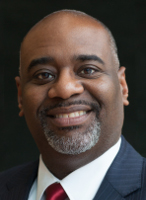
Brad Binkowski

Between the pandemic and the protests, Brad Binkowski believes downtown Madison has gone through one of the most tumultuous years imaginable and looks now like it did in the 1980’s when retail moved out to the malls. He believes it’s important to remember what downtown was; imagine what it can be again; and take the steps necessary to get it there. He says private sector investment is a necessary component of that revival.

Brad stressed the importance of building underground parking to reactivate sidewalks for pedestrians and customers and said the city needs to help cover the extraordinary costs. He says underground parking is behind the success of Urban Land Interests’ development of Block 89 which turned vacant buildings and surface parking into 560,000 square feet of office space on a block that now has the highest assessed value in the city. Brad says multi-modal transportation is growing, but the reality is that tenants demand parking.

ULI is now looking to develop the American Exchange block on the square – a development that has been 23 years in the making. The project, which ULI hopes to start in 2022, will have 805 underground parking stalls and 300,000 square feet of office space targeted to tech companies. Brad says the revenue the block will generate will help the city advance other initiatives.

Brad believes Madison has extraordinary strengths: a quality of life that doesn’t exist in many other places; a labor pool that includes the highest percent of educated millennials; and the highest net in-migration of tech employees in the country. But he says we desperately need a vision of what downtown can be.

Brad closed by saying that Rotary is a force that is committed to a vision for downtown and is critical to creating a dialogue on a plan for downtown Madison and a strategy on how to get there.
Our thanks to Brad Binkowski for speaking this week and to Janet Piraino for preparing this review article. If you missed our meeting, you can watch it here: https://youtu.be/MRnkBjm9Cps.

How to Be Curious and Why It Matters

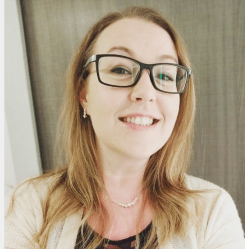
Anne Strainchamps

Anne Strainchamps spoke virtually to Rotarians this week on January 20. As a veteran public radio host and producer, Strainchamps shared “How To Be Curious And Why It Matters.”

As a journalist, Anne said, “Curiosity is the DNA of our radio show.” She said curiosity is the key to learning, progress, invention; inventors are driven by curiosity.

“Curiosity is a habitat that can be cultivated,” Anne said. She continued, “We teach math, history, why not curiosity? It’s the one skill I value most; my job is to be professionally curious, and it’s my life’s satisfaction.”

But you can’t wait for it to strike. Anne told Rotarians to hunt for that spark and feed it by asking lots of questions. Asking good questions is a lost art. She suggested asking beautiful questions, questions that spark stories such as, “What do you treasure in your home and why?”

Science is a way of asking questions about the universe; politics is another opportunity for good questions. In today’s environment of polarization, Anne says it’s difficult to be curious and angry at the same time. She told the story of a former coworker, Barbara, who could disarm office conflict when hearing such a story by pausing…then asking, “Why would they say that?” And you would realize you were caught up in being angry or right.

Anne Strainchamps is the host of To the Best of Our Knowledge. She co-founded the show, along with Jim Fleming and husband Steve Paulson, and has been a featured interviewer on the program for more than a decade. She has worked in public broadcasting at WAMU in Washington, DC, and at NPR.

Our thanks to Anne Strainchamps for speaking this week and to Valerie Renk for preparing this review article. Our apologies for the technical difficulties during our livestreamed meeting on January 20. We have reloaded Anne’s video presentation, and you can view it without interruptions here: https://youtu.be/um27uKYTtn8.

Behind the Scenes of “The Niceties”

The impetus for Eleanor Burgess’s play “The Niceties” was a 2015 incident at Yale, Eleanor’s Alma mater, that involved a disagreement between faculty, administrators and students about whether Yale should be setting guidelines about which Halloween costumes are appropriate. Those in favor of guidance were trying to ward off controversies over students seen in black face, or stereotypical Native American costumes. Those opposed believed one of the purposes of college is for kids to learn to self regulate and make their own decisions.

Friends lost the ability to talk to each other as the controversy continued.  While this is common today, it was unique in 2015.  People felt the need to pick a side: the university doesn’t have the responsibility to coddle whining snowflakes vs. there should be consequences of making students of color feel uncomfortable. 

After two months of obsessively reading op/eds about the incident in her pajamas, Eleanor realized this incident should become a play. 

Eleanor said she naively thought the play would be out of date by the time it was produced.  But in today’s era of Trump, and the killing of George Floyd, we are still having these conversations.  The difference is, in the play, the professor and student have faith and admiration for each other and believe they can change each other’s minds if they just make the right arguments.  Today, we would back out of those conversations much faster and realize it’s hopeless.

   Eleanor hopes we can learn to talk together again – to thread the needle and realize that two things can both be true at the same time.  In the play, the professor says, “no matter how much we disagree, we’re still stuck in a country together.”  But today, we don’t even share the same reality or set of facts. Eleanor believes we can’t live this way forever. Restoring our capacity to have conversations with people we disagree with is not just a nicety, it is a fundamental necessity. 

Our thanks to Eleanor Burgess for speaking this week and to club member Julie Swenson who interviewed her.  We also thank Janet Piraino for preparing this review article.  If you missed our meeting, you can watch it here:  https://youtu.be/SkGEtyy_sCE.

Panel of Rotarians Discussed How Pandemic Has Affected Local Businesses

Jan 6 2021 Panelists

From left: Juli Aulik, Ted Ballweg, Jeannie Cullen Schultz, Stacy Nemeth and Jason Ilstrup

The following Rotarians participated in a panel discussion moderated by Jason Ilstrup: Juli Aulik, Community relations Director for UW Health, represented the health care industry; Ted Ballweg, owner of Savory Accents, represented the Farm to Table industry; Jeannie Cullen Schultz, Co-president of JP Cullen, represented the construction industry; and Stacy Nemeth, Chief Operating Officer for Fiore Companies, Inc., represented the commercial real estate business.
Question: How Has COVID Changed the way you do business?
Juli: We learned how to be nimble, transparent, innovative and collaborative in ways we never dreamed of. We had to move more quickly than ever, be more patient than ever, and use technology in new ways: telemedicine and new forms of PPE.
Jeannie: We lost 25% of our business plan on April 1st. We had to learn how to negotiate and manage projects virtually. State projects and our backlog allowed us to stay in business.
Stacy: Our biggest challenge was helping our tenants–especially restaurants and small retailers–survive while facing our own financial challenges. Our buildings went from full occupancy to empty in 24 hours. We undertook large capital projects to make our buildings “touchless” while tenants were out of the buildings.
Ted: We used to reach 95% of our customers through farmers markets. We adapted by moving the Dane County Farmers Market to the Alliant Center, launching a new website, working with companies that provided weekly deliveries and growing our e-commerce four fold. I wouldn’t want to go through it again, but there were many positives.
Question: What are permanent changes?
Ted: Cash is going away. Now a business can’t survive without PayPal or Venmo.
Stacy: Rapid adoption of technology. Things that would’ve taken us five years to implement happened in a few months. We found great tools for teleworking. Companies will need to decide whether to bring employees back to a physical workplace. It will look different.
Jeannie: We couldn’t work remotely so we had to learn new job site protocols to stay safe and socially distance in small spaces with many workers. We held monthly town halls with our employees.
Juli: Telehealth is here to stay. It improved attendance, especially with older patients who are the least eager to drive. Also, loyalty is here to stay. We have an obligation to shop local.
Question: What were the positive lessons?
Jeannie: We’re proud of our company and community. Great employees and great cultures will persevere.
Juli: People are kind and giving. Staff worked extra shifts. The community showed their support.
Stacy: Creativity of human spirit. People adapt by pivoting their lives and their families to keep relationships strong.
Ted: Don’t be afraid to ask for help. Customers volunteered to help harvest when I couldn’t do it myself.
Our thanks to this week’s panelists: Juli Aulik, Ted Ballweg, Jeannie Cullen Schultz and Stacy Nemeth; to Jason Ilstrup for serving as moderator; and to Janet Piraino for preparing this review article. If you missed our meeting, you can watch it here: https://youtu.be/TWatwVjifqw.

Festival of Youth Arts – Closing 2020 on a Lighter Note

   Rotary members were given a sampling of performances from four of Madison’s outstanding youth arts organizations.  Program Committee member Amanda White provided an overview and arranged for this special program with video technical assistance from Program Committee Chair Neil Fauerbach.  
   The Black Star Drum Line was created in 2008 by Director Joey B. Banks as an opportunity for kids to creatively express themselves through the “Percussive Arts”; that is, drums and percussion musical instruments.  Core youth development values incorporate diversity, equity, inclusion, respect for self and others, and mastery.  They have performed over 600 times in Madison and around the state. 

   In a montage of kids describing what they received from Black Star Drum Line, the word “responsibility” came up most often with dedication, commitment, discipline, maturity, increased self-esteem and mental health, and connection rounding out the ideals the organization provided.

   The Children’s Theater of Madison is a non-profit theater company with longtime roots in Madison.  It seeks to provide theater experiences to youth that inspires, engages, and educates.  A collection of scenes from a performance of “The Wizard of Oz” was featured that exhibited the outstanding talent, production values, and audience engagement of the classic story of Dorothy in the Land of Oz.

   Madison Youth Choirs is a community of 11 ensembles that serves singers from 7 to 18 years old.  They have continued to practice virtually through Zoom even though live practice and performances are not possible during the pandemic.  They report that they remain strong and engaged even in a virtual space.  Their montage included four performances from different groups of varying ages and composition.

   Wisconsin Youth Symphony Orchestra is a large program that consists of five orchestras, a percussion ensemble, brass and harp choirs, a chamber music program, and top notch instrumental and performance opportunities.  Since 1966 they have served over 5,000 young musicians from South Central Wisconsin.  Their video featured an impressive performance from their 50th  anniversary concert at Overture Hall with over 500 musicians ranging in age from 5 to 18.  They performed Beethoven’s “Ode to Joy.”

   Youth arts programs, even under pandemic conditions, remain a powerful way to keep kids connected and engaged.  Non-profits in youth arts are continuing to work to nurture kids in a challenging time.  Rotarians are encouraged to reach out and support and look for ways to be involved.

   Amanda also wanted to make us aware of the new, game-changing Madison Youth Arts Center under development on Madison’s near east side.  It will be an affordable, permanent home for youth arts and help create better access to the arts for all neighborhoods and kids in Madison.

   Our thanks to each performing arts group and to Kevin Hoffman for preparing this review article.  If you missed our meeting, you can watch it here:  https://youtu.be/xQQJAPenF24.