
submitted by President Andrea Kaminski
You may notice as I introduce the May 6 online meeting that my background will be a little different from that of the past few weeks. It won’t be a tropical isle created by Zoom, although that sounds nice! It will be my new home in downtown Madison. Before the coronavirus outbreak, at least in Wisconsin, my husband Tom and I made an offer on a condominium at Metropolitan Place and had it accepted. When the Governor’s Safer at Home order went into effect shortly afterward, it exempted moving services so we decided to go forward with our plans.
We lived in our house across from Edgewood College for 35 years, and it is where we raised our three kids, housed their grandmother for a few years, and hosted some 30 foreign students and professional visitors. The result was an excess of twin-size sheets, plastic hangers and board games, not to mention our family photographs.
Downsizing while social distancing presented a particular challenge, in that thrift stores, Habitat ReStore, and homeless shelters were not able to accept donations. On top of that, many of the items that seemed priceless to us seemed worthless to our kids! We have had to move things that we will donate in the future.
Then there was the moving itself. We did it in stages: 1. Close off one bedroom and a bathroom in our old house while the movers were there; 2. Oversee the placement of furniture and boxes in the condo; 3. Go back to the house and disinfect the kitchen and the main floor; 4. Live there with almost no furniture for three nights to allow for any viral contamination in the new place to die off; 5. Finally move in!
Through all of this it has been a pleasure to be able to continue to facilitate our weekly meetings, something that would have been impossible without huge assistance and support by our Executive Director, Pat Jenkins, and the volunteer technical expertise of Brian Basken and Jason Beren. In addition, our Club directors and directors-elect, who will meet online for the second time on May 4, continue to be active leaders in guiding our Club through the new challenges facing our membership and our community. And our committees and fellowship groups continue to meet online for business and fun.

Screenshot of first time ever Virtual Scotch Whisky Lew Harned Society event held on April 13.
If you haven’t yet viewed one of our weekly online meetings, I encourage you to do so. The programs have been terrific, our committee chairs have been reporting on their activities in support of our club and the community, and the live Q&A sessions with our speakers are particularly informative. Find instructions and links for the weekly meetings and other innovative, online member connections on the home page of the Rotary Club of Madison website.
For Tom and me, the challenges of moving to a downtown condo in the time of social distancing have given us a better insight about what’s important in our own lives. The same could be said for the way the Rotary Club of Madison is creating new ways for members to connect, serve and grow. I hope every member will stay engaged, serve the community and find fellowship through our Rotary Club, while remaining safer at home.
 Fellow Rotarian and board member Nasra Wehelie spoke to us virtually via YouTube this week. Her subject was the traditions of the Islamic holy month of Ramadan, which are both rewarding and challenging. Ramadan is the ninth month of the Muslim lunar calendar, said to be when the Koran was revealed to Muhammad. Because it is based on the lunar calendar, it varies according to the Roman calendar.
 Dr. Jesslyn Hollar is an Edgewood College Professor, and she teaches education courses, “a teacher educator.” She is well qualified to talk about engaging kids in learning amidst COVID-19 school closures as she is the mother of a 6-year-old and a 2-year-old. Her roles of parent and teacher educator are no longer separate but overlapping.
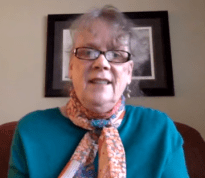 ellow Rotarian Lynn Brady, who is President and CEO of Journey Mental Health Center, shared her insights on “Dealing with Mental Health in the Time of the Coronavirus, a Unique National Emergency!” Brady’s presentation to the club through a virtual meeting platform on Wednesday, April 15, 2020, was an immediate reminder of the significant disruption that all of us are facing in our daily routines. Brady reflected that we are social creatures, and so this required isolation is inevitably going to have an impact. We feel uncertainty about when things will return to normal. In Brady’s work, she says that they are not currently seeing a lot of calls. Rather, people are asking for tips on dealing with stress; how to talk to children about the issue; and how they might reach out in the future to a mental health professional. The mental health professionals that she works with also need a chance to talk through the issues.
 Rotarians heard online April 8 from Benjamin Eithun how Madison is part of several networks to plan for medical emergencies. Eithun is Director of Pediatric Trauma, Surgery, Injury Prevention and Child Protection at American Family Children’s Hospital.

 Rotary Club of Madison, Wisconsin