Category Archives: Rotary Club of Madison

Introducing the Candidates for MMSD School Board Seats 6 and 7

–submitted by Ben Hebebrand; photo by Pete Christianson

Muldrow Toews Vander Meulen 3 8 2017

From Left: Kate Toews, Ali Muldrow and Nicki Vander Meulen

The Rotary Club of Madison hosted a forum for candidates to the Madison Metropolitan School District (MMSD). Each candidate offered an opening and closing statement.

Ali Muldrow, Seat 6:  In her opening statement, she stressed her long-standing commitment to MMSD, going all the way back to her days as a students, having graduated from east High School in 2004. As an alumna, she has continued her ties to East High School, volunteering her talents in a capacity as a facilitator of an arts club.  Ms. Muldrow’s platform centers on equity and inclusion: “Our district has a history of not serving every student equally,” she said. “We talk a lot about racial disparity, an opportunity gap, and an achievement gap – we talk a lot about exclusionary practices – we should talk more about inclusive efforts and practices.” In her opening statement, she concluded by painting a vision of the district “working differently” toward an ideal of “students falling in love with learning.”  In the closing statement, she elaborated on her idea of inclusionary practices. Recalling her days as a student, when 50 percent of the African-American district population did not graduate from high school, she “watched her peers disappear.” Instead, she urged “to reach for the stars – to aim to be at the forefront of inclusion and make space for students who have been left out.”

Kate Toews, Seat 6:  As the parent of a student enrolled in the MMSD, she affirmed her strong “belief in public education.” Citing her background in industry, specifically her work with the McKinsey & Co. global consultancy, she stressed her expertise in setting a vision and implementing such a vision into reality.  Ms. Toews’ platform centers on a three-prong vision: “We have the ability to be the best district in the country, because we have an engaged community. We can show the rest of the country how to do urban education,” she said, stressing clearly that privatization of schools is not the answer. She classified the School Board’s recent decision to fund a private school with a Caucasian student population as wrong, referring to a recent decision to extend charter school status to a current private school. Secondly, she cited the district for having a “workforce challenge,” implying that employment opportunities are not competitive. Thirdly, she mentioned the achievement gap that has “plagued us for a long time” – solutions can be found in hiring teachers of color and focusing on early childhood education.

Nicki Vander Meulen, Seat 7: Identifying herself as an autistic person, her candidacy is deeply rooted in the notion of “giving a voice to the students who are voiceless.  Ms. Vander Meulen’s platform centers primarily on how students with disabilities and with disadvantages need to be treated differently.  Citing disproportionate suspension and expulsion rates for African-American and handicapped students, she questioned the district’s discipline procedures. “We need a behavior education plan where facts are the same, and where punishments are equal,” she said. Further, she stressed the need for restorative justice solutions as opposed to handing students over to the juvenile court system.  She objected to current seclusion and time-out practices for disabled students as an example of unequal treatment.  Furthermore, she questioned the district’s wisdom in publishing a 70-page long document outlining behavior expectations and requiring students and families to sign those. “Let’s make the rules clear, simple, and precise.”

Did you miss our meeting this week?  Watch the video here.

Dane County Circuit Court Candidates Forum: Jill Karofsky vs. Marilyn Townsend

–submitted by Bill Haight; photo by Pete Christianson

karofsky-townsend-3-1-2017

Marilyn Townsend and Jill Karofsky

The two candidates for an open Dane County judge position began with an opening statement, then answered a series of questions presented by moderator Rotarian Andrea Kaminski.

Both candidates indicated a strong desire to address concerns of racial disparity, fairness in the judicial system and support of alternatives to incarceration – help versus punishment.   Both have backgrounds that illustrate their commitment to these concerns. Karofsky is serving as Executive Director of the Office of Crime Victim Services and as Wisconsin’s first Violence against Women Resource Prosecutor. Townsend has represented Unions and men and women on a broad array of issues, typically in cases where a client calls out their employer or a government agency for discrimination on the basis of wage, race, age, gender, or disability.

Attorney Karofsky, though not a judge, emphasizes her previous experience as an assistant district attorney handling “more than 10,000 cases in Dane County Courts, the exact kind of cases the judge will hear.”

Judge Townsend has served the Village of Shorewood Hills as Municipal Court Judge since 2012. In this capacity, she notes, she presides over trials, motion hearings and initial appearances, and decides the guilt or innocence of those who appear before her.

Karofsky contends that while municipal judges play an important role, Townsend’s municipal court experience dealing with mostly ordinance violations is not similar to the complexity of criminal cases, such as homicides, she would find in the circuit court.

When asked by the moderator about their “judicial philosophy” Townsend said she strives to make sure everyone’s voice is heard, “not just the rich and powerful,” Karofsky said her philosophy emphasizes “fairness, respect for everyone and a willingness to try new things [such as alternative courts for specialized cases]”

“Who is your hero?” Moderator Kaminsky asked.

“Franklin and Eleanor Roosevelt,” said Townsend, “because they stood up for the little guy.”

“My Mother [former Middleton Mayor Judy Karofsky], replied Karofsky, “because she always fought for fairness for the little guy.”

Did you miss our meeting this week?  Watch the video here.
Hip Hop Architect in the House!

–submitted by Dawn Crim; photo by John Bonsett-Veal

michael-ford-2-22-2017

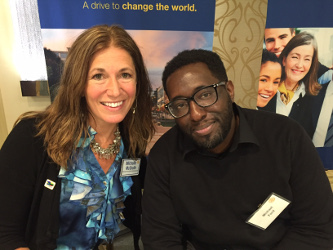
Club President Michelle McGrath and Michael Ford

What can Rotarians learn from the intersection between hip hop and architecture? Michael Ford educated Rotarians on the intersection first starting with history. How hip hop has influenced things over time with things ranging from chairs, boots and photos to artist evolutions. Michael Ford took Rotarians through the creative journeys of Pablo Picasso’s art and Le Corbusier’s architecture illustrating their connection to Hip Hop and the influence Hip Hop had on their work.

Michael Ford shared how Le Corbusier’s five design elements first introduced in Paris were brought to life in urban buildings in New York through Robert Moses’ designed buildings. Unfortunately, Robert Moses only took parts of Le Corbusier’s plan, just using the physical structure, missing the spirit of what the building could do for people. The result, Michael Ford described as an architectural ‘bad remix’ because the buildings in New York City, although similar in physical structure were considered ‘concrete jungles’, not contributing positively to the spirit and lives of the people living there.

According to the talk, it is no coincidence that rap was born in New York City, in the Bronx, because that is where many of these structures were built. One can trace rap songs in the 1970’s back to descriptions of these structures.

From the popularity of his lectures and expertise, Michael Ford is helping to design the Universal Hip Hop Museum in New York City.  He is working with Hip Hop artists from the 70’s and 80’s like Kurtis Blow and the Sugar Hill Gang to design exhibits to tell their our story in the museum. The museum will include public housing, market rate housing, a hotel, children’s museum, retail space and an amphitheater.

Michael Ford has done talks and projects all around the country. He has also created Hip Hip Architecture Camps here in Madison. The camp’s mission is to introduce traditionally marginalized or underrepresented youth to architecture, urban planning and economic development through the lens of hip-hop culture.

He has partnered with the City of Madison Department of Planning, Community & Economic Development, The Madison Public Library and Capital Area Regional Planning Commission to help kids bring their visions and voices into the Imagine Madison Initiative. This initiative will provide input into the City’s 25-Year Comprehensive plan.

From the response to today’s talk, many Rotarians may also bring their ideas to the plan. Some of those ideas may be grounded in hip hop.

2017 Ethics Symposium Highlights

–submitted by Andrea Kaminski

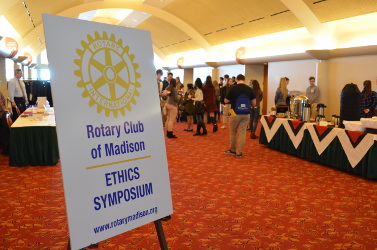
dsc_0106More than 200 students from 20 area high schools assembled at Monona Terrace Convention Center on February 17 for the 17th Annual Rotary Ethics Symposium, underwritten by our club’s Madison Rotary Foundation. They were welcomed by 2017 Ethics Symposium Chair Steve Johannsen, who noted that we all face ethical dilemmas several times a week. He explained that often it’s a small matter, for example, what to do when your cell phone starts ringing in a meeting. Other dilemmas can be gut-wrenching. Steve introduced the students to a hierarchy of four stages of ethical decision-making:

  • Stage 1: What action benefits me most? (Egoism)
  • Stage 2: What actions would my friends or group members think I should do? (Social Group Relativism)
  • Stage 3: What action would produce the greatest amount of good and the least amount of harm? (Utilitarian)
  • Stage 4: What action best respects the rights and dignity of each person? (Rights)

dsc_0046The First Wave Hip Hop Theater then opened the event artistically with dramatizations of three ethical dilemmas that teens might have to face: what to do when the friend who drove you to a party gets drunk; what to make of a famous athlete’s protest during the national anthem; and how to talk with a friend about a decision he has made. First Wave is a cutting-edge, multicultural, artistic program for UW-Madison students. It was the first university scholarship program in the country centered on the spoken word and hip-hop culture. The actors portrayed the dilemmas with humor and insight, and the moderator (a First Wave alumnus who now teaches in the Verona schools) invited audience participation between acts.
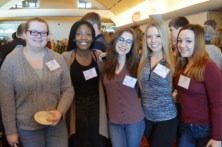
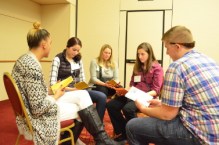
The students then participated in three consecutive breakout sessions in which they considered an ethical dilemma and analyzed it according to the stages of ethical decision-making. The scenarios focused on drunk-driving, affirmative action and transgender locker rooms. Designed by Edgewood College Business Ethics Professor Denis Collins and others, the breakout sessions were led by Rotarians with assistance from Edgewood College students, all of whom had been trained in a half-day session at Edgewood College before the symposium. With 18-20 students in each breakout, the facilitators led the students through a series of small-group discussions in which they deliberated about what action would reflect each level, or stage, of decision-making. The goal was to push students toward higher-level thinking.

dsc_0018  dsc_0065  dsc_0081

I found the students in the three groups that my team facilitated to be open-minded and thoughtful. They were generally familiar with the issues in the three scenarios, at least through the news. Whether they were personally connected with an issue or not, they found the discussion to be eye-opening. For example, one small-town student said that although he had heard about the transgender issue, he had never talked with anyone about it.  A student from Shabazz City High School responded that in her school there are many transgender students, and anyone may use any restroom or locker room. She added that the discussion at the Ethics Symposium helped her understand why the issue, which she said is “normalized” in her school, is an emotional one for others.

img_2420

Rotary President Michele McGrath applied her impressive skill in communicating with teens by asking how many wanted to be a CEO of a company or organization in a few years, how many want to lead impactful change in their community, and how many want to lead impactful change in the world. She got an enthusiastic response to all three questions. She explained they can do that through Rotary.

The impact of the day may have been best articulated by the students themselves at lunchtime. Almost 40 of them responded when Steve Johannsen asked what they thought about the experience. Here are some of the things they said:

  • Even though people disagreed, I appreciated that people could talk and be respected.
  • Listening to other people’s opinions made me more open-minded.
  • It’s not OK to isolate someone for being different.
  • If you feel comfortable in school, then you can’t learn.
  • I gained some ideas for our upcoming Awareness Day at school this spring.
  • It was cool how many people think outside the box, not just levels 1, 2 and 3.
  • It helped me understand other schools, and not just the stereotypes about schools.
  • I was shocked by how many people were not mad at each other about their opinions.
  • I was surprised by how easy the ethical framework was to use after the first time.
  • It was good to talk with students about topics I don’t even talk to adults about.
  • I usually don’t share my opinions with people I don’t know. I was comfortable doing that here.
  • I was surprised how insightful and deeply thoughtful people were even though we’re “just teenagers.”
  • As an openly transgender student, I was happy to see how accepting people were of me.
  • I recognized that there was no single right or wrong answer in some issues.
  • I was impressed by how open people were to listening to others. It makes me optimistic and hopeful as we get ready to become the leaders of this nation.

Carson Gulley’s Legacy

–submitted by Moses Altsech

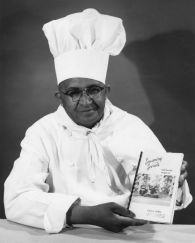
5130078da3521-imageWhat happens when you live in a society where the government and the majority of the people show a complete disregard for social and civil rights? Well, if you’re Carson Gulley you defiantly march on in the face of adversity and accomplish greatness against all odds.
The son of a former slave from Arkansas, Carson Gulley came to Madison in 1926 at a time when Jews and people of color were not allowed to join fraternities or sororities, hotels and restaurants banned African Americans, and there were even restrictions on trying on clothes at a department store if you were a person of color.

Thirty years later Carson Gulley had become one of the first instructors of c
olor at the University of Wisconsin, had written cookbooks, and had become a celebrity chef with his very own radio and television programs co-hosted with his wife Beatrice. He traveled across Wisconsin and to neighboring states for speaking engagements, having to drive home right away because usually the town would not have a hotel that allowed people of color to stay there.

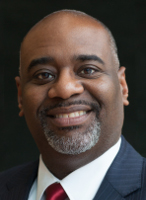
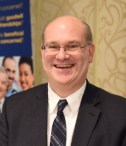
seyforth-scott-2-1-2017As Scott Seyforth noted, in 1954, Gulley was a speaker at our [then all-white] Rotary Club. It’s natural to think of Carson Gulley’s odyssey with admiration for his courage, yet one can’t help but think of the torment that he endured during a lifetime of discrimination.
Although he retired from the University after 27 years of service and after having been routinely passed over for promotion, he became the first African American to have a building named after him at the University in 1965, three years after his death.

If Carson Gulley’s life story is inspirational, let it also be a call to action to stand up against all forms of discrimination and make our country better tomorrow than it was yesterday–just as he did. That’s Carson Gulley’s legacy and that should be ours as well.

You can watch the YouTube video, “The Life and Times of Carson Gulley,” here.

Israel Night: Learning About the Country’s Culture, Food, Religion, & More

–submitted by Jocelyn Riley; photos by Jason Beren

20170126_182657

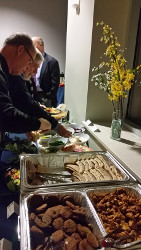
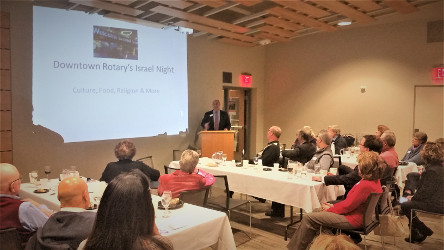
Two dozen Rotarians attended our Rotary Club’s Cultural Awareness Fellowship Event Israel Night on Thursday, January 26, at UW Hillel / The Barbara Hochberg Center for Jewish Student Life on Langdon Street in Madison.  We were treated to a delicious kosher buffet meal of falafel, chicken shawarma, hummus, Israeli salad, pita bread, tahini, and desserts including mandelbread, chocolate and cinnamon rugelach, and “Prussian ears.”  The meal was prepared by Adamah Neighborhood Table, which also runs a restaurant in the Hillel building.

After dinner, Rotarian Lester Pines gave a presentation on the history and culture of Israel.  Lester opened by telling us some details about his own relationship to Israel (which is, he pointed out, about the size of New Jersey).  At the age of 16, Lester spent 9 weeks in Israel in the summer of 1966 (the year before the momentous war of 1967).  When he returned many years later to the place where he had stayed in 1966, at first Lester could not recognize the spot.  Where there had once been small saplings surrounding the building, there was now a forest of large trees, part of Israel’s extensive “reforestation” effort.

20170126_192410

Lester then led us through some highlights of Israeli culture and customs.  Lester pointed out that Israel is home to many people from a wide variety of cultural and religious backgrounds, including people from Western Europe, Central Europe and Asia, and Africa.  Migration to Israel from so many parts of the world has influenced how life there has evolved.  Lester pointed to the mass migration of about a million people from Russia to Israel in the late 1980s and early 1990s as a transformative event in Israeli life.  Many of the Russian Jews who left to avoid persecution were highly educated scientists.  Once in Israel, they initiated scientific work that transformed Israel into “Silicon Wadi,” parallel to America’s Silicon Valley.  Even though the bulk of Israel is located in a desert (the Negev) on a salty sea, its economy had for many years been based on agriculture.  The newly arrived scientists began working on projects that led to Israel becoming the world leader in desalination of saltwater and to developing a strain of potatoes that can be irrigated with saltwater.

Lester closed with a description of an Israeli festival called Purim, based on the biblical book of Esther.  When he showed pictures of people in costumes at a Purim festival, people in the audience spontaneously called out, “It looks like carnival,” and “It looks like Halloween.”  Lester agreed that even though Purim in based in ancient texts, it’s a contemporary festival just for fun.