Category Archives: Rotary Club of Madison

World War II: When Did It End?

–submitted by Larry Larrabee; photo by Mike Engelberger

Stanley Payne 10 14 2015Professor Stanley Payne presented on the topic “WWII: When Did It End?” at our meeting on Wednesday October 14, 2015.  He is a professor emeritus of the University of Wisconsin Department of History and the author of several books on Europe and WWII, some of which have received national awards.

In this week’s presentation, Dr. Payne began by explaining Winston Churchill’s belief that the victory over Germany did not end the equally real threat of the Soviet Union, which controlled half of Europe, upsetting the balance of power that Britain and other democracies needed to survive.  In December 1944, Churchill launched “Operation Unthinkable” to push Russia out of Central Europe by force after the defeat of Germany.

The Polish Government in Exile, with its 200,000 troops, and even a sizable portion of German POWs were willing to enter armed conflict with the USSR after V-E Day but the idea received no support from the US leaders, with the exception of General George Patton.  And thus, a hot war turned into the Cold War.

Since 1945, it has been an age of civil wars in Eastern and Central Europe, the Middle East and Asia including America entering those in Korea and Viet Nam.  In fact, unusual for wars since the Middle Ages, there was no peace treaty in Potsdam following WWII.

Thus, Churchill was correct.  Victory over Germany did not really end the war.  Although the later fall of the Soviet Union decreased that country as a single threat, the civil wars have continued, particularly in the Middle East.

Did you miss our meeting this week?  CLICK to watch the video.
Autumn Hiking in Owen Conservation Park

–submitted by Roberta Sladky; photos by Karl Gutknecht

Owen Park 4

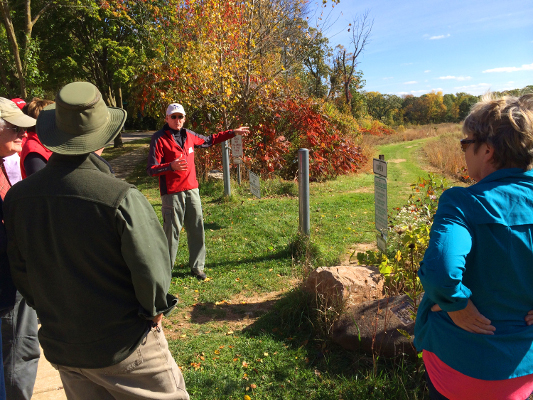
Rotary Club of Madison’s Hiking Fellowship was hosted on October 10 by Rotarian Bob Graebner and his wife Linda, at their home in Madison’s Parkwood Hills neighborhood. The hike was a spectacular walk through their leafy neighborhood and into Owen Conservation Park.  The 92 acre Owen Conservation Park includes a 40-acre woodland, a 15-acre restored prairie, and a 37-acre meadow, as well as 3 stormwater/wildlife ponds that were added in 2008 to reduce the sediment that flowed into Lake Mendota from area mall parking lots.  Bob described having seen cranes, herons and other waterfowl at the ponds.  He led us up hills and down dales through prairies and woodlands which were beginning to show fall color.

Owen Park 2

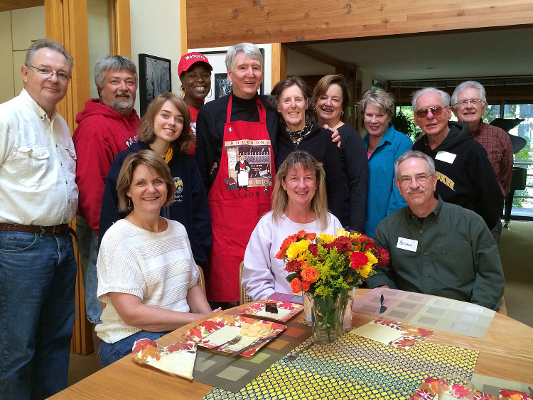
Back row from left: Stan Kitson, Al Goedken, Charlotte, De Monceau, Dawn Crim, Bob Graebner, Linda Graebner, Kay Schwichtenberg, Roberta Sladky, Frank Stein and Dean Nelson Front row from left: Robyn Kitson, Carol Goedken and Herman Baumann

Charlotte De Monceau, our Rotary Youth Exchange student from Lyon, France, joined the group and shared her experiences thus far in Madison. Multiple conversational groups formed and reformed during the 3.4 to 4.2 mile hike.  (Mileage reported by various cell phone apps.)  The hikers enjoyed a delicious luncheon prepared by Linda Graebner. The cheeses and French bread added a touch of Francais to the meal, and the large windows and leafy views made it feel like a pique-nique! All in all, it was a gorgeous fall day shared by companionable Rotarians.

Owen Park 1

How Are We Doing? Where Are We Going? What Have I Learned?

–submitted by Donna Hurd; photo by Jeff Burkhart

Leslie Howard 10 7 2015

As the end of an era approaches, Leslie Ann Howard, CEO of the United Way of Dane County and fellow Rotarian, delivered a heart-felt and impassioned overview of how the social condition of the Madison community has evolved since taking the helm 34 years ago.  As the first female to lead the organization in its 93-year history, Ms. Howard has seen the community’s narrative change from you “can’t get things done in Madison” to “We can and we will.”

Reflecting on life lessons, Leslie Ann recounted the first twenty years of her life as the child of an alcoholic father.  She experienced all of the emotion and pain that such a relationship carries with it.  However, at the age of 44 her father became sober through the balance of his life and taught her, “It’s never too late to change”, a lesson that has shaped her into the inspiring leader she has become.  It is this lesson that has directed her leadership of the United Way and guided her in her mission to help right some of the most pervasive social wrongs in our community.

As the first female manager in the nation of a collegiate football team, she learned “there are no limitations due to gender,” an experience that would equip her with the necessary acumen and confidence to interact with men in the locker room or the Boardroom.

These life lessons, while not all-inclusive, were pivotally instrumental in propelling Leslie Ann into a life focused on social and organizational change, leaving us a gift we should all cherish for many years to come.

In response to donor’s expectations that the needle move in a positive direction as a result of continued asks and gifts of financial support, the organization accepted the charge to embark on a mission of changing the “human condition,” once felt an improbable goal.  With this transformation, the organization embarked on a quest, aptly referred to as the “Agenda for Change,” focusing on Education, Income, and Health; and has moved the needle in the right direction, evidenced by the decreases in recidivism rates, decreases in homeless families and improved outcome because of partnerships with parents.  Successes abound, but the work must continue.

With a strong belief that people, circumstances, and conditions can change, our community can, and will continue change, with the hope that Madison will become one of the Best Places to Live and Work for all its citizens.

Thank you, Leslie Ann, for your leadership, insight, and unrelenting quest for change.  If we all believe in the possibility of change, it will become our reality!

Did you miss out meeting this week?  CLICK to watch the video.
Prescription Pain Killer Abuse in Wisconsin; Sharing a Dose of Reality

–submitted by Mary Borland; photo by John Bonsett-Veal

Attorney General Brad Schimel (right) pictured here with Club President Ellsworth Brown

Attorney General Brad Schimel (right) pictured here with Club President Ellsworth Brown

Wisconsin Attorney General Brad Schimel spoke with Rotarians on September 30 about why the Wisconsin Department of Justice, in conjunction with the Wisconsin Department of Health Services and partners across the State, have launched a $1.7 million campaign titled A DOSE OF REALITY, which is working to prevent prescription painkiller abuse in Wisconsin.

Brad explained, when prescribed and used properly, prescription opioid painkillers can offer relief; however, anyone is at risk of becoming addicted, especially our young people ages 12-25. Deaths and hospitalizations from overdoses are increasing, and four out of five heroin addicts start by abusing prescription painkillers.

Brad went on to share that this problem is impacting tens of thousands of families in Wisconsin and it is now declared a public health crisis.

  • The fear of death is not strong enough to stop people from using these drugs.
  • Opiate overdoses have more than doubled in less than a decade and now exceed motor vehicle deaths!
  • Many myths on this topic, most notably the myth that only “bad” kids and only “other” families or neighborhoods are affected. The fact is, all walks of life and communities are affected by this problem.  If not for prescription opiate abuse, we may not have a heroin problem at all.
  • Most people abusing opiate drugs obtain the drugs from a family member or friend – this presents a great opportunity!
  • Addictions to opiate drugs are driving spikes in most other crimes.
  • Wisconsin is number 2 in America for pharmacy robberies, with Indiana being number 1. Brad stressed that legal enforcement alone will not solve this problem.
  • Treatment is a critical piece to the solution. 163,000 people in Wisconsin are abuins opiates.

The three key messages of the campaign to address abuse of prescription medications are:

  1. Use medications only as prescribed to you and as directed
  2. Store medications safely and securely
  3. Dispose of medications properly by dropping them off at a designated site

What can you do in addition to the three key messages above?  Check out the website http://doseofrealitywi.gov/ and

  • Take the Pledge to Save Lives
  • Spread the word
  • Talk to your kids/grandkids about the dangers of opiate abuse
  • Ask your health care providers if there are alternative therapies available instead of taking an opiate drug. In the United States, we readily reimburse for drugs but are not good at covering addictions.  Advocate for changing this.
  • Keep track of the number of pills in your bottles
  • Dispose of unused meds promptly and safely. October 17 is Drug Take Back Day.  Last Take Back Day yielded over 20 tons of medications.  Find a medication return unit close to you to use anytime by visiting:   http://doseofrealitywi.gov/get-the-facts/safe-storage/

Our thanks to WisconsinEye for videotaping our meeting this week.  CLICK to view the video.

Jim Ruhly Receives Club’s Highest Honor: Joseph G. Werner Meritorious Service Award

-Introduced by Rich Leffler; photo by John Bonsett-Veal

Jim Ruhly (right) received Joseph G. Werner Meritorious Service Award from Club President Ellsworth Brown

Jim Ruhly (right) received Joseph G. Werner Meritorious Service Award from Club President Ellsworth Brown

In April 1974, the Joseph G. Werner Memorial Committee proposed that awarding of this honor “not be done annually or routinely or for a specific project but in recognition of outstanding club service over a period of years. The intention is not to provide a reward or incentive for club efforts but rather to maintain examples of a tradition of ‘service above self.’ ”

In 1994, when Claire Thomas received this award, the presenter was Ted Long. Joe Werner mentored Ted as a lawyer and sponsored him as a member of this club. Ted knew Joe well. Ted said of Joe that he “was a committed Rotarian, for Rotary was a primary focus of his life from the time he joined this club.”

Those words apply as well to Jim Ruhly for this club has been “a primary focus of his life.” He truly is one of the most extraordinary members in the 102-year history of the Rotary Club of Madison.  His service has been stunning. Since joining the Club in 1973, Jim has chaired the Fund Drive, been Sergeant-at-Arms, served as a member of the Board twice (1984–86, 1997–99), been president (1999–2000), has served on numerous major committees, been a member of the kitchen committee, and, remarkably, Jim arranged our weekly Club programs from July 2005 to July 2015. His community service has also been outstanding, serving on the boards of the Badger Red Cross, Big Brothers/Sister of Dane County (president), CTM Family Theater, the Madison Civic Center Commission, the Madison Cultural Arts District (chairman), Madison Opera, and United Way of Dane County, to name just a few.

As the Werner Memorial Committee said forty years ago, such service cannot be rewarded; nor is there an incentive we can offer to induce such service over so many years.  But we can offer this award to note a lifetime of service to this club, in the tradition of “Service Above Self.” Let us use Jim as an example for the rest of us of an exemplary Rotarian.

Jim Ruhly, thank you for your continuing commitment to Rotary, and congratulations on receiving our club’s highest recognition, the Joseph G. Werner Meritorious Serivce Award.

History of Joseph G. Werner Meritorious Service Award:   In 1974, our club established the Joseph G. Werner Meritorious Service award as the club’s highest recognition for club service.  This award is granted by our Rotary Club in recognition of outstanding club service in the Rotary tradition of “Service Above Self.”  Joseph Werner was a committed Rotarian.  He chaired many significant committees, both before and after serving as club president in 1953-54.  He served as a district governor in 1958-59 and became the second member of this club to serve as director of Rotary International in 1969-71.  He later served Rotary International in many other positions, and two different RI Directors indicated that Joe was in line for president of Rotary International at the time of his death from cancer in 1973.  Joe was a truly committed Rotarian whose example of “Service Above Self” is memorialized in this award.

First Wine Tasting for the Fall Season

–submitted by Mike Wilson

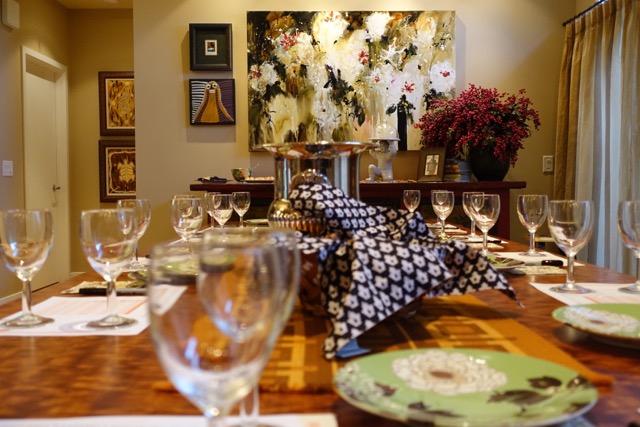
wine1On Thursday the 24th September the Wine Fellowship organized a tasting that included wines that would be sold by the Madison Rotary Wine Fellowship through UW Rotaract.  This fundraiser for the Mashambanzou Care Trust helps AIDs-affected families and orphans and has been performed annually for about a decade when the  Fellowship raises between $1000 and $1500 annually.  One year, Noel and Dick Pearson held the fundraiser when Mike Wilson was not available.  The official Mashambanzou tasting will follow with 14 wines, which will then be offered for sale.  Today’s “BYO and Snack” event included 6 wines that will not be in the upcoming donation Wine Fellowship event (20 wines would be far to may to try at once) yet needed to be evaluated for recommendation to the Fellowship sales event.

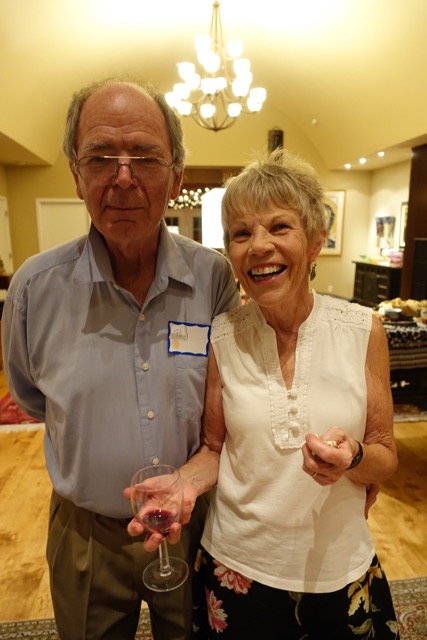
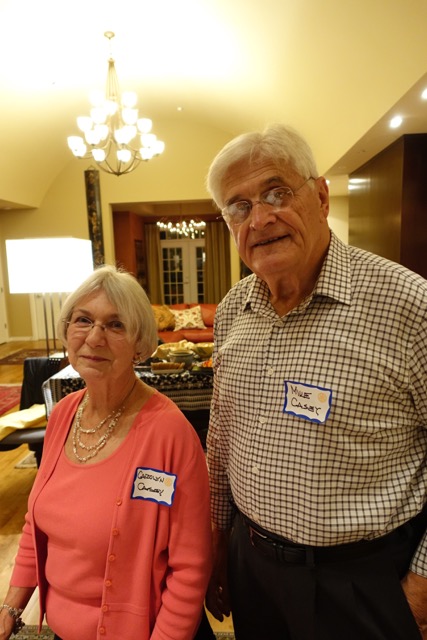
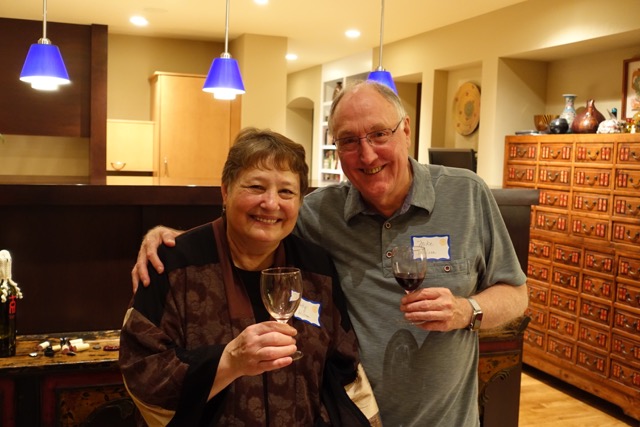
Schatzs   Mixtackis   Caseys

(Photo 1: Paul & Ellie Schatz; Photo: Steve & Meryl Mixtacki; Photo 3: Carolyn & Mike Casey)

The “Mashambanzou” wines tasted included: Gruet Blanc de Noir, Mollydooker Shiraz, Hey Mambo Sultry Red, Catena Malbec of the more reasonable priced wines (all $12-28) and two excellent reds -Paul Hobbs Crossbarn Napa Cabernet Sauvignon @$53 and a Zenato Amarone @$70.  The consensus was that these were very suitable for purchase with Catena and Hey Mambo universally liked.  All these wines had excellent scores of 90, 91 and the latter two wines rated well above that.

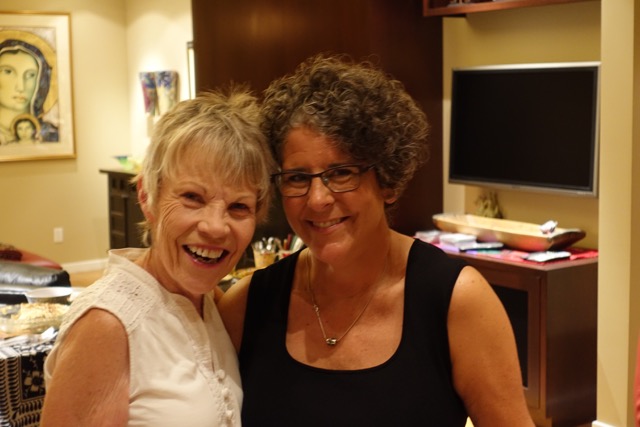
Wilsons   Wittke Schatz  Baumgartner

(Photo 1: Patty & Mike Wilson; Photo 2: Ellie Schatz & Cheryl Wittke; Photo 3: Juli & Kieth Baumgartner)

With the “business part of the event” ongoing, the BYO bottles were also universally liked with a great Virginia Gray Ghost Reserve oaked Chardonnay, a delicious Morgon Premier Cru Beaujolais, a Zaca Mesa GSM that was super, and a St. Francis (for the visiting pope no doubt) excellent single vineyard Old Vines Dry Creek Zinfandel.  All these were excellent and made for good company.

wine5   wine4  wine3

Snacks brought by individuals to the BYO included the mandatory breads, crackers, nuts and cheeses provided by the Wilson’s, but also a quiche, collections of dried figs and meats, skewers with mozzarella, basil and balsamic dressing, and goat and cream cheese preparation topped with tomato.

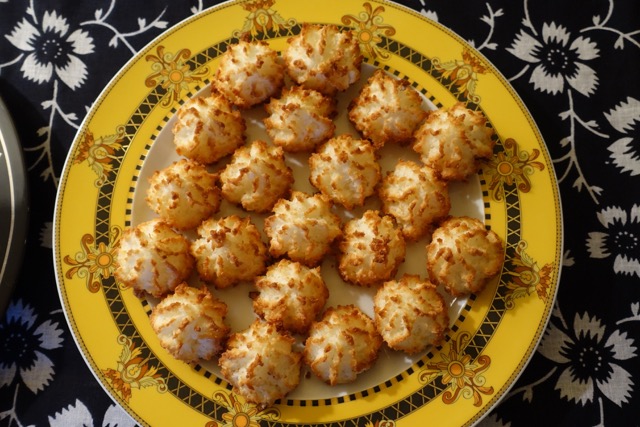
As Patty Wilson had procured some macaroons and fresh figs from Whole Foods together with Maytag Blue cheese Mike Wilson pulled out an unusual sweet red wine (Amas Amiel 10 ans – stored outside in glass demijohns for a year, the fermentation ended with alcohol, then aged in oak for 9 years) that he had purchased at the Rotary Wine Fellowship tasting organized by Keith Baumgartner and held at the Madison Club (with record attendance) and this very interesting sweeter wine was a nice way to end the tasting.

Fun was had by all, excellent wines were tasted, and importantly we were able to establish that the six wines selected by Mike Wilson and Steve Mixtacki (Co-chairs of the Rotary Wine Fellowship) from an array of some 91 wines offered by the Purple Feet Wine Distributors (purchased by the Winebow Group) would be appropriate for adding to the 14 wines we will taste at a later fundraiser event for the Zimbabwe Mashambanzou Care Trust.