Category Archives: Rotary Club of Madison

Hiking Group Learns More About John Muir’s Boyhood Home on Aug. 22

–text and photos submitted by Karl Gutknecht

Muir Hike 1

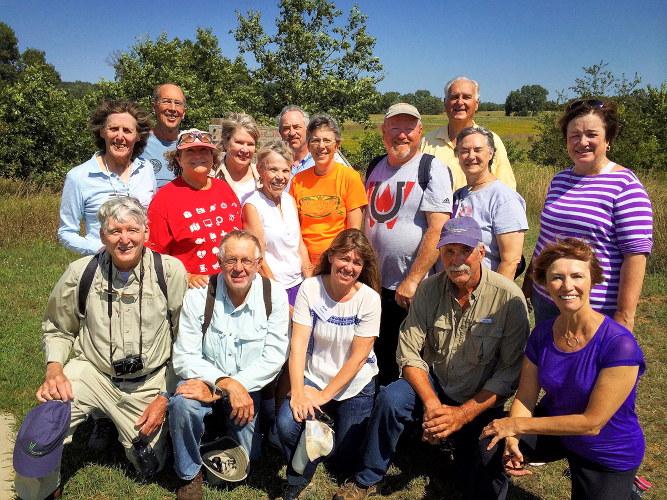
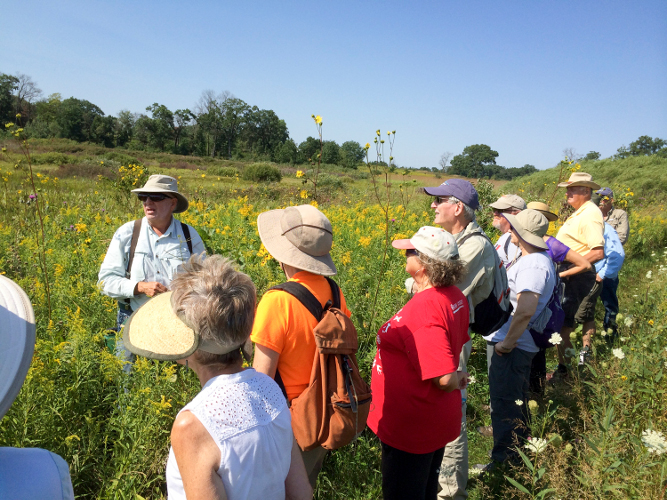
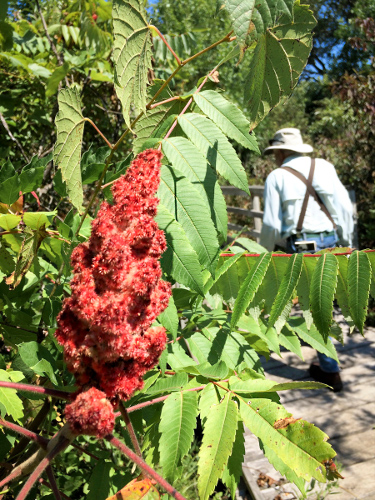
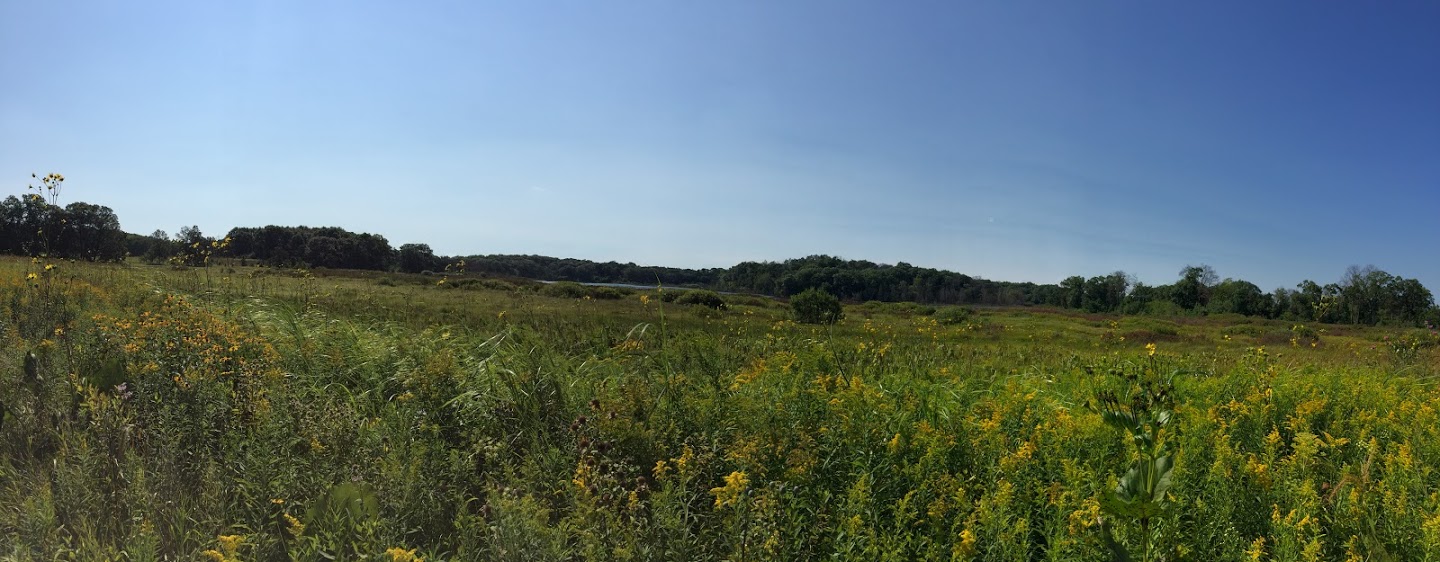
Downtown Rotarians and guests were hosted by The Wisconsin Friends of John Muir and Natural Heritage Land Trust while hiking Muir’s boyhood farm home terrain in Marquette County Saturday.

They learned that Muir’s conservation ethic was formed as a young man on the Muir Wisconsin homestead. These boyhood years in Wisconsin inspired his conservation ethic and love and appreciation of the natural world. Muir went on to espouse an intrinsic, spiritual value and beauty in nature and maintained that all living things are interconnected.

Muir Hike 2  Muir Hike 3  Muir Hike 4

Providing interpretations on the John Muir Memorial Park and nearby Observatory Hill hikes were Wisconsin Friends of John Muir Board of Directors Mark Martin and Fred Wollenburg as well as Heidi Habeger, Natural Heritage Land Trust. Hiking/Skiing Fellowship Group chair, Bob Graebner, was hike coordinator.

IMG_5918

The John Muir Memorial Park and Friends of John Muir celebrate the legacy of this great naturalist, a founder of The Sierra Club and often called the father of our country’s National Park System. The Natural Heritage Land Trust seeks to permanently protect local natural areas, rivers and streams, wildlife habitat, and working farms. It recently purchased part of the original John Muir family farm, bringing the total protected landscape to 1,400 acres, which includes the Muir Park and Fox River National Wildlife Refuge.

Further information on the John Muir Memorial Park can be found at Wisconsin Friends of John Muir, website www.johnmuir.org/wisconsin and for the Natural Heritage Land Trust, www.nhlt.org.

German POWs Working in Wisconsin

–submitted by Andrea Kaminski

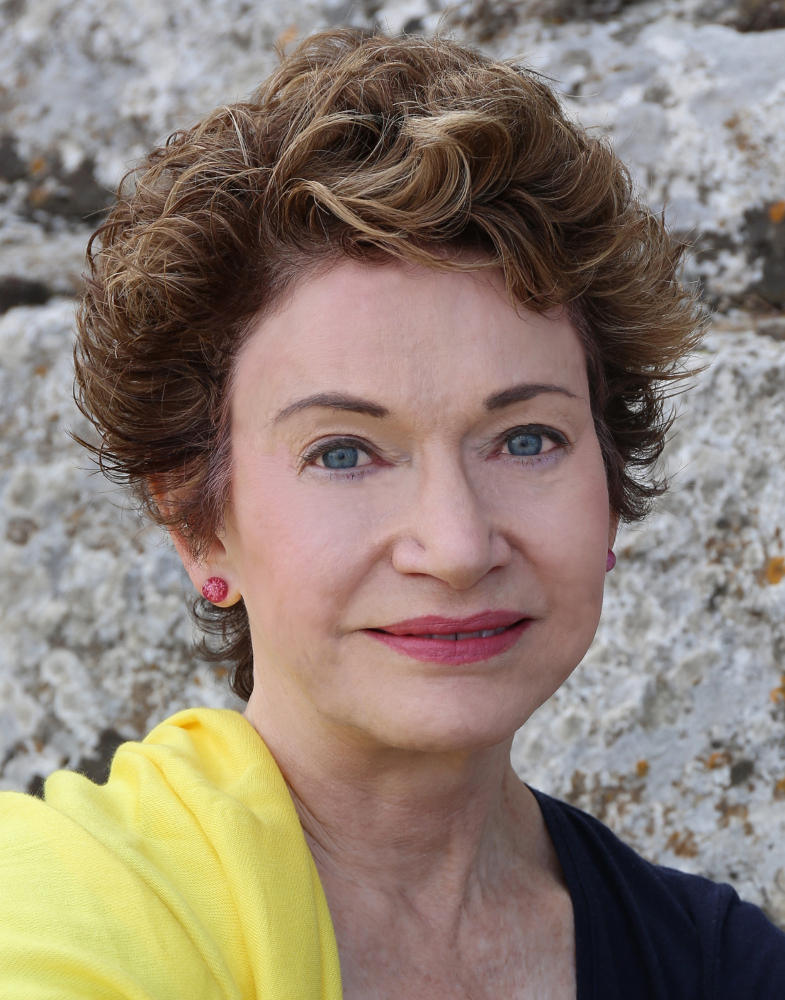
Lucy SannaOne of the many benefits I appreciate about Rotary is the chance to learn new things about Wisconsin from our wonderful programs. Having moved here in 1977 – which made me a “newbie” at my table – I was unaware of the German prisoners of war who worked on our farms in World War II. Author Lucy Sanna filled us in on the history of German POWs in Wisconsin and read the opening of her newly released historical novel, The Cherry Harvest. Her presentation was enriched by historical photos of ships and trains that transported the POWs, camps where they lived and places where they worked.

Sanna acknowledged the aid of experts at the Door County Historical Society and public library, as well as the Wisconsin Historical Society, for her research. She and her daughter stayed with a farm family in the area, and she was put in touch with people who once worked with the POWs. She gained a lot of information from the staff at Fort McCoy.

In 1941 German POWs captured by the British were encamped in Europe. Because of a rumor that Hitler planned to drop bombs on the camps, the POWs were shipped to the United States on empty, returning Liberty Ships used to bring American troops to Europe. They traveled by train to military bases in many states, including Fort McCoy and other camps in Wisconsin. In 1945 there were some 425,000 German POWs in the U.S., according to Sanna.

At Fort McCoy, German and Japanese prisoners were retained in a separate camp within the Fort. The two groups were housed separately but used some shared facilities, leading to hostilities which needed to be managed by camp staff. The camp treated the prisoners well, offering such benefits as typing classes, a library with books in their own language and services provided by the YMCA. Yet officials publicly kept mum about the presence of the POWs in Wisconsin.

With the troops in Europe, Wisconsin residents who had once worked in orchards, canneries and dairies moved to more lucrative jobs in factories. This left farmers and food processing operators without the workforce they needed to make a living.

Sanna’s novel opens in 1944 with a moving scene about a Door County farm woman who is desperate to feed her family. She learns that there are German POWs who will pick cherries for 50 cents per hour (of which they keep 80 cents per day in the form of scrip which could be used in the camp commissary). The woman overcomes fear and conflict in her community to bring these workers to the peninsula for the harvest.

Circus World Museum — Not Just Clowning Around

–submitted by Mary Helen Becker; photo by Mary O’Brien

Scott O'Donnell 8 12 2015Rotarians and guests were enlightened and delighted with Scott O’Donnell’s (right) lively presentation about The Circus World Museum in Baraboo, Wisconsin, and his own lifelong fascination with the circus. Born in Canada, he claims to have moved to Wisconsin to escape  the harsh winters in Canada.

The program opened with President Ellsworth Brown wearing a clown nose while he introduced O’Donnell, Executive Director of the museum, which is a Wisconsin historical site. The music for the day was “The Man on the Flying Trapeze,” including a slide of the 19th  cemtury circus acrobat named Jules Leotard, whose name is used for the tights he developed.

O’Donnell did not have a circus background, as do many performers. Instead, he became interested in the circus as a child and turned into “the crazy kid at the back door of every circus.”  In college he studied Russian history but did his senior thesis on the animal rights movement in the circus.

He began his career as a clown, using dogs in his act. He refers to this period as having a “traveling dog pound,” relating how a woman left him “Tiny,” the largest great dane he ever saw.

Interested in show “business,” he owned his own circus for several years. He entertained the audience with circus history, including the origin of such terms as “making the nut,” or earning enough to pay the bills and get back the nuts which hold the wheels on the circus wagons. He also explained  the origin of pink lemonade, which sold much better at the circus than ordinary lemonade.

He described the daily programs at Circus World and other activities and features that await visitors. It seemed as if everyone in the audience wanted to head straight for Baraboo and the Circus World Museum. His presentation was about as much fun as a visit to the circus, but he left us all wanting more!

Highlights from Culinary Steak Fry August 4

–submitted by Mary Borland; photos by Juli Aulik and Donna Beestman

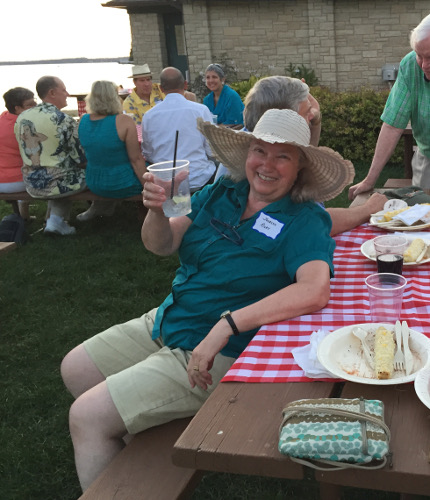
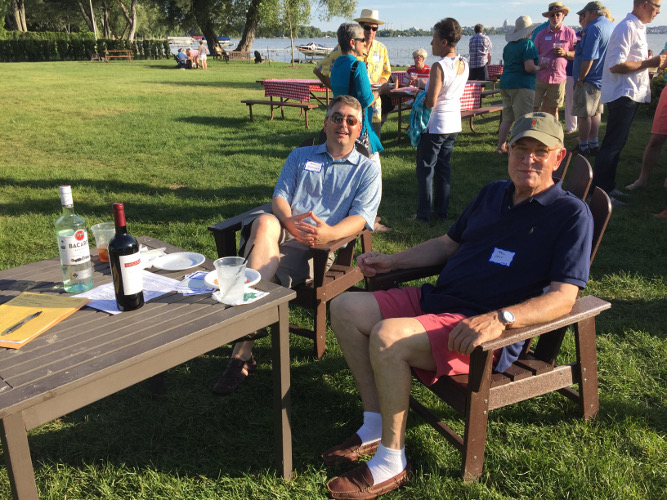
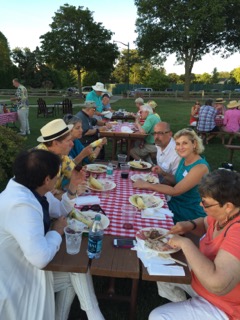
The Rotary Culinary Arts Fellowship Group met for a fun summer gathering on the sandy shore of Lake Mendota the evening of August 4. It was a perfect summer night in Madison! If someone looking to move to Madison was in town August 4, they would have immediately fallen in love with our city just due to the perfect weather.

From left: Dorothy Brown, Randy Banks, Donna Jurek, and Ellsworth Brown

From left: Dorothy Brown, Randy Banks, Donna Jurek, and Ellsworth Brown

Add a view of Lake Mendota and the Capitol, and it can’t be beat! The group enjoyed an Old-fashioned, delicious Lakeside Steak Fry, including appetizers and dessert, under the direction of celebrated Chef Steven Hahn (below) of the Maple Bluff Country Club.

IMG_6743AAA

Chef Steve demonstrated how to make the marinade used on the evening’s steaks and answered a multitude of questions from the group including how to test if a steak is done without piercing it with a meat thermometer and how long to marinate the steaks.

IMG_6810AAA  IMG_6814AAA  IMG_6706AAA

After enjoying the wonderful buffet, guests lingered on the shores of the Maple Bluff Beach House as the sun set and left thankful for the new friends they made and the wonderful food they enjoyed.

Photo2  Photo7  Photo8

If you’d like to join the Rotary Culinary Arts Fellowship Group, please contact the Rotary office – we’d love to have you!

Recent Summer Rotary Events

Saying “Aloha” to Bruna Perez on July 24

IMG_4917

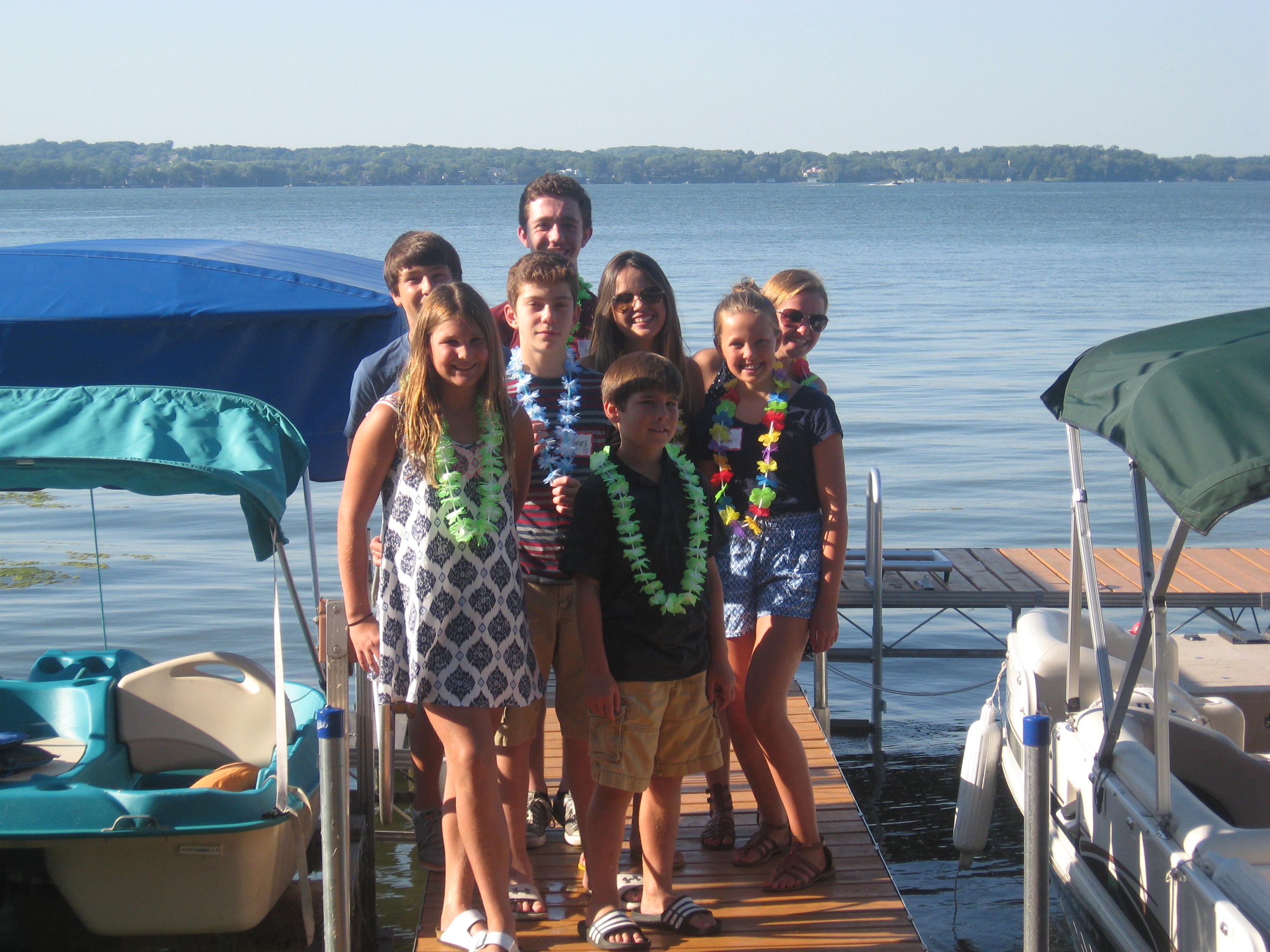
Our thanks to Dick and Noel Pearson for hosting a Going Away Party for Bruna Perez, our Rotary Youth Exchange student who attended Edgewood High School during the past school year.  Her host families were: Terry & Liz Heinrichs, Lynne & Paul Myers, and Trey & Shelly Sprinkman.  Bruna traveled back to her home in Brazil this week.

Bike Tour de Madison led by Paul Riehemann on July 25
013

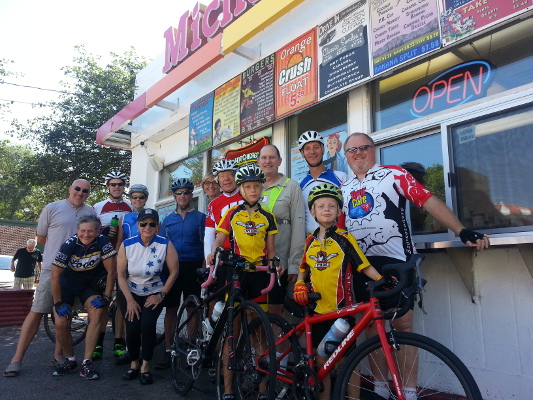
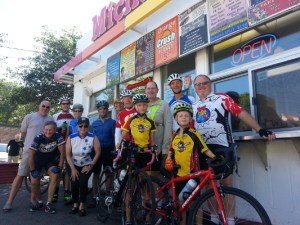
Thirteen members and their guests gathered for a bike ride on July 25 – the weather was beautiful!  Was followed by lunch at Bluephies on Monroe Street.  Much of the ride was in the Arboretum and on bike paths.  Flats – 0; Smiles – hundreds.

Hope you can join us on our next ride! …..August 8, Madison to Paoli, meet at   Break Away SportsCenter at 10am. Until then……

Wine Fellowshippers Gathered at Mixtacki Home on July 28
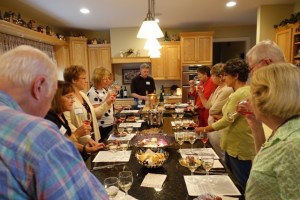
Photo3

Photo5  Photo9  Photo6  Photo10

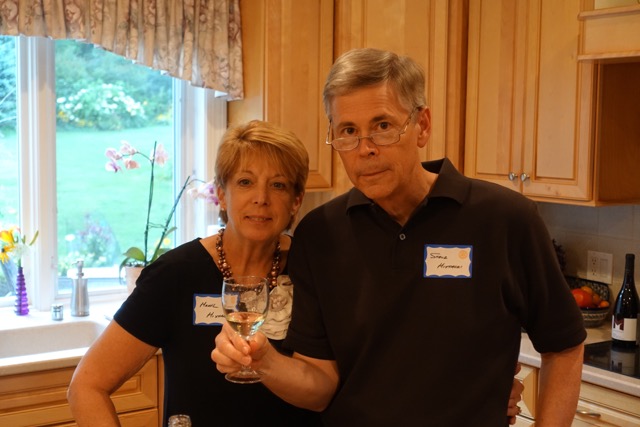
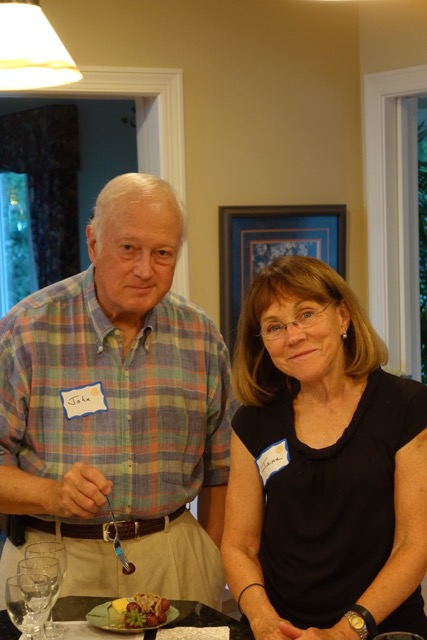
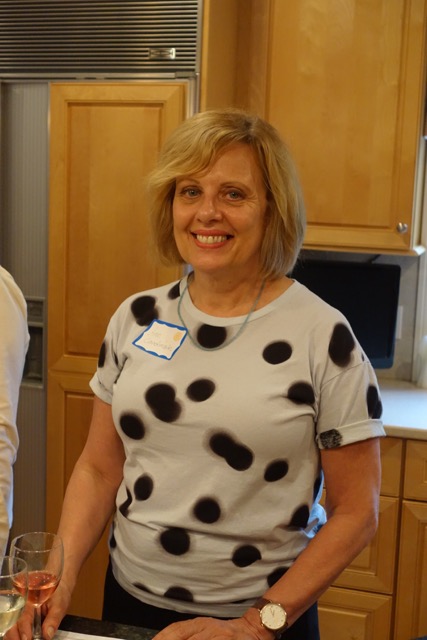
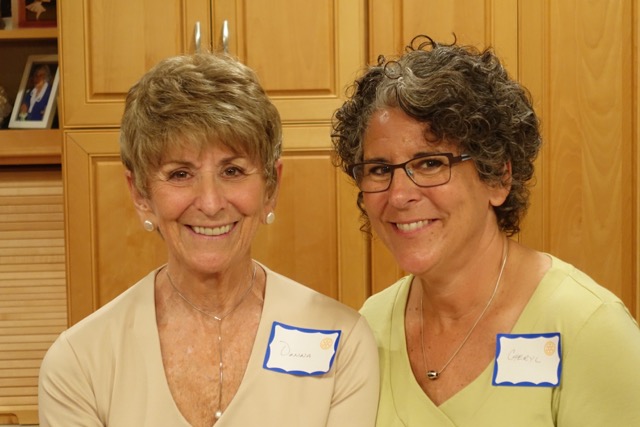
(Photo 1: Meryl & Steve Mixtacki; Photo 2: John & Jane Wegenke; Photo 3: Ann Cardinale; Photo 4: Donna Wittke & Cheryl Wittke)

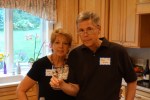
Twelve gathered at the Mixtacki residence to taste wine including Rotarians, spouses, friends, and family.  Meryl Mixtacki had prepared breads, cheese, cold cuts, an olive preparation and chocolate coated strawberries.  These were marvelously displayed and enjoyed by all, complementing the wines tasted.

Three Oregon wines by the Teutonic Wine Company were followed by Fingerlake Region wines of Konstantin Frank fame. Then we switched to the Okanagan valley of British Columbia where we tried three reds and three whites the had been sourced by Mixtacki and Wilson following their visit last year to the region with the Wellensiek’s.

The Oregon white wines included a Pinot gris and two white blends.  One blend contained 60-70% red Pinot noir according to vintage and had a pink blush with small portions of Muller Thurgau, Chasselas and Silvaner.  The other had only had 25% Pinot Noir and the white wine grapes were 50% Scheurebe (Riesling and unknown grape possibly a wild cross and Huxelrebe, another cross).  These two crosses were developed by Scheu in the early 1900’s with rebe meaning wine hence Scheurebe, while Hexelrebe was to honor the grape vine distributor – I guess you cannot have too many wines named after you.  The fascinating thing about the Teutonic Wine Company is their success at being a real little German Winery in the heart of the Pacific Northwest.

Next we traveled to the opposite side of America, to the Fingerlakes district that the Mixtacki’s had visited some time ago.  We tried a semidry and dry Riesling and a Rose, from Konstantin Frank.  Konstantin had migrated from Russia in 1951 with a Ph.D. from Odessa, with his thesis being about Vitis Vinifera in the cold climate.  At that time the Fingerlakes district was firmly in the hands of the Hybrid varieties Crossings of the Vitis Vinifera [the cultivated vines] and an American native [wild vine] Vitis Lambrusca) allowed for the early wine industry to develop in the cold eastern states. In hybrids the european Vitus [species vine] Vinifera [wine yielding vine] provides the quality taste, while the American native wild [noncultivated/wild vitis/vine] provides the weather and disease resistance that is natural to wild American vine species given their millennia of local development.

As we know every Colony of early, and therefore Eastern America, had been charged with producing wine, silk and olive oil for supply back to the Homeland, and despite valiant attempts, including that of Thomas Jefferson, the european Vitis Vinifera just could not be established there.  In 1938 Mr Wagner (newspaper editor, write and amateur vintner) wrote the first book in English on grape growing and wine making – and he was to be the champion of Hybrid grapes that could grow in the cold climate and this resulted in an “East of the Rockies” wine industry.  There developed a prolonged war between Wagner and Konstantin Frank as Frank began to establish that vinifera could grow in the cold Eastern America. Konstantin Frank was said to be stubborn, but he indeed did demonstrate that vinifera could grow in New York.  Four Frank generations have made wine from Vitis Vinifera in the Fingerlakes. His son started the first local quality Method Champenoise under the Chateau Frank label, a grandson developed a second label wine label – Salmon Run. The family wineries won 129 medals in wine competitions in 2013 alone.  Now a Great Granddaughter has an MBA in wine from Adelaide University (Barossa Country of Australia) continuing as the 4th generation of a historic winemaking family.  Meagan Frank is mentioned in the latest Wine Enthusiast N.Y. Wine Country Supplement that arrived today!

Next we moved to the Okanagan Valley region of British Columbia, Canada.  This region makes all vinifera wines well and Wine Spectator recently described it as the second best wine region of the world to visit.  Both Steve and Mike had independently tried these wines when visiting Vancouver and this was the basis of the Rotary trio visiting.  We tried three whites, all Chardonnay.  These included two Meyer’s, their standard and a named vineyard.  We also tried NK’MIP (Inkameep) chardonnay, and all were excellent.  In keeping with the underlying theme of this tasting, this Indian tribe winery was the first to transition to Vitus Vinifera from Hybrid vines in the 1970’s with now a complete displacement of the hybrid vines.

Finally we tried three red wines.  First, a Meyer Pinot Noir that I believe has rekindled my love of Pinot Noir so good was the typical Burgundian Pinot Noir nose.  Next we tried a Laughing Stock Blind Trust red blend with the actual blend under a special flap that needed to be lifted to see the wine balance.  Unfortunately this wine was slightly “corked” so everyone had an chance to see an example of why wines can be returned in a restaurant.  Then we tried a Painted Rock Red Icon, and everyone was told the new winery was indeed an icon (we saw it the day they had a wedding due, and the building and site was glorious).  The owner looks like an icon, with an appearance similar to  Richard Gere.  This man was the person who told us of a way to obtain Okanagan wines as only one winery officially ships to the US.  Using invino.com I have been able to get continuing supplies, but I think you may have to contact them to display that part of their portfolio.

As expected everyone left after an evening of fun and fellowship.

It Was a Picnic and a Pleasure

–submitted by Maria Alvarez-Stroud; photos by Moses Altsech, Dennis Birke and Stan Kitson

20150726_164440

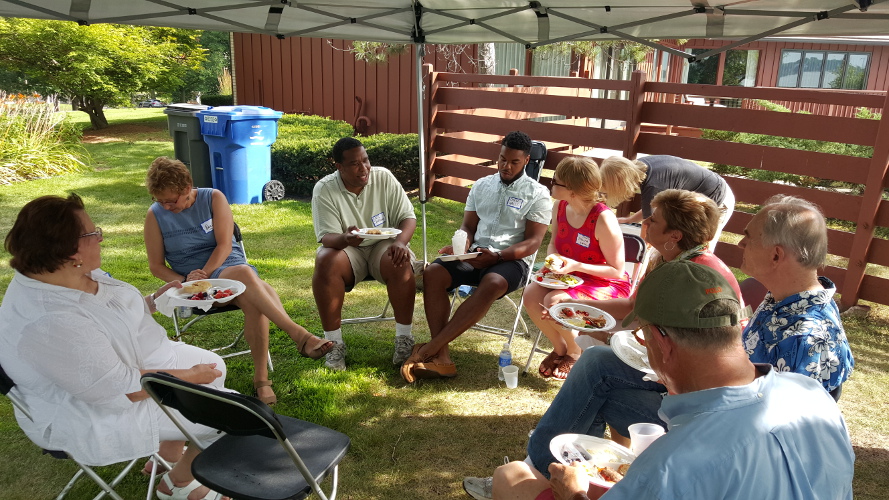
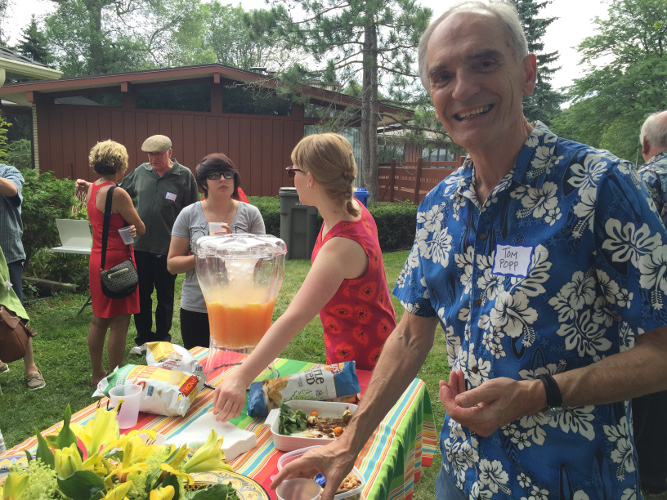
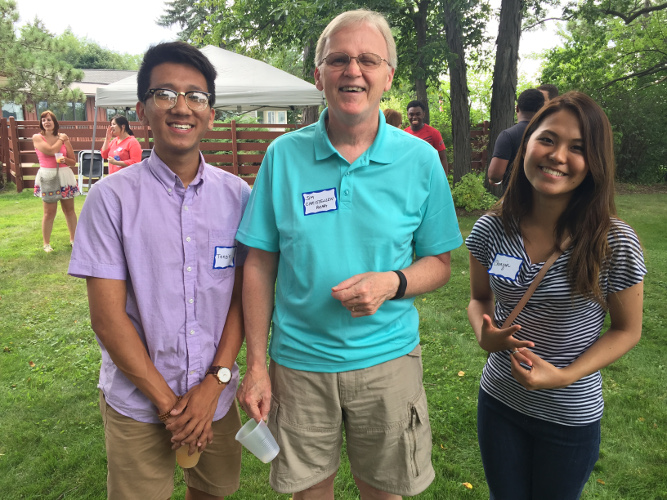
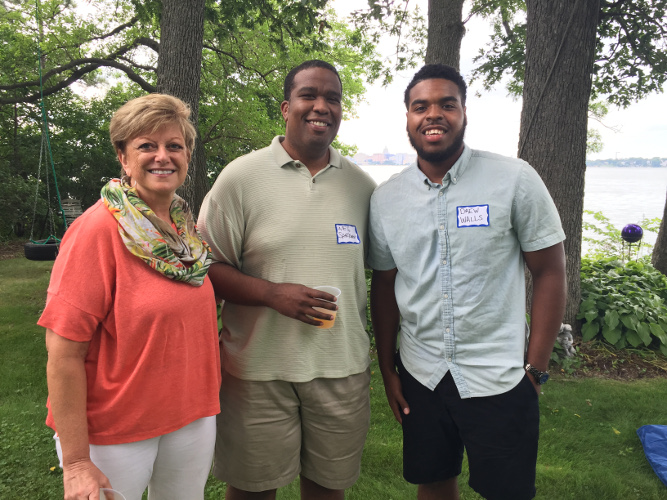
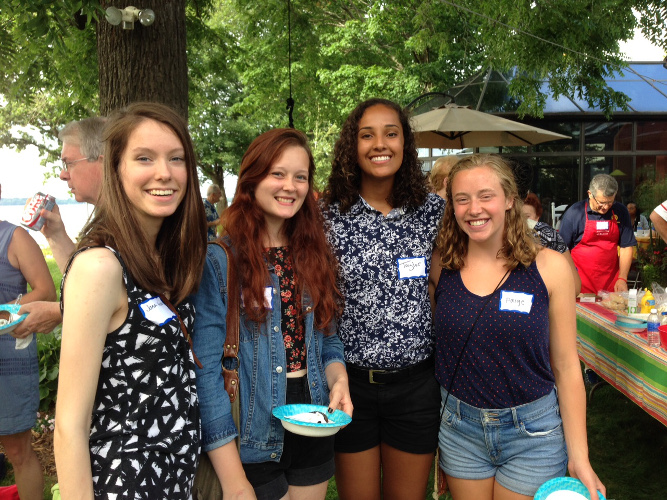
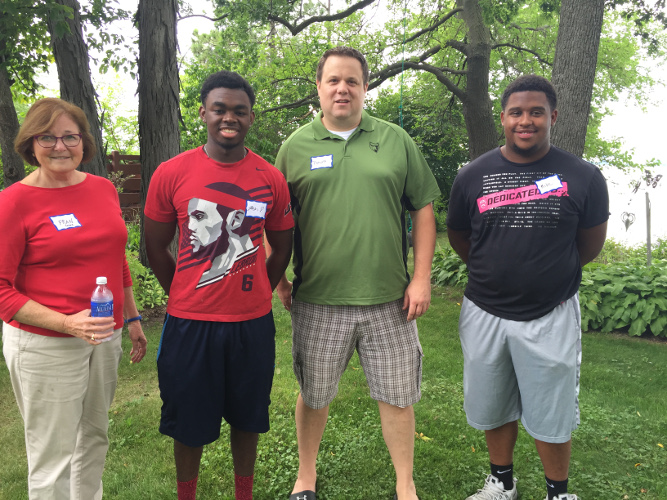
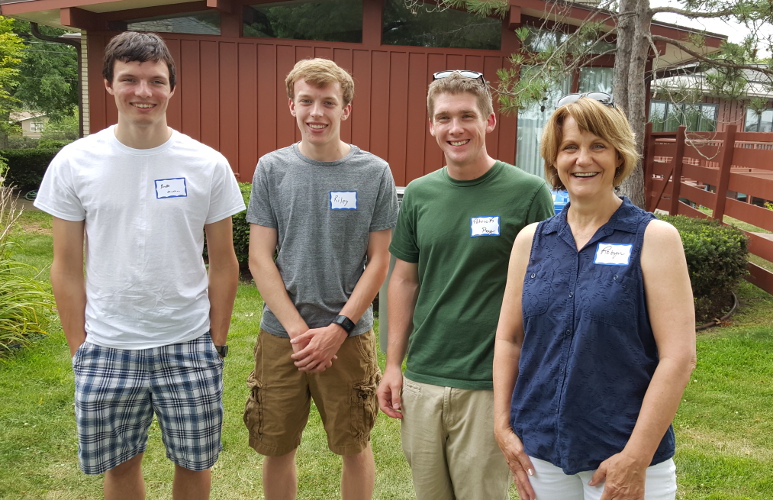
What a great event for Rotary Scholars and Mentors at the home of Nancy and Ed Young on Sunday, July 26.  As hoped for, the crowd included not only new Scholars heading off to various colleges both in Wisconsin and beyond but also past scholars who have continued to be connected to their mentors and to the Downtown Rotary Club.

IMG_0444As intended, the main focus was good conversation and tasty food.  For the Scholars, the picnic gave them the opportunity to get to know each other a bit more and compare notes about their plans for first years at college.  It was terrific to see multiple groups just chatting away, sometimes amongst themselves other times with their mentors at their side.  And for the Mentors, especially those that are new at this, what a great time to hear and see the kind of bonds that can be created.

IMG_0433  IMG_0431  IMG_0355

With well over 90 in attendance, kitchen committee members had their work cut out for them.  But Mentors did a good job in providing snacks, salads and desserts to compliment the hamburgers and brats provided.

20150726_151621  IMG_4930  IMG_4928

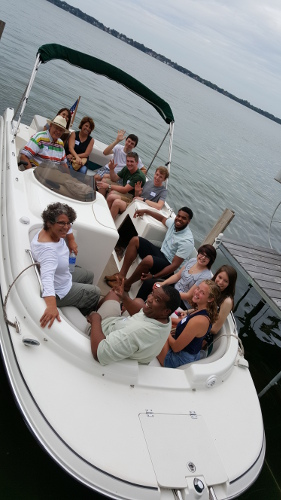
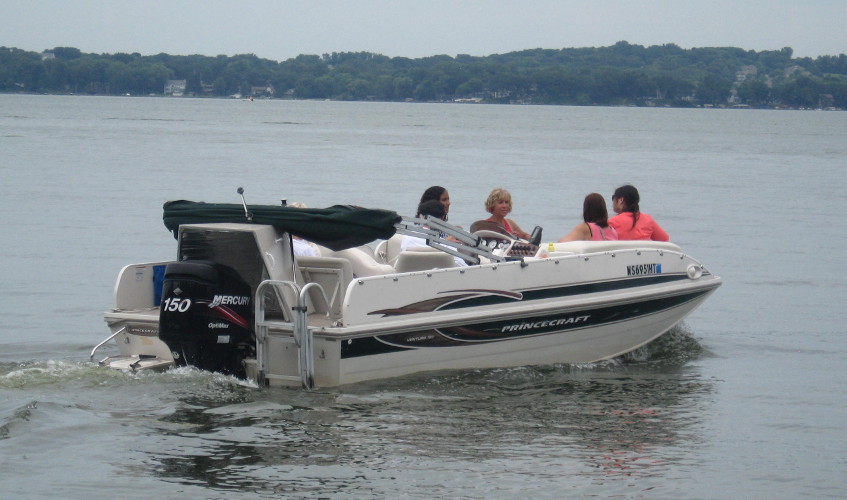
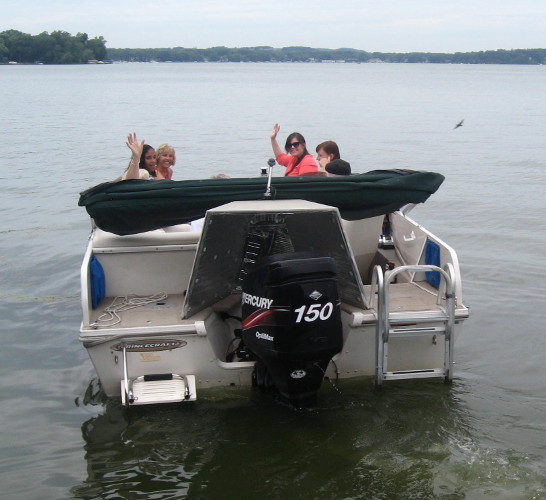
Dick Pearson and Ed Young were of course busy providing boat rides around Lake Monona.  And a couple of us were fortunate enough to actually arrive and leave by Dick’s boat; highly recommended, as he is a fabulous tour guide.

IMG_0424   20150726_150300

Thanks much to Nancy and Ed for letting such a large group of people take over their back yard and for their gracious hospitability.