Category Archives: Rotary Weekly Guest Speaker

August 9: New McKenzie Center: Educating Young People in the Skilled Trades

–submitted by Joy Cardin

From left: Michael Johnson, Alan Branch, Club President Charles McLimans and John McKenzie

Rotarians heard from the key leaders in the Boys and Girls Club of Dane County’s new McKenzie Regional Workforce Development Center that just celebrated its grand opening on July 15.  The center was created to address the labor shortage in the skilled trades industry.  John McKenzie, owner of the McKenzie Apartment Company and donor to the project, approached BGCDC president and CEO Michael Johnson when he realized the only way to meet the demand was to diversify the workforce – which is largely male, white, and aging.  McKenzie says the center will be good for the economy, business, and the social fabric of the community.   Johnson says the $30-million project is the largest workforce training center in Boys and Girls Club history and has spurred similar efforts in 20 other communities.  Alan Branch, the vice president of workforce development for BGCDC, says it is important to interest children between the ages of 9 and 13 in the skilled trades before they eliminate them as a career choice. The McKenzie Center will offer some participants an alternative to college and a path directly from high school to a job.  There will also be opportunities for apprenticeships, education about wealth management, entrepreneurship, and post-secondary education.   

If you missed last week’s program you can watch it here:  https://www.youtube.com/watch?v=9sBXA3PkCo0&t=1574s.

July 19 Program: Changing Behaviors

–submitted by Kevin Hoffman

UW-Madison psychology professor Markus Brauer punctured some myths and practices in programs designed to bring about change and good behavior; specifically, with application to Diversity, Equity, and Inclusion (DEI) efforts. These efforts include providing information in the hopes people will change; targeted initiatives such as mandatory training; and relying on good people with knowledge, interest and common sense. They are all ineffective and sometimes counterproductive.

Methods that have worked include using a structured, studied approach that targets behaviors, audiences, identifies barriers and benefits, and uses social marketing elements to achieve DEI goals. Importantly, changing people’s perceptions of social norms by creating conditions for social pressure and conformity has great benefit for DEI success for marginalized groups. Additionally, having committed, supportive, and positive leadership and adequate resources devoted to DEI is critical.

If you missed our meeting last week, you can watch it here: https://youtu.be/if_Axz-1vcI.

June 28: Annual Changing of the Guard Program Highlighted Multiple Milestones & Accomplishments

–submitted by Sharyn Alden

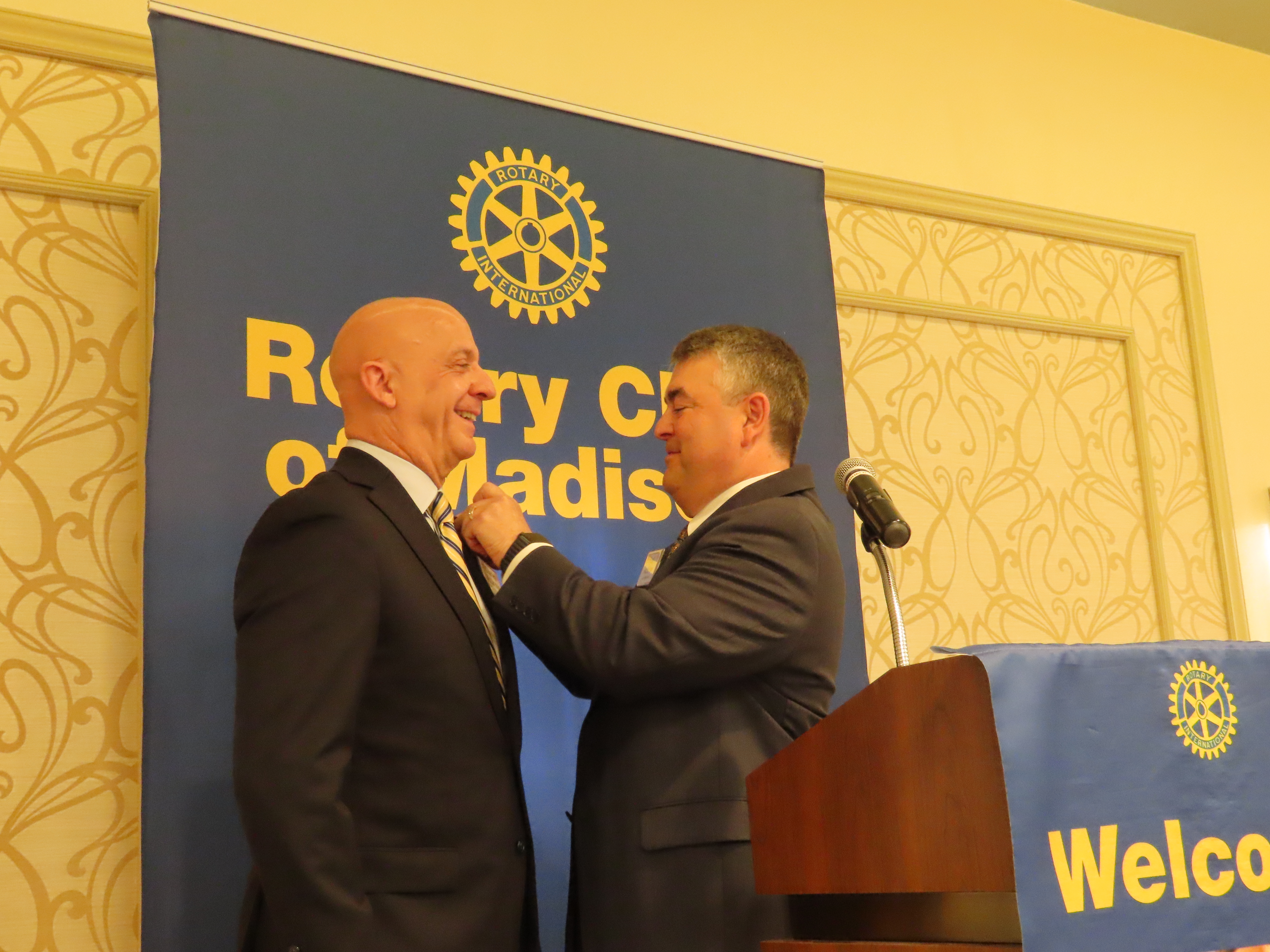
Outgoing Rotary President Paul Hoffmann Transferred the Gavel to the Club’s 2023-24 President Charles McLimans

On June 28, Paul Hoffmann was given a resounding send-off during the Changing of the Guard Rotary Program. He told Rotarians and the 40 guests present that he was proud to have been the club’s 110th president. “Wow, that went fast?” (referring to the past year) I know Charles McLimans is going to be a fantastic president.”

Paul pointed out many ways Rotary continues to give back to the community. He noted, “When I asked someone to do something, I almost always received a yes.” From reaching and exceeding goals when asked to contribute to community grants programs, to heading programs and fellowship groups, he paid tribute to club members for making contributions on all levels of involvement.

“I appreciate that Rotarians stand up in their resolve to make the world a better, different place,” he said.

A brief video roasted the outgoing president by focusing on his attention to numbers, since, after all, he is a banker.

One number of the screen was the #1 –indicating the number of Rotary meetings Paul missed during his tenure as president.

Another was the #42—indicating the number of times he “appreciated” the program presenters over the last year.

Many Rotarians would probably say, we appreciate you, too, Paul!

If you missed our meeting last week, you can watch it here: https://www.youtube.com/watch?v=ZFtn7qcmt70.

June 21: The Importance of Insects in Our Gardens

–submitted by Jessika Kasten

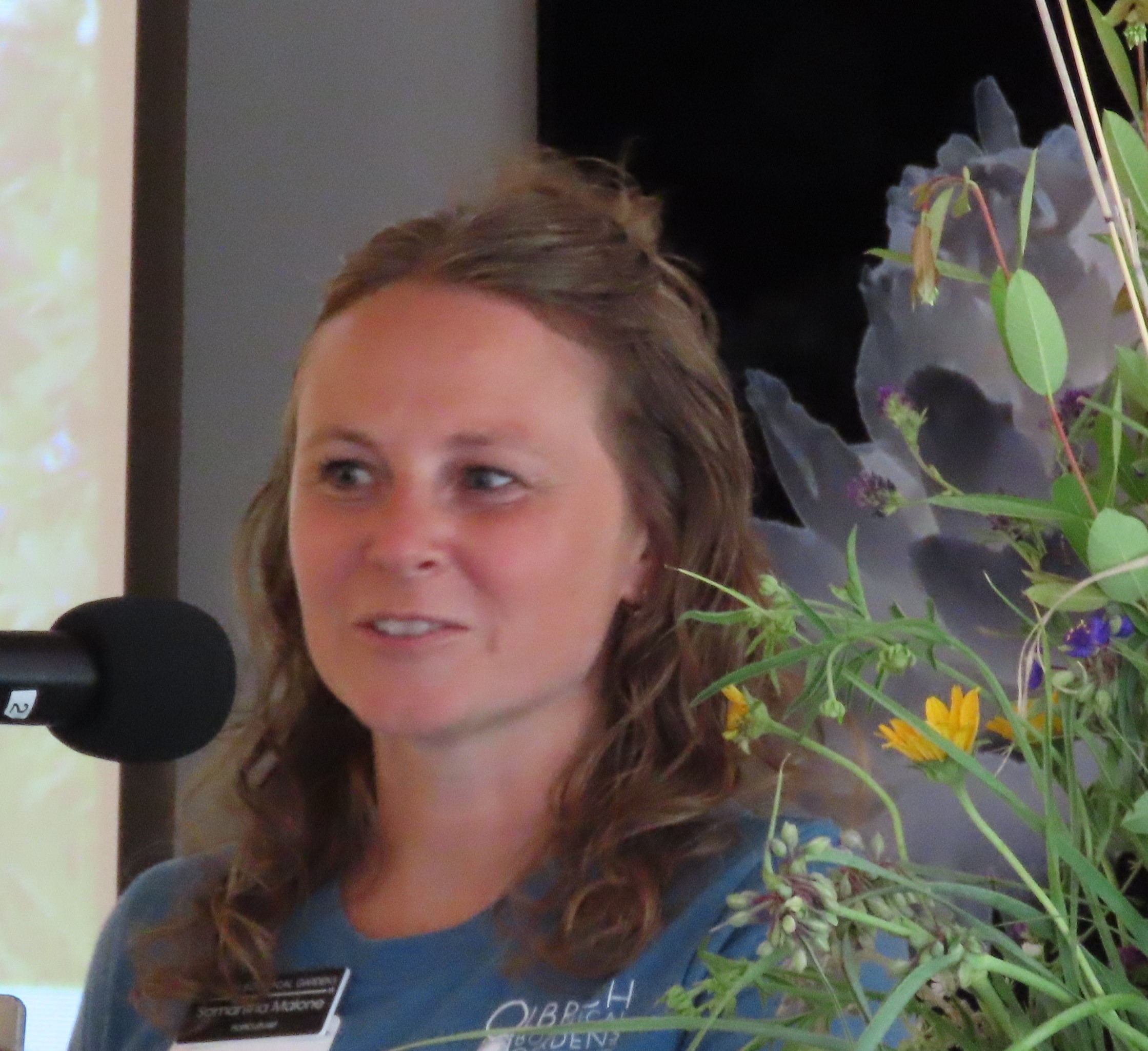
This week’s meeting was held at Olbrich Botanical Gardens, featuring horticulturist Samantha Malone. Sam spoke on the important role inspects play in our gardens, as well as the mutualistic relationship many plants and insects have with each other. Sam also presented on the resilient nature of insects due to their size (they don’t need much food to survive), their strength (many have a strong exoskeleton) and their reproductive systems that allow for millions of eggs. Sam’s calls to action for the group were to keep your fall clippings onsite over the winter and to focus on growing native plants.

Wheelchair Ballroom Dancing Empowering Individuals

–submitted by Larry Larrabee

Our May 24th program was presented by Arthur Sigmund of the Fred Astaire Dance studio in suburban Milwaukee along with two of his para-dancers, Autumn Neugent and Martha Siravo.  They described the mechanics of Wheel Chair Ballroom Dancing and the three, along with the volunteer help of our own Jeff Bartell, demonstrated the basic dance moves of the para-dancer coupled with a walking partner. 

Wheelchair dancing has the advantages of building muscles and improving posture as well as learning to work with partners.  At the end of the program, Arthur and Martha performed a very intricate and dramatic dance that was awe inspiring that resulted in a standing ovation.

If you missed our meeting this week, you can watch the video here: https://youtu.be/jCnP7OyYZI8.

Making Their Mark in Wisconsin History

–submitted by Valerie Renk

Angela Titus shared 10 inspiring stories from 10 inspiring people in Wisconsin History at the May 10 meeting. Titus highlighted people ranging from musician Al Jarreau to surfer Tom Blake.

Jarreau, for example, started in Psychology in Ripon College, ending as a Jazz Icon on the Hollywood walk of fame with seven Grammys. 

Edna Ferber is another example.  Starting in Appleton with a love for the theatrical, she quit school at 17.  She moved from reporting to fiction, winning a Pulitzer for her novel, “So Big” and wrote “Giant” and “Showboat.” 

Inspiring others included:

  • Electa Quinney – First Wis school teacher, part of native mass removal movement
  • Ezekiel Gillespie- Led black community through voting rights movement
  • Gary Gygax – Creator of Dungeons & Dragons from Lake Geneva, inspired $97 billion gaming industry
  • George Poage – Poage graduated 1893 from UW in History as fist African American big ten champion, competing in the 1904 Olympics, first black athlete to win a medal.
  • Jesus Salas – Salas became a farmworker justice leader, forming Obreros Unidos movement, later joining UW Board of Regents
  • Kate Newcomb – One of first woman doctors in 1917, Kate practiced in Boulder Junction
  • Tom Blake – Born in Milwaukee in 1902, Blake is thought to have transformed surfing from a Hawaiian sport to a national pastime
  • Benjamin Butts – came to Wisconsin at 11 with Wisconsin military returning from Virginia. Started barbershop across from Capitol. First Black person on Assembly staff; became an influencer due to his connections.

Titus invited Rotarians to a Black History Walking Tour, Wed, May 17 following the Rotary meeting, ending at 2.30pm.  Reservations required.  Use this link to sign up: https://forms.gle/oDgqNf2du8gLHs3R6.

If you missed our meeting this week, you can watch it here: https://youtube.com/live/j97bdWzZ1dI.