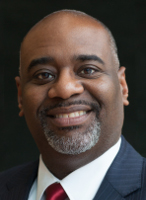
Category Archives: Rotary Weekly Guest Speaker

April 5: Senator Tammy Baldwin: Building Support for Respect for Marriage Act

–submitted by Janet Piraino

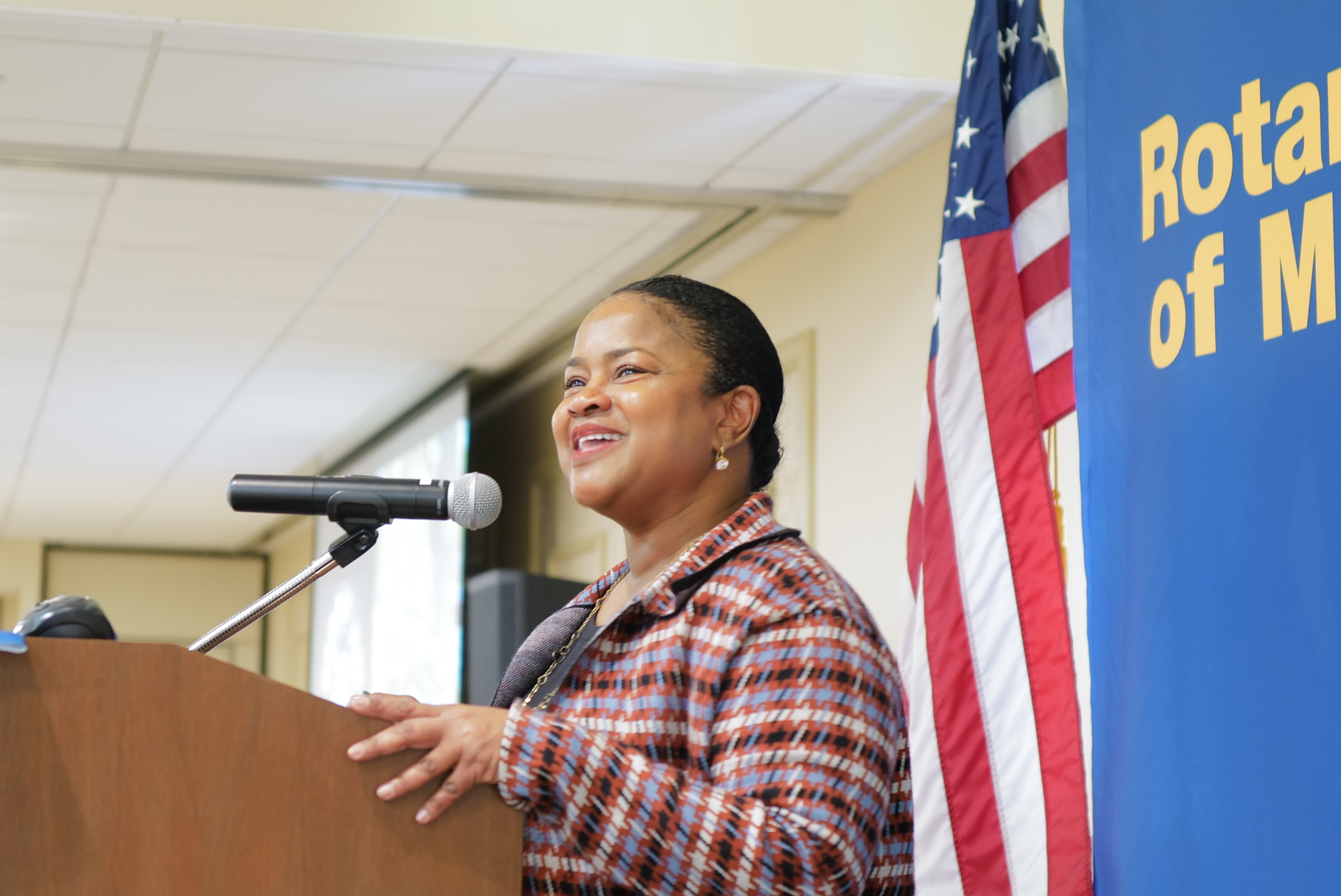
U.S. Senator Tammy Baldwin spoke to our club on April 5th about building bipartisan support for the Respect for Marriage Act, which requires states to recognize same-sex and interracial marriages performed in other states. 

In building support for the bill, the Senator credited the many men and women who had the courage to come out to their families and friends.  She encouraged her colleagues to talk to their loved ones about the issue because she knew every one of them knew someone they loved who was married or committed to their same sex partner.  She also credited the endorsement of faith organizations she never dreamed would support the bill, including Mormon, Christian and Orthodox Jewish groups. 

She ultimately convinced 12 Republican senators to join her Democratic colleagues in voting for the bill, something she said would have been impossible even just a decade ago.  

Our thanks to WisconsinEye for videotaping our Rotary meeting last week. If you missed it, you can watch it here: https://wiseye.org/2023/04/05/rotary-club-of-madison-senator-tammy-baldwin/.
March 22: Madison Mayoral Candidates Weigh In

–submitted by Sharyn Alden

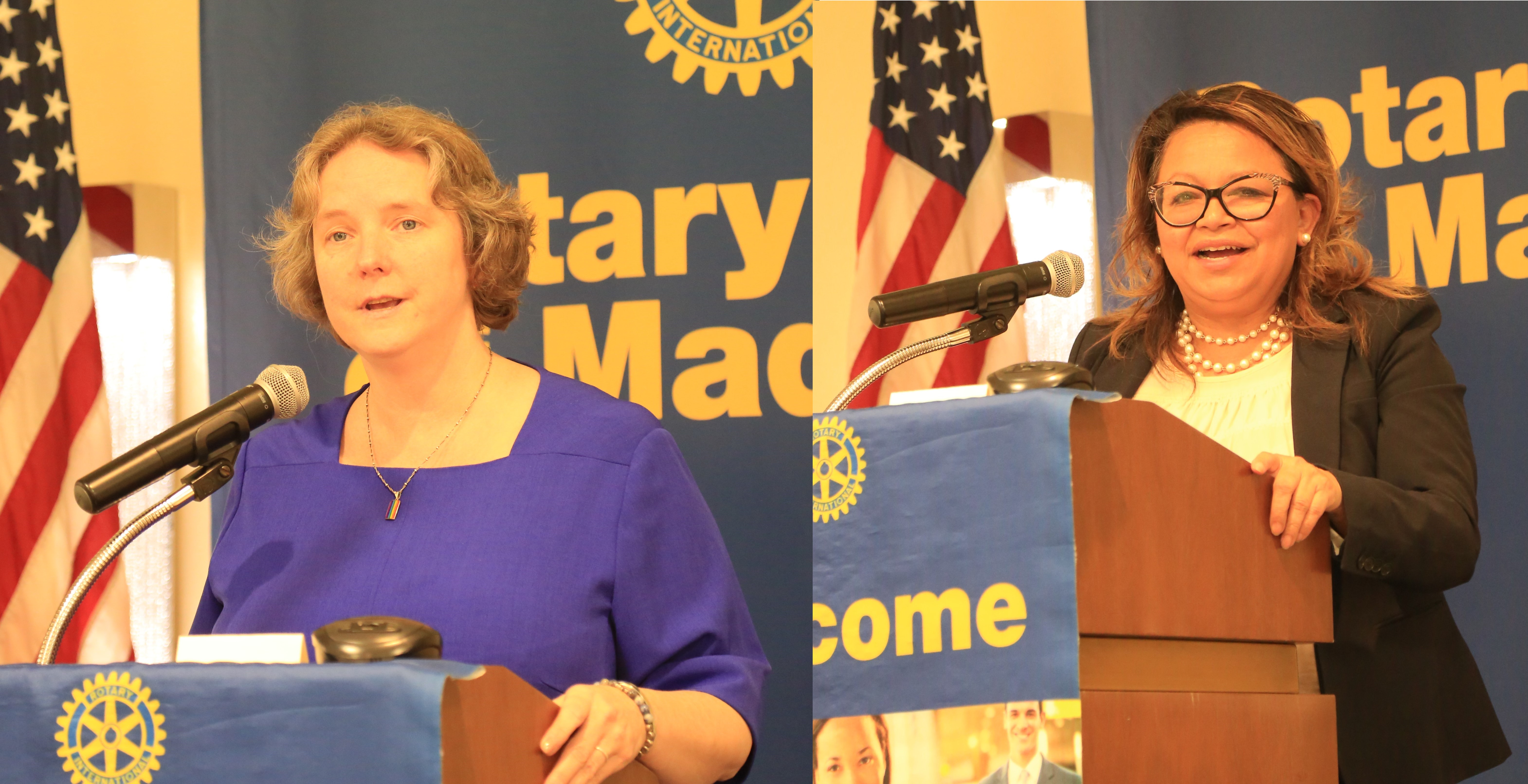
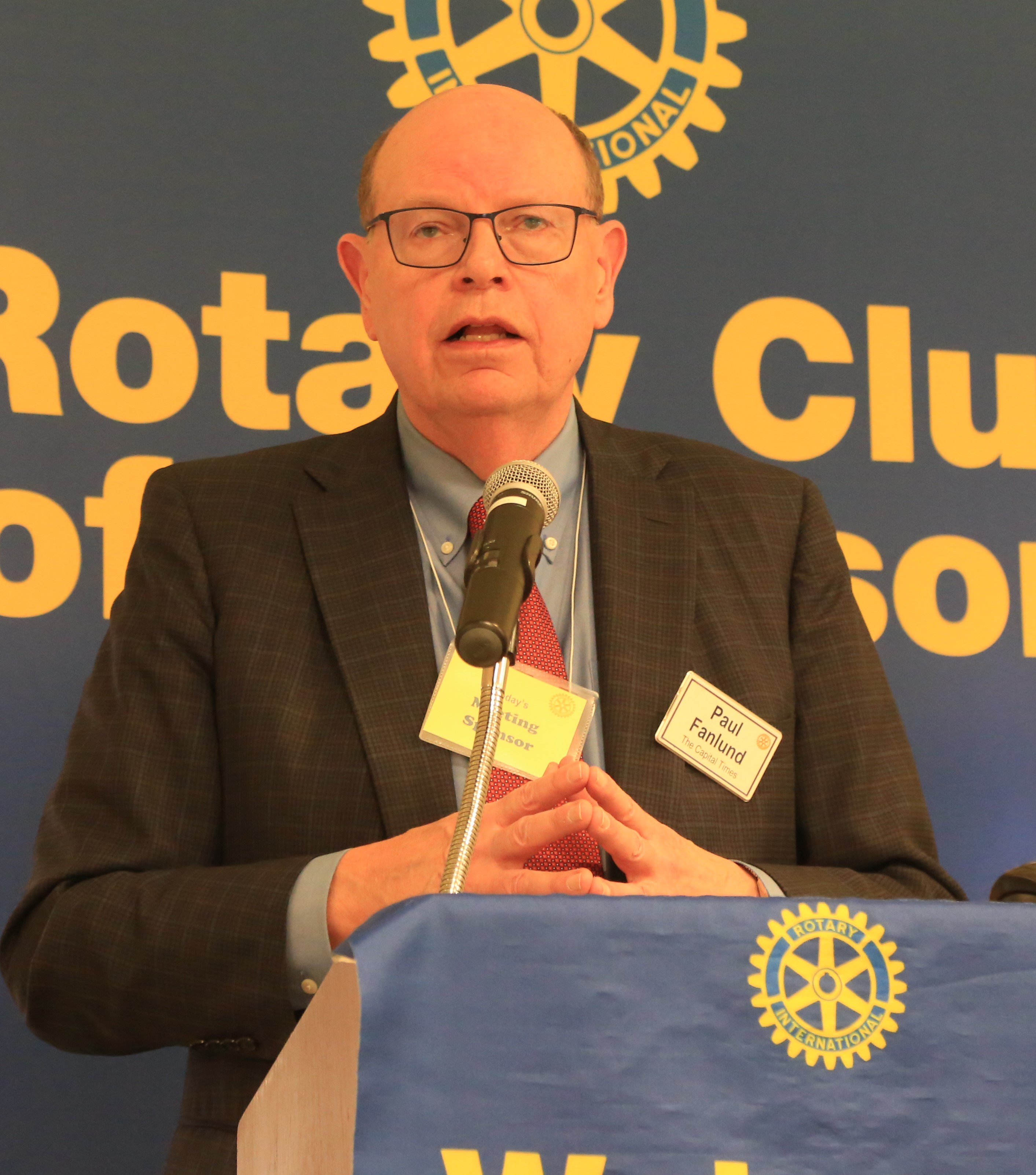
Mayoral Candidates Satya Rhodes-Conway and Gloria Reyes Offer Insightful Views for Madison’s Future

At Rotary on March 22, both Madison mayoral candidates showcased their positions, often punctuated with deep feelings, for the future of Madison.

Mayor Satya Rhodes-Conway pointed out several areas of progress. She pointed out she was proud of Dane County’s vaccination rate (during Covid-19) as being the highest in the country.

Priorities for her administration have included increased housing and transportation choices. Another focus has been on police safety, which she gives credit to Chief Shon F. Barnes, and the 911 mental health program which was implemented during the Mayor’s term in office.

She said housing challenges have been a top priority. “We were under producing housing for years.” Recently Madison has approved 15,000 units of new housing.

She added, “Beyond just having more housing, we need to have affordable places for everyone who wants to live here.”

Mayoral candidate Gloria Reyes expressed concern for the city-wide improvements that didn’t take place when the current administration headed by Mayor Satya Rhodes-Conway took office four years ago. “The perceived changes didn’t happen,” she said.

Reyes, who proudly noted she grew up in Madison, framed her views around the need for a more diverse perspective and improved communications between Madison leaders in government and other sectors.

She pointed out policy projections are one thing, but there’s a need to build real-world better on-the-ground, collaborative relationships. “Plus, we need to get away from the narrative of defunding the police.”

“We need more diverse perspectives so decisions work better for those who are impacted,” she said.

She pointed out the following example around transportation decisions. “They moved the bus stop that was in front of Briarpath in Madison, exactly where young people need it.”

If you missed our meeting last week, you can watch the video here: https://www.youtube.com/watch?v=CQLjAA4xYtU&t=2410s

March 1: Print Media Today and Tomorrow

–submitted by Valerie Renk

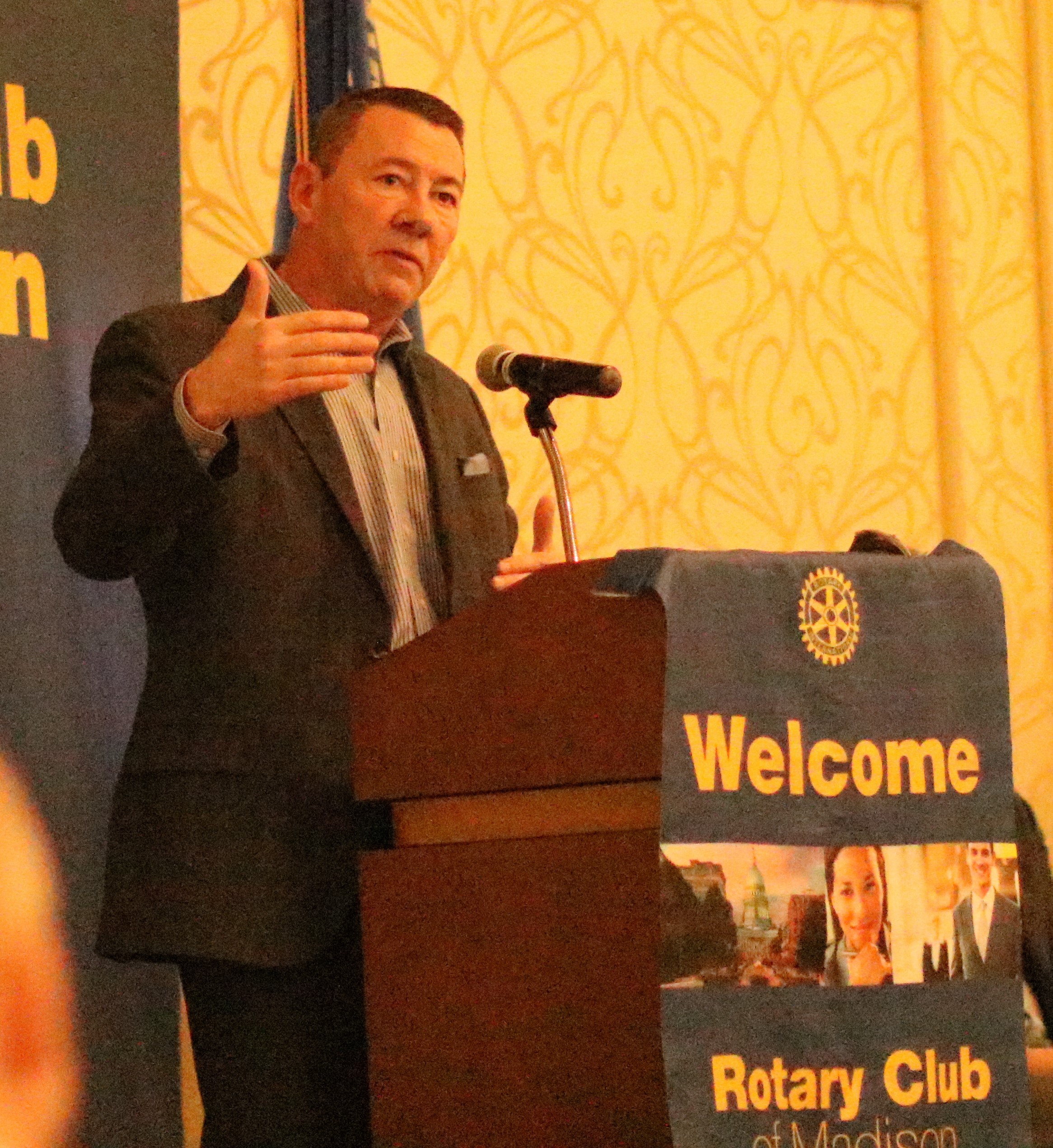
Paul Fanlund told Rotarians March 1 print media is alive and well. Fanlund is publisher of the The Capital Times, and he served the Madison print media trifecta as Wisconsin State Journal Editor and Madison Media Partners VP Operations prior to that. 

“I’ve worked in the same building over 40 years but for three companies,” Fanlund said.

Looking forward, Fanlund consulted with leaders of all three media organizations, who report legacy media may have some areas of decline but will still be relevant. 

Statewide, 84 percent of Wisconsin adults read local print or digital newspapers. A surprising number, 28, newspapers are published five times a week or more; 194 total papers are staffed by 8,950 people.

Print news challenges include youth leaning toward digital platforms, cost/availability of newsprint, plus delivery issues. And digital offers immediacy, intimacy, and flexibility with audio and video enhancements.

Still, Fanlund says he doesn’t buy that old day journalism was better because more people were doing it. 

“A lot of the positions not there anymore were not doing the front-line reporting; you may see more typos now, but editors are prioritizing that front line reporting,” he says.  “We sometimes worked in packs covering the same story.  Good work is done today to avoid that mentality.“

Madison is lucky to have multiple excellent newsrooms and a well-educated readership. We need community support for events, consideration from advertisers, and knowing we are building our success on the size of our audience, not print circulations. 

If you missed our meeting this week, you can watch the video here: https://youtu.be/EJ9z84DB2V4.

February 22: Advocating and Building Community

–submitted by Jessika Kasten

This week, Camille Carter, president and CEO of the Madison Black Chamber of Commerce, spoke to Rotary about the history and mission of her organization. At only 10 years old, the Chamber has made a major impact, serving more than 700 Black business owners in Dane County. The organization’s mission is to promote, lead, advocate and build community, which they do by staying closely connected to their members, partners and community. The Madison Black Chamber hosts a variety of events, expos, awards and networking opportunities, notably hosting the first Black Restaurant Week in the nation.

If you missed our meeting this week, you can watch the video here: https://youtube.com/live/Gj-AWnWFAm0.

February 15: SHINE’s Efforts in Cancer Treatment

–submitted by Larry Larrabee

On February 15th, our Rotary program was a presentation by Patrick O’Connell, Vice-President of Marketing and Communication for SHINE Technologies headquartered in Janesville, Wisconsin, with a manufacturing facility in Fitchburg.  SHINE is a startup company specializing in producing medical isotopes that are used to diagnose and treat various cancers and diseases.

Mr. O’Connell described the difference between fission and fusion, the latter being the process SHINE uses in manufacturing isotopes for both diagnostics and treatments.  The company’s medium range goals include using fusion to process nuclear waste from nuclear power plants that would significantly reduce the amount requiring disposal.

If you missed our meeting this week, you can watch the video here: https://www.youtube.com/watch?v=xpkN3PZYIn8&list=PLD8FIDQlj8al6JvWDHjRYyMuH637UAnM9.