Category Archives: Rotary Weekly Guest Speaker

From Washington to Wisconsin

submitted by Mary Borland; photo by Mike Engelberger
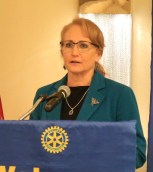
Jo Handelsman 2 21 2018During the February 21 Rotary meeting, we heard from Dr. Jo Handelsman. She spoke to us about her time serving in President Obama’s administration as the Associate Director for Science in the White House Office of Science and Technology Policy (OSTP) in Washington D.C. and her return to Madison to become the Director of the Wisconsin Institute for Discovery at UW-Madison. In Washington D.C., her area included the following:

  • Office of Science & Technology Policy
  • Science Division
  • Levers for Change
  • Initiatives, most notably the “Precision Medicine Initiative”

She advised President Obama about science, which he is passionate about; managed science and technology in crises, the Ebola and Zika crises occurred in her 8 years in D.C.; managed her budget; scanned for gaps and opportunities; championed new ideas; increased visibility of science and technology; led committees/task forces (26 agencies were on the Ebola task force!); and recommended candidates for the Presidential Medals for Science and Technology.

Dr. Handelsman stated how fortunate she was to work for and with John Holdren, OSTP Director, and President Obama, given both of them digest information quickly and are able to articulate it in summary form extremely well. She also shared that diversity in the agency was extremely important for better outcomes.

The levers utilized to accomplish advancements included:

  • Executive orders
  • National monuments
  • Proclamations
  • Presidential Messages
  • Presidential Speeches
  • Event Commitments
  • Federal Agencies
  • Formation of Commissions
  • Compelling Arguments + Stature of White House

Regarding the Precision Medicine Initiative: the 21st Cures legislation contained $4.8 billion for this initiative, had bipartisan support and passed both houses in Dec. 2016.

Now at the WI Institute for Discovery (WID), she is able to continue many things she worked on in the White House.  WID is currently experimenting with new ways to catalyze interdisciplinary research; generate new research collaborations across campus; and build connections with the State of WI. It is exciting to put the word out to the entire campus to obtain ideas and input on particular issues – it elevates creativity and collaboration!

WID has a “Small World Initiative” course, which is a fusion of research and education to crowdsource antibiotic research in the hopes of discovering more antibiotics. Across the world, 10K students are taking this course and providing research to solve global problems.  This includes collecting soil samples in support of developing new antibiotics. Dr. Handelsman encourages us all to visit the WID.

Our thanks to Dr. Jo Handelslman for her presentation and to Mary Borland for preparing this review article. If you missed our meeting this week, you can watch the video here.

Celebrating Love on Valentine’s Day at Rotary

–submitted by Andrea Kaminski

1718_Tommy Ensemble Holiday Video Shoot_02

For Valentine’s Day, Rotarians and guests were treated to a lively performance of love songs from Broadway musicals by five very talented teen performers in the Southern WI Tommy Ensemble. Students from St. Ambrose Academy, Verona Area High School, Edgewood High School and Mt. Horeb High School sang solos and duets from musicals as diverse as Phantom of the Opera, Carousel, Dear Evan Hansen, Motown the Musical, and Natasha, Pierre, & the Great Comet of 1812.

The Southern WI Tommy Ensemble was created nine years ago, when its first members performed in 23 area high school musicals. This year the group has 92 productions on its schedule, with performances at the Overture Center, the Marcus Center for the Performing Arts in Milwaukee, The Grand Theater in Wausau and Wisconsin Public Television.

Students have to audition and be accepted into the company. The full ensemble has 21 students.

One high school senior who has been in the group for three years told Rotarians that he is auditioning for admission to post-secondary musical acting schools. Certainly his three years with the Tommy Ensemble will help!

At the end of the performance, after the standing ovation, a Rotarian in the audience asked for an encore. Clearly the performers did not have a plan for that, but they got up and sang a beautiful a capella version of our national anthem, which they have performed at sporting events.

Our thanks to members of the Southern WI Tommy Ensemble for their musical presentation this week!

IMG_5623 rotary 12


In the “Growth Zone” to End Domestic Abuse

–submitted by Kay Schwichtenberg; photo by Mary Ellen O’Brien

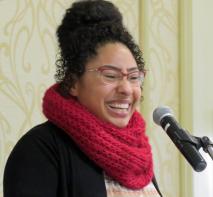
IMG_5168 speaker 2Stephanie Ortiz, a Prevention and Public Awareness Coordinator at End Domestic Abuse Wisconsin has a unique perspective on the dynamics of power that present themselves in both our work spaces and personal lives.   Her work with rape prevention and programming for Native youth informs her intimate view of these power dynamics.

She opened her dialogue with the hope that the topic makes us all a bit uncomfortable.  In her view, the ‘groan zone’ will yield a ‘growth zone’.

The topic of power and its misuse has saturated our reading, news viewing and discussions over the past many months.

The video from Time magazine’s person of the year laid out the raw nature of self-blame, manipulation and shame felt by those impacted by abuse.  Ortiz emphasized the need for ‘turning these moments into movements’.

Ortiz laid out two areas where power dynamics can be understood and changed.

In our home lives, she said that consent is about shared and equal power.  To facilitate that discussion at home, Ortiz encouraged open dialogue on the nuances of consent, the need for all of us to speak up, and teach people how to treat us.

Work life is the second prominent place that needs a cultural change.  Ortiz suggests the following actions that can positively influence that shift.

  1. Clear policies for gender based violence
  2. Ensure that Human Resources has a level of autonomy to address the issues
  3. Provide a complete list of resources available in your community
  4. Create a culture of accountability

Individuals in the workplace should be encouraged to share knowledge and information, watch documentaries and read books with groups.

Ortiz presented a passionate discussion about the need for engaging all of us to address changing any unhealthy power dynamics that may occur in our personal and work lives.

For each of us these issues are personal and framed by our individual experiences.  What matters now is that this is the perfect time for having these conversations.

Resources to Share: www.endabusewi.org; www.ncall.us; www.riselawcenter.org

If you missed our meeting this week, you can watch it here.

Brexit–What Next?

–submitted bu Linn Roth; photo by Margaret Murphy

Copelovitch 1 31 2018

From left: Ron Luskin, Mark Copelovitch and Club President Donna Hurd

At Wednesday’s meeting, Professor Mark Copelovitch gave a highly informative presentation on the history and status of the UK’s planned exit (Brexit) from the European Union (EU) and its potential impact on trans-Atlantic relations.  Historically, the UK has had a tortuous relationship with continental Europe, but, after World War II, Churchill became the greatest champion of European unification.  Despite ongoing domestic ambivalence, the UK finally applied for EU membership, and was accepted in 1973, although the UK chose to maintain its own monetary system.   Subsequently, the EU continued its membership and economic growth for approximately 40 years.

However, the decade from 2007 – 2017 changed all that.  The global recession spawned the growth of isolationism, nativism, and right-wing political factions in much of the world, including the UK and the US.  Relationships with NATO and on-going trade partnerships have been challenged by President Trump, and some of the same economic, regional, and political schisms occurring in the US are taking place in the UK and other European nations.  In a political miscalculation originally intended to shore up his base and undercut competing factions, Prime Minister David Cameron called for a public referendum on whether the UK should stay in or withdraw from the UK.  On June 23, 2016, 72% of UK citizens voted in the referendum, and while the margin for exodus was small (52% to 48%), the consequences of the UK’s withdrawal could be monumental.

For example, the UK was strongly split on Brexit, with Scotland and Northern Ireland voting to stay and with London supporting the EU by an 80%/20% margin.  So potentially, these two countries could try to leave the UK, and many major financial institutions in London are looking to relocate in Europe.  Other European countries, such as Spain, are suffering similar crises, and there is a growing movement within the EU to establish trade and defense relationships apart from the US.  As Professor Copelovitch emphasized, the history of isolationism and protectionism is not a sound or peaceful one, so the US must be wary of exiting its leadership position on the world’s stage.  Since there is no actual legal requirement for the UK to exit the EU in March 2019, there is still the potential for a reversal.  Nevertheless, Brexit seems to serve as a warning signal for all nations to recognize that globalization is here to stay and can only be reversed at our own peril.


Admissions and Recruitment at UW-Madison—How Does It Really Work?

–submitted by Carol Toussaint; photo by Valerie Renk

DSC00741As Director of Undergraduate Admissions and Recruitment at the University of Wisconsin-Madison, Andre Phillips has a key role in determining who will or will not become a student.  He described both the opportunities and obstacles to his Rotary audience Wednesday emphasizing that he works with a team in the Division of Enrollment Management in the Office of the Provost.  Several from this team were guests at the program.  Phillips came to Madison in 2011 after extensive experience in similar positions at the University of Chicago.

Phillips emphasized that he works with a “Wisconsin First” policy as directed by the Board of Regents of the UW System.  “Everything starts with Wisconsin” is the way to think about the job.  Phillips said that it is a big job which starts by being in touch with high schools in the state.  Assuring the audience that the team reads everything submitted with the application, he went through some of the requirements.  Acknowledging that high schools offer a variety of opportunities, he noted that they look to see what a student has done with what was offered.  The importance of organizing thoughts in response to questions asked on the application reinforced the value of writing with clarity.

“We want to know why the applicant wants the UW-Madison but we also need to learn why some of our top students aren’t applying here” was the opening for presenting information for what Phillips referred to as “Wisconsin Prime”.  Saying “we need to recruit more of our own” he described work that is being done starting with high school sophomores through visits to individual schools and bringing these students to the UW.   Outreach is also focused on first generation multi-cultural students.

Rotarians raised questions as to issues of affordability.  Phillips said he was not free to discuss some new plans we’d hear about fairly soon.  In fact, we were sworn to secrecy but without learning any details!

As the program concluded a number of Rotarians were heard commenting on whether or not they would be accepted under the high standards and competition of today.  Andre Phillips would probably respond that each of us should know that a lot is expected but each applicant is fairly judged.

If you missed our meeting this week, you can watch the video here.
Rowing Together in Madison and Dane County: Efforts to Improve Lives

–submitted by Andrea Kaminski

ANNA BURISH   Lynch_Richard  RENEE MOE

As Dane County continues to grow, approaching an estimated 600,000 population by 2040, the United Way of Dane County (UWDC) is working to ensure a high quality of life in which all residents thrive. Two UWDC leaders – Board Chair Anna Burish and President & CEO Renee Moe – updated Rotarians on current challenges facing our community and strategies for addressing them. Past UWDC Board Chair Rich Lynch described a “parallel effort” more sharply focused on housing and homelessness.

As the largest private funder in Dane County, the UWDC in 2005 adopted its Agenda for Change as a way to look at the community holistically, identify specific needs and establish a coordinated philanthropic approach to addressing them. Burish noted that such change management requires the same steps in the philanthropic sector as it does in other areas: pinpoint the needs; propose strategies to solve the problems; identify the desired impact, or goal; set metrics by which to measure success.

UWDC works with approximately 100 nonprofits, many of which on their own do not have the capacity to do this kind of planning or the resources to collect the needed data. Their expertise is in providing services. With a coordinated approach to philanthropy, UWDC helps them carry out their programs in a manner that advances the shared goals while gathering the needed data to measure progress.

Moe said there are 64,000 people living in poverty in Dane County, including 12,000 children. In addition, there are challenges related to shifts in the economy and workforce, technology, demographics, race relations, gender relations and the changing framing of social issues. She noted that the population of people over age 65 is expected to grow 130 percent in the next decade. There are also shifts affecting philanthropy including declines in public funding, changes in tax law related to charitable giving, local business trends, and more choice in how people give, including crowdfunding and designated project support.

Moe believes the “best change happens when you take the best of what people have built over almost 100 years and move it forward.” Working with nonprofits, school districts and government, UWDC is identifying new ways to tackle old problems and boost its ability to shift and allocate resources to address change. For example, as a result of a successful recent program, every health care organization in the county is conducting early childhood screening starting at 6 months in an effort to ensure that all Dane County children are prepared to go to kindergarten. The screening data are being collected in Epic software, so we can measure the success of various interventions. With a relatively small investment, more kids are on track for learning.

Lynch explained that, while UWDC carries out its holistic Agenda for Change, a group of volunteer leaders have created an Economic Stability Council, with representatives of businesses, foundations and government agencies, to launch the parallel, intensive effort aimed at reducing homelessness.

If you missed our meeting this week, you can watch it on our club’s YouTube channel here.