Category Archives: UW-Madison

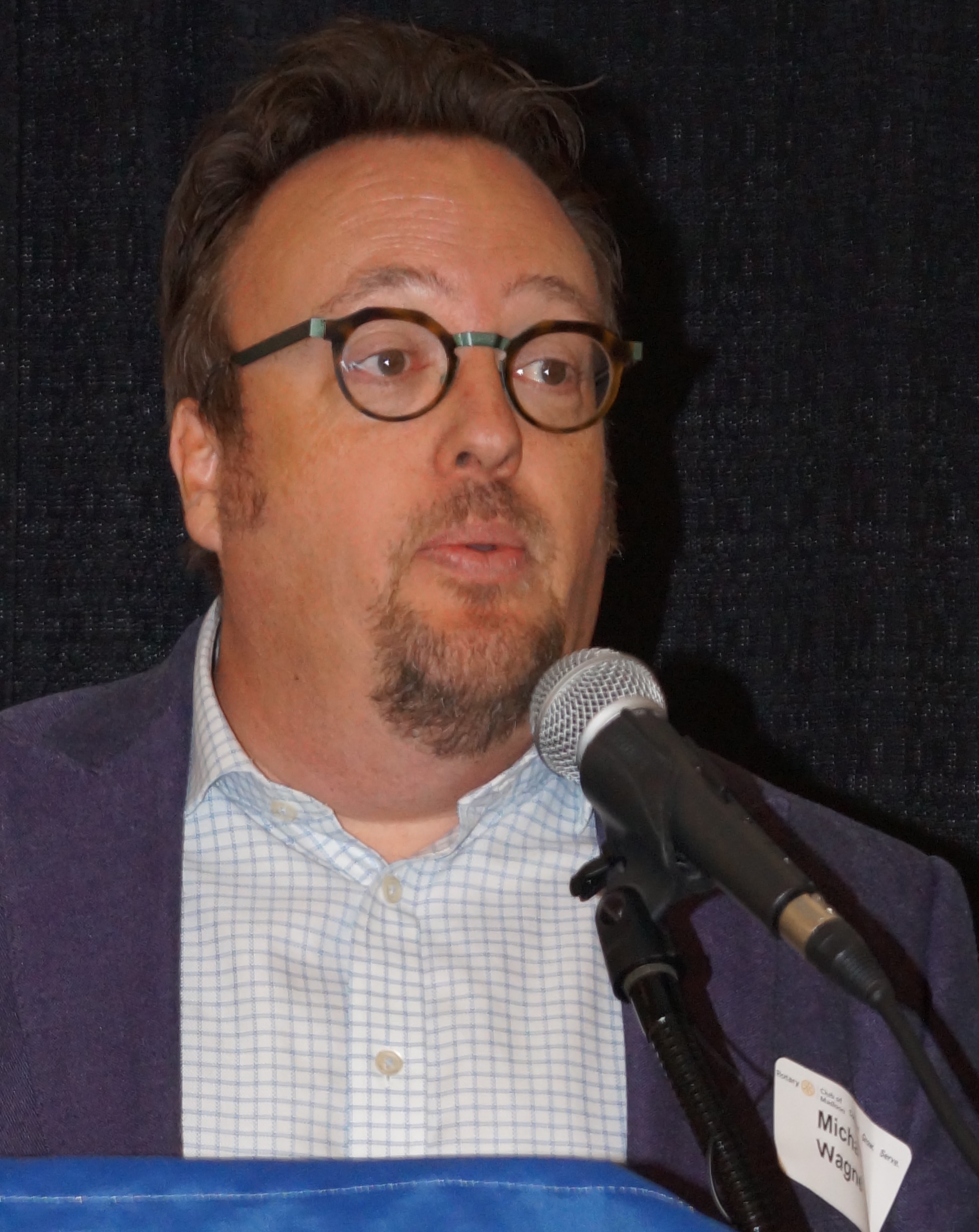
November 13: Wagner on 2024 Election Results

–submitted by Michael Shulman

Michael Wagner is a faculty affiliate at the Elections Research Center at UW-Madison and provided a fresh analysis of the election. His data centric presentation emphasized the impact of voters’ low approval ratings of the current administration (41%) and voter indifference to a rebounding economy. Biggest surprises? 65% of people do not want to talk about politics, Harris lost the popular vote due to weak voter turnout in bright blue states and people who consume information from diverse sources split their ticket, re-electing Tammy Baldwin. Wagner’s presentation is easily followed in the video recording on our club’s YouTube Channel: https://youtu.be/_sb3EH5ntOg.

Do you want to hear more about the election results? The Elections Research Center at UW-Madison is hosting a 2024 Elections Symposium on Friday, Nov. 22. If you are interested, here is a link for more information and how to sign up: https://elections.wisc.edu/2024symposium/.

October 9: Leckrone Shares His Moments of Happiness

–submitted by Ellsworth Brown

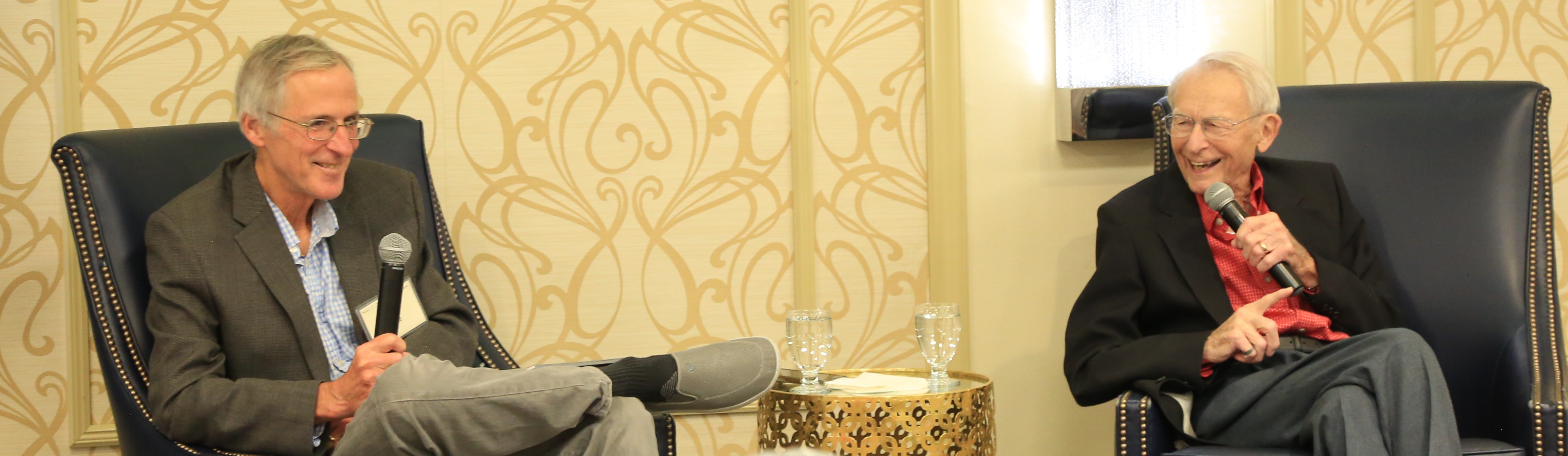
Moments of Happiness:  A Wisconsin Band Story, co-authored by Doug Moe and Mike Leckrone, provided more than a meeting’s worth of happiness for Rotarians as Moe interviewed Leckrone about his fifty years as UW-Madison Marching Band leader.

From a musical family, Leckrone’s inspiration was fueled by a stage-side seat at a non-stop two-and-a-half-hour performance by Louie Armstrong and his band in a small Indiana town.  Armstrong’s commitment to even a small audience was not forgotten by Leckrone.

Moe’s questions triggered endless stories about Leckrone’s life, band, students, and stage creations from 1969 on.  In fact, he began earlier with a story about meeting his future wife in seventh grade and extended it to sixty-two years of marriage.

Many UW Band traditions began accidentally:  “When you say Wisconsin, you said it all” was a commercial injected with “Wisconsin”.  The basketball “pep band” became the UW Varsity Band.  Leckrone’s famous concert entrances offset his boredom with standard entrances.  A career highlight: The 1994 Rosebowl parade where the band played “On Wisconsin” 137 times while passing by Wisconsin fans.  Pride: The band played for all UW sports except fencing (ended too soon).

In closing . . . career and life well-lived, and presentation very funny besides!

If you missed our meeting this week, you can watch it here: https://youtu.be/PJidZnF6uzc.

July 10: Ribbon in the Sky: Soul, Funk, and the Enduring Power of Black Art

–submitted by Kevin Hoffman

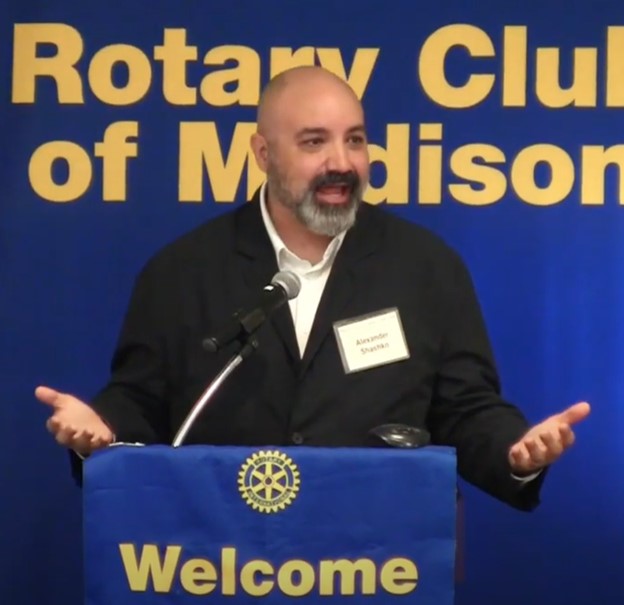
Professor Alexander Shashko of UW Madison and a lecturer in African American history, gave an illuminating overview of the exceptional and significant impact Black art, and music in particular, has had on American and world culture. From the times of the enslaved to the present-day Black music in its various forms (Gospel, Blues, Jazz, Soul, Funk and more) is the communication medium that expressed hope, survival, innovation, identity, joy and greatness through and between generations. If we want to understand the world and young people and what they are experiencing, Professor Shashko urge us to listen to contemporary music – not just the melody but especially the words and what they are saying.

If you missed our meeting this week, you can watch the video here: https://youtu.be/hfpOSng1TVY.

April 3: “Nobody Knows Who Will Win”

–submitted by Ellsworth Brown

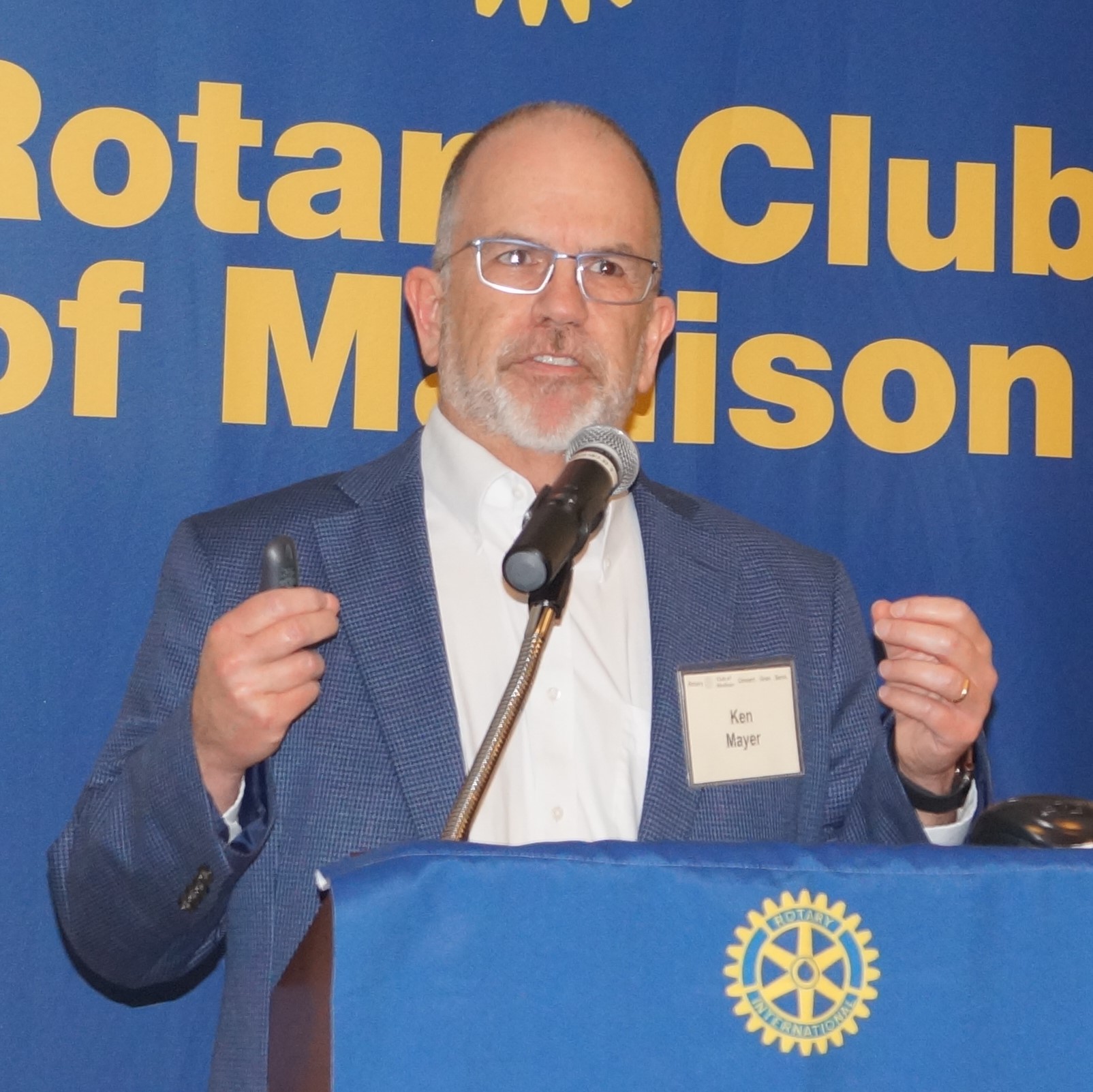
“Nobody knows who will win,” said Professor Ken Mayer in anticipation of the universal question. Thus, he provided a framework for understanding the current presidential campaign.

Once, United States politics honored democratic systems relying on a public ethos of virtue. This “democratic bargain” honored the winner but has succumbed to a new ecosystem fueled by unlimited and unregulated social mediums, falsehoods, AI, punishment in defeat, loss of regulatory structure, and asymmetric polarization.

The forecasting model, however, depends on stable inputs and outputs, so . . . nobody knows.

If you missed our meeting this week, you can watch it here: https://youtu.be/zemNwK94qj8. We’d also like to thank WisEYE for livestreaming and videotaping our guest speaker this week.

Reopening UW-Madison for Fall 2020

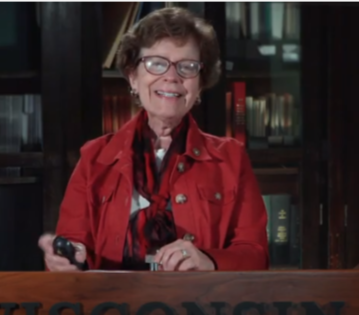
Rebecaa Blank 8 12 20When UW-Madison closed campus in March, 8,000 classes were converted to remote learning. Thirteen days later, 97.5% of classes were online. Closure was a heavy lift, but reopening is a much bigger lift.

UW-Madison faces similar challenges we all are due to the pandemic. Revenue streams are slim, PPE expenses are increasing, and the environment is constantly changing making planning and budgeting difficult. All plans must remain responsive to best serve students, employees and the community.

Currently, UW-Madison will use a hybrid teaching model, blending small-group in-person teaching with virtual teaching for large classes. The class schedule will include classes in the evening, Fridays and Saturdays to keep students physically distanced and classrooms clean. Students will be required to take a pledge to adhere to hygiene protocols (masks, hand sanitization, temp checks, testing, social distancing) and faculty may take disciplinary measures should a student resist complying. Employees must also adhere to these protocols and workstations and work hours have been adjusted to reduce interaction.

UW-Madison is engaged in 320 approved or pending COVID-19 research projects to explore the virus and its impacts. One project is seeking to understand how and why the virus has localized mutations; for example, a strain in Madison is different from that in San Diego. This can help understand if an outbreak is due to community spread or travel into the community.

The university is facing a $150 million budget shortfall, and that’s if a full student body matriculates and pays expected tuition. There will be a long road to financial recovery, and it could be even longer should state support for higher education decrease. Nonetheless, Chancellor Blank is optimistic about the future. “Technology doesn’t replace in-person, live experiences. However, we will be teaching better after this for incorporating technology more fully in the classroom.”

Our thanks to Chancellor Rebecca Blank for her presentation this week and to Emily Gruenewald for preparing this review article.  If you missed our meeting this week, you can watch it here: https://youtu.be/VhwzjUvPtIM.

“Tiny Earth” – The Need for Antibiotic Research

–submitted by Jessika Kasten

Jo HandelsmanThis week, UW-Madison Professor Jo Handelsman talked virtually with the Downtown Rotary about a project she began while working at Yale University in 2012 called Tiny Earth. This important project was developed to increase the number of students pursuing STEM degrees as well as address the growing antibiotic crisis. Researchers estimate that unless we do something soon, by 2050 the leading cause of death will be related to bacteria-related illness.
Over time, humans have become resistant to many antibiotics that treat bacterial infections such as pneumonia, ear infections, strep throat and the like. At the same time, there have been far fewer new antibiotics put on the market. Antibiotics are simply not as lucrative to pharma companies, and many pharma companies felt as though the vast majority of known antibiotics (99%) had already been identified through the soil. They were generally not willing to put in the time and resources needed to find the new 1%.

Tiny Earth began with just 6 students at Yale but has now grown to participation by more than 10,000 students per year. All of the students are working towards the same goal of making antibiotic discovery cheaper and more efficient for pharmaceutical companies. Specifically, they are developing new screening methods and new targets to find that 1% of antibiotics that are either new or different than previously discovered. They will then share those with pharma companies, thereby reducing the cost. This form of crowdsourcing most recently has discovered three new chemical structures that are currently underway. The COVID pandemic forced the research to stop earlier this year, but students are looking forward to getting back into the labs soon to continue their research.

Tiny Earth is harnessing the power of crowdsourcing, a student workforce and the need for antibiotic research, in the hopes they can make a significant impact on bacterial resistance in the future.

If you missed our meeting this week, you can watch the video here.