Category Archives: Weekly Rotary Guest Speaker

Mattoon Addresses Rotary on 2015 Economic Outlook

–submitted by Rick Kiley; photo by Karl Wellensiek
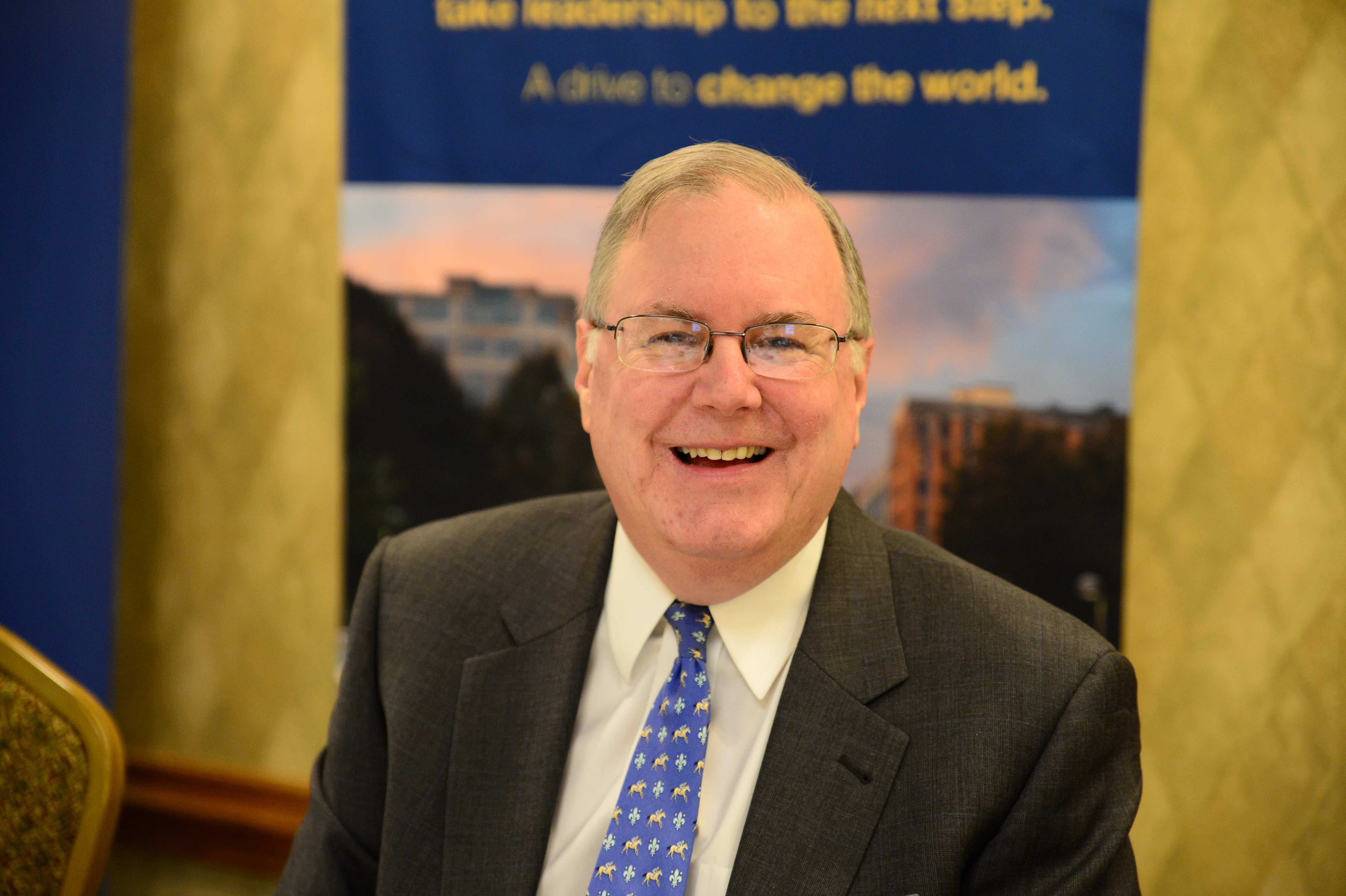
Mattoon Rick

Our guest speaker this week was Rick Mattoon, Senior Economist and Economic Advisor for the Federal Reserve Bank of Chicago.  Mr. Mattoon’s talk, “U.S. and Wisconsin Economic Outlook for 2015”, reviewed the current state of our national and local economy as it emerges from the Great Recession of 2008-2009.

The past year has seen the strongest GDP growth since the recession, with second and third quarter growth of 4.6% and 5%; however, this growth is weaker than the recoveries following the recessions of 1981-1982 and 1974-1975.  This slow recovery reflects a variety of conflicting trends.  For example the oil price collapse of approximately 50% has generated a $550 annual household benefit, but wage gains are modest; employment has reached prerecession levels, but increases in wealth are the result of stock market gains, so household wealth increases are unevenly shared.

There are a variety of factors to watch in 2015 that will influence the near future.  Examples include a number of states increasing minimum wages, the prospect of continued growth of construction spending after several years of below average investment.

With regard to Wisconsin, the southern part of the state is closely tied to the economy of the Chicago area, which has underperformed national growth.  And, while personal income in the state has recovered well, only half the jobs lost in the recession have returned.  The business climate in the state is generally positive, about the middle of the pack among the states.

Mr. Mattoon concluded saying the U.S. economy has good momentum and should have GDP growth in the coming year approaching 3%.  Wisconsin, however, has made slower progress since the recession.  Our biggest challenge as a nation will be weak international markets as a result of their slower growth and the strength of the dollar.
CALS Dean Tells Club of Today’s Impact and Tomorrow’s Challenges for Wisconsin Agriculture

–submitted by Jerry Thain; photo by Jeff Smith

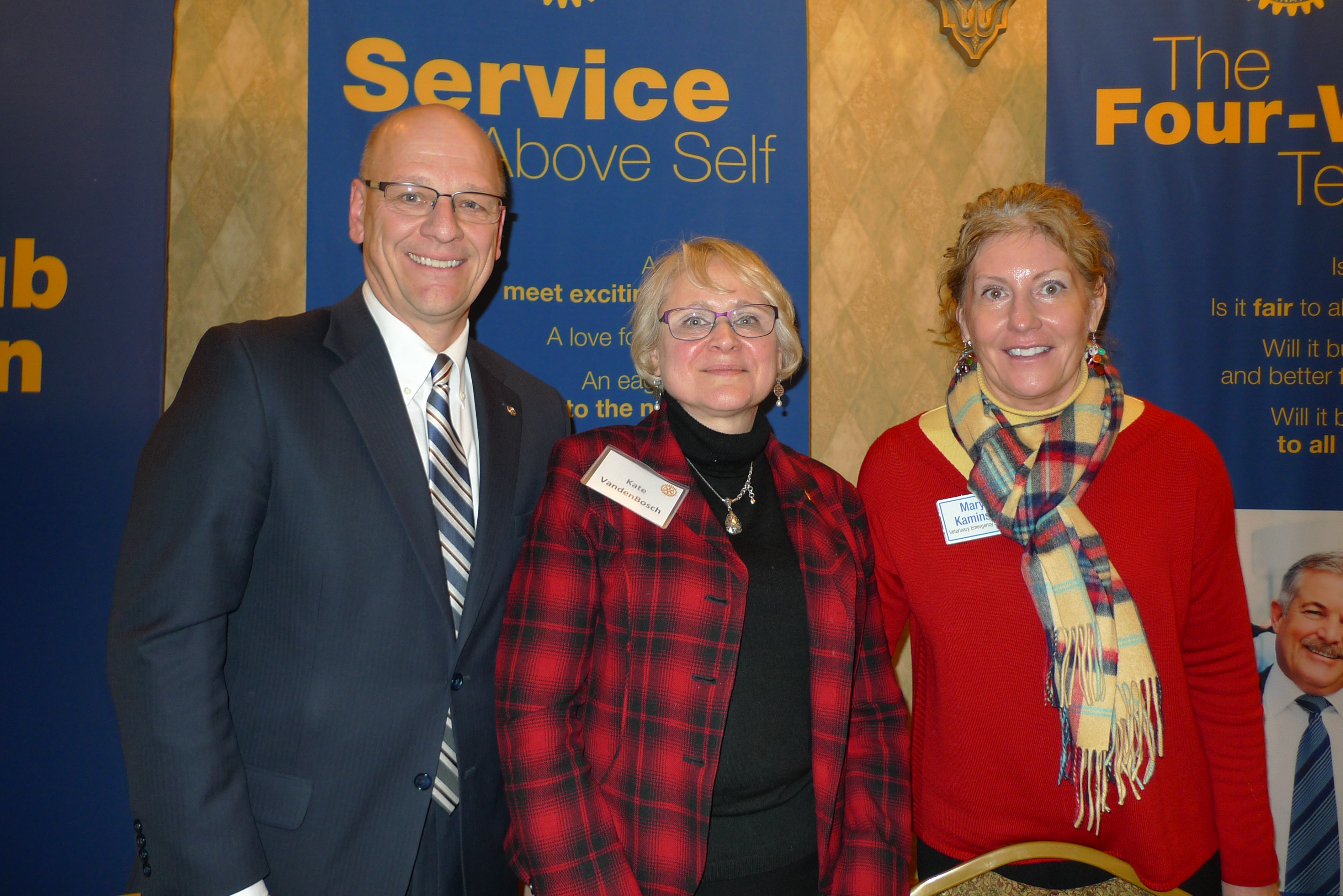
Pictured from left: Club President Tim Stadelman, Dean Kate VandenBosch and Rotarian Mary Kaminski

Pictured from left: Club President Tim Stadelman, Dean Kate VandenBosch and Rotarian Mary Kaminski

Kate VandenBosch, Dean of UW-Madison’s College of Agriculture and Life Sciences, presented a brief but far-ranging summary of Wisconsin agriculture to Club members on January 28.  She noted the efforts of Governor William Hoard to promote the dairy industry in the 1800s and the contributions of Professor Stephen Babcock who developed the butterfat test for milk in the early 20th Century.  The economic impact of agriculture in Wisconsin is huge; it composes 11% of the state’s economy, with 78,000 farms producing $88 billion in total sales. Beyond dairy products, Wisconsin agriculture is a leader in production of cranberries, potatoes, corn, snap beans and other fruits and vegetables.  Our largest agricultural export is ginseng root. Most farms in the state are family owned and operated.

As to the future, Dean VandenBosch noted the “modest goals” were to achieve greater productivity, increased nutrition, and greater variety of foods to help feed an expected world population of about 10 billion people by mid-century, while maintaining environmental stability and animal welfare.  She noted the likelihood of an increased emphasis on genetically modified crops in future years and gave examples of CALS staff and programs working toward better agriculture such as developing meats “beyond brats” to go with Wisconsin’s special artisanal cheeses and the “field to food-bank’ program that delivers surplus food to the needy.  She concluded with examples of efforts by CALS faculty and staff to improve food production and security around the globe.

The talk surely left Club members impressed with the current state of Wisconsin agriculture and the ongoing efforts to maintain and possibly improve the industry’s vitality and contributions to the state’s well-being.


Rotarians Called to Action on Hiring People of Color

–submitted by Paul Fanlund; photo by Jeff Smith

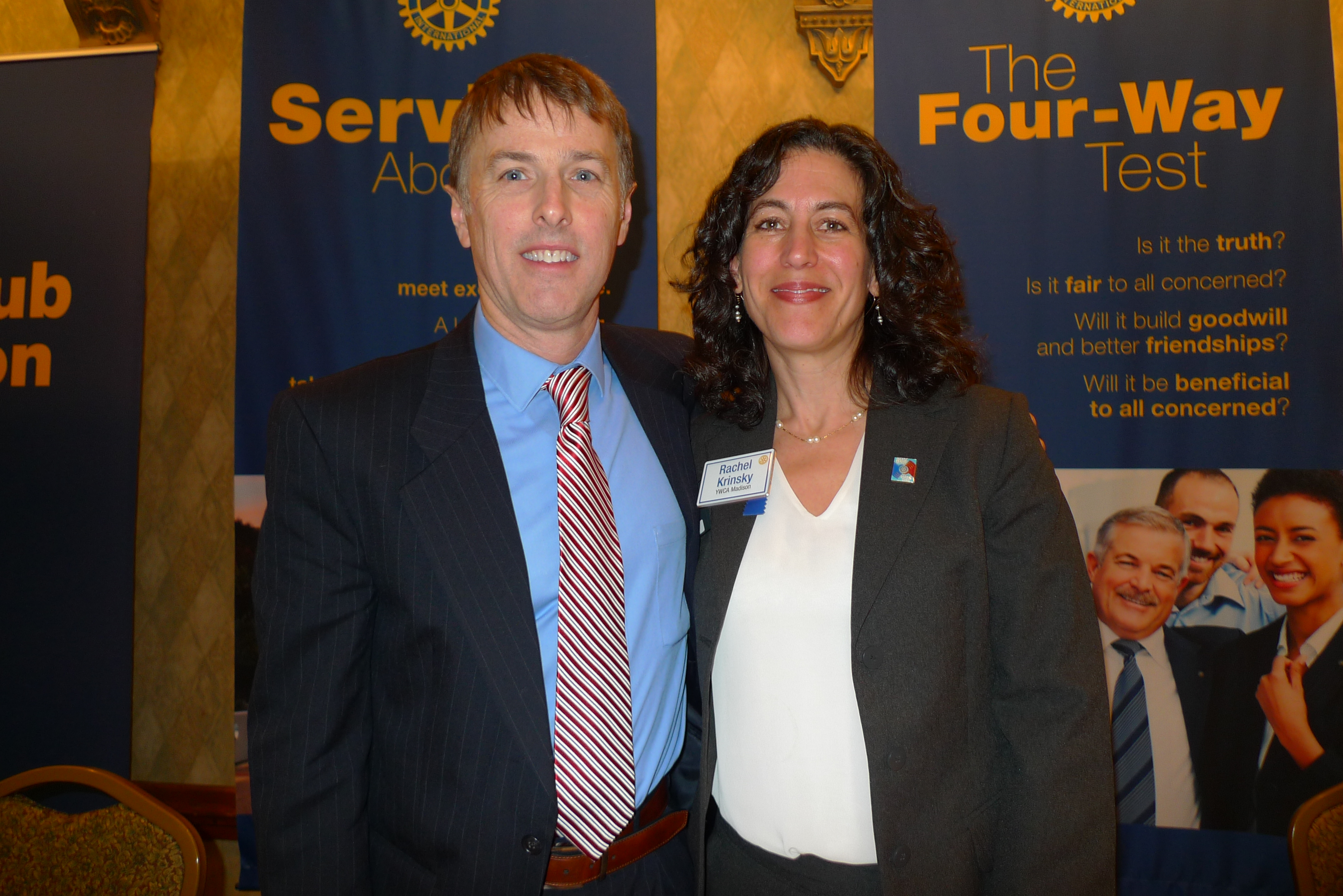
Taylor Krinsky

Downtown Rotary is filled with civic and business leaders who influence hiring decisions as well as the culture within their organizations, Wednesday’s speakers said.

And so businesspeople in Rotary should help accomplish a community goal of increasing the employment and earnings of at least 1,500 currently unemployed or underemployed African-American parents by 2020.

That goal was set out in a joint presentation by Ken Taylor, executive director of the Wisconsin Council on Children and Families, and Rachel Krinsky, CEO of YWCA Madison.

The two said progress will require a special level of effort by business leaders; it will not occur naturally. Leaders must be flexible and creative, Krinsky told the gathering: “Just being fair,” which Rotarians have no doubt been, “has not gotten us to where we want to be.”

Taylor told the group that while pursuing diversity is the right thing to do, it is also an imperative because a more diverse, younger generation will drive business growth in coming years.

The two listed what will be required for success:

  • A commitment by corporate, public, nonprofit, health and higher education employers to significantly increase the diversity of their workforces;
  • Outreach to connect with targeted families;
  • An increase in the number of jobs that pay family-supporting wages;
  • Additional public and private investment in the agencies that provide job training and placement;
  • On-the-job supports to encourage retention and advancement of targeted new entrants to the workforce.

The two also focused on what business leaders should emphasize: leadership, skill building and hiring practices.

Under leadership, they pointed to a personal and organizational commitment, communication, strategic planning, tenacity and accountability.

For Rotarians to develop skills and get educated, they suggested reading, training and workshops, talking with credible peers who have expertise and using consultants.

And employers should review hiring practices, network, review position descriptions and explore the question of “fit.”

 If you would like a copy of the PowerPoint presentation used by this week’s speakers, contact the Rotary office at rotaryoffice@rotarymadison.org, and they will email you a copy of it.

Imagining to Remember

–submitted by Donna Hurd; photo by Jeff Smith

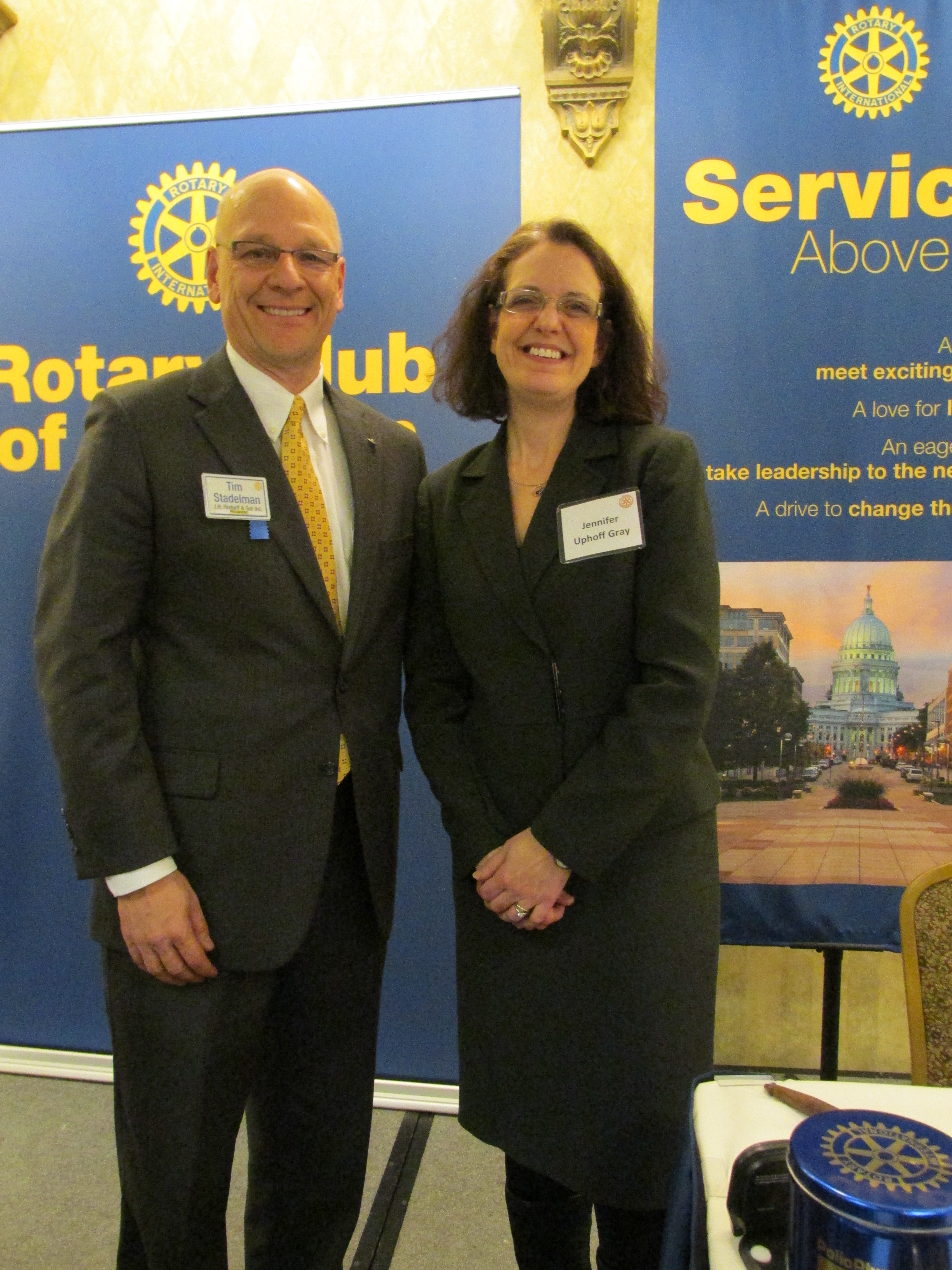
President Tim Stadelman and Jennifer Uphoff Gray

President Tim Stadelman and Jennifer Uphoff Gray

An enthusiastic, Jennifer Uphoff Gray, Artistic Director of Forward Theater Company presented a side of the artistic community that few know existed…its commitment to the community by educating, entertaining and connecting the community.  In its 5th season, the Company strives to connect the work they do as artists to the community.  Its latest endeavor tackles the subject of dementia, in general, and Alzheimer’s (the most common form of dementia) in particular.  Through its partnership with the University of Wisconsin Hospitals and Alzheimer’s & Dementia Alliance of Wisconsin, the theater is taking on an integral part in the understanding, communication and ultimately addressing alternative treatments for this debilitating disease.

Example after example was presented to highlight the profound role the Arts play in Alzheimer’s treatment.  Clinicians and researchers alike are touting the benefits realized through music, art and story-telling therapy for patients and caregivers.

The Theater’s mission of connecting the work they do as artists to the community will begin on stage January 15 – February 2 with the presentation of “The Other Place,” an off-Broadway show about a research scientist on the cusp of the development of a new dementia drug as she struggles with personal hardships. Extending social conversations beyond the stage, the company offers talk backs (post-show discussions), pre-show lectures and the “Play Club” (in-depth discussions with the theater professionals) providing theater goers an opportunity to engage in thoughtful discussion about the subject matter at hand.

The culmination of this collaboration, will take place on Sunday, February 15, 2015, at Promega Corporation, 5445 E. Cheryl Parkway in Fitchburg from 1:00pm – 4:00pm.  “Imagining to Remember”  will be an interactive program for the general public, as well as caregivers, professionals, and others who work with people living with Alzheimer’s and dementia. This interactive event features Professor Anne Basting, Director of the UW-Milwaukee Center on Age & Community and Founder of TimeSlips Creative Storytelling. TimeSlips is a method of engaging with those with memory loss using imagination and storytelling. Attendees will have the opportunity to experience specific creative engagement practices including Poetry, Visual Art, Movement and Music. A moderated Q&A panel will follow, featuring Anne Basting and other leaders of this innovative approach to connecting to those with Alzheimer’s and dementia.

We applaud the efforts of Forward Theater Company in addressing the social concerns of our community through the arts!

UW System: The University for Wisconsin

–submitted by Carol Toussaint; photo by John Bonsett-Veal

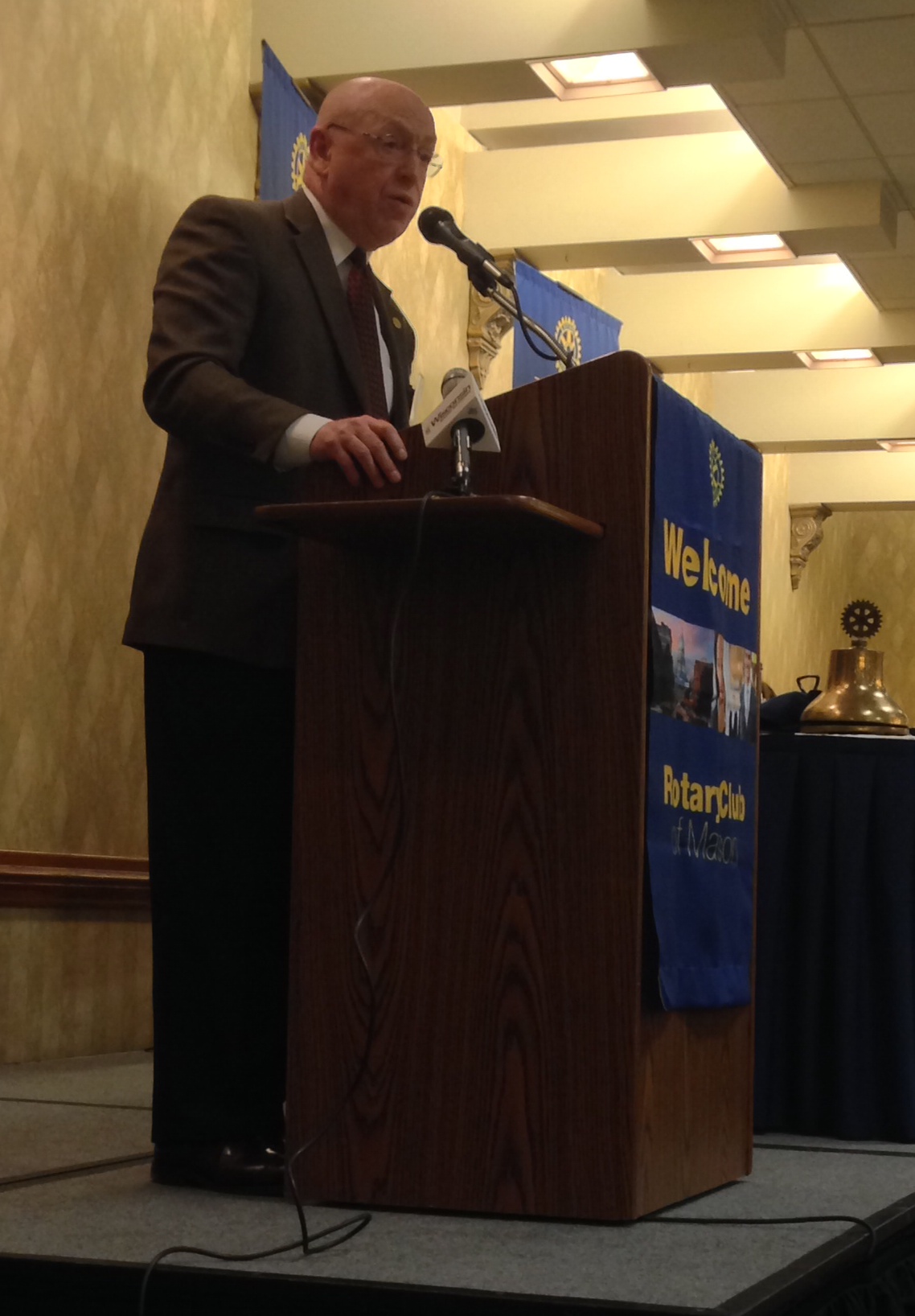
photo (2)In a presentation packed with insight and ideas, UW System President Ray Cross closed his presentation by asking his audience of Rotarians and guests to “think of us not just as the University of Wisconsin but as the University for Wisconsin.”

Cross referenced the statutory mission for the university and its charge to “educate and improve the human condition” by relating ways in which this can best be done when the State and University are partners.  A serious challenge is to get more students into and through the System and keep more of the graduates here to leverage economic success.

Looking at higher education as an investment, Cross cited statistics which speak to the need to think of the UW System as bringing a return on the investment.  Developing the state budget is a difficult process and the System is not exempt from hardship.  However, he described ways in which the university can and should be viewed as a long-term partner, not another state agency or expense.

A veteran of Rotary meetings, Cross divided clubs into three categories:  singing, non-singing, and singing but should not.  He did not say where our club should be classified, but he broke into song himself with a brief rendition of “Que Sera, Sera.”  For those not familiar with Doris Day’s philosophy of “whatever will be, will be”, it definitely does not describe the need Cross sees for the University to be nimble, flexible, and engaged as a partner in securing a bright future for Wisconsin,

As UW System President, Cross leads a workforce of some 40,000 faculty, academic and classified staff, and graduate assistants.  There are approximately 180,000 students participating in the colleges and universities and more than one million Wisconsin citizens are reached through outreach, public broadcasting and continuing education programs.  As he begins his second year as System President, Ray Cross exhibited why he was selected by the Board of Regents to lead Wisconsin Forward.  (Singing not included.)

New Book Tells Goodman Brothers Impact on Community

–submitted by Linda Maremont; photo by Stacy Nemeth

Doug MoeDoug Moe, long-time Madison journalist, shared several anecdotes and points of interest gathered during his research for his new book, Good Men:  The Lives and Philanthropy of Irwin A. and Robert D. Goodman.  When the Goodman Foundation Board approached Moe about writing the book, he acknowledged that he accepted with some trepidation.  The Goodman brothers were famously private throughout their lives and Moe had never personally met them.

Moe was able to interview 35 people who had known the Goodmans and shared some amusing stories about the rarely seen personal side of the brothers’ lives.  Irwin and Bob’s father came to America with $12.00.  After changing his surname from Gutmann to the anglicized Goodman, he joined his brothers to open Goodman Jewelers.  The State Street store opened in 1934 and Bob and Irwin ran the store together until they sold the store to the manager in 1998.  The brothers shared a passion for healthy living, sports, their business, their mother, each other, and their extraordinary devotion to philanthropy.

Their charitable works in the community were significant both in size and scope.  The local community can thank the Goodmans for sizeable donations which funded the city’s first public community pool, the UW women’s softball diamond, a Jewish community center campus in Verona, and the Goodman Community Center on the east side of Madison.

Moe’s presentation was followed by a number of comments by those who had personally experienced the kindness and generosity of the Goodman brothers.  Irwin and Bob clearly left an indelible mark on the community and Moe’s book provides engaging insight into the background of the men who impacted the lives of so many.