
submitted by Mary Borland
 Dr. Jesslyn Hollar is an Edgewood College Professor, and she teaches education courses, “a teacher educator.” She is well qualified to talk about engaging kids in learning amidst COVID-19 school closures as she is the mother of a 6-year-old and a 2-year-old. Her roles of parent and teacher educator are no longer separate but overlapping.
With school closures, our school systems have to consider access. Are basic needs of students being met with food and shelter, do they have educational resources, access to internet, etc.? At least 800 MMSD students are experiencing homelessness. Nearly half of students qualify for free or reduced lunch; more than 20% are English language learners and more than 14% have a disability. As a result, ensuring emotional support and navigation during this turbulent time may supersede formal academics at this time. Professor Hollar stated that attending to your own needs as a parent/caregiver during this time also benefits your child. To decrease your child’s anxiety, work to decrease your own.
Where does learning happen? Most learning throughout our lives occurs quite informally. It is our ability to understand how to learn and to transfer and apply that learning to other settings that holds us in good stay, “learning with understanding.” Where you can, encourage active learning with reflection on learning. Strategies for learning by grade were shared by Professor Hollar, and you can find additional links to resources at the end of her video presentation. She encourages parents/caregivers not to feel shame or guilt during this time about their young learner’s academic trajectory while schools are closed.
If you missed our meeting this week, you can watch the video here.

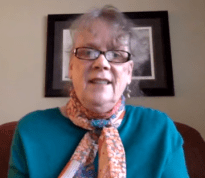 ellow Rotarian Lynn Brady, who is President and CEO of Journey Mental Health Center, shared her insights on “Dealing with Mental Health in the Time of the Coronavirus, a Unique National Emergency!” Brady’s presentation to the club through a virtual meeting platform on Wednesday, April 15, 2020, was an immediate reminder of the significant disruption that all of us are facing in our daily routines. Brady reflected that we are social creatures, and so this required isolation is inevitably going to have an impact. We feel uncertainty about when things will return to normal. In Brady’s work, she says that they are not currently seeing a lot of calls. Rather, people are asking for tips on dealing with stress; how to talk to children about the issue; and how they might reach out in the future to a mental health professional. The mental health professionals that she works with also need a chance to talk through the issues.
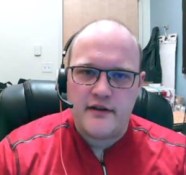 Rotarians heard online April 8 from Benjamin Eithun how Madison is part of several networks to plan for medical emergencies. Eithun is Director of Pediatric Trauma, Surgery, Injury Prevention and Child Protection at American Family Children’s Hospital.
 Rotary Club of Madison, Wisconsin