
–submitted by Andrea Kaminski; photo by Herman Baumann

From left: Ted Waldbillig, Mike Crane, Cindy Waldbillig, Leslie Overton, Katie Ryan & Andrea Kaminski
It was 37 degrees when we got to Wingra Park Saturday morning. The ice conditions looked poor, yet people were fishing on the lake. Then again, people who fish through the ice are a particularly intrepid lot, and they are not burdened by the pesky survival instincts that keep the rest of us on terra firma or even indoors in the winter. The surface ice had thawed and refrozen a couple of times, leaving a slippery surface and there were large patches that were covered by water. Although some members of our group were willing to try it, we decided instead to hike a wooded trail that leads from Wingra Park to the duck pond at the northern tip of the Nakoma golf course. This led us over an open, spring-fed stream with a crop of fresh, green watercress. The spring rises from a rock outcrop called Council Ring, which was designed in the early 20th century by landscape architect Jens Jensen. We all managed to stay upright, thanks to cleats on our boots, walking sticks from a store or the forest floor, or a combination of skill and luck. Then six of us piled around a table for four at Colectivo for coffee and treats.
 Madison’s Mayor Paul Soglin, serving his 20th year as mayor, made his 26th appearance at our club. Here to discuss what Madison might be like in 2050, he gave a few facts about Madison in 1950: a population of 96,000; about 95% white; occupied an area of approximately 33 sq. miles. Today we have a substantially more diverse population and occupy about 80 sq. miles. By 2050 Madison will probably be a city occupying about 103 sq. miles. In 1950, the major employer was Oscar Mayer. Today the largest employers are UW Health, Epic, the UW Hospital, and American Family Insurance. Madison is one of 5 U.S. cities considered a bicycling community which is rare among metropolitan areas not in the south, but that is growing. It is also the 3rd coldest — after the Twin Cities and Anchorage, Alaska. Epic has created an atmosphere hospitable to tech companies and entrepreneurial businesses. As household numbers decline, we need more units; 1,000 new units per year barely keeps us even.
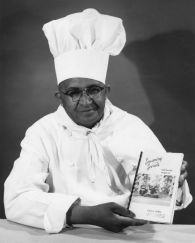 What happens when you live in a society where the government and the majority of the people show a complete disregard for social and civil rights? Well, if you’re Carson Gulley you defiantly march on in the face of adversity and accomplish greatness against all odds.
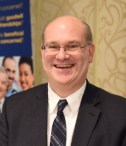 As Scott Seyforth noted, in 1954, Gulley was a speaker at our [then all-white] Rotary Club. It’s natural to think of Carson Gulley’s odyssey with admiration for his courage, yet one can’t help but think of the torment that he endured during a lifetime of discrimination.
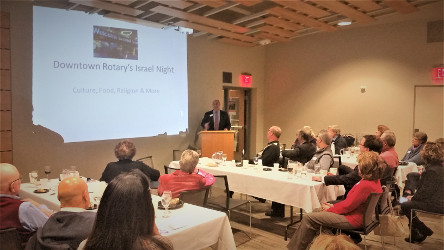
 Rotary Club of Madison, Wisconsin