“He Was a Different Kind of Giant”

–submitted by Andrea Kaminski; photo by Loretta Himmelsbach

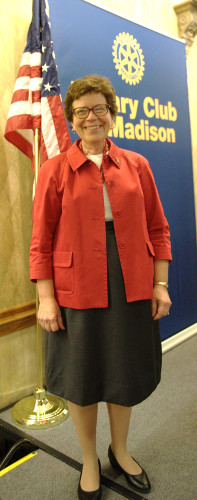
Hannah Rosenthal 11 11 2015Wednesday, November 11, marked 77 years since Kristallnacht, the deadly attack against Jews throughout Nazi Germany and Austria which is considered the beginning of the Holocaust. Club President Ellsworth Brown noted that 20 years earlier, November 11, 1918, was when the armistice was signed ending World War I.

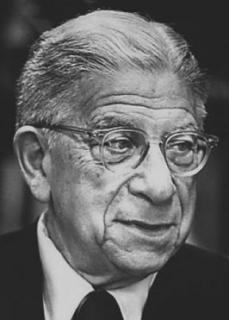
On this important anniversary of division and reconciliation events in history, Rotarians celebrated the memory of Manfred E. Swarsensky, a member of our Club until his death in 1981. Rabbi Swarsensky’s legacy remains with us as a model of human behavior and a call to action.

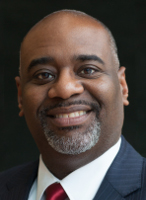
Our speaker was Hannah Rosenthal, CEO and president of the Milwaukee Jewish Federation and a former member of our Rotary Club. A student and mentee of Rabbi Swarsensky, Hannah has carried on his legacy of building relationships within and between communities.

Hannah’s father lived in Mannheim, Germany, when Swarsensky lived in Berlin. As a girl, Hannah often heard her father speak about Swarsensky’s wisdom and oratorical skills. She was thrilled when her mother announced one day that Rabbi Swarsensky would be coming to dinner. Hannah got dressed up and asked for the honor to open the door for him. She wanted to greet the ancient wise man she assumed must be “at least 10 feet tall.” She was surprised when she found that he was not even half that tall. “He was a different kind of giant,” she explained.

Over the years, Hannah had the honor of working and studying with Rabbi Swarsensky. She described a few remarkable characteristics that defined him and his legacy.

Rabbi Swarsensky was resilient. In Germany he watched his synagogue be burned and his congregation tortured and killed. He was arrested by the Gestapo. He came to the United States with every reason to be bitter, but he was not. Instead he dedicated himself to working for reconciliation.

In 1970, thirty years after leaving Berlin, he went back and visited his father’s and grandfather’s graves, and he spoke to Jews. He knew he was there to speak to the importance of reconciling with one another. When he returned to the United States, he increased his ecumenical activities. Unlike many of his colleagues, he was willing to marry inter-faith couples. He taught at Edgewood College, a Catholic institution.

Although Swarsensky treasured reconciliation, he believed that all people should bear witness to horrendous incidents of cruelty throughout history. Through these horrors we learn lessons. If we don’t learn the lessons of the holocaust, it is bound to be repeated.

Swarsensky also believed we all should leave something behind that matters. We need to communicate to our children the fundamental values of who we are, who we want to be and who we want them to be. He said we will find out about whether there is an afterlife “when the time comes.” But our legacy will live on long after our life is over if we teach, preach and live by our values.

Rosenthal concluded that we need to call out rhetoric or actions that are divisive and dangerous, and we need to reach across the divide and seek reconciliation.

An award-winning documentary video, “A Portrait:  Rabbi Manfred Swarsensky,”  was created and produced by Rotarian Dick Goldberg with assistance by Wisconsin Public Television in 2000.   This film received a national bronze Telly Award for best short documentary.

Did you miss our meeting this week?  CLICK to watch the video.
Christine Hodge Receives 2015 Manfred E. Swarsensky Humanitarian Service Award

–introduced by Mario Mendoza on November 11, 2015; photos by John Bonsett-Veal and Loretta Himmelsbach

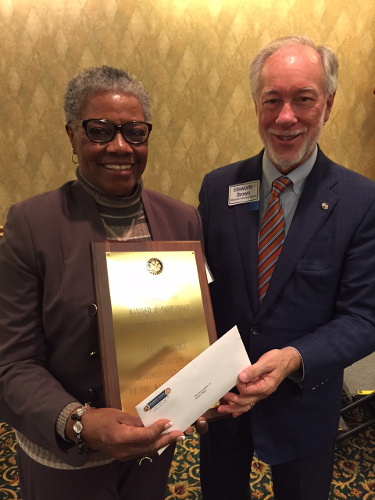
Christine Hodge pictured here with Club President Ellsworth Brown

Christine Hodge pictured here with Club President Ellsworth Brown

This year’s recipient of the Swarsensky Humanitarian Service Award is Christine Hodge, who was nominated by Dawn Crim.  Christine Hodge came to Madison from Arkansas in 1971, along with her three children.  The people of Mt. Zion Baptist Church on Madison’s south side quickly embraced her and her family—a gesture that, as you will see, she reciprocated later in life.

Soon after arriving in Madison, Ms. Hodge—who had previously been a teacher in Arkansas—became a teacher for the Madison Metropolitan School District.  She taught for 26 years.  She then served as assistant principal at LaFollette High School and later as principal of Allis Elementary.  She served the District for 35 years before retiring.  Following her retirement, and as referenced in a news story about her, Ms. Hodge “lounged around exactly zero days before throwing herself into her next project.”  She took her energy and experience as an educator and administrator and founded the Mt. Zion Academic Learning Center.

The Mt. Zion Academic Learning Center is an after-school program affiliated with Mt. Zion Baptist Church.  Ms. Hodge tirelessly enlisted the help of many in our community to transform what was a dark basement at Mt. Zion Church into a bright, cheerful and deserving learning space.  She raised funds and recruited volunteer tutors. The Center’s program is focused on fostering academic excellence for children in grades K-6th, primarily residing on Madison’s south side.  Parents pay nothing; all that is asked of them is their commitment to Ms. Hodge’s program.  The program runs three days a week, and about 20 students participate regularly.  Volunteer tutors and mentors assist the children.  They leave with their homework done, and done right.  Ms. Hodge tells each child her goal:  “Be the smartest kid in your class.”  The Center is credited with improving the academic performance of its students.

Consistent with Rabbi Swarsensky’s example, Ms. Hodge has helped build bridges.  She has built bridges between homes and schools.  She has helped parents establish effective communications and problem-solving with teachers and District staff.  And her contributions toward children’s academic excellence advance the cause of putting an end to the educational achievement gap in our area.  That gap is an obstacle to full participation in and enjoyment of life in our community.  Ms. Hodge’s efforts help build a bridge toward the promise of that full participation and enjoyment—one student at a time.

Ms. Hodge has devoted nearly ten years to the Academic Learning Center.   It is clear that the warm welcome Ms. Hodge received from Mt. Zion Church when she first arrived in Madison many years ago planted a seed in her, which has now blossomed into the this praiseworthy legacy.

Christine Hodge pictured here with Swarsensky Award Committee Chair Mario Mendoza

Christine Hodge pictured here with Swarsensky Award Committee Chair Mario Mendoza

Our congratulations to Christine on receiving the Rabbi Manfred Swarsensky Humanitarian Service Award for 2015.

Along with this award, a $2,500 grant is provided to an organization of the recipient’s choice, and Christine selected the Links Foundation, Madison Chapter

Our thanks to Mario Mendoza, chair, and members of this year’s Manfred Swarsensky Humanitarian Service Award Committee in organizing this year’s award presentation.

swarsenskymanfredThe Manfred E. Swarsensky Humanitarian Service Award was established in 1982 and identifies individuals who have, through their voluntary efforts, made a particularly outstanding contribution to the humanitarian service in the greater Madison community, in the tradition so well exemplified by the life of Rabbi Swarsensky.   The award-winning documentary video, “A Portrait:  Rabbi Manfred Swarsensky,” that was created and produced by Rotarian Dick Goldberg with assistance by Wisconsin Public Television, provides background on Manfred Swarsensky and can be viewed on YouTube, and the Rotary office also has a copy of the video for any member wishing to view it.

All Ways Forward

–submitted by Ellie Schatz; photo by Will Anzenberger

Rebecca Blank 11 4 2015The tone was set for Chancellor Rebecca Blank’s talk about moving the UW Forward by talented UW alumni. Soprano Emily Birsen sang “Quendo m’en vo” from La Bohème, accompanied by pianist Scott Gendel. Do we want to keep supporting and encouraging this kind of talent development in Wisconsin? Their standing ovation plus the response to Chancellor Blank’s opening questions (who in the audience works at, has a family member work at, or graduated from UW) signaled strong passion and commitment to our favorite education and research institution.

Chancellor Blank proceeded to give Renee Moe a run for her money as the fastest speaker we know. Filled with statistics, she demonstrated that we could feel the energy resulting from the tremendous investments to both education and research at UW since its founding in 1848. We can look forward to and support new approaches that will be both exciting and challenging as we move forward.

Trends at UW include a declining number of students from within the state, an increase in the number of out-of-state students, and an increase in the number of international students. There is a clear shift of students moving into STEM (science, technology, engineering, math) fields, which is a good thing, but with a caution: students should also understand the importance of writing, critical thinking, learning languages, and other skills taught in a broad liberal arts program.

Statistics supporting the good things happening at UW in education and research include: the student retention rate is 95.8! Graduation rates are up, and UW ranks as one of the top 25 research universities in the world. Given a changing research landscape, this means that to offset declining state and federal dollars we need to work differently, building research partnerships with industry. Chancellor Blank gave several examples of such partnerships, showing how we are growing in spite of the 250 million dollar cut in state funding, ongoing budget debates, and negative press.

All Ways Forward is a comprehensive Fundraising Campaign with the goal of raising 3.2 billion dollars by 2020. Recent gifts from John and Tasha Morgridge, Jerome and Simona Chazen, Albert and Nancy Nicolas, and the Grainger Foundation show how transformational gifts can help to move us forward. However, Blank warns, gift dollars are not substitutes for state dollars. $250 million in donor dollars does not equal that in state dollars for several reasons, i.e., gift dollars are tied to donor intent, gift dollars are in endowment, of which only 4 1/2% is accessible in a given year, and what we raise now in pledges may not be dollars in hand until many years out.

With continuing new programs and wonderful spaces, how can we not join the Chancellor in her enthusiasm and optimism. From the Villager Mall programs, a School of Education partnership with MMSD to build a pipeline of students of color and low income to help close the achievement gap, and excellent faculty, to awe-inspiring research, On Wisconsin.

 Did you miss  our meeting this week?  Our thanks to WisconsinEye for videotaping and providing this LINK.

New Member Coffee Event at YWCA October 29

–submitted by Joyce Bromley; photos by Dave Ewanowski

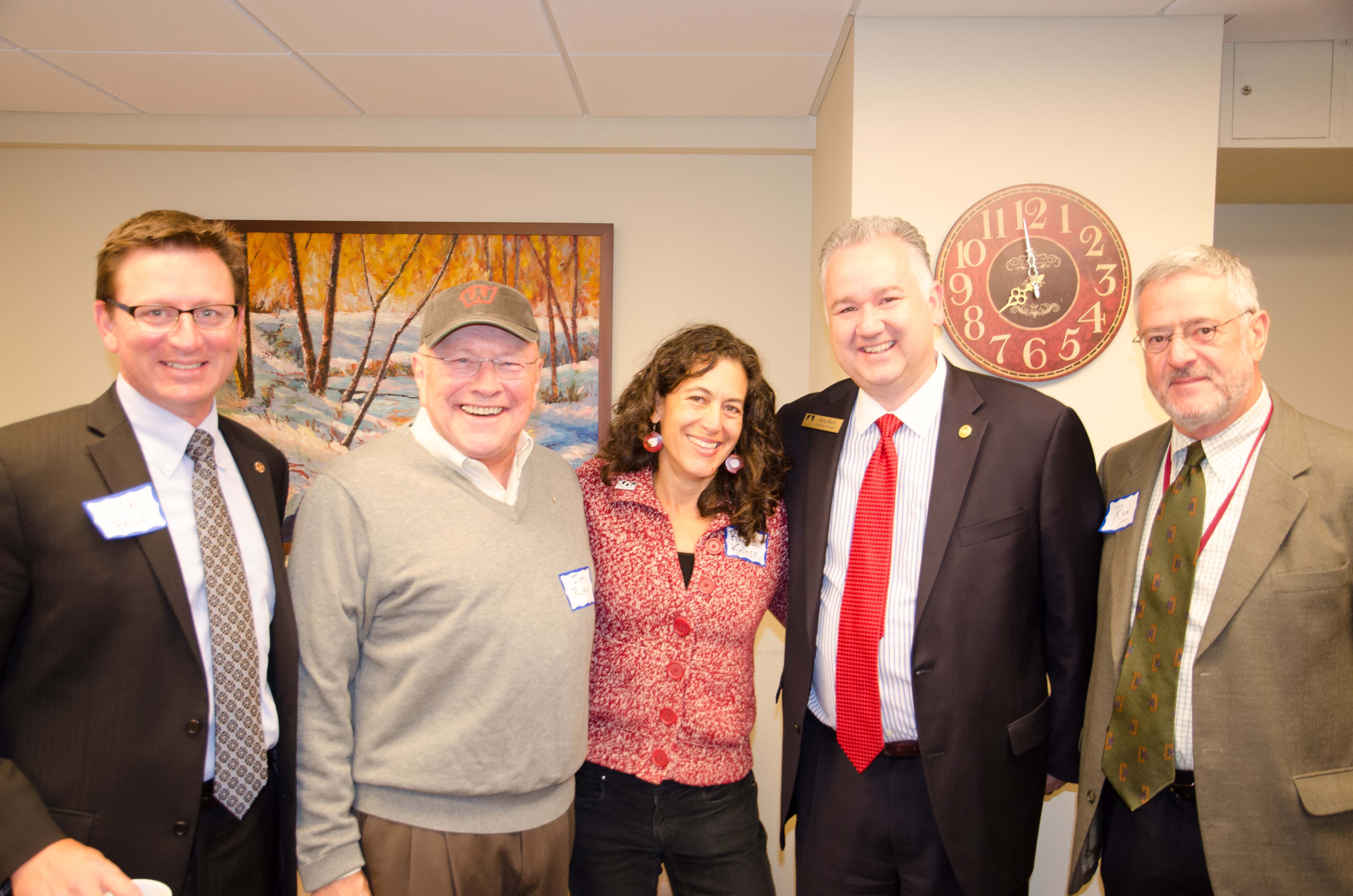
From left: Bob Sorge, Jim Ruhly, Rachel Krinsky, Gary Klein & Ron Luskin

From left: Rick Bova, Jim Ruhly, Rachel Krinsky, Gary Klein & Ron Luskin

The New Member Coffee Reception, hosted by Rachel Krinsky at the YWCA and organized by Jason Beren brought together members as new as 3-weeks, with a lifetime member; several of our past presidents and those of us in between.

Jason Beren, once again, put together an enlightening program.  Carol Koby gave the history of the radical concept of opening Rotary to women first introduced in 1934 at a Rotary-Chicago meeting.  Today, twenty percent of the Downtown Rotary Club of Madison membership is women.  She reminded us that women are Rotarians who happen to be women, not women in Rotary.

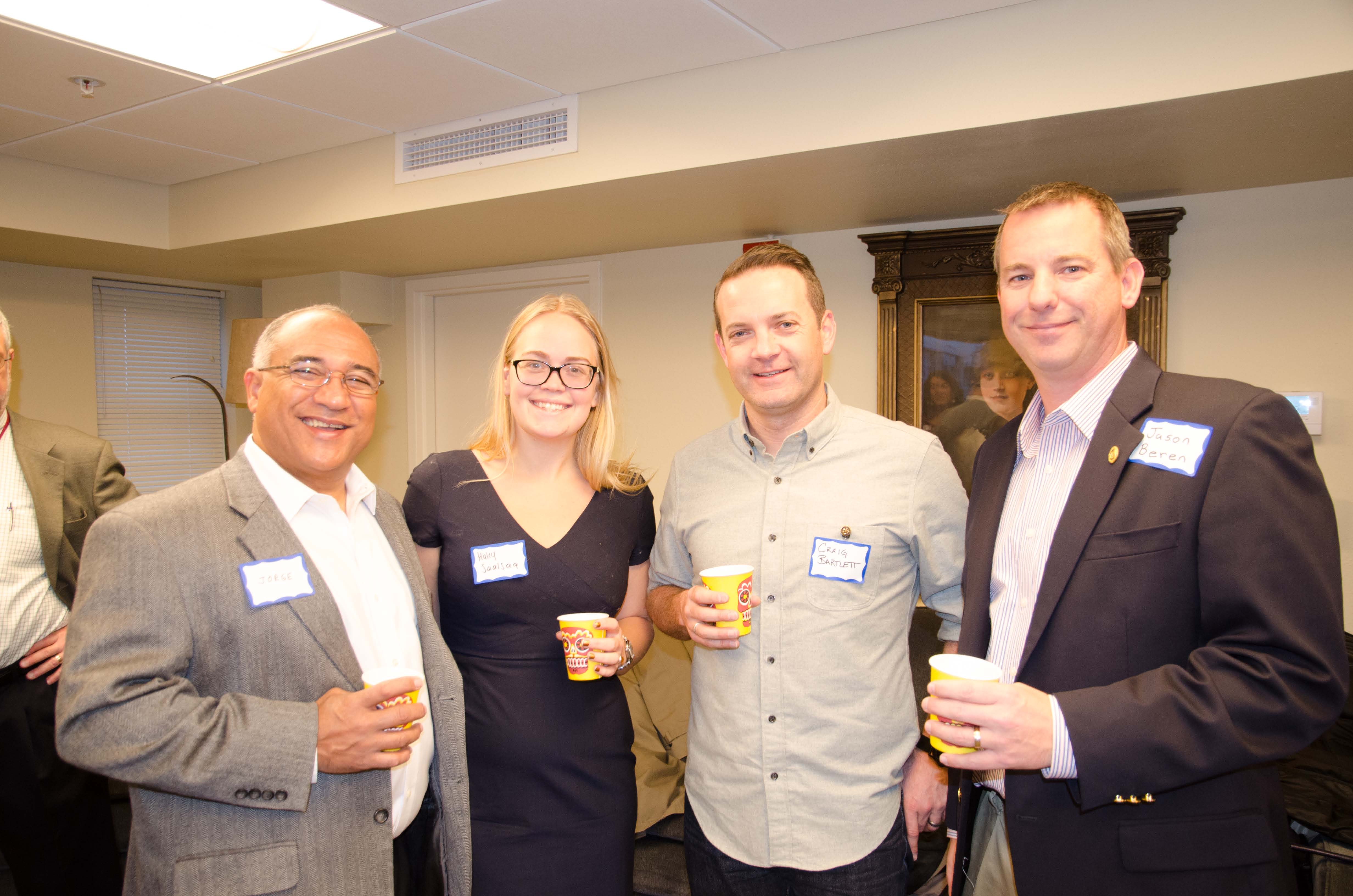
From left: Jorge Hidalgo, Haley Saalsaa, Craig Bartlett & Jason Beren

From left: Jorge Hidalgo, Haley Saalsaa, Craig Bartlett & Jason Beren

Rachel Krinsky, a member of our Rotary Board, described the principles of the Large Impact Project that will involve all aspects of our Club in addressing ways to improve racial inequality.  This 3-prong project will be achieved by:

  1. Having every committee and fellowship group look at their participation through an equity lens;
  2. Making our Rotary Club a model by partnering with businesses to advise, hire, and retain employees to correct the inequity imbalance; and;
  3. Beginning in 2016 partnering with the Madison Public School District to provide programs for students of color.

Through the Large Impact Project we all have a role in its success.

From left: Nick Curran, Will Anzenberger, Joyce Bromley, Courtney Searles & Neil Dinndorf

From left: Nick Curran, Will Anzenberger, Joyce Bromley, Courtney Searles & Neil Dinndorf

Jason closed the meeting with the announcement of the formation of the upcoming “New Member Roast Committee” which brought President Ellsworth Brown to full attention.  As Dickens would have said “a good time was enjoyed by all.”

Wine Fellowship Event on October 27

–submitted by Mike Wilson

From left: Mark Brant, Tracy Brant and Patty Wilson

From left: Mark Brant, Tracy Brant and Patty Wilson

The Wine Fellowship group met at Mike & Patty Wilson’s home on October 27 for the annual Mashambanzou Fundraiser.  This fundraiser has been held for the last 10 years and usually by the Wine Fellowship group, but once Dick and Noel Pearson held it at their place when the Wilson’s were not available.  In the past this has raised up to $1800/year for the Mashambanzou Care Trust (MCT), a Harare based organization in Zimbabwe.  The money is used for orphans and families in need, as a result of the AIDS epidemic. Initially the monies were used for uniforms (a requirement for elementary and high school attendance) and home assistance for these affected families and orphans, but this has graduated to continued education. The most recent monies were used to send several orphans to University/Technical Colleges.  This is a very worthy charity, a 501(c)3 registered group to which the UW Rotaract Club channels the donations that result in tax deductions for the Rotarian contributors.

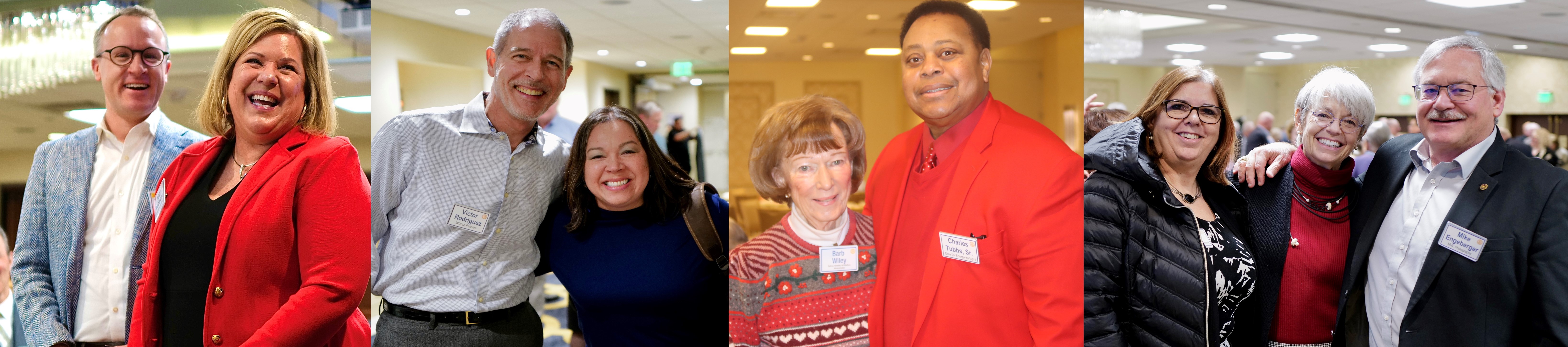
wine oct 27MPictured at left, Annie Roensch (President of UW Rotaract) and Makenzi Tijerina (in charge of Rotaract fundraisers)  were present to help with the wine purchases, and started the event with a short presentation of the role of MCT and the monies previously raised by us for them to send to MCT.  These ladies will be important in the wine offering that will go to all the Madison Rotary Wine Fellowshippers – more to follow. Also, they will facilitate the IRS Tax deduction documentation/evidence for the entrance donations ($75) and donated portions of wines bought (15-25% of total cost).

Rachelle Richardson has been the driving force behind this fundraiser, and the 20 tasted wines were contributed by Purple Feet (now part of the Winebow group).  The sale of the selected wines will be through Steve’s of University Avenue, and facilitated by Wayne Crokus.  We required a retail outlet to get the sales tax registered, and they received a discount from Purple Feet, and discounted their sales price,to allow a significant portion of the wine price to be provided to the MCT.  Both the UW Rotaract Club and Steve’s liquor Store were vital to this fundraiser, and we, the Madison Rotary Wine Fellowship group, are indebted to them.

We tried Zardeto Proseco, Gruet Brut Methode Champenoise sparkling wine, and Ayala champagne (4 weeks before we tried Gruet Blanc de Noir) and all were excellent.

Next we tried three chardonnays, a Burgundy Bourgogne from Bichot, and a Melville Estates from the Santa Rita Hills CA, and Paul Hobbs from the Russian River Valley.  Again all very good.

Three wines from the 3/Three company proved the “Best Buy” wines with everyone raving about them, especially given their modest prices and their history of aging excellently.  Mike has old versions in his wine cellar.

wine oct 27B  wine oct 27D  wine oct 27E

Photo 1: From left: Jane Wegenke, Meryl Mixtacki & Cheryl Wittke; Photo 2: Juli & Keith Baumgartner; Photo 3: Ken Yuska

We were reminded of the tasting a month before and four great red wines tasted then. Starting with an unbelievable Hey Mambo (a Sultry Red) from “The Other Guys” group in California, and a great Catena Malbec. These were two reasonably priced ($12 and $23 respectively) wines that scored the best reviews among the tasters at that event.  We also had a MollyDooker (left handed – in the land of OZ) Shiraz that continues a series of mind-boggling awards internationally for these wine growers, and a great but expensive Paul Hobbs Cabernet Sauvignon.

Meryl & Steve Mixtacki

Meryl & Steve Mixtacki

We also tried a Sardinian Cannonau (aka Grenache – Sardinia was once a Spanish colony hence the Grenacha plantings in Italy), followed by a Ripassa (a “repass” of Amarone grapes), and super Barbaresco (93 Pts).  A month ago at the Mashambanzou “pretasting” we had a very soft and beautiful Amarone (95 pts) that was loved, but the most expensive wine at these two tastings.

In all, between the event four weeks ago and last night’s event, we have tried 20 wines that are available. They all had scores between 89 and 95, with the Three 3/Three winery reds being unrated as far as I could find, but definitely “Crowd Pleaser” “Best Buys” in everyone’s opinions.

Of the tasters at last night’s event, $2200 worth of wine was purchased and this contributed between 15 and 25% of the purchase price to the MCT, and is tax deductible for the purchasers.  These were extraordinary wines that we are going to make available to all the Wine Fellowshippers for one week (more to follow soon).

wine oct 27I  wine oct 27H  wine oct 27K

The Wilson’s provided breads and crackers, cheeses (Brie, Maytag, and Dubliner), three Italian meats, and nuts, seeds, salted caramels, and of course Patty’s chocolate covered strawberries.

A good time was had by all, and Mike made some Aperol Spritzers for some to try, Patty and Mike having just got back from the Veneto where these originated, and are seriously consumed in Venice, Verona and Lake Garda by their observation.

David Maraniss on Detroit

–submitted by Carol Toussaint

You could tell by the number of people working their way around the Inn on the Park construction site that the speaker on this Wednesday had attracted a crowd.  Indeed, one of Madison’s favorite sons was there again to share insights captured in a new book, ONCE in a GREAT CITY, a Detroit StoryDavid Maraniss was back with another great story for Rotarians and their guests.

As his talk revealed, Maraniss was more interested in why things had happened in and to Detroit than to simply chronicle the events that brought down a great city. In the author’s note to his book he wrote that “the city itself is the main character in this urban biography, though the populace includes many larger-than-life figures.”   These individuals played key roles in the drama that was Detroit in 1962-64.  We met them Wednesday and learned some surprising things about the many ways each contributed to the vibrant city.

Whether it was the story of the launching of the Ford Mustang or the touching memories that talented performers shared about the creative side of the city, Maraniss researched through interviews as well as documents.  The migration of African Americans from the South to jobs in Detroit influenced the development of the Motown music and the stories of the prominent stars, many of whom rose from modest beginnings, are well represented in the book.

Reading Maraniss’ book is a bit like receiving a postcard from your favorite cousin who visited Detroit in 1963 and reported that “it had everything!”  Rotarians got a sense of what was behind the “everything” and enjoyed the inside view of it all.

Did you miss our meeting this week?  CLICK to watch the video.