Doug Moe Speaks to Madison Area Service Clubs on October 21

–submitted by Linda Maremont

Award-winning journalist and author Doug Moe was the keynote speaker featured at the 52nd Annual Madison Area Service Club’s Luncheon held at the Sheraton Hotel.  A lifelong Madisonian and graduate of UW-Madison, Moe has worked as a journalist and author for almost 40 years. As a daily newspaper columnist for The Capital Times and Wisconsin State Journal, he wrote some 4,000 columns. Prior to his newspaper career, he was a writer and editor of Madison Magazine.

Doug shared some of his more memorable experiences over the course of his journalistic career.  Contacted by a sports agent to write NFL defensive end Lyle Alzado’s biography, Moe’s book was aborted over a controversial chapter regarding Alzado’s anabolic steroid use.  He was invited to join a transplant team flying to central Illinois to harvest a liver, then returned to witness the transplant operation to the new recipient the following day.  Doug had the opportunity to interview the progeny of several notable figures including Lana Peters, the daughter of Joseph Stalin, and Reeve Lindbergh, daughter of Charles Lindbergh.

His wide-ranging experiences also included less well-known subjects such as Richard Trentlage, professional jingle writer responsible for the famed Oscar Mayer wiener jingle, and Don Featherstone, the artist most widely known for his creation of the pink plastic flamingo (Madison’s city bird).

Throughout his career, Doug has also “written books on the side,” two of which are currently being considered for movie or documentary production — “The World of Mike Royko” (a Chicago Tribune Choice Selection of the Year); and “Lords of the Ring: The Triumph and Tragedy of College Boxing’s Greatest Team,” runner-up for the Derleth Award for best non-fiction book of the year by a Wisconsin author. He is currently collaborating with former Wisconsin Gov. Tommy G. Thompson on Thompson’s autobiography.
¡estaba delicioso!

–submitted by Robyn Kitson; photos by Kris Ashe

Picture6

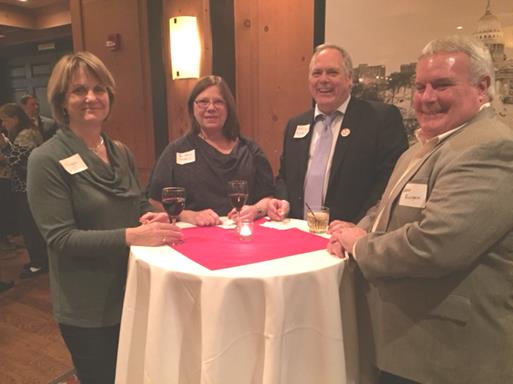
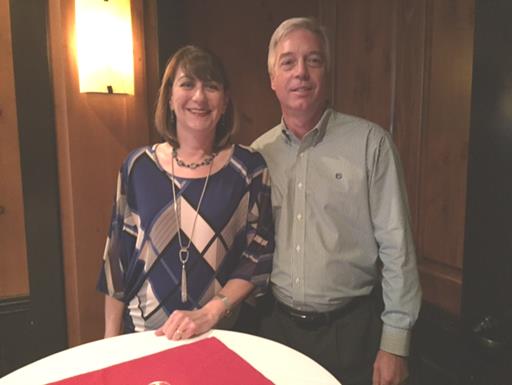
From Left: Robyn Kitson, Bev Mazur, Greg Mickells, and John Burgan

Spanish food was the theme as Rotarians of the Culinary Arts Fellowship Group gathered at the Madison Club Monday evening.

Picture8  Picture4  IMG_0065

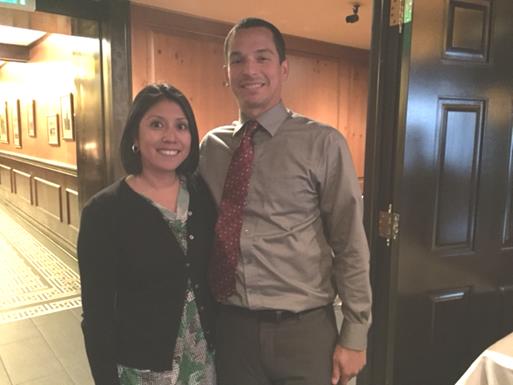
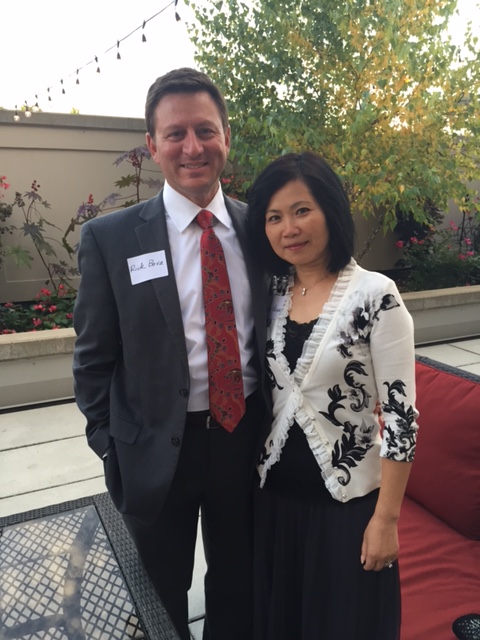
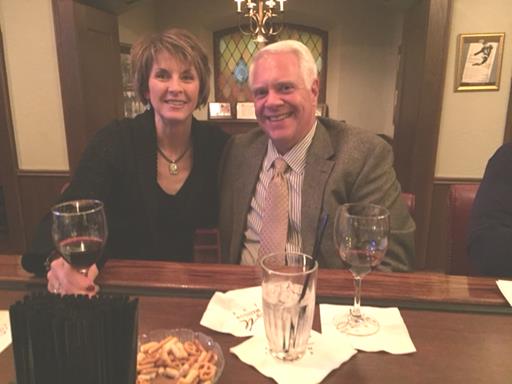
Photo 1: Mary & Robert Borland; Photo 2: Sandy & Theran Morales; Photo 3: Rick & Joanna Bova

The feast began while Rotarians socialized with Madison Club staff circulating the room offering hors d’oeuvres of croquettas de jamon, manchego, olive and chorizo pinxtos, and smoked rainbow trout bocadillos.

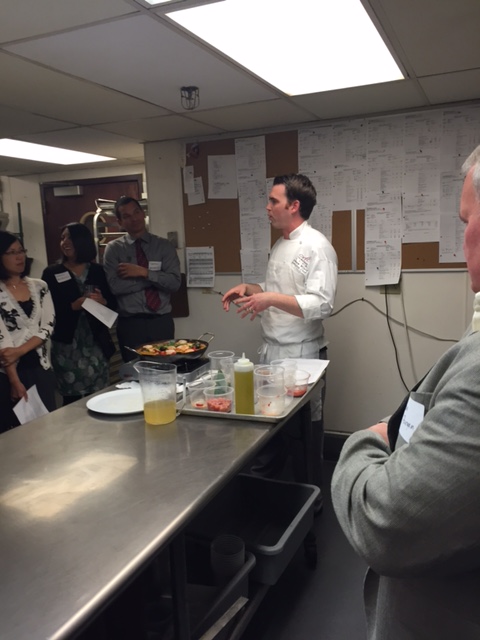
IMG_0083Chef Andrew Wilson invited us into the kitchen to witness his creation of classic paella. It was fascinating to see the master at work, adding the different ingredients – the chicken and the olive oil and the shrimp for just a little bit of coloring – peppers, basil, saffron, and then the mussels and shrimp and green beans…a bit of rabbit, too.

Rotarians filled four tables to partake in this artfully prepared Spanish spread.

First course: goat cheese stuffed piquillo, peppers, Serrano ham, oranges and parsley puree; wine pairing of Ulacia Txacolina- Basque Coast.
Second course: grilled octopus, roasted pearl onions, romesco sauce; wine pairing of Cune Rioja Crianza.
Third course: paella with saffron rice, rabbit, chicken, chorizo and shellfish; wine pairing of Pata Negra Ribero del Duero Reserva.
Fourth course: caramel flan with fresh figs and whipped cream.

Picture11  Picture2  Picture3

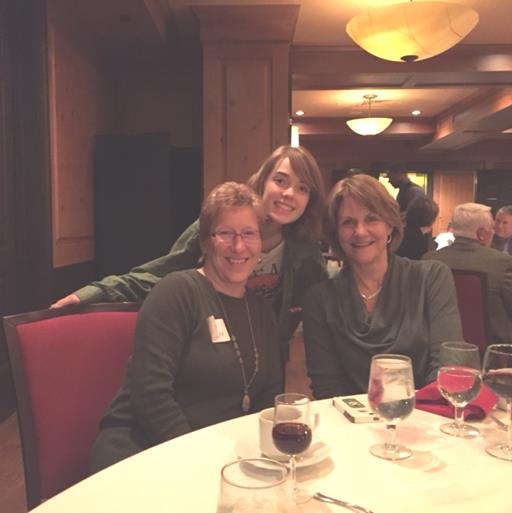
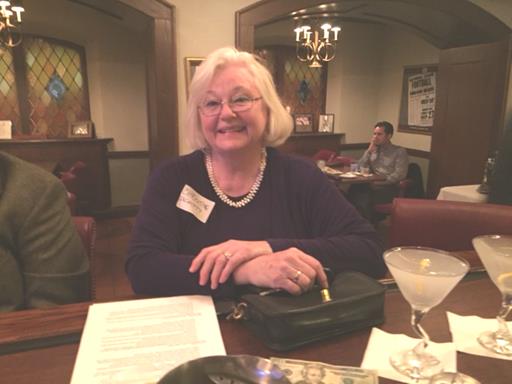
Photo 1: Becky Steinhoff, RYE Student Charlotte de Monceau; Photo 2: Juli & Keith Baumgartner; Photo 3: Christine Beatty

Jason Beren concluded the evening with a toast on behalf of the whole group to Valerie Kazamias for planning this popular, well-attended event.

Estaba delicioso!

World War II: When Did It End?

–submitted by Larry Larrabee; photo by Mike Engelberger

Stanley Payne 10 14 2015Professor Stanley Payne presented on the topic “WWII: When Did It End?” at our meeting on Wednesday October 14, 2015.  He is a professor emeritus of the University of Wisconsin Department of History and the author of several books on Europe and WWII, some of which have received national awards.

In this week’s presentation, Dr. Payne began by explaining Winston Churchill’s belief that the victory over Germany did not end the equally real threat of the Soviet Union, which controlled half of Europe, upsetting the balance of power that Britain and other democracies needed to survive.  In December 1944, Churchill launched “Operation Unthinkable” to push Russia out of Central Europe by force after the defeat of Germany.

The Polish Government in Exile, with its 200,000 troops, and even a sizable portion of German POWs were willing to enter armed conflict with the USSR after V-E Day but the idea received no support from the US leaders, with the exception of General George Patton.  And thus, a hot war turned into the Cold War.

Since 1945, it has been an age of civil wars in Eastern and Central Europe, the Middle East and Asia including America entering those in Korea and Viet Nam.  In fact, unusual for wars since the Middle Ages, there was no peace treaty in Potsdam following WWII.

Thus, Churchill was correct.  Victory over Germany did not really end the war.  Although the later fall of the Soviet Union decreased that country as a single threat, the civil wars have continued, particularly in the Middle East.

Did you miss our meeting this week?  CLICK to watch the video.

Autumn Hiking in Owen Conservation Park

–submitted by Roberta Sladky; photos by Karl Gutknecht

Owen Park 4

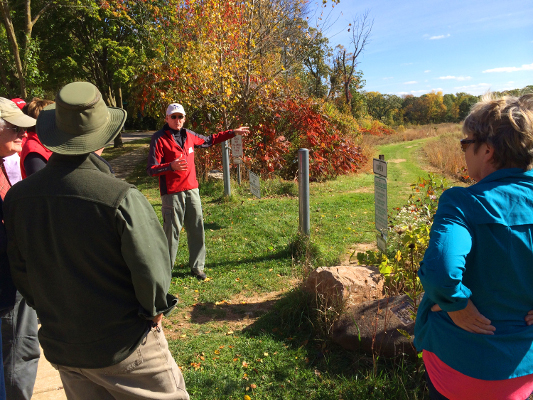
Rotary Club of Madison’s Hiking Fellowship was hosted on October 10 by Rotarian Bob Graebner and his wife Linda, at their home in Madison’s Parkwood Hills neighborhood. The hike was a spectacular walk through their leafy neighborhood and into Owen Conservation Park.  The 92 acre Owen Conservation Park includes a 40-acre woodland, a 15-acre restored prairie, and a 37-acre meadow, as well as 3 stormwater/wildlife ponds that were added in 2008 to reduce the sediment that flowed into Lake Mendota from area mall parking lots.  Bob described having seen cranes, herons and other waterfowl at the ponds.  He led us up hills and down dales through prairies and woodlands which were beginning to show fall color.

Owen Park 2

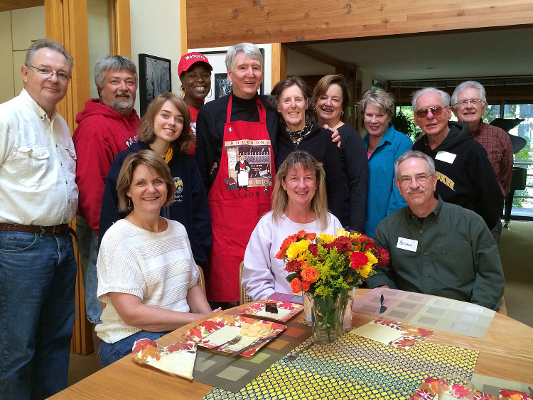
Back row from left: Stan Kitson, Al Goedken, Charlotte, De Monceau, Dawn Crim, Bob Graebner, Linda Graebner, Kay Schwichtenberg, Roberta Sladky, Frank Stein and Dean Nelson Front row from left: Robyn Kitson, Carol Goedken and Herman Baumann

Charlotte De Monceau, our Rotary Youth Exchange student from Lyon, France, joined the group and shared her experiences thus far in Madison. Multiple conversational groups formed and reformed during the 3.4 to 4.2 mile hike.  (Mileage reported by various cell phone apps.)  The hikers enjoyed a delicious luncheon prepared by Linda Graebner. The cheeses and French bread added a touch of Francais to the meal, and the large windows and leafy views made it feel like a pique-nique! All in all, it was a gorgeous fall day shared by companionable Rotarians.

Owen Park 1

How Are We Doing? Where Are We Going? What Have I Learned?

–submitted by Donna Hurd; photo by Jeff Burkhart

Leslie Howard 10 7 2015

As the end of an era approaches, Leslie Ann Howard, CEO of the United Way of Dane County and fellow Rotarian, delivered a heart-felt and impassioned overview of how the social condition of the Madison community has evolved since taking the helm 34 years ago.  As the first female to lead the organization in its 93-year history, Ms. Howard has seen the community’s narrative change from you “can’t get things done in Madison” to “We can and we will.”

Reflecting on life lessons, Leslie Ann recounted the first twenty years of her life as the child of an alcoholic father.  She experienced all of the emotion and pain that such a relationship carries with it.  However, at the age of 44 her father became sober through the balance of his life and taught her, “It’s never too late to change”, a lesson that has shaped her into the inspiring leader she has become.  It is this lesson that has directed her leadership of the United Way and guided her in her mission to help right some of the most pervasive social wrongs in our community.

As the first female manager in the nation of a collegiate football team, she learned “there are no limitations due to gender,” an experience that would equip her with the necessary acumen and confidence to interact with men in the locker room or the Boardroom.

These life lessons, while not all-inclusive, were pivotally instrumental in propelling Leslie Ann into a life focused on social and organizational change, leaving us a gift we should all cherish for many years to come.

In response to donor’s expectations that the needle move in a positive direction as a result of continued asks and gifts of financial support, the organization accepted the charge to embark on a mission of changing the “human condition,” once felt an improbable goal.  With this transformation, the organization embarked on a quest, aptly referred to as the “Agenda for Change,” focusing on Education, Income, and Health; and has moved the needle in the right direction, evidenced by the decreases in recidivism rates, decreases in homeless families and improved outcome because of partnerships with parents.  Successes abound, but the work must continue.

With a strong belief that people, circumstances, and conditions can change, our community can, and will continue change, with the hope that Madison will become one of the Best Places to Live and Work for all its citizens.

Thank you, Leslie Ann, for your leadership, insight, and unrelenting quest for change.  If we all believe in the possibility of change, it will become our reality!

Did you miss out meeting this week?  CLICK to watch the video.

Prescription Pain Killer Abuse in Wisconsin; Sharing a Dose of Reality

–submitted by Mary Borland; photo by John Bonsett-Veal

Attorney General Brad Schimel (right) pictured here with Club President Ellsworth Brown

Attorney General Brad Schimel (right) pictured here with Club President Ellsworth Brown

Wisconsin Attorney General Brad Schimel spoke with Rotarians on September 30 about why the Wisconsin Department of Justice, in conjunction with the Wisconsin Department of Health Services and partners across the State, have launched a $1.7 million campaign titled A DOSE OF REALITY, which is working to prevent prescription painkiller abuse in Wisconsin.

Brad explained, when prescribed and used properly, prescription opioid painkillers can offer relief; however, anyone is at risk of becoming addicted, especially our young people ages 12-25. Deaths and hospitalizations from overdoses are increasing, and four out of five heroin addicts start by abusing prescription painkillers.

Brad went on to share that this problem is impacting tens of thousands of families in Wisconsin and it is now declared a public health crisis.

  • The fear of death is not strong enough to stop people from using these drugs.
  • Opiate overdoses have more than doubled in less than a decade and now exceed motor vehicle deaths!
  • Many myths on this topic, most notably the myth that only “bad” kids and only “other” families or neighborhoods are affected. The fact is, all walks of life and communities are affected by this problem.  If not for prescription opiate abuse, we may not have a heroin problem at all.
  • Most people abusing opiate drugs obtain the drugs from a family member or friend – this presents a great opportunity!
  • Addictions to opiate drugs are driving spikes in most other crimes.
  • Wisconsin is number 2 in America for pharmacy robberies, with Indiana being number 1. Brad stressed that legal enforcement alone will not solve this problem.
  • Treatment is a critical piece to the solution. 163,000 people in Wisconsin are abuins opiates.

The three key messages of the campaign to address abuse of prescription medications are:

  1. Use medications only as prescribed to you and as directed
  2. Store medications safely and securely
  3. Dispose of medications properly by dropping them off at a designated site

What can you do in addition to the three key messages above?  Check out the website http://doseofrealitywi.gov/ and

  • Take the Pledge to Save Lives
  • Spread the word
  • Talk to your kids/grandkids about the dangers of opiate abuse
  • Ask your health care providers if there are alternative therapies available instead of taking an opiate drug. In the United States, we readily reimburse for drugs but are not good at covering addictions.  Advocate for changing this.
  • Keep track of the number of pills in your bottles
  • Dispose of unused meds promptly and safely. October 17 is Drug Take Back Day.  Last Take Back Day yielded over 20 tons of medications.  Find a medication return unit close to you to use anytime by visiting:   http://doseofrealitywi.gov/get-the-facts/safe-storage/

Our thanks to WisconsinEye for videotaping our meeting this week.  CLICK to view the video.