submitted by Jerry Thain
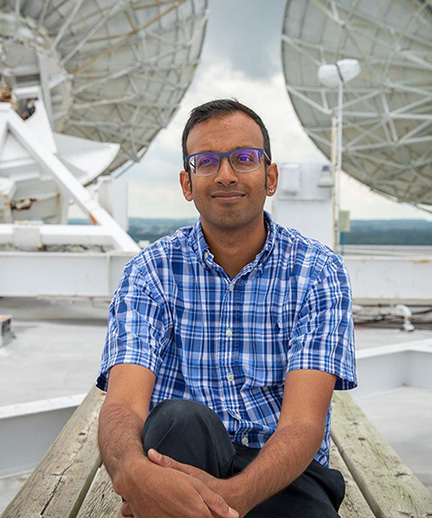 Dr. Ankur Desai, professor of climate, people and environment at UW-Madison, addressed the first ever virtual meeting of the Club on the effect of climate change on local weather. He stated that climate is personality, and weather is mood.
Looking at weather over the years, he noted a global trend, beginning in the 1980s, of higher temperatures. This is caused by CO2 emissions which are raised by the use of fossil fuels. He said CO2 is to climate change what steroid use was to baseball. An increase in temperature up to 2 degrees Celsius has only modest impact, but above that level, it leads to significant and harmful consequences. Policy changes could mitigate the damage by “flattening the curve” much as health experts urge us to do in attacking the current pandemic. A major difference is that it will take decades to flatten the climate curve.
Turning to the influence of climate change on local weather, Dr. Desai showed the global decline of snow cover which, in itself, affects the temperature. The meeting of snow/no snow lines influence weather fronts and increases the severity of storms. Lesser snow over North America means most places get wetter and rainier–rain on frozen ground is more likely to cause storms than snow. Southern Wisconsin has seen wetter and rainier weather in recent years while northern Wisconsin has been drier. Some cold winter weather will still occur but at a much lower rate than in the past.
The problems caused by this will need to be addressed either by adaptions (such as moving homes from frequently flooded areas) or by mitigation (reducing emissions significantly). Unfortunately, there is no single “silver bullet” to solve things so all alternatives must be pursued by policymakers.
Dr. Desai cited recent research indicating, contrary to some beliefs, that climate change deniers are a very small proportion of the populace. Moreover, among people aged 18-30, climate change is either their first or second highest policy priority. It is not possible to prevent all adverse effects, but we must take actions that will have some effect or be overcome by the problems.
He ended on a hopeful note, showing the sprouting of tree plants in an Australian forest area recently consumed by wildfires. Earth will survive, but we need to help heal it for our own good.
If you missed our online meeting this week, you can watch the video here.



 On July 12, Professor Jonathan Patz, Director of the Global Health Institute at UW-Madison and a pioneer in researching global climate change and its consequences (he has been active in national and international programs in this area for more than two decades and received a Paul Harris fellow award at the RI annual meeting in Atlanta last month when he addressed a break-out session on the connection between extreme weather events and the explosion of the Zika virus) described the health consequences of global climate change and his proposals for addressing these issues.

 Rotary Club of Madison, Wisconsin