Tag Archives: Madison WI

Behind the Scenes of “The Niceties”

The impetus for Eleanor Burgess’s play “The Niceties” was a 2015 incident at Yale, Eleanor’s Alma mater, that involved a disagreement between faculty, administrators and students about whether Yale should be setting guidelines about which Halloween costumes are appropriate. Those in favor of guidance were trying to ward off controversies over students seen in black face, or stereotypical Native American costumes. Those opposed believed one of the purposes of college is for kids to learn to self regulate and make their own decisions.

Friends lost the ability to talk to each other as the controversy continued.  While this is common today, it was unique in 2015.  People felt the need to pick a side: the university doesn’t have the responsibility to coddle whining snowflakes vs. there should be consequences of making students of color feel uncomfortable. 

After two months of obsessively reading op/eds about the incident in her pajamas, Eleanor realized this incident should become a play. 

Eleanor said she naively thought the play would be out of date by the time it was produced.  But in today’s era of Trump, and the killing of George Floyd, we are still having these conversations.  The difference is, in the play, the professor and student have faith and admiration for each other and believe they can change each other’s minds if they just make the right arguments.  Today, we would back out of those conversations much faster and realize it’s hopeless.

   Eleanor hopes we can learn to talk together again – to thread the needle and realize that two things can both be true at the same time.  In the play, the professor says, “no matter how much we disagree, we’re still stuck in a country together.”  But today, we don’t even share the same reality or set of facts. Eleanor believes we can’t live this way forever. Restoring our capacity to have conversations with people we disagree with is not just a nicety, it is a fundamental necessity. 

Our thanks to Eleanor Burgess for speaking this week and to club member Julie Swenson who interviewed her.  We also thank Janet Piraino for preparing this review article.  If you missed our meeting, you can watch it here:  https://youtu.be/SkGEtyy_sCE.

Panel of Rotarians Discussed How Pandemic Has Affected Local Businesses

Jan 6 2021 Panelists

From left: Juli Aulik, Ted Ballweg, Jeannie Cullen Schultz, Stacy Nemeth and Jason Ilstrup

The following Rotarians participated in a panel discussion moderated by Jason Ilstrup: Juli Aulik, Community relations Director for UW Health, represented the health care industry; Ted Ballweg, owner of Savory Accents, represented the Farm to Table industry; Jeannie Cullen Schultz, Co-president of JP Cullen, represented the construction industry; and Stacy Nemeth, Chief Operating Officer for Fiore Companies, Inc., represented the commercial real estate business.
Question: How Has COVID Changed the way you do business?
Juli: We learned how to be nimble, transparent, innovative and collaborative in ways we never dreamed of. We had to move more quickly than ever, be more patient than ever, and use technology in new ways: telemedicine and new forms of PPE.
Jeannie: We lost 25% of our business plan on April 1st. We had to learn how to negotiate and manage projects virtually. State projects and our backlog allowed us to stay in business.
Stacy: Our biggest challenge was helping our tenants–especially restaurants and small retailers–survive while facing our own financial challenges. Our buildings went from full occupancy to empty in 24 hours. We undertook large capital projects to make our buildings “touchless” while tenants were out of the buildings.
Ted: We used to reach 95% of our customers through farmers markets. We adapted by moving the Dane County Farmers Market to the Alliant Center, launching a new website, working with companies that provided weekly deliveries and growing our e-commerce four fold. I wouldn’t want to go through it again, but there were many positives.
Question: What are permanent changes?
Ted: Cash is going away. Now a business can’t survive without PayPal or Venmo.
Stacy: Rapid adoption of technology. Things that would’ve taken us five years to implement happened in a few months. We found great tools for teleworking. Companies will need to decide whether to bring employees back to a physical workplace. It will look different.
Jeannie: We couldn’t work remotely so we had to learn new job site protocols to stay safe and socially distance in small spaces with many workers. We held monthly town halls with our employees.
Juli: Telehealth is here to stay. It improved attendance, especially with older patients who are the least eager to drive. Also, loyalty is here to stay. We have an obligation to shop local.
Question: What were the positive lessons?
Jeannie: We’re proud of our company and community. Great employees and great cultures will persevere.
Juli: People are kind and giving. Staff worked extra shifts. The community showed their support.
Stacy: Creativity of human spirit. People adapt by pivoting their lives and their families to keep relationships strong.
Ted: Don’t be afraid to ask for help. Customers volunteered to help harvest when I couldn’t do it myself.
Our thanks to this week’s panelists: Juli Aulik, Ted Ballweg, Jeannie Cullen Schultz and Stacy Nemeth; to Jason Ilstrup for serving as moderator; and to Janet Piraino for preparing this review article. If you missed our meeting, you can watch it here: https://youtu.be/TWatwVjifqw.

Festival of Youth Arts – Closing 2020 on a Lighter Note

   Rotary members were given a sampling of performances from four of Madison’s outstanding youth arts organizations.  Program Committee member Amanda White provided an overview and arranged for this special program with video technical assistance from Program Committee Chair Neil Fauerbach.  

   The Black Star Drum Line was created in 2008 by Director Joey B. Banks as an opportunity for kids to creatively express themselves through the “Percussive Arts”; that is, drums and percussion musical instruments.  Core youth development values incorporate diversity, equity, inclusion, respect for self and others, and mastery.  They have performed over 600 times in Madison and around the state. 

   In a montage of kids describing what they received from Black Star Drum Line, the word “responsibility” came up most often with dedication, commitment, discipline, maturity, increased self-esteem and mental health, and connection rounding out the ideals the organization provided.

   The Children’s Theater of Madison is a non-profit theater company with longtime roots in Madison.  It seeks to provide theater experiences to youth that inspires, engages, and educates.  A collection of scenes from a performance of “The Wizard of Oz” was featured that exhibited the outstanding talent, production values, and audience engagement of the classic story of Dorothy in the Land of Oz.

   Madison Youth Choirs is a community of 11 ensembles that serves singers from 7 to 18 years old.  They have continued to practice virtually through Zoom even though live practice and performances are not possible during the pandemic.  They report that they remain strong and engaged even in a virtual space.  Their montage included four performances from different groups of varying ages and composition.

   Wisconsin Youth Symphony Orchestra is a large program that consists of five orchestras, a percussion ensemble, brass and harp choirs, a chamber music program, and top notch instrumental and performance opportunities.  Since 1966 they have served over 5,000 young musicians from South Central Wisconsin.  Their video featured an impressive performance from their 50th  anniversary concert at Overture Hall with over 500 musicians ranging in age from 5 to 18.  They performed Beethoven’s “Ode to Joy.”

   Youth arts programs, even under pandemic conditions, remain a powerful way to keep kids connected and engaged.  Non-profits in youth arts are continuing to work to nurture kids in a challenging time.  Rotarians are encouraged to reach out and support and look for ways to be involved.

   Amanda also wanted to make us aware of the new, game-changing Madison Youth Arts Center under development on Madison’s near east side.  It will be an affordable, permanent home for youth arts and help create better access to the arts for all neighborhoods and kids in Madison.

   Our thanks to each performing arts group and to Kevin Hoffman for preparing this review article.  If you missed our meeting, you can watch it here:  https://youtu.be/xQQJAPenF24.

Young Leaders Shaping a New America

Steven Olikara is the founder and CEO of the national Millennial Action Project (MAP) based in Washington DC.  It is the largest nonpartisan organization of millennial lawmakers and seeks to build a new generation of leadership to bridge the political divides that threaten our democracy and future.

He founded the Millennial Action Project because he saw a need to develop and work with younger members of legislatures and change the tone of politics from contempt and hatred for the other side into compassion, understanding, and building bridges to reach agreement and compromise.  He wanted to facilitate a future-oriented mindset with young leaders rather than be limited to dwelling on the divisions and conflicts of the past.

Even though partisanship and political separation has been on the rise for some time, MAP encourages and supports the rise of the millennial generation into leadership roles and helps them develop future-focused policy and bi-partisan coalitions to get initiatives across the line.  MAP does this through affiliation and support of chapters in each state that identify issues, policies and people to find common ground.

Three issues MAP has identified for further work are election resiliency, gerrymander reform and gun violence prevention.  While it may seem that these issues are as divisive and partisan as they come, MAP has been able to achieve some successes by listening, staying focused on the future, and identifying moderate and swing legislative partners to form coalitions. 

Learning lessons from the spring and fall elections in Wisconsin, MAP is working on strengthening voting systems and, because of the large number of absentee and mail-in ballots in the most recent cycle, working on legislation to allow pre-processing of early ballots.

On gerrymander reform, MAP has found that there are members on both sides who are willing to reform how boundaries are created.  For those who want to reform the system the unifying desire is to have leaders who win based on the best ideas rather than by manipulation of the system and disregard for other interests and constituencies.  They have achieved victories in Ohio, Virginia, Colorado, Michigan and Missouri.

The victory they achieved with gun violence prevention is to win authorization and funding for the Centers for Disease Control (CDC) to begin studying gun violence as a public health issue.  It is hoped that looking at it from a scientific and rigorous perspective that policies and laws can be developed to protect society from further proliferation of gun violence.

He encouraged us to choose to exercise more compassion and empathy towards the “other” and recognize that many leaders manipulate and profit from hate that is amplified on social media.  Empathy and compassion need to be exercised to grow, and we should choose and support leaders who build bridges and appeal to our better angels.

Our thanks to Steven Olikara for his presentation this week and to Kevin Hoffman for preparing this review article.  We also thank WisEye who co-streamed our online meeting this week.  If you missed our meeting, you can watch it here:  https://youtu.be/RxM2SKOcPXQ.

Project 3000, A Community Response to COVID-19

After receiving our club’s 2020 Manfred E. Swarsensky Humanitarian Service Award in our November 18 meeting, our fellow Rotarian Floyd Rose spoke about Project 3000: A Community Response to COVID-19.

In response to the pandemic, most area schools last spring turned to virtual learning for the foreseeable future. This transition has presented significant challenges for children and parents, especially those limited-income families with little experience or access to computer-based education.

Dr. Rose explained that 100 Black Men of Madison, Inc., in collaboration with strategic partners in the community, launched Project 3000 to provide technical and conventional solutions to a targeted group of 3,000 low-income families in our community who have been particularly challenged by the abrupt transition to virtual learning. He noted that Rotarians Charles Tubbs and Willy Larkin serve with him on the organization’s board of directors.

100 Black Men of Madison has a legacy of helping youngsters start the school year right. Project 3000 grew out of the organization’s “Backpacks for Success” program, which has provided more than 38,000 free backpacks filled with school supplies to area at-risk youth over the past 25 years. Because of the pandemic, the organization enhanced the project by offering additional forms of support.

Through another program, partners 100 Black Men of Madison and the Urban League of Dane County already provide one-on-one mentoring and wrap-around support services for middle-school students. This year Project 3000 has applied this kind of assistance to kids from kindergarten through high school. The project works to serve the whole child in this special time, Dr. Rose explained, by providing technical support as well as mentoring and educational opportunities for parents. Nutrition is also a focus because school has long been a place where low-income children receive healthy meals.

The efforts of 100 Black Men are making a difference in our community. The Madison chapter helped area high school students win the national organization’s 2020 championship in the “Dollars and $ense” financial literacy program. Each participating student will receive a $4,500 scholarship for their first year of college.

In addition to virtual learning and financial literacy, 100 Black Men focuses on health and wellness for children and their families. Dr. Rose stressed the need for factual communication, and said the group has produced written and virtual communications by experts on such topics as: COVID-19 and high school athletics; talking to your kids about COVID-19; successful virtual learning; and the state of COVID-19 developments.

Dr. Rose said the work of 100 Black Men of Madison is predicated on the four pillars of respect for families, justice, integrity and spirituality. He said this is compatible with Rotary’s 4-Way Test and with the values of Rabbi Manfred E. Swarsensky, who wanted everyone to feel special, to feel they are valued and that they belong.

Our thanks to Floyd Rose for his presentation this week and to Andrea Kaminski for preparing this review article.  If you missed our meeting this week, you can watch it here: https://youtu.be/HdUALJNFij4.

2020 Manfred E. Swarsensky Humanitarian Service Award Recipient is Fellow Rotarian Floyd Rose

Presented by Joyce Bromley – Nov. 18, 2020
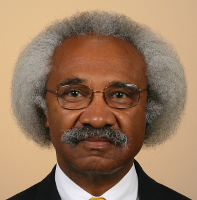
Today we honor the memory of Rabbi Manfred E. Swarsensky, a beloved member of our Club until his death in 1981.  He was admired as a leader for inter-faith dialogue, religious tolerance, and civil rights.  Before coming to Madison he had a brilliant career as a Rabbi in Berlin where he was famous for his sermons, until the Nazis burned down his synagogue and sent him to a concentration camp.  Many of his family members and friends were victims of the Holocaust.  He was released.  At 39 years old and alone, he came to Madison and founded Temple Beth El.  We, as well as the Madison community, came to admire him and respect him for his dedicated leadership to peacemaking and forgiveness, for building bridges and reconciliation.  Each year we designate an award to someone who emanates the Rabbi’s ideals. 

This year’s Manfred E. Swarsensky Humanitarian Service Award recipient is Dr. Floyd Rose. For decades his active voice in education in the Madison Community has been his avocation—always working in partnerships to help others do better for themselves.  As Dawn Crim stated, “his passion work is education and his support of the next generation.”  He seeks to find solutions with the Madison Metropolitan School District and families surrounding the persistent educational achievement gap between white students and students of color. 

As President of 100 Black Men of Madison, he sees that members of this organization are role models for the community.  They attend schools in the Madison Metropolitan School District on the first day of class to welcome students and their parents to the school year.  In preparation for school, for 26 years they have led the “Annual Back to School Celebration” campaign providing free backpacks AND school supplies for students from limited-income families.  When schools transitioned to virtual education, the backpack project promptly transitioned into Project 3000, which represents the 3000 local students in families with limited incomes.

The tasks before them were immediate.  Dr. Rose recognized that virtual learning at home requires more than a student and a laptop.  The entire family needs to be supported in their student’s academic pursuits.  Parents and caregivers require resources necessary to facilitate learning.  Families need technical and guidance support   Project 3000 works with families to ensure that each student has an internet installation and access—and a plan to sustain service and utilities.  When appropriate, parents, caregivers, and students are provided with basic computer training.  This support includes mentoring, educational coaching, and tutoring.  Dr. Rose recognized that this level of attention is important to ensure that all school-age students have the necessary educational support to be successful. 

This endeavor is in addition to the SOAR partnership with 100 Black Men of Madison and the United Way of Dane County that began in 2016.  This comprehensive program is designed to decrease truancy rates and increase high school graduation rates.  It begins with one-on-one mentoring of students in middle school and continues through high school.   These projects require a substantial commitment to the benefit of others—for the next generation.

I will conclude with a quote from Bob Sorge who wrote of Dr. Rose—he is an excellent embodiment of … the social justice advocacy, personal insight, and empathy reflected by the work and life of Rabbi Swarsensky. 

Our congratulations to Dr. Floyd Rose on receiving this year’s Manfred E. Swarsensky Humanitarian Service Award.  Along with this award, a $2,500 grant is presented by the Madison Rotary Foundation to an agency of the recipient’s choice.  Dr. Rose has chosen our annual Community Grants Campaign to receive this grant.  

The Manfred E. Swarsensky Humanitarian Service Award was established in 1982 and identifies individuals who have, through their voluntary efforts, made a particularly outstanding contribution to the humanitarian service in the greater Madison community, in the tradition so well exemplified by the life of Rabbi Swarsensky.   The award-winning documentary video, “A Portrait: Rabbi Manfred Swarsensky,” that was created and produced by Rotarian Dick Goldberg with assistance by Wisconsin Public Television, provides background on Manfred Swarsensky and can be viewed on YouTube, and the Rotary office also has a copy of the video for any member wishing to view it.