Tag Archives: Rotary Club of Madison

March 1: Print Media Today and Tomorrow

–submitted by Valerie Renk
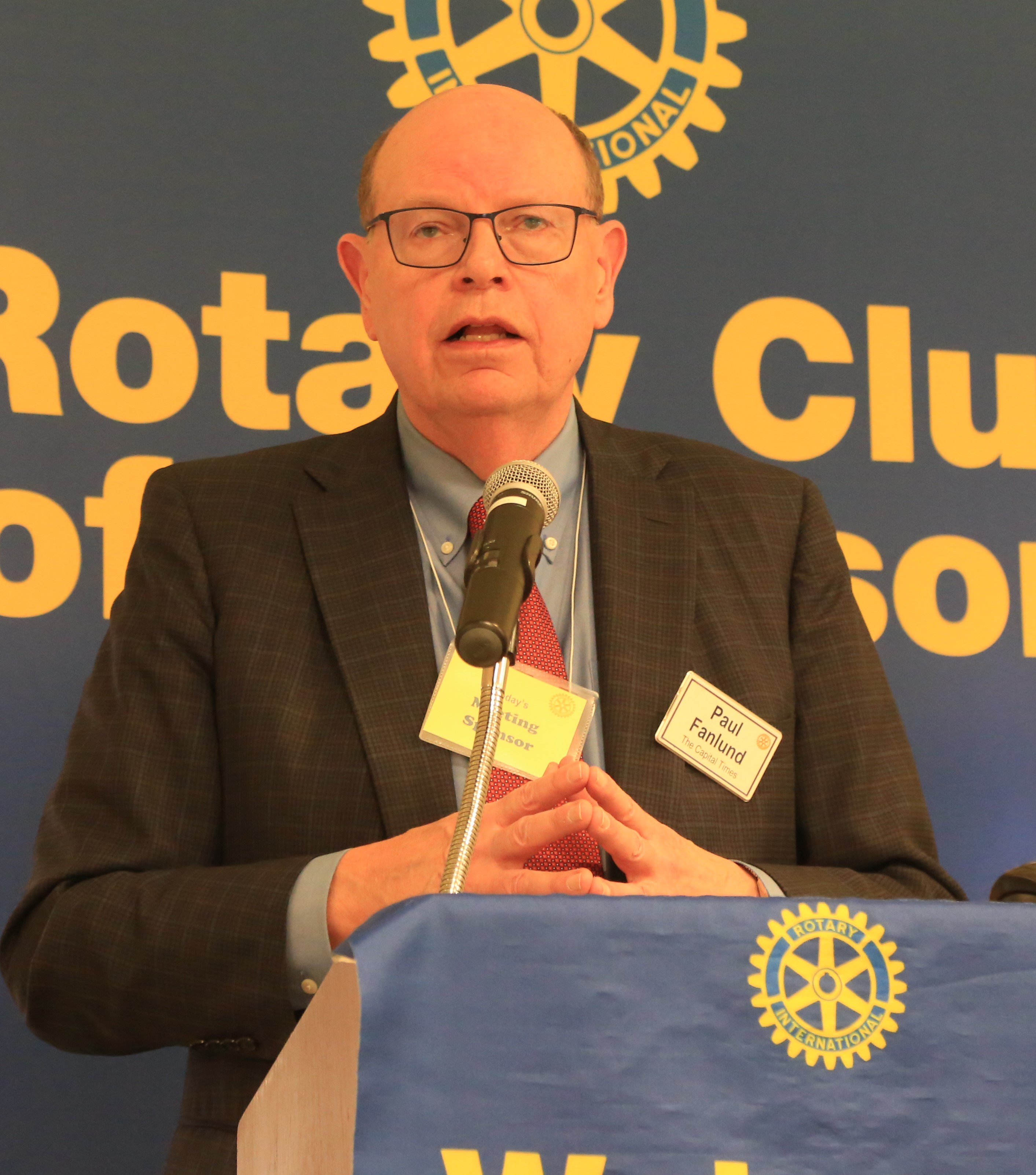
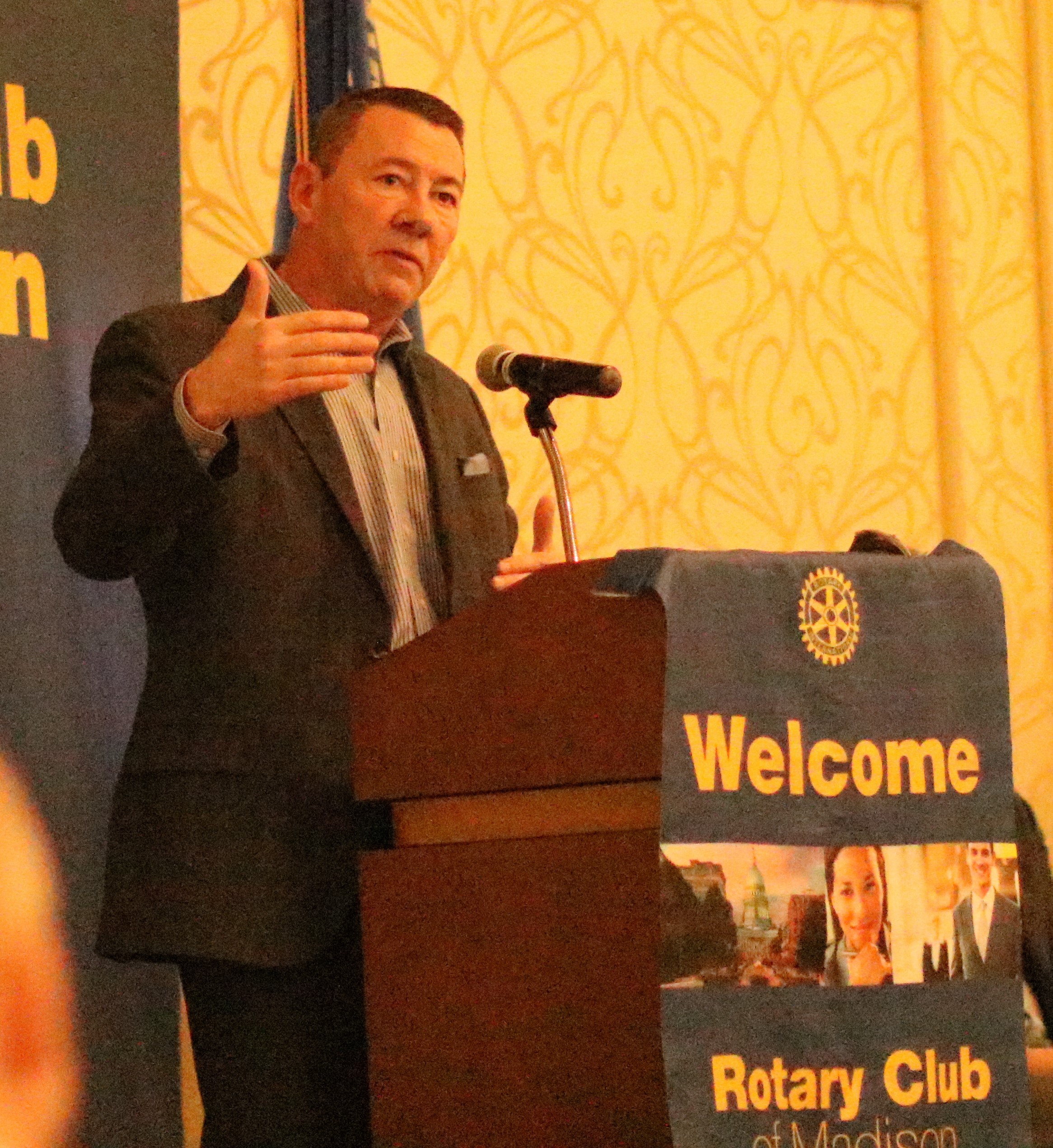
Paul Fanlund told Rotarians March 1 print media is alive and well. Fanlund is publisher of the The Capital Times, and he served the Madison print media trifecta as Wisconsin State Journal Editor and Madison Media Partners VP Operations prior to that. 

“I’ve worked in the same building over 40 years but for three companies,” Fanlund said.

Looking forward, Fanlund consulted with leaders of all three media organizations, who report legacy media may have some areas of decline but will still be relevant. 

Statewide, 84 percent of Wisconsin adults read local print or digital newspapers. A surprising number, 28, newspapers are published five times a week or more; 194 total papers are staffed by 8,950 people.

Print news challenges include youth leaning toward digital platforms, cost/availability of newsprint, plus delivery issues. And digital offers immediacy, intimacy, and flexibility with audio and video enhancements.

Still, Fanlund says he doesn’t buy that old day journalism was better because more people were doing it. 

“A lot of the positions not there anymore were not doing the front-line reporting; you may see more typos now, but editors are prioritizing that front line reporting,” he says.  “We sometimes worked in packs covering the same story.  Good work is done today to avoid that mentality.“

Madison is lucky to have multiple excellent newsrooms and a well-educated readership. We need community support for events, consideration from advertisers, and knowing we are building our success on the size of our audience, not print circulations. 

If you missed our meeting this week, you can watch the video here: https://youtu.be/EJ9z84DB2V4.
February 22: Advocating and Building Community

–submitted by Jessika Kasten

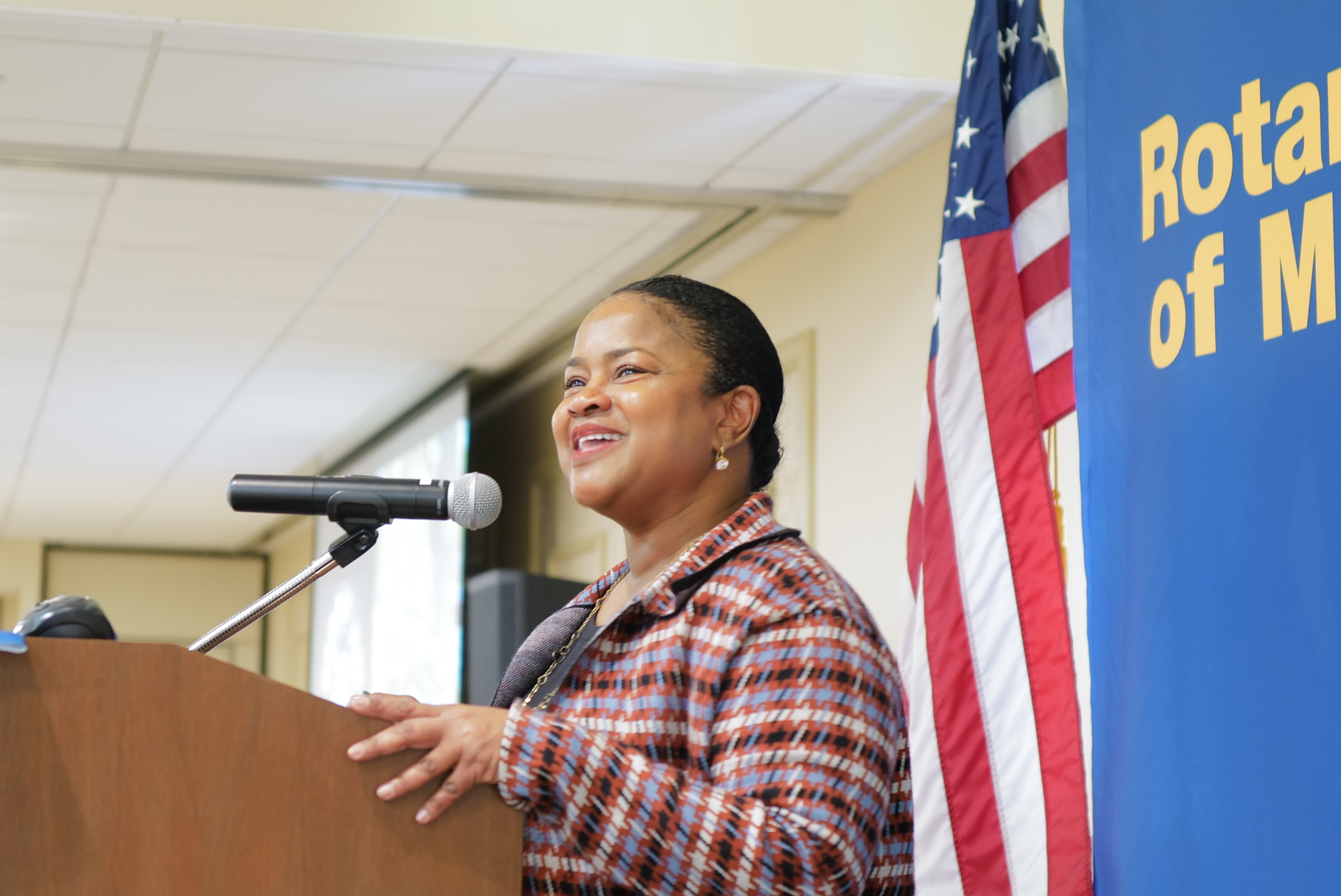
This week, Camille Carter, president and CEO of the Madison Black Chamber of Commerce, spoke to Rotary about the history and mission of her organization. At only 10 years old, the Chamber has made a major impact, serving more than 700 Black business owners in Dane County. The organization’s mission is to promote, lead, advocate and build community, which they do by staying closely connected to their members, partners and community. The Madison Black Chamber hosts a variety of events, expos, awards and networking opportunities, notably hosting the first Black Restaurant Week in the nation.

If you missed our meeting this week, you can watch the video here: https://youtube.com/live/Gj-AWnWFAm0.

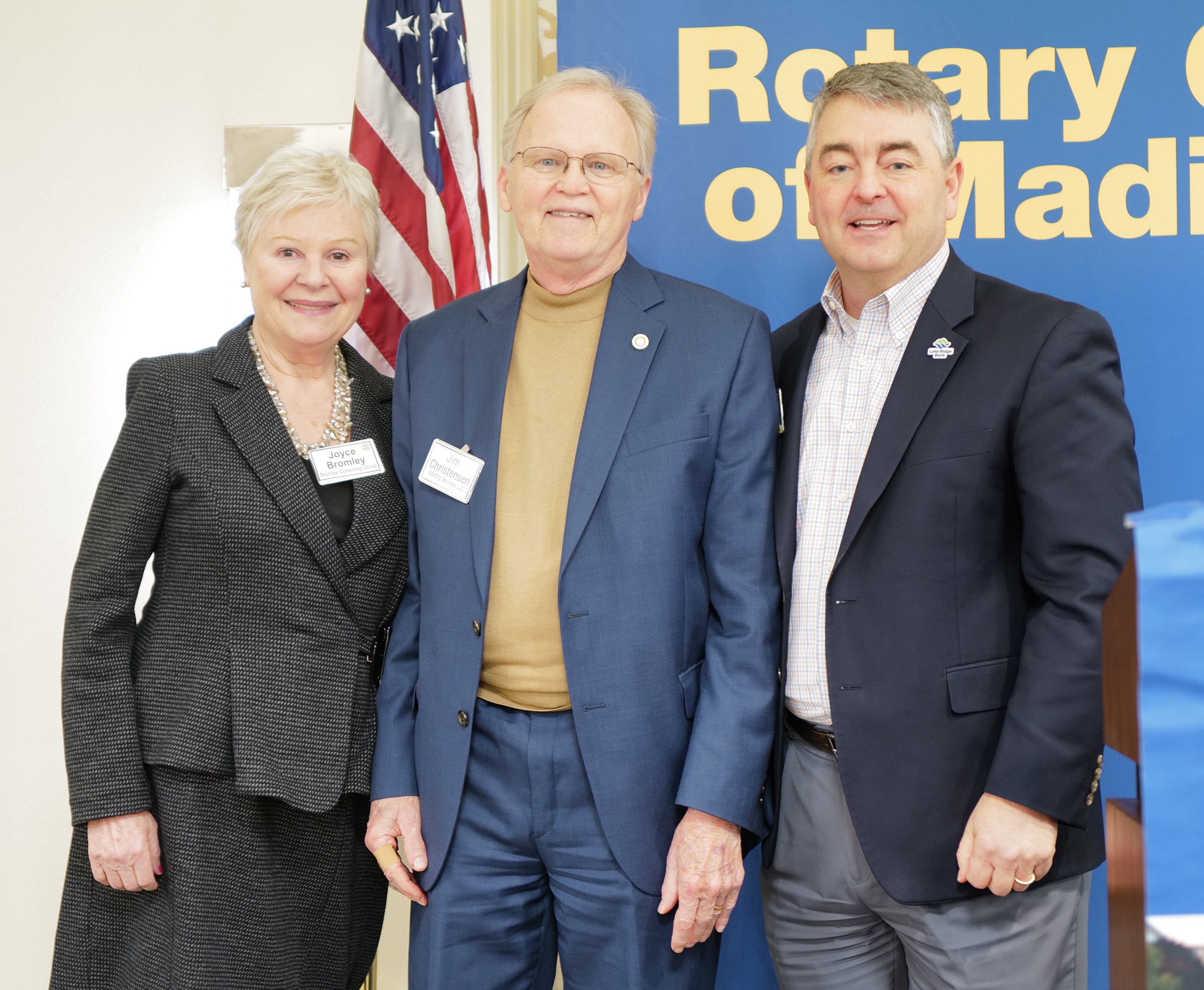
Jim Christensen Receives Community Service Award

–presented by Joyce Bromley on February 22, 2023

From left: Joyce Bromley, Jim Christensen and Club President Paul Hoffmann

The Member Recognition Committee was established by our Board of Directors to annually recommend members who have exhibited outstanding service in one of Rotary’s Five Avenues of Service: Service to our Club; Service to the Community; Service to the international community; to vocational service; and to youth service.

On behalf of the Rotary Club of Madison, I am honored to announce that Jim Christensen has been selected to receive the Community Service Award.

In the 30 years that Jim has been a member of our club, he has served us well in a variety of ways.

He has served on our club’s board of directors, has been a mentor to several Rotary Scholars, has been a regular volunteer at our annual Ethics Symposium, and he currently chairs our Member Retention Committee.   

We see him at work within our Club and on behalf of our club in the community. He has been involved over the longest period of time with the Community Projects Committee, where he has served as its chair and regularly volunteers in its group activities within the community.  He helps organize and contributes to our holiday gift project for children in need.  He has organized and participated in a number of tree planting projects at area schools. 

Additionally, he volunteered at Ironman, at Habitat for Humanity, and the picnic we held at Concerts on the Square for One City School students.  Jim is a champion in helping our Rotary Club make a difference in our community.

For Jim’s continual service over 30 years, our Club has made a $200 gift in his name to The Rotary Foundation of Rotary International for his Community Service.

Thank you, Jim!

February 15: SHINE’s Efforts in Cancer Treatment

–submitted by Larry Larrabee

On February 15th, our Rotary program was a presentation by Patrick O’Connell, Vice-President of Marketing and Communication for SHINE Technologies headquartered in Janesville, Wisconsin, with a manufacturing facility in Fitchburg.  SHINE is a startup company specializing in producing medical isotopes that are used to diagnose and treat various cancers and diseases.

Mr. O’Connell described the difference between fission and fusion, the latter being the process SHINE uses in manufacturing isotopes for both diagnostics and treatments.  The company’s medium range goals include using fusion to process nuclear waste from nuclear power plants that would significantly reduce the amount requiring disposal.

If you missed our meeting this week, you can watch the video here: https://www.youtube.com/watch?v=xpkN3PZYIn8&list=PLD8FIDQlj8al6JvWDHjRYyMuH637UAnM9.

February 8: Behind the Scenes of Designing and Building Warships and Other Vessels in Wisconsin

–submitted by Sharyn Alden

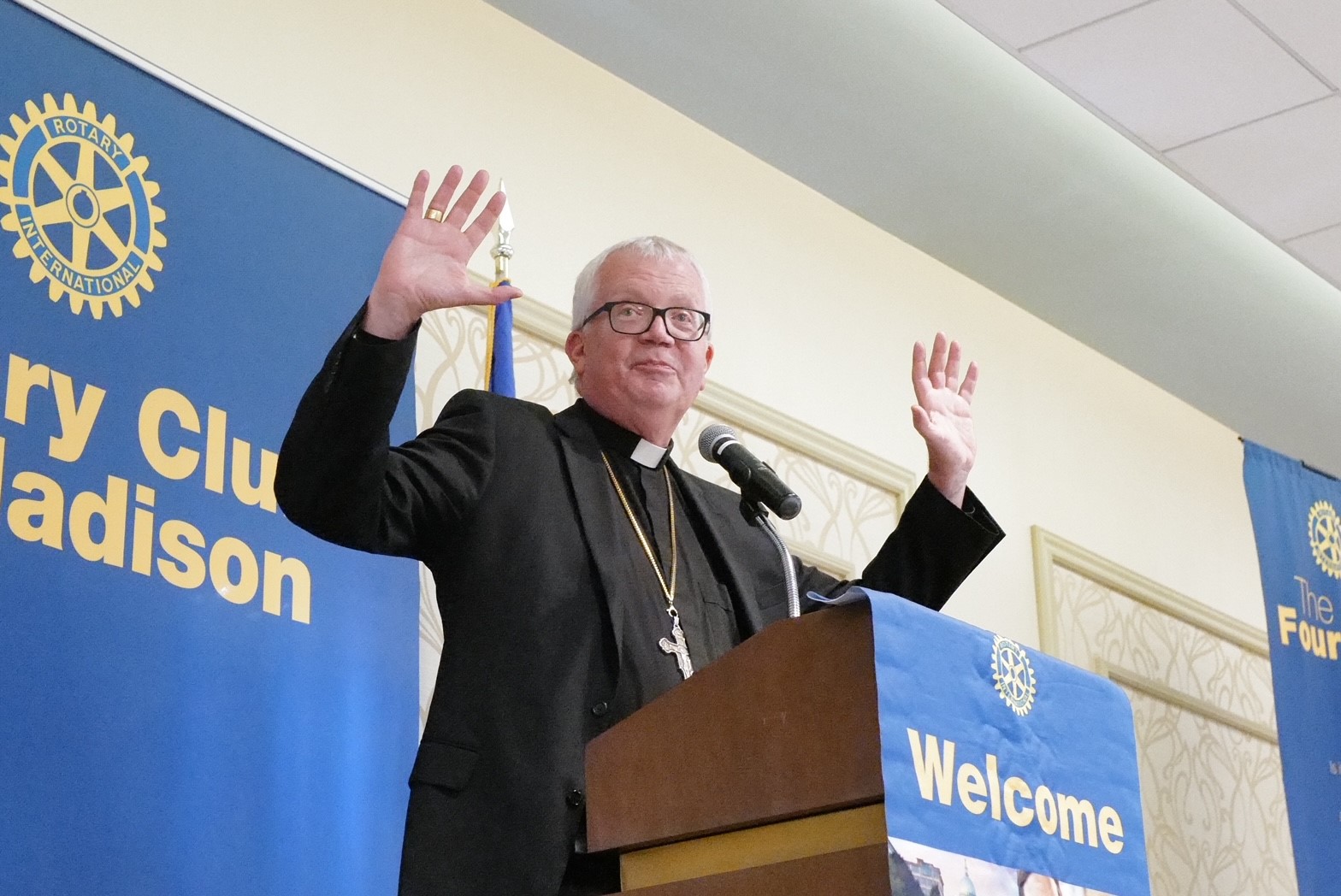
Mark Vandroff, CEO of Fincantieri Marinette Marine in Marinette, Captivated the February 8th Rotary Audience.

“If there’s a ship out there adding quality to life, we’re probably behind it,” Vandroff said.

Mark Vandroff began his talk by saying Fincantieri, based in Italy, is the largest ship builder in the free world. In the U.S. the primary shipbuilding hubs are in Wisconsin, with a focus primarily on defense, and in Florida where pleasure industry, cruise ships are built.

Vandroff’s long list of credentials includes former senior adviser to the White House. He holds a B.S. in physics from the U.S. Naval Academy and a MS in Applied Physics from Johns Hopkins University. 

Fincantieri has three shipyards in Wisconsin –Marinette, Green Bay, and Sturgeon Bay. “Green Bay is our highway,” Vandroff said.

He pointed out that he and Joshua Humphreys, the iconic 18th century shipbuilder and naval architect who built the first six U.S. frigates in 1797, have something in common. “Not much changes when you’re running a large shipbuilding industry. We still face the same challenges that Humphreys did—sourcing material, supply chain issues, and differing opinions from Congress,” Vandroff said.

The way ships are built and launched, though, has decidedly changed. At Fincantieri Marinette Marine (FMM) they now use Syncrolift, an ultra-efficient ship lifting and launching engineering marvel. The Syncrolift at Marinette, is the largest ship transfer system of its kind in the western hemisphere.

FMM was founded in 1942 when the U.S. needed more small boats to support the WWII war effort. By 1945, most shipyards became specialists. Vandroff said FMM has built a wide variety of ‘things that float,’ from boats and barges to Staten Island ferries to ice breakers for oceanography training courses for the University of Alaska.

Eventually, the focus changed to building warships for new customers like the U.S. Navy.

Vandroff noted shipbuilding in Wisconsin has enormous economic benefits for the state. At FMM’s Wisconsin facilities 2000 men and women are employed. And they’re building bigger ships, growing from crafting 3,500 ton ships to today’s 7,000 ton warships.

“We’re looking for people to hire. We’re building bigger ships so we need a bigger workforce,” Vandroff said, “from welders to engineers.”

If you missed our meeting last week, you can watch the video here: https://www.youtube.com/watch?v=mAsw7x4AGWg&list=PLD8FIDQlj8al6JvWDHjRYyMuH637UAnM9.