Tag Archives: Rotary Club of Madison

Keep Up the Good Work

submitted by President Andrea Kaminski
Social Distance

Are your hands chapped from so much washing? Do you miss your colleagues? Wish you could hug your grandchildren? Miss seeing your friends at Rotary luncheons?

Yes? Then keep up the good work!

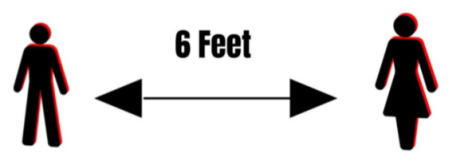
As community leaders, Rotarians need to practice and model assiduous social distancing to the extent that our jobs or family needs allow. In fact, without widely available protective gear, testing and, ultimately, vaccination, physical distancing is the only way to contain the coronavirus threat and minimize infection.

While we look forward to a time when we can safely ease up on the restrictions, there are lessons we can learn from this experience. And I’m not just referring to my enhanced ability to connect with people online!  For example, while I have at times been frustrated by the difficulty of shopping or ordering groceries online, I’ve learned that the brands we normally buy are less important than the actual family meals in our house that bring together our kids and granddaughter.

For life to go back to “normal” we will have to keep social distancing for the foreseeable future. We can’t let our guard down before our first responders and healthcare professionals are adequately equipped to do their essential work. Here are some resources to help get us through these challenging times:


Managing Our Mental Health During the Coronavirus Pandemic

submitted by Carole Trone

FLynn Bradyellow Rotarian Lynn Brady, who is President and CEO of Journey Mental Health Center, shared her insights on “Dealing with Mental Health in the Time of the Coronavirus, a Unique National Emergency!” Brady’s presentation to the club through a virtual meeting platform on Wednesday, April 15, 2020, was an immediate reminder of the significant disruption that all of us are facing in our daily routines. Brady reflected that we are social creatures, and so this required isolation is inevitably going to have an impact. We feel uncertainty about when things will return to normal. In Brady’s work, she says that they are not currently seeing a lot of calls. Rather, people are asking for tips on dealing with stress; how to talk to children about the issue; and how they might reach out in the future to a mental health professional. The mental health professionals that she works with also need a chance to talk through the issues.

Brady walked her audience through the stages of mental stress that the coronavirus has brought, from disruption and worry at a personal level to an increased level of community anxiety about jobs and access to necessities. People at different ages will exhibit signs of stress differently and it’s especially important not to dismiss the distress that older people feel as a normal aspect of aging. Brady provided ideas for how we, as leaders in our community and at work, can provide structure and support to our colleagues and those we supervise. Routines and ongoing opportunities to discuss challenges and to stay in touch are supportive for everyone. Think about the immediate and also the longer term plans of dealing with this crisis. Be sure to thank people who are in the mental health field.

In closing, Brady reminded her audience that Journey Mental Health Center has a crisis line: 608-280-2600, and it is staffed  24/7, 365 days a year.

If you missed our online meeting this week, you can watch the video here.

COVID-19 Efforts

–submitted by President Andrea Kaminski

Many of our members have asked what they can do through Rotary to contribute to COVID-19 relief. We have an opportunity coming up, and that is our club’s fund drive for The Rotary International Foundation, which supports sustainable projects including fighting disease and responding to disasters. You will be receiving a letter in the next week from our Rotary Club office encouraging you to participate.

Of course, this year COVID-19 is having a global impact and is devastating many communities around the world as well as here at home. Grants for COVID-19 relief efforts come from The Rotary International Foundation’s Disaster Response Fund and are helping people in need of food, supplies, shelter and much more.  Our Rotary district has requested support from The Rotary International Foundation for COVID-19 efforts here, and we expect to receive funding for local projects for people in need in the coming months.

In addition, The Rotary International Foundation is now applying the vast infrastructure developed to fight polio to protecting vulnerable people from COVID-19, especially in polio-endemic countries. From Pakistan to Nigeria, the program is drawing on years of experience fighting outbreaks to support governments as they respond to the new virus. Read more about this effort:  https://www.endpolio.org/polio-eradication-staff-support-covid-19-response  

Maybe the best part is that contributing to The Rotary International Foundation stretches your philanthropic dollar. If members of our club contribute a combined total of $50,000 by June 30, 2020, our club will be eligible for $75,000 in district and international matching dollars for future international projects such as our club’s Change HERstory project in Ghana.

I hope you will make a contribution, according to your ability, to The Rotary International Foundation. Your philanthropy will support COVID relief or other worthy projects locally and internationally.

By the way, to be sure our club is credited for your contribution, please make your check payable to The Rotary International Foundation and mail it to our Rotary Club of Madison office, 2 S. Carroll Street, Suite 255, Madison, WI 53703


Is Madison Prepared for the Coronavirus and Its Effects?

submitted by Valerie Renk

Eithun BenRotarians heard online April 8 from Benjamin Eithun how Madison is part of several networks to plan for medical emergencies. Eithun is Director of Pediatric Trauma, Surgery, Injury Prevention and Child Protection at American Family Children’s Hospital.

In 2014, Wisconsin formed seven Healthcare Emergency Readiness Coalitions (HERCs), which were based on seven Regional Trauma Advisory Councils.  The councils are made of up EMS, trauma hospitals, public health agencies, government emergency management agencies, businesses and other related partners.

“With the coalitions and the councils, we can better coordinate, communicate and be ready,” Eithun said. “We may be competitors, but we all have the goal to serve patients in need.”

Examples of coordination include sharing where there are needs for more beds, working together to make emergency plans, and coordinating needs in the area, region or statewide.  There are two communications vehicles, EMresources (web based) and WISCOM (VHF Radio) used for urgent sharing of needs.

Eithun has a MSN and a BSN from the University of Pennsylvania and a BS from UW-LaCrosse.  Prior to coming to the UW, he was a pediatric critical care nurse practitioner in the PICU at Children’s Hospital of Philadelphia.

If you missed our meeting this week, you can watch it here.  

Club Learns How Climate Change Affects Local Weather

submitted by Jerry Thain

ankur_desaiDr.  Ankur Desai, professor of climate, people and environment at UW-Madison, addressed the first ever virtual meeting of the Club on the effect of climate change on local weather.  He stated that climate is personality, and weather is mood.

Looking at weather over the years, he noted a global trend, beginning in the 1980s, of higher temperatures.  This is caused by CO2 emissions which are raised by the use of fossil fuels.  He said CO2 is to climate change what steroid use was to baseball.  An increase in temperature up to 2 degrees Celsius has only modest impact, but above that level, it leads to significant and harmful consequences.  Policy changes could mitigate the damage by “flattening the curve” much as health experts urge us to do in attacking the current pandemic.  A major difference is that it will take decades to flatten the climate curve.

Turning to the influence of climate change on local weather, Dr. Desai showed the global decline of snow cover which, in itself, affects the temperature.  The meeting of snow/no snow lines influence weather fronts and increases the severity of storms.  Lesser snow over North America means most places get wetter and rainier–rain on frozen ground is more likely to cause storms than snow. Southern Wisconsin has seen wetter and rainier weather in recent years while northern Wisconsin has been drier. Some cold winter weather will still occur but at a much lower rate than in the past.

The problems caused by this will need to be addressed either by adaptions (such as moving homes from frequently flooded areas)  or by mitigation (reducing emissions significantly).  Unfortunately, there is no single “silver bullet” to solve things so all alternatives must be pursued by policymakers.

Dr. Desai cited recent research indicating, contrary to some beliefs, that climate change deniers are a very small proportion of the populace. Moreover, among people aged 18-30, climate change is either their first or second highest policy priority.  It is not possible to prevent all adverse effects, but we must take actions that will have some effect or be overcome by the problems.

He ended on a hopeful note, showing the sprouting of tree plants in an Australian forest area recently consumed by wildfires.  Earth will survive, but we need to help heal it for our own good.

If you missed our online meeting this week, you can watch the video here.

Applying The 4-Way Test to Serve Our Club and Members

submitted by Club President Andrea Kaminski

4 Way Test LogoLast week, I wrote about how the Rotary Four-Way Test is a wise guide that can help us limit the spread of COVID-19 while we safeguard ourselves, our loved ones and community. Here are some ways our Rotary Club of Madison members are applying this principle to serve our own Club and its members:
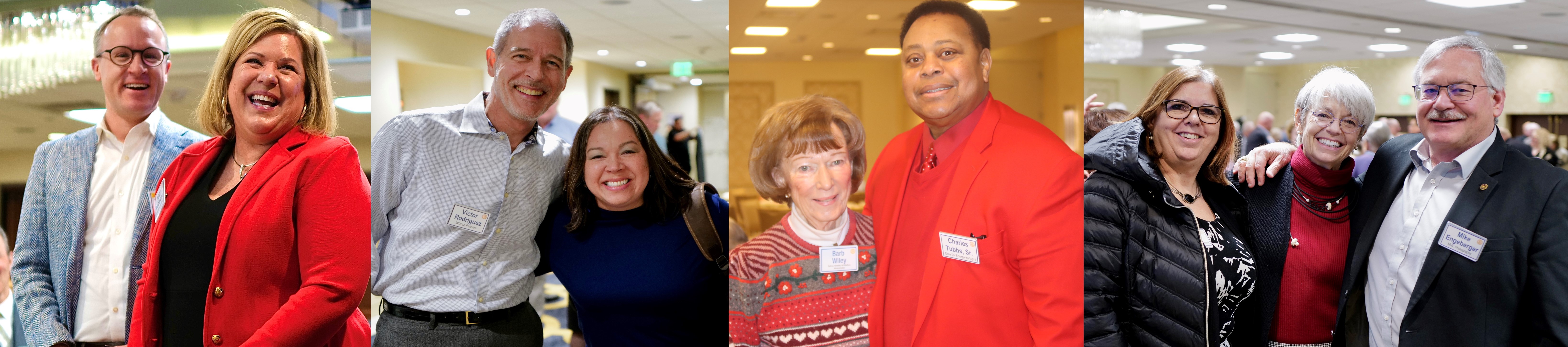

Because our weekly luncheons have been canceled, the members of our Rotary News Committee do not have speaker programs to write up, so some of them are using their journalistic skills to produce a new weekly feature called “Connecting With Members.” The first installment was in last Friday’s newsletter (page 2) and it featured an interview by Rich Leffler in which Paul Hoffmann described how his family had to leave Europe ahead of schedule to escape the coronavirus. Be sure to open your Rotary Newsletter every Friday to keep up with our Club and individual members.

Members of our Club’s Caring Committee are keeping track of RCM members who may need assistance in getting groceries or other daily supplies while they are staying safe at home. Committee members are arranging for Rotarians to meet these needs.  Contact the Rotary office at 608-255-9164 or rotaryoffice@rotarymadison.org if you need assistance.

These are just a few ways Rotarians are helping to keep members of our Club and our community connected despite social distancing. We also have Club members who are on the front lines as health care workers, public safety officers, grocers and election officials, just to name a few.

Let us know about your experiences so if you can fit in an interview, we can share it in our Rotary News or in a post on our Rotary Blog.