
submitted by Linda Baldwin; photo by Pete Christianson
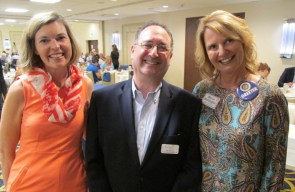
From left: Program Committee Chair Sara DeTienne; Ben Merens & Marcia Whittington
This week’s Rotary presentation by Ben Merens, a “storyteller” for the Blood Center of WI Blood Research Center, was one where I left having learned amazing information about a subject of which I knew nothing.
Merens did indeed tell stories…
The young man at Verizon who had had a double lung transplant, survived, married his nurse and had a family. Ricky owes his life to doctors like those at the BRI because blood research found a way to get the body to accept transplants.
Chaos, Merens describes, is what the blood system looks like and scientists determine what patterns do exist, how they are supposed to work and then find out how to fix things when they don’t.
BRI scientists patented a test to determine whether the regularly used blood thinners would work for a specific patient and if not, doctors could substitute a more effective blood thinner.
We watched with Merens as he described a heart being harvested and then rushed down the hall to transplant into a waiting patient. The heart was successfully inserted…then the action stopped, and they waited. The heart, still in the open chest, began to beat.
Merens described a WI Donor event when a mother spoke about the joy and sadness when she realized her son is living because another person’s child has died. Then she said, he’s an active two year old being held by the mother of the donor who heard her child’s heart beat in the chest of my son.
We think about research being a scientific activity with words and practices that most of us don’t understand. Merens brought the results of research into our hearts and minds at Rotary today. And we do understand.
If you missed our meeting this week, you can watch the video here.
 What will it take for Wisconsin to win the battle for economic growth fueled by entrepreneurship? Rotarians and their many guests left the Wednesday lunch with some specific ideas presented by Kevin Conroy, Chairman and CEO of Exact Science.


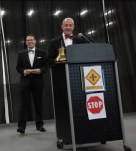
 Interviewed club members declared they knew their oath verbatim. Yet it was admitted that even longtime members might still need an occasional prompt to assure they didn’t stumble. For example, Boris Frank could not easily repeat the test by heart, but he pointed out the truth–that words were being held up, off camera, for his reference.
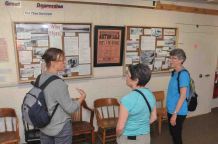

 Other parts of the property belong to the Wisconsin Department of Natural Resources and the USDA Dairy Forage Research Center. Meine took us to sites on the DNR land, where there is public access. Volunteers have put in trails, and they are working on prairie restoration. One section is a beautiful hillside of lightly forested grassland. Meine said it took 15-20 volunteers, mostly working with hand tools, about three hours to beat back the thicket of invasive shrubs to expose this native Wisconsin oak savanna.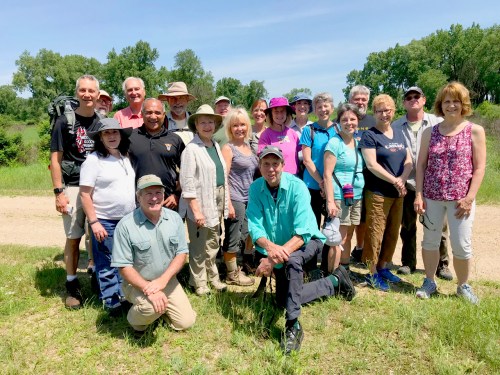
 Rotary Club of Madison, Wisconsin